Last Updated on October 18, 2026 by Aaron Chen
I price private China tours for a living — I’m the one reading your WhatsApp message, building the itinerary, and sending back the number. So let me tell you the thing nobody tells travelers: a private China tour has no sticker price. Even with the same itinerary, the same services and the same group size, different Chinese operators will quote you different totals. Every quote is really just two things added together:
- The service items — guide, hotels, vehicle, tickets, inter-city transport;
- The operator’s own running cost and margin.
Here’s how I see it after years of doing this: a Chinese tour operator works less like the travel agencies you know at home and more like an integrator. We all assemble trips from the same pool of local resources, so in any given city, the cost of guides, hotels, vehicles and tickets sits inside a fairly fixed range. The service items rarely explain a big price gap. What actually moves the total is the second part. An operator that does nothing but bundle resources has almost no running cost of its own, so its price can be low — and if commissioned or hidden shopping is subsidizing the trip, lower still. But at that point, the itinerary isn’t really answering to you anymore. I sit at the other end of that spectrum: I run tours specifically for Muslim travelers, which means that on top of assembling the same resources, I have to check whether the route actually works for you — which verified halal restaurants anchor each day, where prayers fit, whether the hotel is inside walking distance of food you can eat. That checking work is my running cost, and I’d rather explain it than hide it.
For scale: our 5-day Zhangjiajie itinerary starts around $348 per person at the larger-group tier. By the end of this article you’ll know exactly what builds a number like that — and you’ll have the five checks I’d use to compare any two quotes.
What’s actually inside a private tour quote?
Here’s how I build a quote — and every Chinese ground operator builds theirs from the same parts. The numbers below are from quotes I sent travelers in 2026. Treat them as reference points, not a price list, because routes and seasons move them.
| Line item | How it’s priced | From my recent quotes |
|---|---|---|
| English-speaking guide | Per group, per day | Around ¥600/day in Zhangjiajie; large cities run higher |
| Private vehicle + driver | Per vehicle, per day | ¥700–800/day for a 7-seater, fuel and regular parking included |
| Hotels | Per person, per night, twin share | Zhangjiajie 4-diamond around ¥280–340; 5-diamond around ¥500–600 |
| Entrance tickets | Per person, official price | e.g. Zhangjiajie National Forest Park entrance ¥236 (entrance + park shuttle only — cable cars and lifts inside are separate tickets) |
| Inter-city trains/flights | Per person, at cost | Varies by route; listed separately in the quote |
| Operations fee | Per group | My booking work, driver/guide meal allowances, 24-hour support during your trip |
Three things in that table decide whether a quote makes sense to you.
Guides and cars are group costs. The guide doesn’t charge each traveler ¥600 — your group pays ¥600 for the day and splits it. Same with the car. Most of the price confusion I deal with comes down to this one fact, and I’ll show you the math in the next section.
Tickets are pass-through — but check what “ticket” means. Chinese attractions have official prices, and for some parks, operators booking as a group actually pay a bit below the walk-up rate. I keep a current breakdown of Zhangjiajie’s official ticket prices on this site, so you can check my line items against the source.
Now, something a lot of my customers have run into — I hope it saves you the same surprise. Travelers don’t only ask me for prices; they ask other Chinese operators too, and most of the time the other quotes come in lower than mine. Out of habit, I always ask to see the breakdown. And when the customer sends it over, I usually see it right away: the ticket line only covers the entrance ticket, not the project tickets inside the park — and that’s where the “savings” came from.
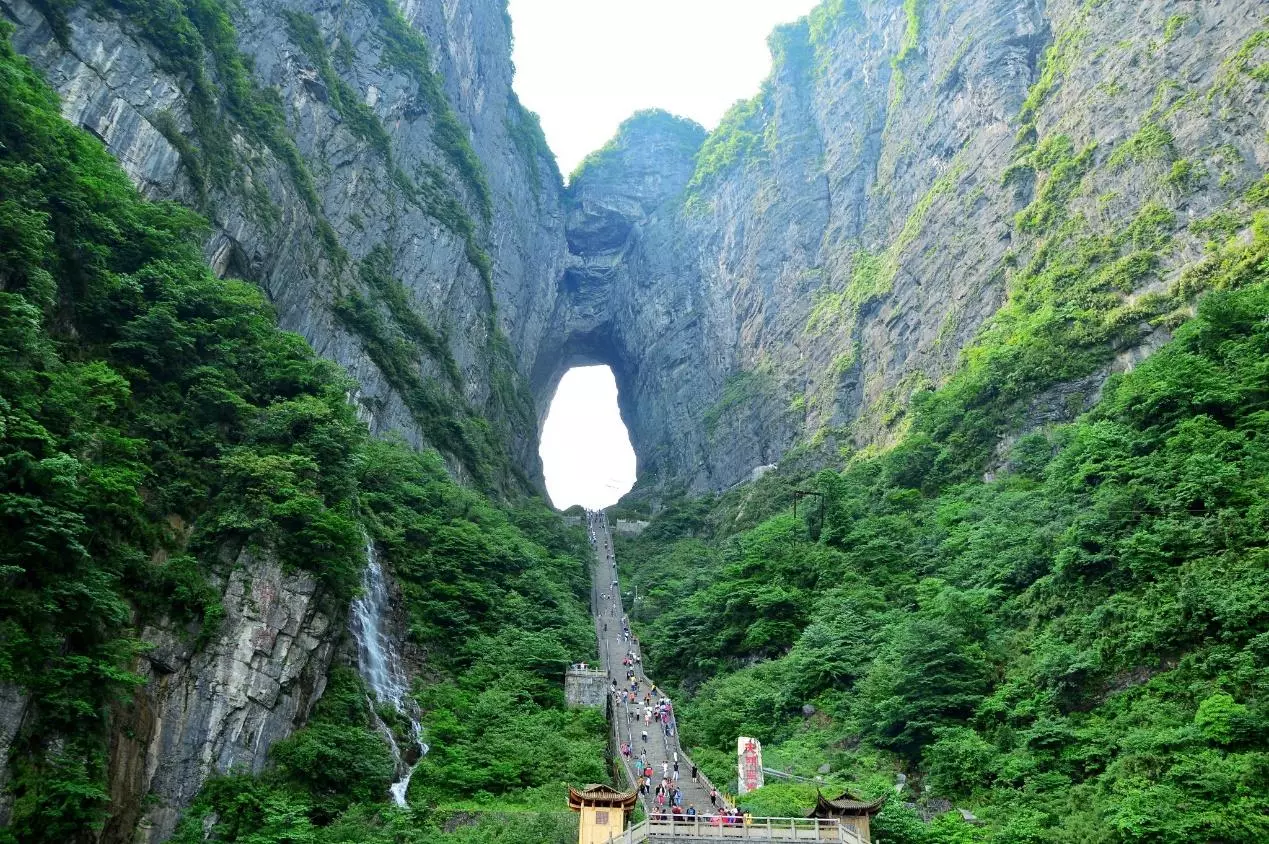
In China, most scenic areas charge on two levels: an entrance ticket, and separate tickets for the experiences inside. Tianmen Mountain is the most direct example I can give you. You buy an A, B or C route ticket, which includes the cable car, so most visitors assume everything’s covered. Then you reach the plaza below Tianmen Cave and you’re facing a choice: pay ¥32 on the spot for the escalator to the top, or climb the 999 steep steps of the stairway — which, with elderly parents or small kids, is a genuinely bad time. You’re already mid-trip, so you pay. That’s what I understand “hidden cost” to mean in practice. My quotes include every project ticket your route actually uses — if your day rides the escalator, the ¥32 is already in the number.
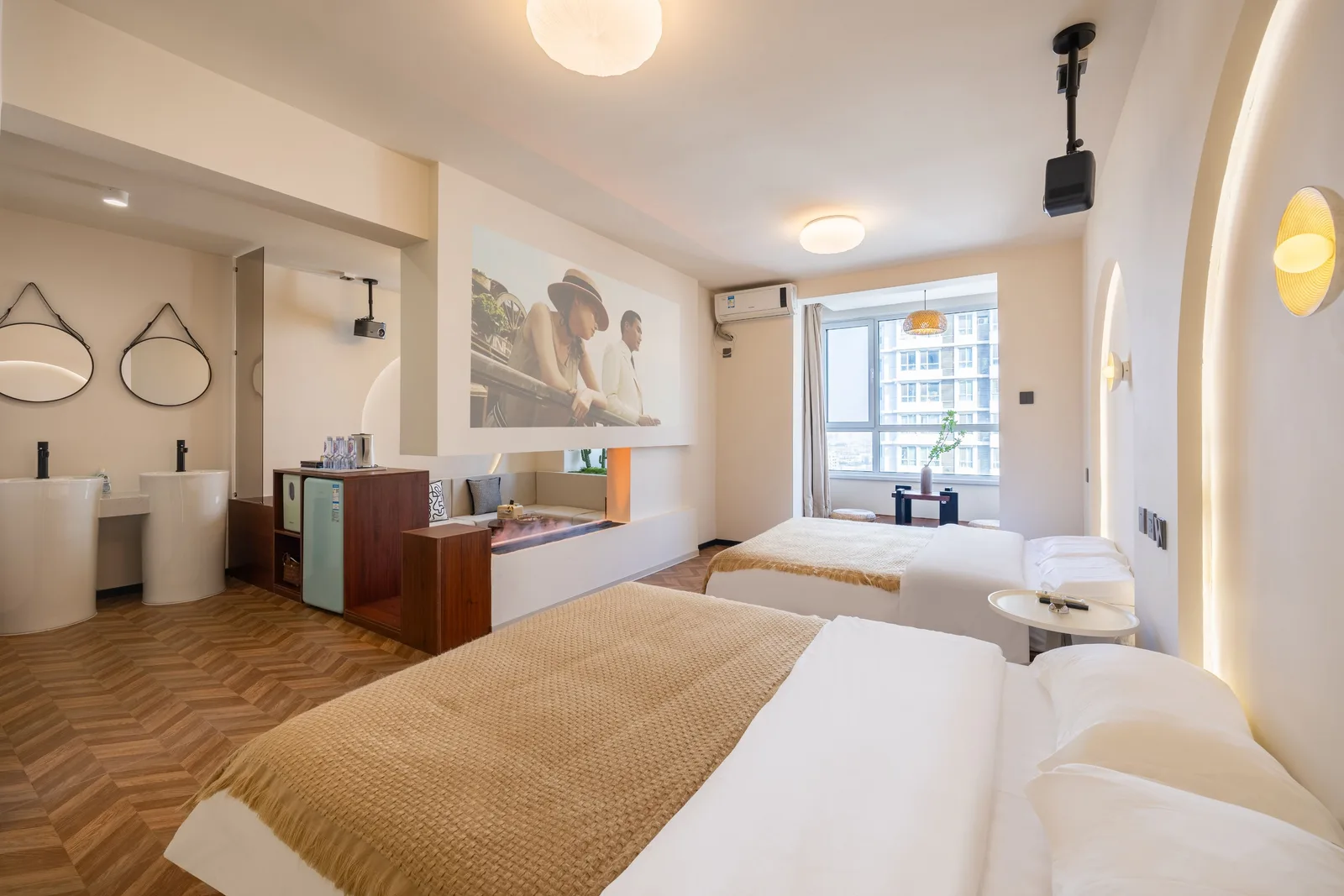
Hotels are quoted per person, twin share. This surprises travelers who book by the room. Chinese group quotes price accommodation per person per night, assuming two people share a twin room. A solo traveler pays a single supplement for the empty bed; a family of five needs a triple arrangement (genuinely scarce in Chinese hotels) or an extra room. One more thing worth knowing: the “diamond” ratings you’ll see in quotes are Ctrip’s platform ratings, not an international star system — a 4-diamond in Zhangjiajie and a 4-star in Kuala Lumpur are not the same promise. That’s why I name the actual hotels in my quotes instead of just a tier.
And the line travelers ask me about almost every time: the service or operations fee. Fair question — it’s the one item with no gate price to check, so I’ll put my own number on the table. In my quotes it sits on its own labeled line, typically a few hundred yuan per group (¥200–600 depending on trip length). It covers the booking and reservation work before you arrive, the meal allowances Chinese operators customarily pay guides and drivers, and me being reachable around the clock while you’re on the ground. If a quote you received has a service fee with no number or no explanation — ask. A legitimate operator can tell you what’s inside it.
Why the per-person price depends on group size
First, the question I get on almost every quote: my prices are per person, not per group — and any quote you receive, from anyone, should say which one it is in writing. Now the math.
Take a three-day private Zhangjiajie itinerary. The car costs roughly ¥750 a day and the guide ¥600 a day, so your group’s fixed costs are about ¥4,050 for three days — whether one person rides in that car or six.
- Two travelers: ¥4,050 ÷ 2 = about ¥2,025 each, before hotels and tickets.
- Six travelers: ¥4,050 ÷ 6 = about ¥675 each. Same car, same guide, same route.
Hotels and tickets barely move per person. So when a couple compares their quote against the price a group of six was given — or against a group-tour price built on twenty seats — the gap looks like someone’s cheating. Nobody is. The couple is simply carrying a whole car and a whole guide between two people.
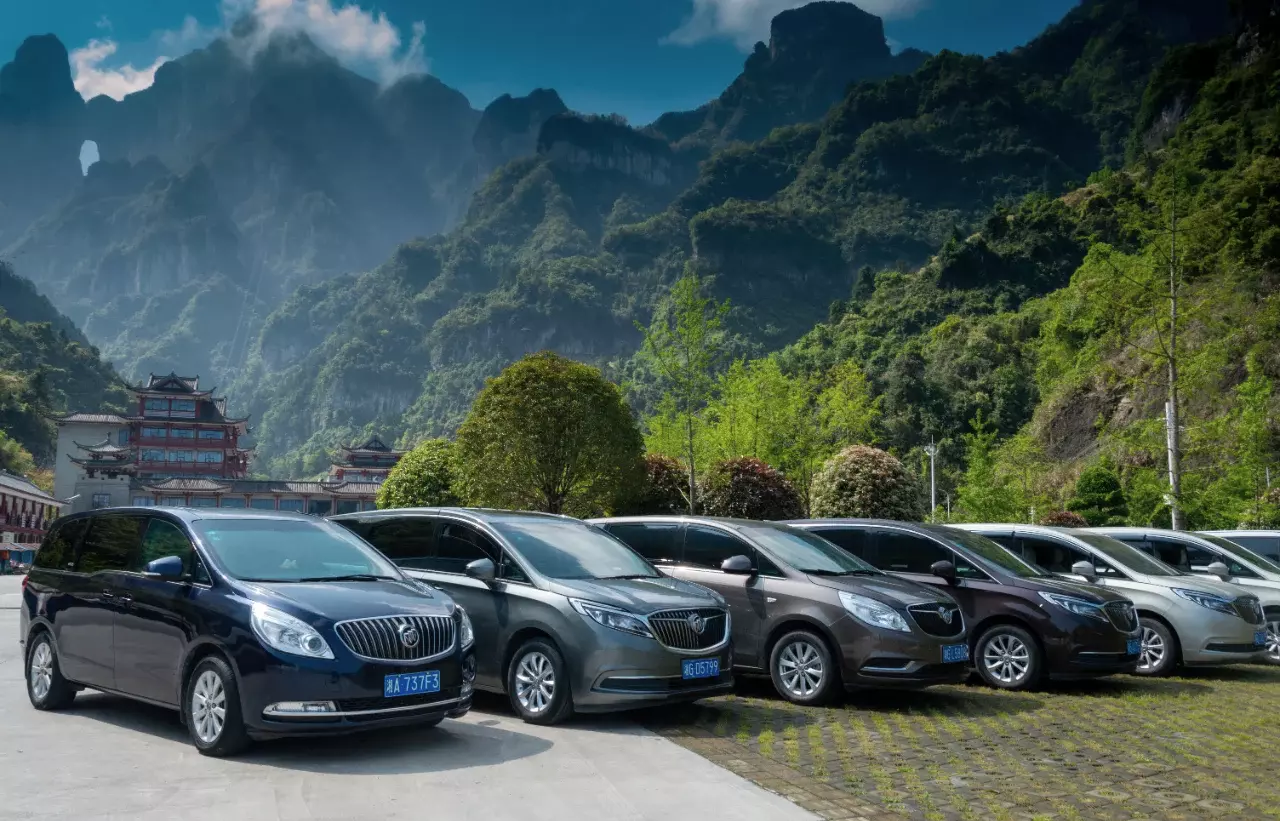
This cuts both ways, and I’d rather tell you now than after you’ve anchored on the wrong number. If you’re two people expecting the per-person price you saw a family of eight mention in a Facebook group, a private tour will feel expensive, and no operator can math that away. The honest options are: add travelers, trim service days, or accept the cost of privacy. And when travelers see our Zhangjiajie and Fenghuang 5-day itinerary from ¥2,365 (about $348) per person and ask me, slightly suspicious, “why is it so cheap?” — it’s the same arithmetic. That’s the larger-group tier, where fixed costs split many ways. Smaller groups sit higher on the same curve. One mechanism, both directions.
What you can remove from a quote — and what I’d keep
My quotes are itemized precisely so you can do this. Travelers trim them all the time, and these are the cuts I’ve seen work:
Book your own hotels. Plenty of travelers prefer choosing their own rooms — especially the ones hunting for apartment hotels with washing machines. I remove the hotel line entirely and the quote drops by exactly that amount. During peak windows like the Canton Fair or New Year, I sometimes suggest it myself, because hotel prices swing fast then and booking direct can beat locking them into a package.
Drop the private car in metro cities. Shanghai, Guangzhou and Chengdu have metro systems good enough that a full-time car can be genuinely unnecessary. Keep the airport transfers, use the metro and DiDi between sights, and the vehicle line shrinks to two short entries.
Don’t pay for a guide every day. A guide earns the fee inside Zhangjiajie National Forest Park, where the routing between Yuanjiajie, Tianzi Mountain and the cable cars decides whether you see the park or queue through it — and where there is no halal food inside the park at all, so lunch has to be planned around the entry and exit: eat before you go in, carry something halal, and time the route so you’re out in reach of a verified restaurant. That’s the local knowledge you’re paying for. On a free city day or a Disneyland day? A guide adds very little, and I’d rather cut those days from my own quote than have you feel you paid someone to follow you around a theme park.
Where I’ll push back: sometimes travelers want to cut the last guide day or the park-day car to force the total down. I’ll price it if you insist — but I’ll also tell you what breaks. In Zhangjiajie it’s usually prayer and lunch, because without a vehicle there’s no quiet place to pray mid-route — and since there’s no halal food inside the park, getting back out to a verified restaurant at a sane hour depends entirely on the car waiting at the right gate. Cutting the right items is a saving. Cutting the load-bearing ones just moves the cost into your trip.
Meals, by the way, usually aren’t in my quote to begin with. Our standard itineraries run “dine your way”: I plan each day’s route around verified halal restaurants and you pay the menu price directly — no markup hiding in a meal plan. Want set meals included? I’ll price that too. It’s one more line you can see and decide on. Exactly what both systems look like from the table — meal standards, who picks the restaurants, and the days with no halal option at all — is in our guide to how halal meals work on a China tour.
Does “halal” make a private tour more expensive?
Travelers ask me this straight out — “is a halal guide more expensive than a non-halal tour?” — and my answer is: no on the line items, yes in one honest, structural way.
No single item in my table carries a halal surcharge. The guide costs what guides cost. The car, the tickets, the hotels — identical prices to what any traveler pays. There’s no “Muslim rate.”
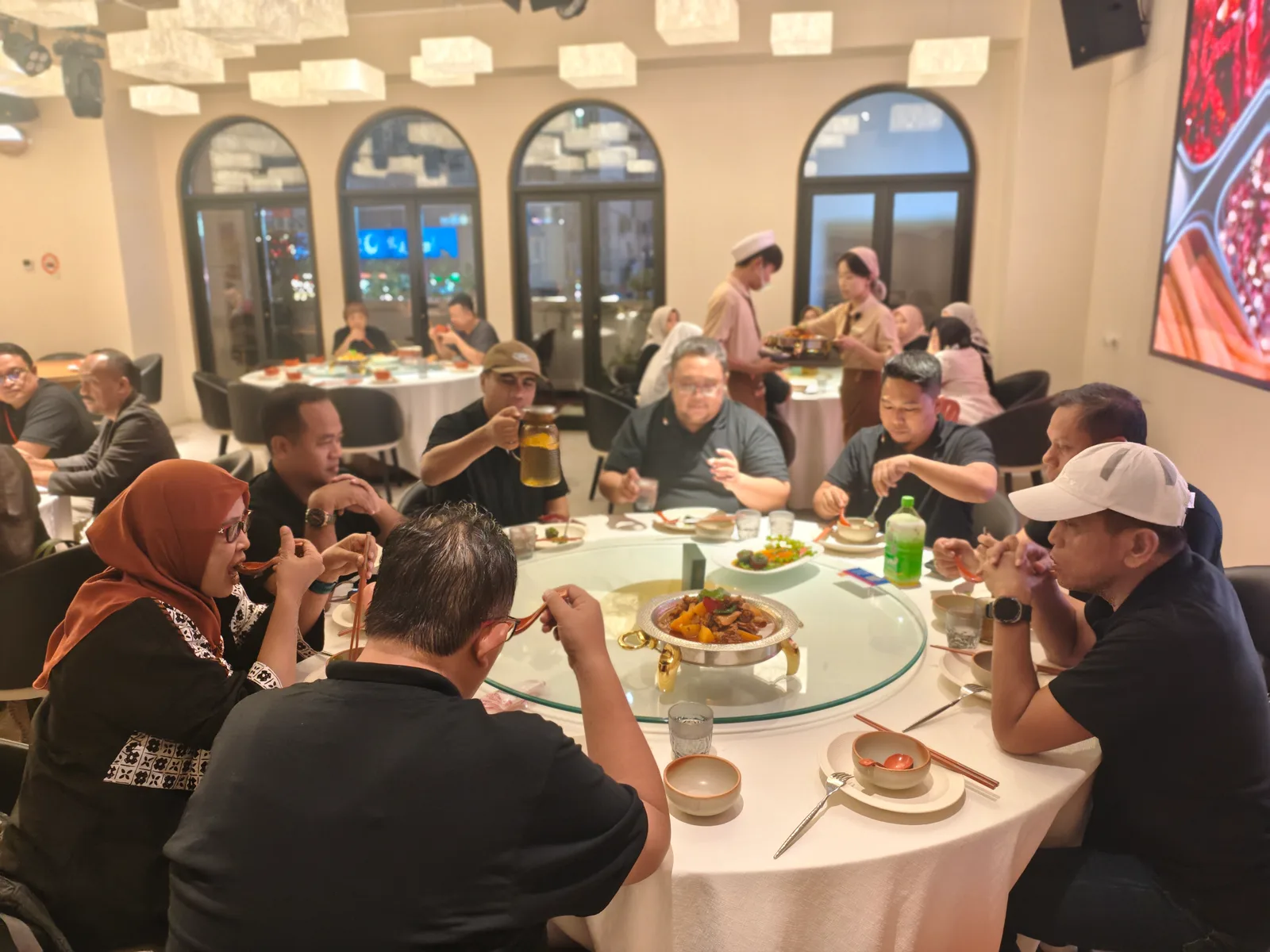
The real difference is in the planning, and it shows up as route design, not as a fee. A day plan that has to pass a verified halal restaurant at lunchtime — and when I say verified, I mean I check the certification, then call, then re-confirm before your trip — leave room for prayers at sensible points, and end near a dinner you can actually eat, is a much tighter puzzle than “see the sights, eat anywhere.” Sometimes that means the slightly longer road that passes the mosque, or a hotel chosen for walking distance to halal food instead of the rock-bottom rate — my halal food planning guide explains how that verification chain works. The cost of all that lives inside my operations fee and the itinerary itself, not in padded line items. Put it next to the group-size effect — hundreds of yuan of planning against thousands of yuan of fixed costs — and the conclusion is simple: if a “Muslim-friendly” quote is dramatically higher than a standard one for the same route and group size, the premium isn’t coming from halal.
How to compare two quotes fairly
The painful comparisons I see — “another company offered ¥7,500 per person, you quoted ¥14,000” — almost always dissolve once the two quotes are read side by side. I’ve done this with customers many times. Before you compare totals, line up these five:
- Per person or per group? Get it in writing. This one ambiguity causes more shock than any real price difference I’ve seen.
- Same group size? A per-person price for 10 travelers isn’t comparable to one for 2. Ask what tier the price assumes.
- What’s inside the ticket line? Entrance only, or the project tickets too? As I showed above with Tianmen Mountain, this is where most cheaper quotes quietly got cheaper.
- Car and guide: how many hours, which days? “Private car” can mean ten hours a day with an English-speaking guide, or a silent airport pickup. Both are legitimate; they’re just not the same product.
- What happens after you pay? Fixed price or seasonal surcharges? Cancellation terms in writing? My quotes state the total, the deposit and the refund terms before you commit — travel accident insurance is included on our standard itineraries — and the price I confirm is the price you pay.
One red flag worth naming plainly: a price that undercuts the visible math. If the car alone costs ¥700 a day and a full Zhangjiajie ticket lineup runs roughly ¥300–400 a head, a ¥900-per-person three-day “private tour” has to recover its costs somewhere — and historically, that somewhere has been commissioned shopping stops and self-paid add-ons along the route. That’s an industry cost-structure pattern, not an accusation at anyone. It’s also exactly why I’d rather show you every line than win on a number that can’t be real. Still weighing whether to book through an operator at all? My DIY versus private tour comparison for Zhangjiajie runs that decision with the same arithmetic.
Frequently asked questions
Is a quoted price per person or for the whole group?
Mine are per person, with the group size stated on the quote. Always confirm this with any operator before comparing prices — it’s the most common source of quote shock I see.
How much does a private tour guide cost in China?
In my 2026 quotes, an English-speaking guide runs around ¥600 per day for the whole group in Zhangjiajie, more in Shanghai or Beijing. The group splits that fee — a party of six pays ¥100 a head per day; a couple pays three times that.
Do I have to book hotels through the tour company?
Not with me. Booking your own hotels is the most common change travelers make to my quotes, and the quote drops by the full hotel line. I’ll still tell you which areas keep you inside a halal-food radius before you book.
How are children priced?
I state it in the quote before you pay: infants are free, a child sharing an existing bed is priced differently from one taking a bed or a vehicle seat, and attraction tickets follow China’s height-line rules rather than age alone — so measure your kids before you compare quotes. If a quote just says “child price” with no rule attached, ask what happens at the ticket gate.
Is there a deposit, and can I cancel?
Yes — I confirm bookings with a deposit and put the balance schedule and cancellation terms in the quote itself, so you have them in writing before paying anything. Ask me on WhatsApp for the current terms for your dates.
If you want to know what your own trip actually costs — not a range, your numbers — send me your cities, dates and group size on WhatsApp and I’ll send back an itemized quote within 24 hours, usually faster. Every line will be visible, and every line is yours to question or remove.