Last Updated on October 5, 2026 by Aaron Chen
Yes — you can eat halal across China, and in several cities it is genuinely easy. The thing that catches travelers out is not scarcity; it is distribution. China has no Muslim quarter in most cities the way Kuala Lumpur or Istanbul does. Instead, halal food concentrates in a specific cluster in each city, and the skill is knowing where that cluster sits before you book your hotel. Get that right and meals stop being a daily worry. This guide gives you the halal map city by city, tells you which famous Chinese dishes you can actually eat, and shows how to handle the harder days — mountains, old towns and long transfers.
How Halal Works in China
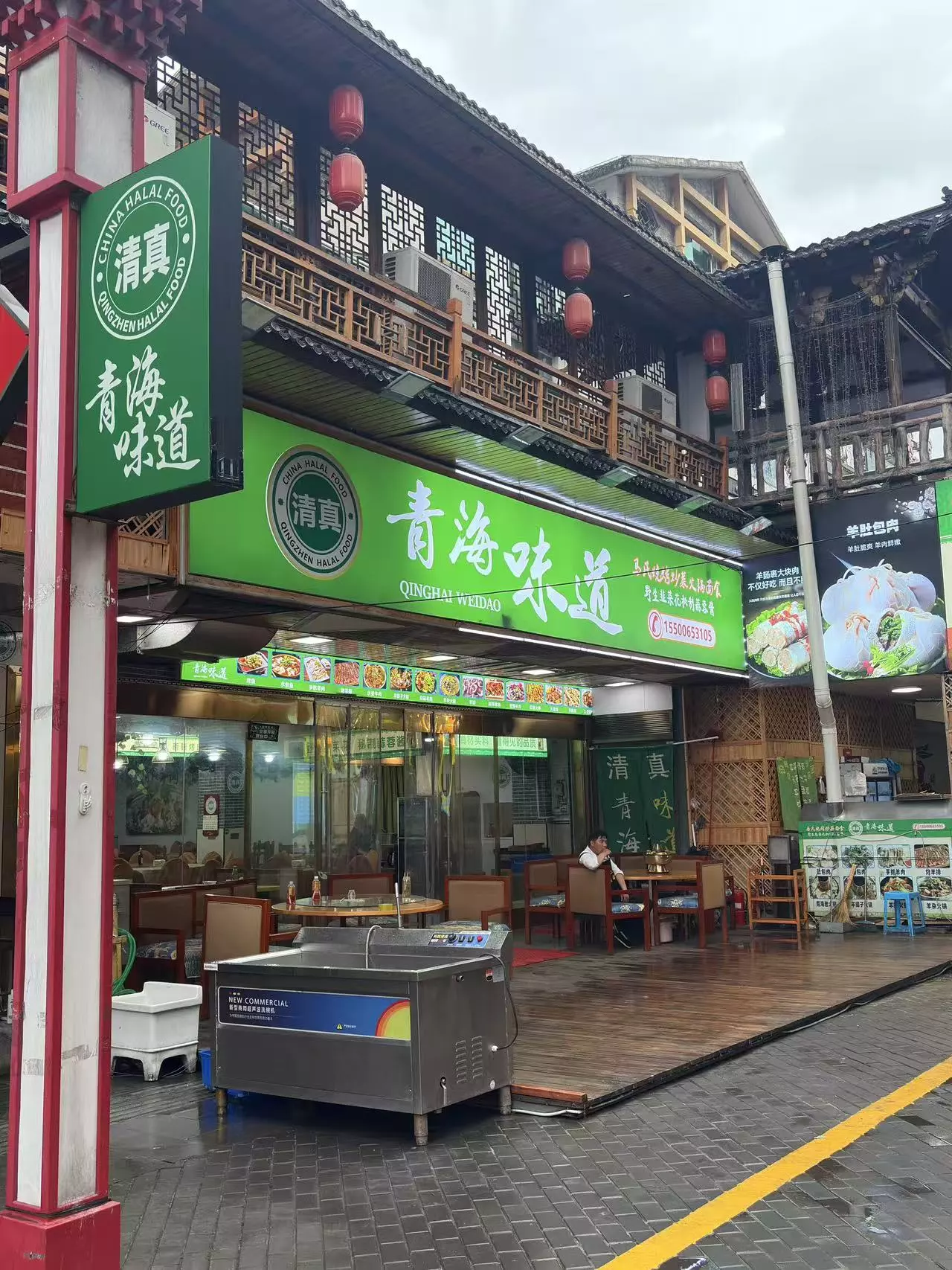
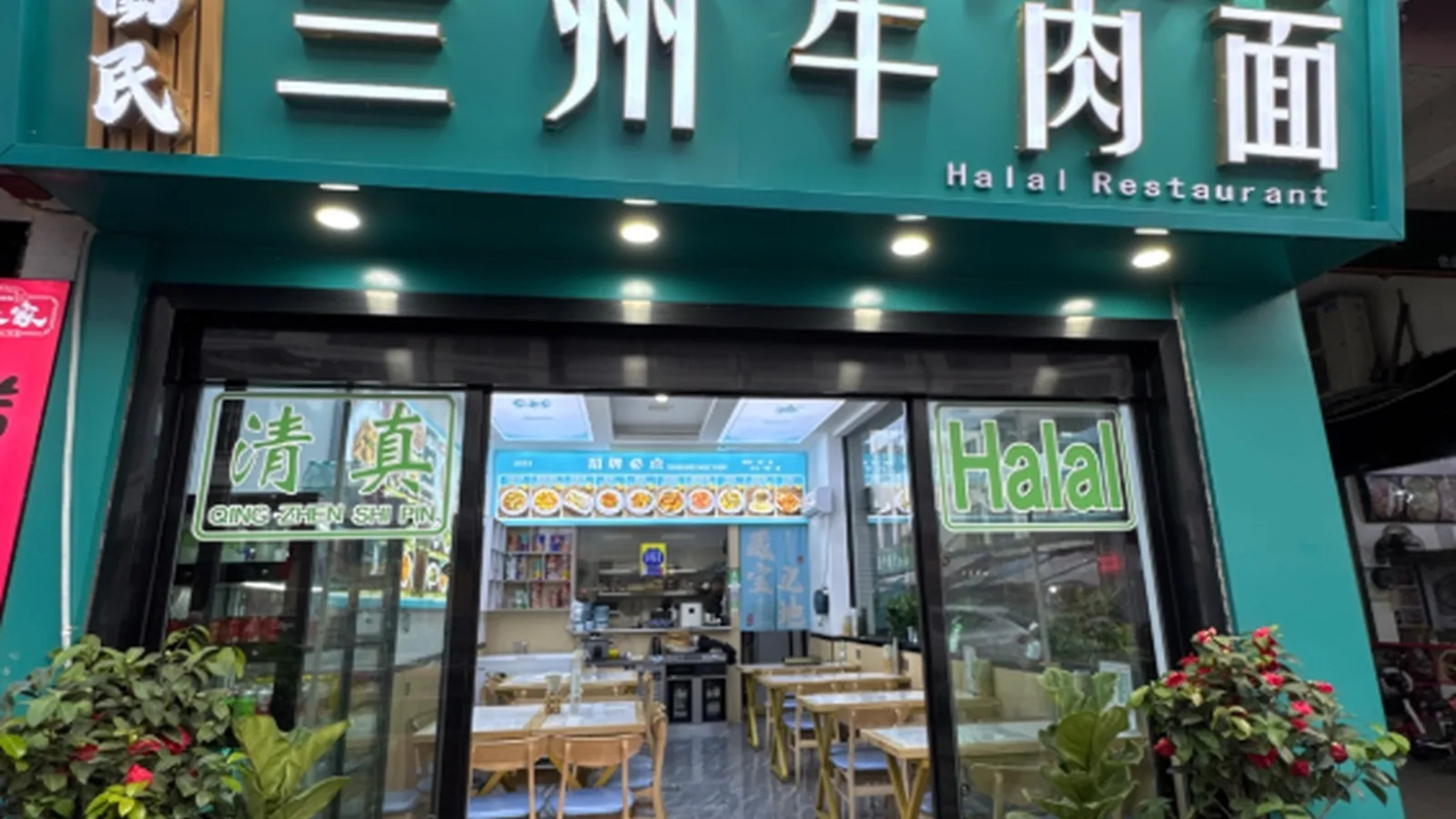
China has no national halal certification body, so you will not find a JAKIM- or MUI-style logo on the door. The working marker is the green 清真 (qīngzhēn) sign, usually with Arabic script, displayed by Muslim-owned restaurants — most run by Hui or Uyghur families. Qingzhen is a community standard: it means a Muslim-run kitchen holding itself to halal practice, not merely a “no pork” menu. For most travelers a qingzhen sign plus a Muslim owner is the working standard; if you follow a stricter rule, stick to the established Hui and Uyghur restaurants, and ask about meat sourcing and whether alcohol is served to other diners.
Two cautions save a lot of second-guessing. First, mainstream Han Chinese food defaults to pork and lard, and cooking wine is common even in beef and vegetable dishes — so a dish being meat-free or beef-based does not make it halal. Second, newer ramen-style “Lanzhou” chains have dropped the qingzhen branding; the name alone does not mean halal, so look for the sign. For the dish-by-dish detail — what to order, what to avoid, and the Chinese phrases to show staff — see our guide to halal Chinese food.
Halal Food in China, City by City
How hard halal food is depends almost entirely on which cities you choose and where you sleep. Here is the honest picture for the cities we cover, easiest first. Each links to a full area-by-area guide with restaurant names, addresses and current checks.
| City | How easy | Where the halal cluster is | The one thing to know |
|---|---|---|---|
| Xi’an | Easiest major city | The Muslim Quarter behind the Drum Tower | A thousand years of Hui kitchens — but a full Terracotta Warriors day has no halal lunch on site, so plan it |
| Guangzhou | Easy | Xiaobei, in Yuexiu district | Food clusters at Xiaobei while the main sights sit elsewhere — base yourself near the cluster |
| Beijing | Easy with planning | Niujie (Xicheng), plus central halal institutions | Halal Peking duck is real (at old halal houses) — but the Great Wall day is the food gap |
| Shanghai | Easy with planning | People’s Square and Nanjing East Road | No Muslim quarter; Yu Garden’s snack streets and the airports are the two gaps |
| Chongqing | Easy | The Muslim Building (民族大厦) at Jiaochangkou | Halal Chongqing hotpot exists here — you do not have to skip the city’s signature dish |
| Chengdu | Manageable | Around the old city-centre mosque | A real cluster, but confirm each restaurant before you rely on it — our Chengdu team checks on the ground |
| Hangzhou | Manageable | Two clusters: Phoenix Mosque and just east of West Lake | Know the two clusters before you arrive, or you lose an hour of your West Lake day hunting |
| Guilin | One street solves it | Chongshan Road — the 1735 mosque and the Hui kitchens around it | Anchor to that kilometre; Yangshuo is thinner, so carry the names in advance |
| Suzhou | A little harder | No quarter — a Xinjiang chain on both sides, plus Lanzhou noodle shops | Easiest handled as a day trip from Shanghai rather than a separate food base |
| Zhangjiajie | Hardest (scenic) | Town restaurants only — none inside the parks | Plan every park day’s meals before you enter; there is no halal food inside the forest park or on Tianmen Mountain |
The pattern holds nationwide: the large and historically Muslim-trading cities are comfortable once you know the cluster, while scenic and smaller places need the meals planned in advance. A Muslim-run Lanzhou beef-noodle shop — green sign, no pork, no alcohol, open early and late — is the safety net in almost every district of almost every city, so you are rarely more than a short walk from one reliable meal.
The Signature Dishes: What You Can Actually Eat
The worry most travelers arrive with is that China’s famous dishes are off-limits. Most are not — you just eat them in a halal kitchen rather than the famous mainstream one.
- Peking duck — yes. Mainstream duck houses roast in kitchens that handle pork, but Beijing’s old halal restaurants have served fully halal roast duck for generations. See the Beijing halal food guide.
- Hotpot — yes. Halal copper-pot mutton hotpot (Beijing and Shanghai) and halal Chongqing hotpot both exist; our halal hotpot in China guide explains which pots are genuinely halal and which cities do it best.
- Lanzhou beef noodles — the everyday workhorse, Hui- and Salar-run, found everywhere with the green sign.
- Xinjiang and Northwest food — lamb skewers, big-plate chicken, hand-pulled noodles and naan: a naturally halal tradition and the most reliable sit-down option in cities without a dense cluster.
- Cantonese dim sum — the one to plan. Mainstream dim sum is not halal, but Guangzhou’s Xiaobei has Muslim-run options; outside that, treat dim sum as a looking-not-eating experience unless a kitchen is verified.
The Hard Days: Scenic Areas, Old Towns and Transfers

City food is the easy part. The days that go wrong are the ones spent inside a scenic area, on a cableway, or crossing between cities. Zhangjiajie is the clearest example: you can be inside the forest park for eight hours, and there is no halal restaurant in it — so breakfast is substantial, lunch is carried or planned for a specific exit, and dinner depends on whether you sleep in Wulingyuan or the city. The same logic covers old-town nights (Fenghuang, Furong) and long train or flight transfers, where a late arrival can leave you with only the sealed snacks you brought.
A workable rule for the hard days: eat a proper halal meal before you enter, carry simple backup food (dates, bread, nuts, fruit), and decide the next real meal’s location and time before the day begins rather than hoping to improvise. For Zhangjiajie specifically, pair the Zhangjiajie travel guide with our halal restaurants in Zhangjiajie list when you choose a hotel.
Planning a Multi-City China Trip Around Halal Meals
If your trip is one city, this guide and the city link are enough. The planning gets real when you combine several cities with a scenic leg — a Shanghai-and-Zhangjiajie trip, or a Xi’an-Beijing-mountains loop — because each added city means new clusters to learn and each scenic day means a meal to pre-arrange. The method that works is simple: match each day’s restaurants to that day’s location, keep the Lanzhou-noodle safety net in mind for gaps, and protect the hard days with a plan rather than hope.
That matching — hotel area, sightseeing order, meal timing and prayer windows fitted together before anything is booked — is what our local teams do for every group we run. If your route crosses several cities, includes elderly parents or children, holds a strict halal standard, or has tight trains and late arrivals, send us your dates and city list on WhatsApp and we will check the halal options along each day’s route before you fly — we reply within 24 hours, usually faster.
FAQ
Is it easy to find halal food in China?
In the right cities, yes. Xi’an, Guangzhou, Beijing, Shanghai and Chongqing all have real halal clusters, and Muslim-run Lanzhou noodle shops are found in nearly every district nationwide. The difficulty is distribution — food concentrates in one area per city rather than being everywhere — plus scenic days, where you plan meals before entering.
Which Chinese cities are easiest for halal food?
Xi’an is the easiest major city, with a thousand-year-old Muslim Quarter. Guangzhou (Xiaobei), Beijing (Niujie), Shanghai (Nanjing East Road) and Chongqing (the Muslim Building) are all comfortable once you know the cluster and book your hotel near it.
Can Muslims eat Chinese food in China?
Yes, but Chinese food is not automatically halal — mainstream Han cuisine defaults to pork, lard and cooking wine. Eat the signature dishes (Peking duck, hotpot, noodles) at qingzhen Muslim-run kitchens rather than the famous mainstream versions.
Can you eat halal Peking duck and hotpot?
Yes to both. Beijing’s old halal restaurants serve fully halal roast duck, and halal copper-pot mutton hotpot and halal Chongqing hotpot both exist. See our Beijing and halal hotpot guides for the specific restaurants.
What about halal food at scenic areas like Zhangjiajie?
There is no halal restaurant inside Zhangjiajie’s forest park or on Tianmen Mountain, so those days are planned: a big halal breakfast, carried backup food, and dinner arranged around your hotel area. The city and towns have halal restaurants; the parks do not.
Is there a halal certificate system in China?
No national one. The practical marker is the green qingzhen sign on Muslim-run restaurants. It means a Muslim-run kitchen, not a formal certificate, so treat it as where you start asking — especially if you follow a stricter standard.