Last Updated on October 5, 2026 by Aaron Chen
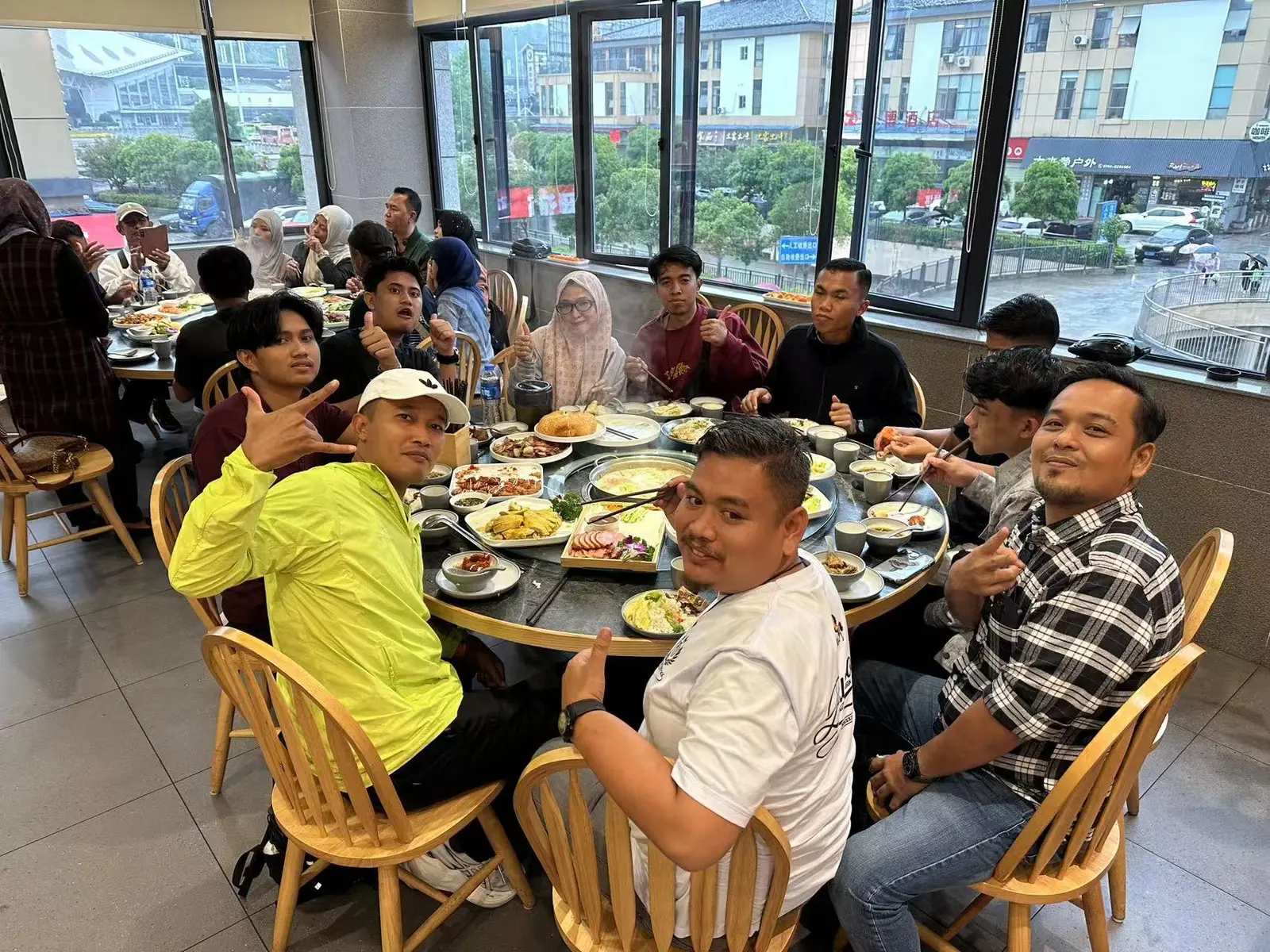
Is Chinese food halal? Not automatically — but a great deal of it is, and the famous dishes you are worried about mostly have a halal version. The short answer is that China has deep Muslim food traditions (the whole Northwest cuisine, the Hui and Uyghur kitchens found in every big city), while mainstream Han cooking defaults to pork, lard and cooking wine. Eat in the first and you are fine; the skill is telling them apart. This guide explains how to spot a halal kitchen, which dishes you can actually order, what to avoid, and the exact Chinese phrases to show the staff.
Quick Answer: Is Chinese Food Automatically Halal?
No. Some Chinese restaurants are halal or Muslim-run, and many classic dishes have a halal version — but plenty of ordinary dishes use pork, lard, cooking wine, mixed meat stock, shared oil or non-halal sauces. So a dish being beef-based, noodle-based or even vegetable-based does not make it halal on its own. The reliable approach is to eat at Muslim-run (qingzhen) restaurants, order the dishes those kitchens are built around, and ask before you assume. The rest of this guide makes each of those three steps concrete.
How to Spot a Halal Restaurant: the 清真 Sign
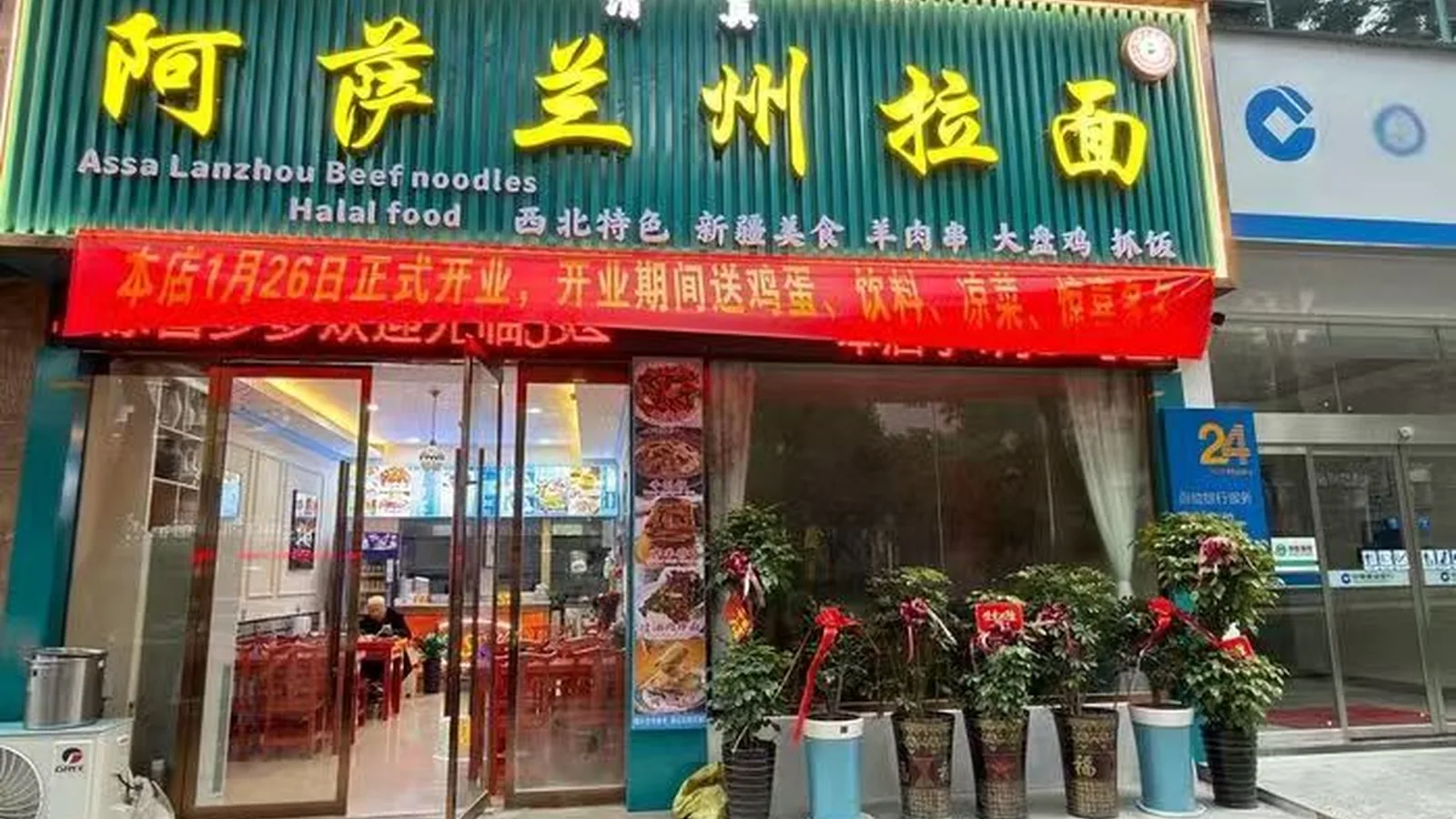
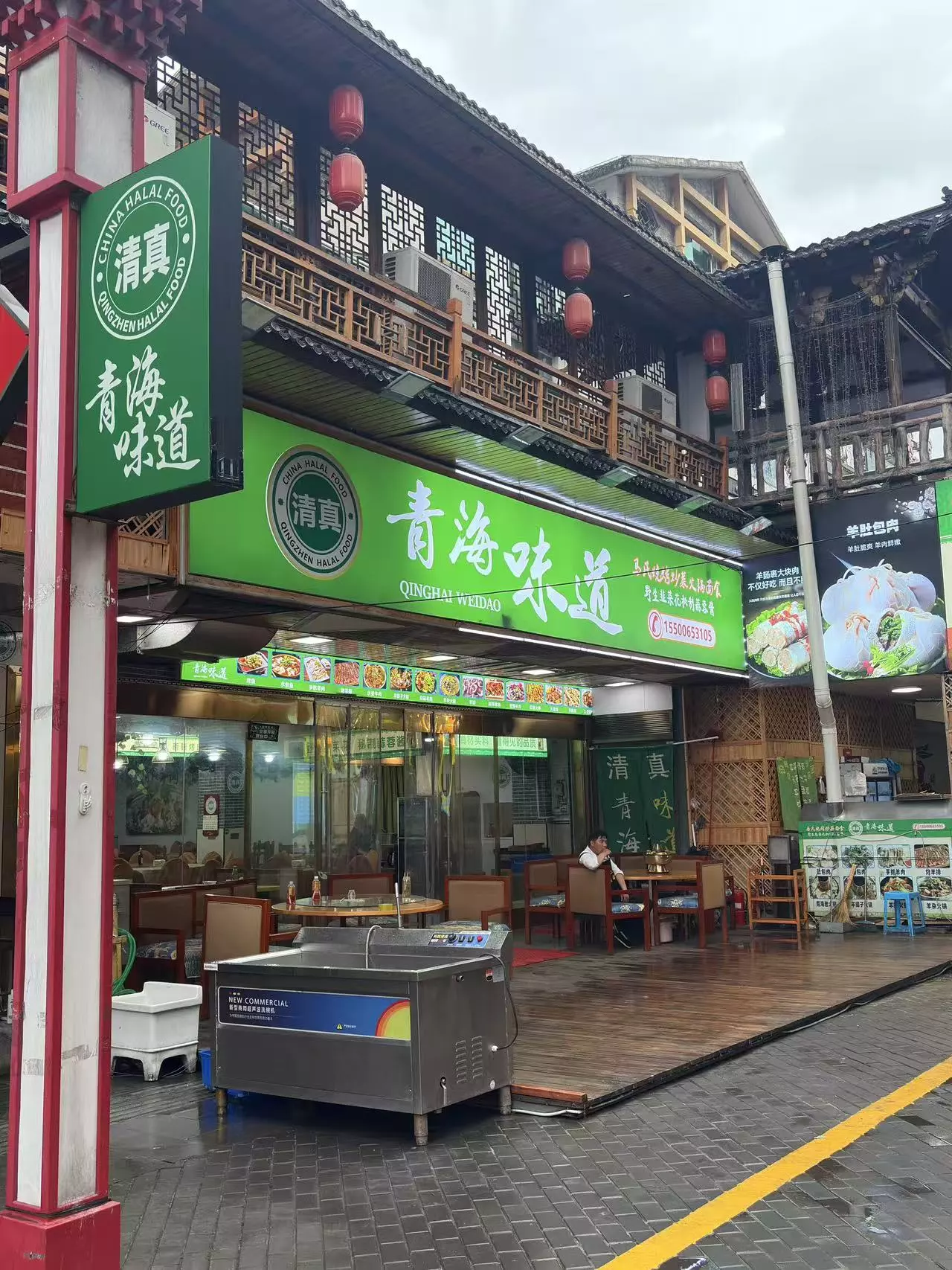
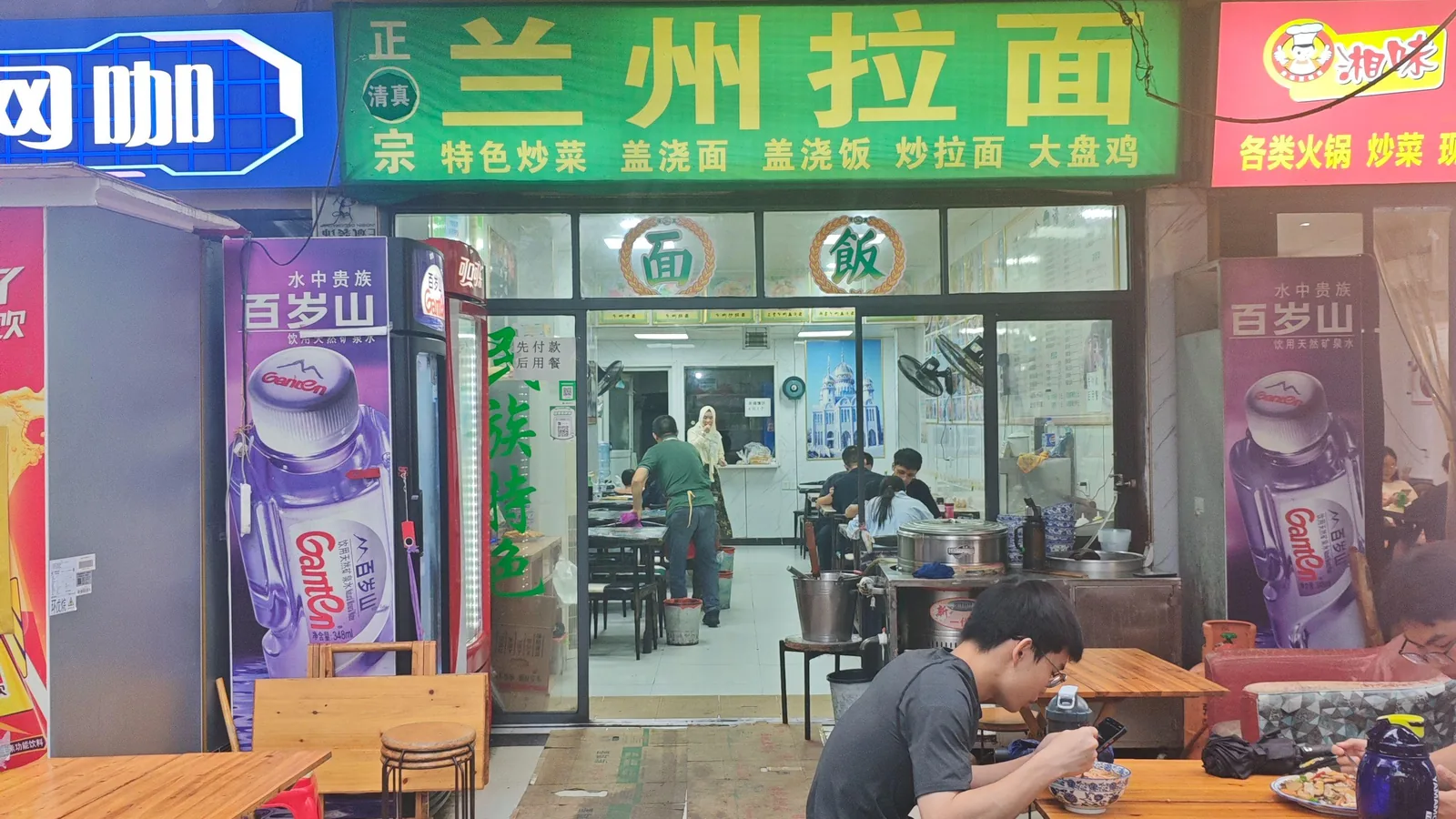
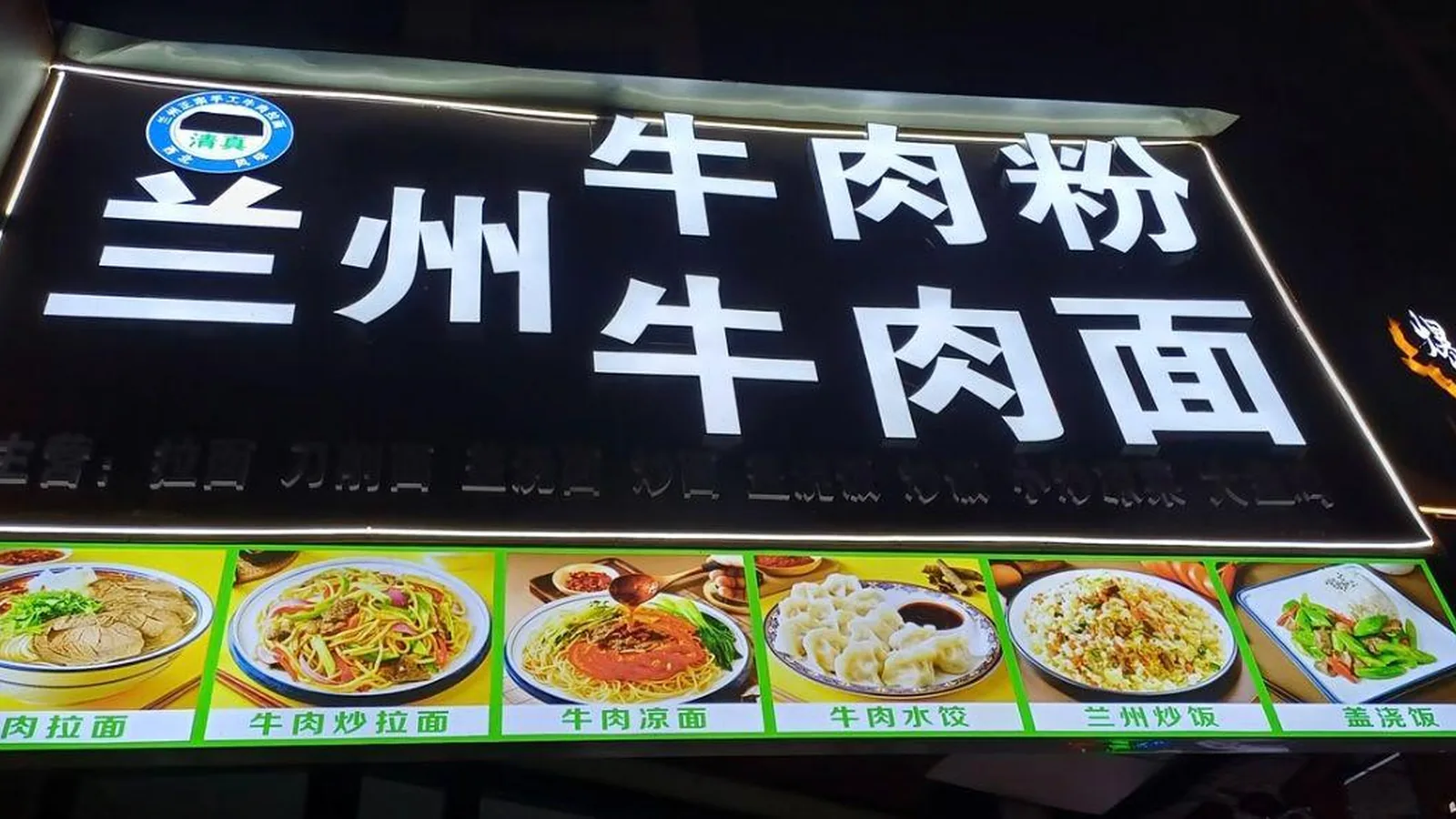
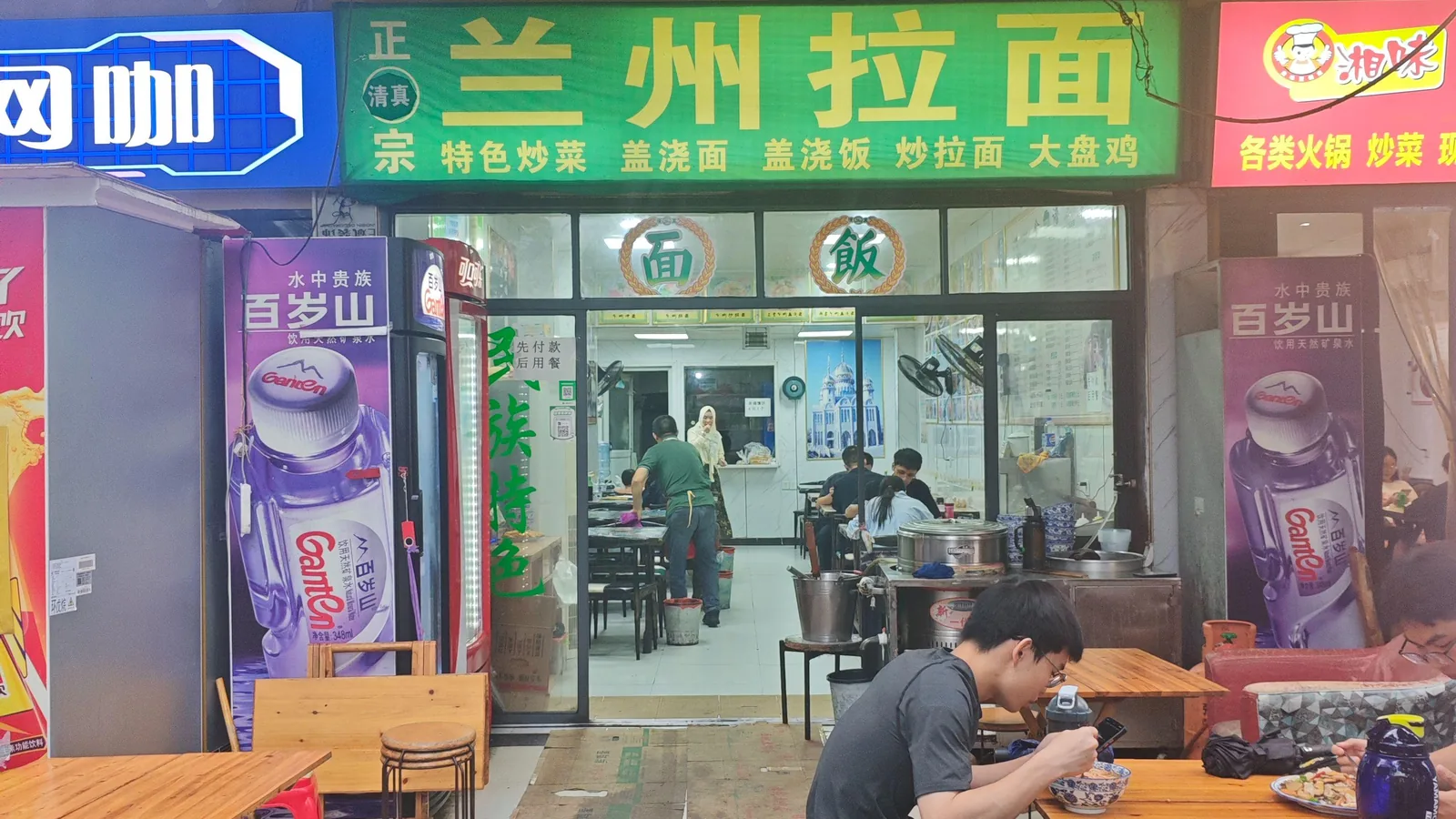
China has no national halal certification body, so you will not find a JAKIM- or MUI-style logo on the door. The working marker is the green 清真 (qīngzhēn) sign, usually with Arabic script, displayed by Muslim-owned restaurants — most run by Hui or Uyghur families. Qingzhen is a community standard: it means a Muslim-run kitchen holding itself to halal practice, not merely a “no pork” menu. For most travelers a qingzhen sign plus a Muslim owner is the working standard; if you follow a stricter rule, stick to the established Hui and Uyghur restaurants and ask about meat sourcing. One caution: newer ramen-style “Lanzhou” chains have dropped the qingzhen branding, so the name alone does not mean halal — look for the sign, not just the word.
What You Can Order: Halal Chinese Dishes by Type
There is no single list of “safe” dishes, because preparation changes by kitchen. But inside a qingzhen restaurant, these are the categories built on halal practice — what you came to China to eat, done properly.
- Lanzhou beef noodles (兰州牛肉面) — the everyday workhorse: hand-pulled beef noodles in a clear broth, Hui- and Salar-run, no pork, no alcohol, open early and late. The single most reliable meal in any city.
- Xinjiang and Northwest dishes — lamb skewers (羊肉串), big-plate chicken (大盘鸡), hand-pulled laghman noodles (拉条子), hand-grabbed lamb (手抓肉), pilaf (手抓饭) and naan (馕): a naturally halal tradition and the most reliable sit-down option everywhere.
- Halal versions of the famous dishes — the ones travelers fear they must skip, but needn’t: halal Peking duck in Beijing (roasted in old halal houses), halal copper-pot and Chongqing hotpot, and Muslim-run dim sum in Guangzhou’s Xiaobei. You eat them in a halal kitchen, not the famous mainstream one.
The trap worth knowing — same name, different meat. Some dishes exist in both a halal and a pork version under the same name. The clearest is roujiamo (肉夹馍): inside Xi’an’s Muslim Quarter it is made with braised beef, while the citywide version is pork by default — same name, same look, different meat. Dumplings, baozi and wontons are pork-filled unless a qingzhen kitchen makes them. Always read the restaurant, not just the dish name.
What to Watch For in Mainstream Restaurants
If you do end up in an ordinary (non-qingzhen) restaurant, these are the defaults that catch travelers out: pork appears in fillings, broth and small ingredients even when the dish name does not mention it; lard is common in noodles, pastries and fried vegetables; cooking wine goes into many stir-fries, including beef and vegetable dishes; and oil, woks and grills are shared across pork and non-pork orders. This is why “vegetarian” or “beef” alone is not a halal signal in a mainstream kitchen — the fat and the wok are shared.
The Verification Checklist
When a restaurant is not an obvious qingzhen kitchen, run through this before ordering. These questions are not confrontational — they just prevent accidental assumptions.
| Check | Why it matters | What to ask |
|---|---|---|
| Pork | Appears in fillings, broth, sauces and small ingredients | Does this contain pork or pork broth? |
| Lard | Used in noodles, pastries, frying and vegetables | Is this cooked with lard or animal fat? |
| Alcohol | Cooking wine is common in meat and stir-fries | Is cooking wine used? |
| Soup stock | Noodle soup and hotpot can use mixed or pork stock | What is the soup base made from? |
| Meat sourcing | Beef, lamb and chicken are not automatically halal | Is the meat halal by Muslim standards? |
| Shared oil / wok | Equipment may be shared with pork dishes | Is this cooked separately from pork? |
| Opening hours | A plan fails if the kitchen is closed at your meal time | Will it be open at this meal time? |
Chinese Phrases to Show Restaurant Staff
English rarely works in small kitchens. Save these on your phone and show the screen — it is faster and clearer than speaking.
- 这是清真的吗? (Zhè shì qīngzhēn de ma?) — Is this halal?
- 我是穆斯林,不吃猪肉。 (Wǒ shì mùsīlín, bù chī zhūròu.) — I am Muslim, I don’t eat pork.
- 有牛肉 / 羊肉吗? (Yǒu niúròu / yángròu ma?) — Do you have beef / lamb?
- 不要放猪油和料酒。 (Bú yào fàng zhūyóu hé liàojiǔ.) — Please don’t use lard or cooking wine.
- 汤是用什么熬的? (Tāng shì yòng shénme áo de?) — What is the soup base made from?
If the staff are unsure, choose another option. A polite thank-you and a backup plan beat forcing a meal decision.
Where to Eat: City by City
Knowing what to order is half the job; the other half is knowing where each city keeps its halal cluster, so your hotel sits near the food. Our halal food in China guide maps that city by city — from Xi’an’s Muslim Quarter to Zhangjiajie’s scenic-day workarounds — and links the full restaurant list for each place.
If your route crosses several cities or includes scenic days where lunch is hard to control, send us your dates and city list on WhatsApp and we will check the halal options along each day’s route before you fly — we reply within 24 hours, usually faster.
FAQ
Is Chinese food halal?
Not automatically. Mainstream Han cooking defaults to pork, lard and cooking wine, but China has strong halal traditions — Northwest and Xinjiang cuisine, and Hui- and Uyghur-run restaurants in every big city. Eat at qingzhen (Muslim-run) kitchens and the famous dishes mostly have a halal version.
Is beef noodle soup always halal in China?
No. Lanzhou beef noodles from a qingzhen shop with the green sign are reliable, but check the sign — newer ramen-style “Lanzhou” chains have dropped the qingzhen branding, and in a mainstream shop the broth and meat are not guaranteed halal.
Is hotpot halal in China?
Yes, in a halal hotpot house. Halal copper-pot mutton hotpot (Beijing, Shanghai) and halal Chongqing hotpot both exist. Ordinary hotpot restaurants use mixed broths, pork products and shared utensils, so choose a qingzhen hotpot kitchen.
Are vegetarian dishes halal in China?
Not automatically. Vegetables in a mainstream kitchen may be cooked with lard, pork stock, cooking wine or shared oil. In a qingzhen kitchen they are fine.
Can I rely on an Arabic-style sign?
The green qingzhen sign is a genuine clue — it marks a Muslim-run kitchen. Treat it as where you start, not a formal certificate: if you follow a stricter standard, still ask about meat sourcing and whether alcohol is served to other diners.