Last Updated on October 5, 2026 by Aaron Chen
The honest answer on halal food in Changsha is that it is real, but scattered. There is no Xi’an-style Muslim street here — no single quarter to wander and eat your way through. Heading on to the mountains? Our Changsha to Zhangjiajie guide covers trains, stations and where to stock up before the ride.
So your job as a Muslim traveler passing through, often on the way to Zhangjiajie, is not to find one district but to know the handful of spots worth a small detour.
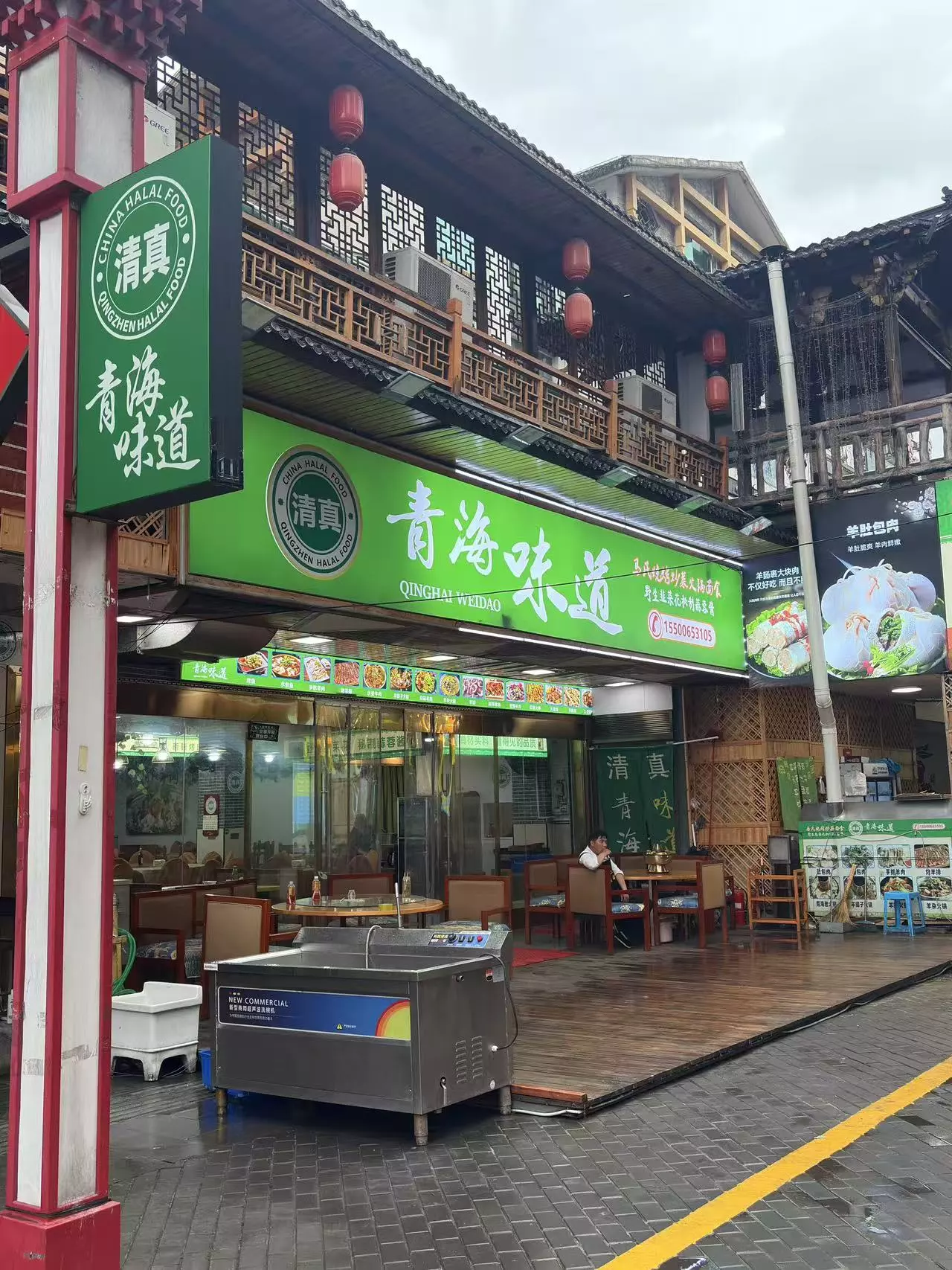
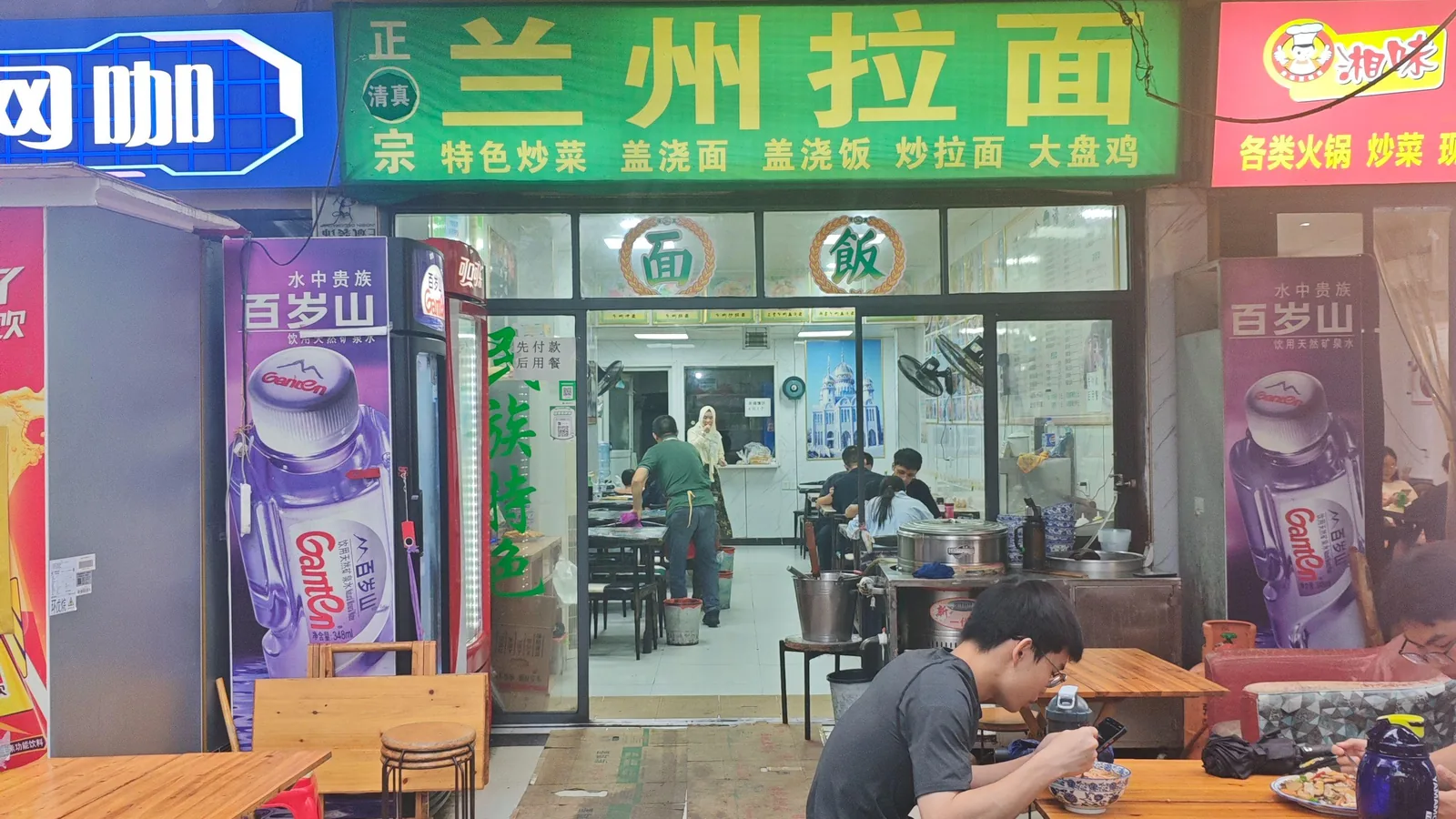
The food you’ll eat is Northwest and Xinjiang — mutton kebabs, naan, hand-pulled noodles, big-plate chicken — not the stinky tofu and crayfish Changsha is famous for. A green-labeled 兰州拉面 (Lanzhou noodle) shop is your reliable fallback almost anywhere.
Plenty of families worry about going hungry here. You won’t — but you do need to plan around the scatter, not stumble onto it.
Where to Find Halal Restaurants in Changsha
Changsha’s halal restaurants sit in three loose pockets: a Furong cluster along Wuyi Avenue, a scatter across Tianxin, and a meal-and-prayer anchor at the Huilongshan Mosque in Yuhua. Around 40 Muslim food businesses operate citywide and about a dozen carry the provincial halal brand — enough to eat well, but spread too thin to form a walkable quarter.
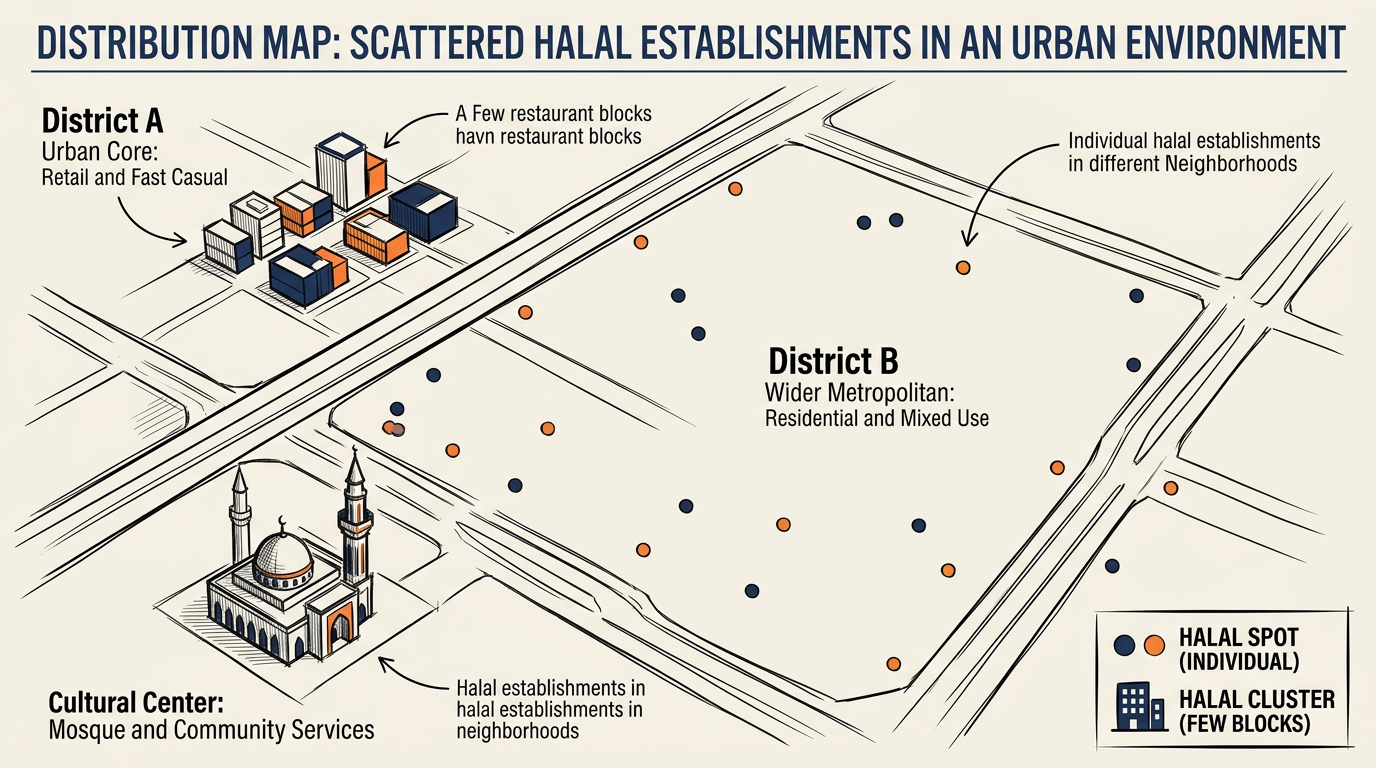
The Furong pocket is the closest thing Changsha has to a cluster. Three sit-down halal restaurants sit within a few blocks of Wuyi Avenue, near the city center, so a lunch here slots neatly into a day of central Changsha sightseeing.
| District | Halal spot | Known for | Rough price |
|---|---|---|---|
| Furong (Wuyi Ave) | Ka Xi Mu 咖稀穆 | Lamb leg, kebabs, naan | ~155 CNY |
| Furong (Wuyi Ave) | Avanti 阿凡提 | Pilaf, lamb shashlik | ~54 CNY |
| Furong (W Wuyi Rd) | Donglaixing 东来兴 | Kebabs, big-plate chicken | ~40 CNY |
| Tianxin | Xinjiang Yakshi 亚克西 | Shashlik, shaved noodles | ~40 CNY |
| Tianxin | Lihesheng 利和生 | Long-standing Hui kitchen | Varies |
| Yuhua | Qingzhensi at Huilongshan Mosque | Meal + prayer | Varies |
One name confuses people online: Ka Xi Mu shows up at two different addresses. Both are real branches — 274 Wuyi Avenue in Furong, and No. 375 West Laodong Road across town — so pick whichever is nearer rather than worrying which listing is wrong.
The West Laodong Road branch is the one Muslim groups rate most highly, with a 4.8-out-of-5 score and a steady “best halal in town” reputation.
The Yuhua option is different. The Qingzhensi restaurant sits on the grounds of the Huilongshan Mosque (回龙山清真寺) — the one place to pair a halal meal with prayer in a single stop. Build a Yuhua morning around it if prayer matters to your family.
Whatever you pick, treat addresses, hours and prices as things to confirm — a quick “清真吗?” (Is it halal?) on arrival beats any online listing.
What Halal Food to Order in Changsha
What you’ll actually eat halal in Changsha is Northwest and Xinjiang food, not the local Hunan cuisine. The same handful of dishes turns up on nearly every halal menu in the city:
- Mutton kebabs — the first thing to order
- Xinjiang naan — chewy flatbread, good to carry
- Hand-pulled and shaved noodles — the everyday staple
- Pilaf (手抓饭) — rice with lamb and carrot
- Big-plate chicken (大盘鸡) — braised chicken with potato, green pepper and wide noodles
The part that surprises first-timers is that there is no genuine halal Hunan dish to hunt for. The spice you’ll taste is Xinjiang cumin-chili, not Hunan pork-and-chili — and it’s still very good eating.
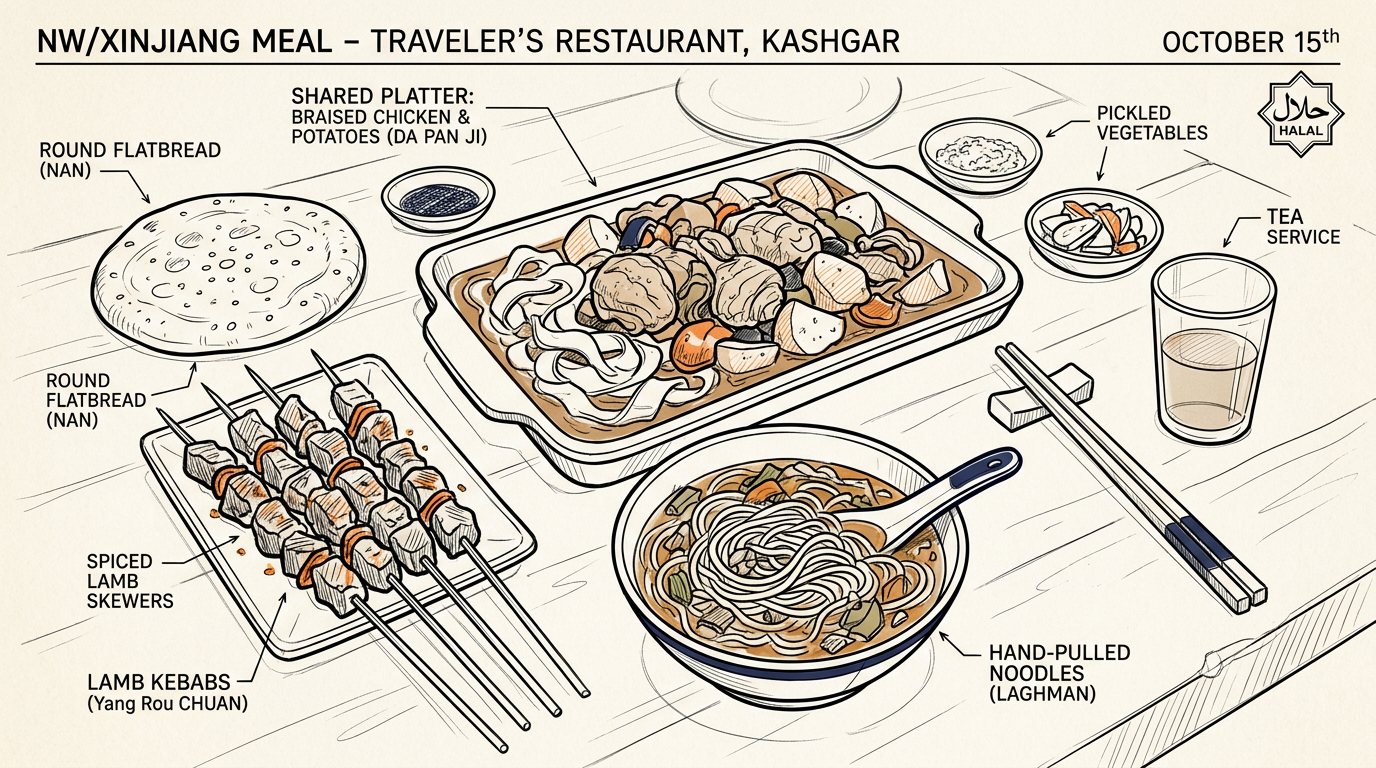
Halal Chinese food varies enormously by region, and Changsha’s happens to be Northwest.
When no named restaurant is near, the reliable fallback is a 兰州拉面 (Lanzhou noodle) shop with a green 清真 sign. These are Hui-run, common in every part of the city, and serve hand-pulled beef noodles in a clear stewed broth, plus kebabs and often big-plate chicken.
A green-labeled noodle shop is the meal I point families to when the map doesn’t cooperate — dependable, cheap, and everywhere.
How to Tell If a Place Is Genuinely Halal
A place is genuinely halal when it shows a green 清真 (qīngzhēn) sign — ideally with a crescent and a government or China Islamic Association certificate — and is run by Hui staff. Treat that sign as where you start asking, though, not a full guarantee.
The quick spoken check is “清真吗?” — “Is it halal?”
To explain “no pork, no lard” clearly, point to a dish and show the staff this line: “我是穆斯林,我需要清真食品。这道菜是清真的吗?不能有猪肉、猪油或酒。”
In English: “I’m Muslim and need halal food — is this dish halal, with no pork, lard, or alcohol?”
A green sign shows a place aims to serve halal food; it does not certify the kitchen. In braised or stir-fried dishes especially, ask about:
- Lard (猪油) — a common cooking fat in Chinese kitchens
- Pork-bone broth — it hides in noodle soups
- Cooking wine (料酒) — splashed into braises and marinades
So ask on the spot rather than assume — a friendly “清真吗?” rarely offends and often saves you. The same green 清真 sign marks halal kitchens in every Chinese city, so the habit travels with you across the rest of your China trip.
Are Changsha’s Famous Food Streets Halal?
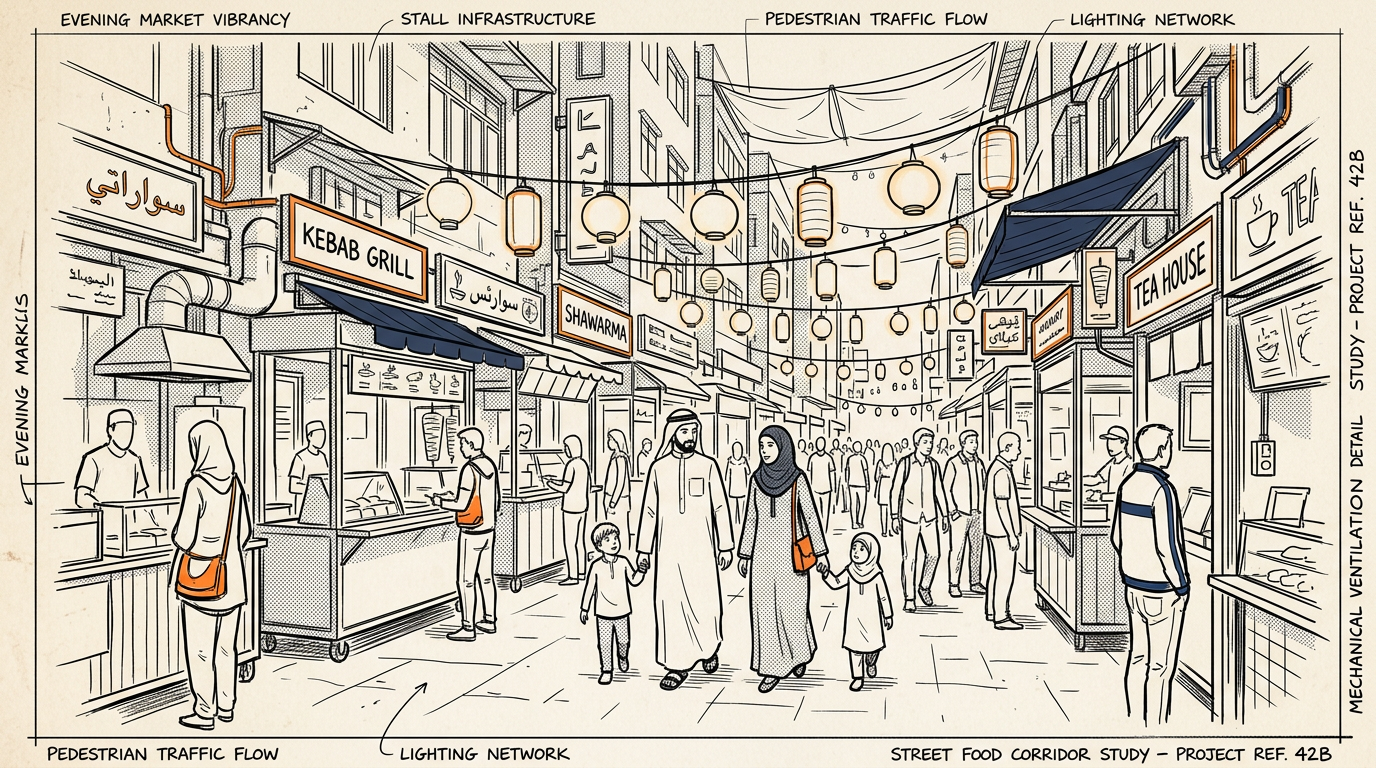
No — Changsha’s celebrated food streets are built on pork dishes and food with no halal certification, so they are for looking, not eating. Wenheyou, Taiping Old Street and the Fire Palace are the heart of the city’s food scene, and almost nothing on them is halal.
The signature foods are exactly the ones a Muslim traveler skips:
- Wenheyou (文和友) — crayfish and jumbo pork sausages
- Taiping Old Street (太平街) — Shao Fu Ji’s preserved-pork snacks
- Fire Palace (火宫殿) — fried stinky tofu, usually cooked with non-halal ingredients
- 茶颜悦色 (Sexy Tea) — the famous milk-tea chain has no halal certification, so check the ingredients yourself; either way it is a drink, not a meal
Walk them anyway — the crowds, the neon and the smells are half of what makes Changsha Changsha. Just eat a proper halal meal before you set out, because options thin out inside the parks and attractions.
Which halal spots sit near each day’s plan is a five-minute answer — send your route on WhatsApp and we’ll mark them for you.
The upside: most Muslim travelers are only in Changsha for a day or two before heading to the mountains. If Zhangjiajie is next on your route, our 5-day Zhangjiajie & Fenghuang private tour takes over from here — every halal meal on the route is arranged in advance.
What First-Time Visitors Get Wrong
The mistake first-timers make is arriving hungry for local Changsha food and expecting a halal version of it. There isn’t one — decide before you go that this is a Northwest-food trip, and the disappointment disappears.
Anchor each day around one deliberate halal meal — a Wuyi Avenue lunch, or a meal and prayer at the Huilongshan Mosque — and keep a 兰州拉面 shop in mind for the gaps.
Confirm every spot with “清真吗?” rather than trusting a signboard, and you’ll eat well in a city that looks, on paper, like it has nowhere for you.
The real shift is simple. Changsha never asks you to find a Muslim quarter — just to plan one good meal at a time.