Last Updated on October 6, 2026 by Aaron Chen
Yes — you can wear your hijab anywhere tourists go in China. Nobody will ask you to take it off in the street, and in cities with large Chinese Muslim communities you will see local women in headscarves going about an ordinary Tuesday. We arrange trips for Muslim travelers across China, many of them women and family groups, and in our experience the hijab itself has never been the problem a first-time visitor fears it will be. The questions actually worth preparing for are smaller and more practical: what happens at ID checks, how a face veil differs from a headscarf here, and what to expect from curious strangers in less international cities. Let’s take them one at a time.
If your worry is broader than the hijab — whether China works for Muslim travelers at all — start with our overview of halal travel in China and come back here for the specifics.
The Short Answer: Tourists Wear the Hijab All Over China
There is no national rule against the hijab for visitors — no permission to seek, nothing to register, nothing to explain. China has tens of millions of Muslims, and in cities like Xi’an and Xining, where Hui Muslim communities have lived for centuries, women in headscarves are part of the everyday street scene: running restaurants, riding the metro, picking children up from school. In Xi’an’s Muslim Quarter your hijab will not earn a second glance.
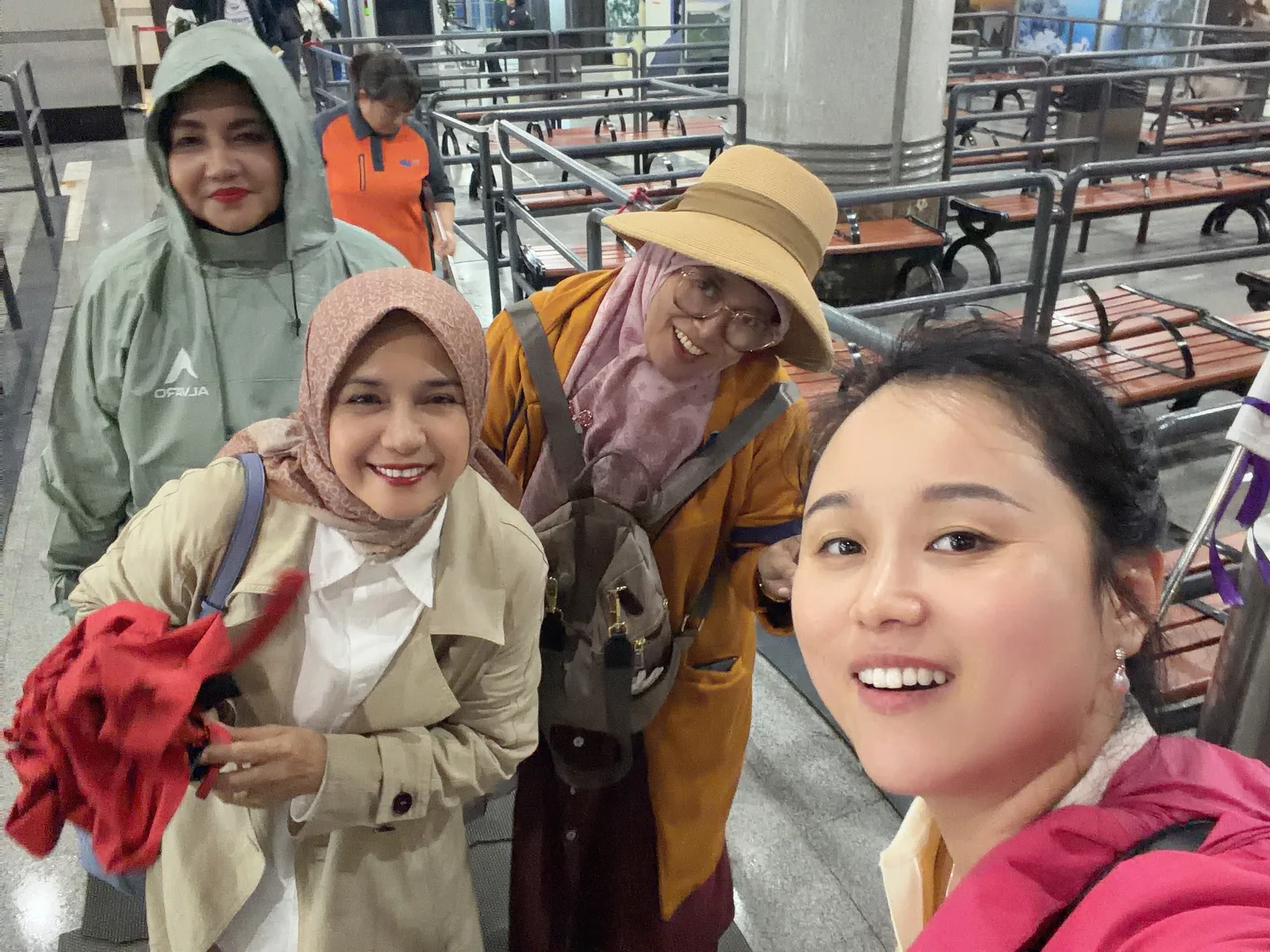
The same holds in the big tourist cities. Beijing, Shanghai, Chengdu, Chongqing, Guangzhou, and Zhangjiajie all receive Muslim visitors continuously — from Malaysia, Indonesia, the Gulf, South Asia, the UK — and hotel receptionists, guides, and airport staff in these places are used to hijab-wearing guests. You will not be a novelty at the check-in desk.
One thing worth knowing, though: out at the sights, you may sometimes catch someone quietly looking at you. It is almost never about the hijab. To many Chinese, especially visitors from towns that rarely see foreigners, any foreign face is simply interesting — travelers of every appearance get the same looks. It stays at a look, and there is no edge to it.
“But I Read About Hijab Bans” — What Those Headlines Were About
This worry is what brings most people to this page, so let’s answer it head-on.
The headlines you may have seen — mostly from 2015 to 2017 — reported local restrictions on full-face veils and burqas in Xinjiang, in China’s far west. Those measures were about full-face coverings, not the headscarf — and they are old news. Today, wearing a hijab has caused no issues for our guests anywhere we operate — Beijing, Chengdu, Zhangjiajie and beyond. We can say that from the ground, not from reading about it: across every region we operate in, we have never had a client’s hijab raise an issue with police, hotels, attractions, or transport. Not once. Xinjiang itineraries can be arranged on request.
The confusion is understandable: a headline says “veil banned in China,” and a reader in Kuala Lumpur or London naturally wonders whether her headscarf has become a legal problem for her holiday. It has not. What is worth understanding is the difference between the hijab and the full-face veil — more on that below.
What Day-to-Day Travel Actually Feels Like in a Hijab
Legality is one thing; comfort is another. Here is the honest picture from the trips we have hosted.
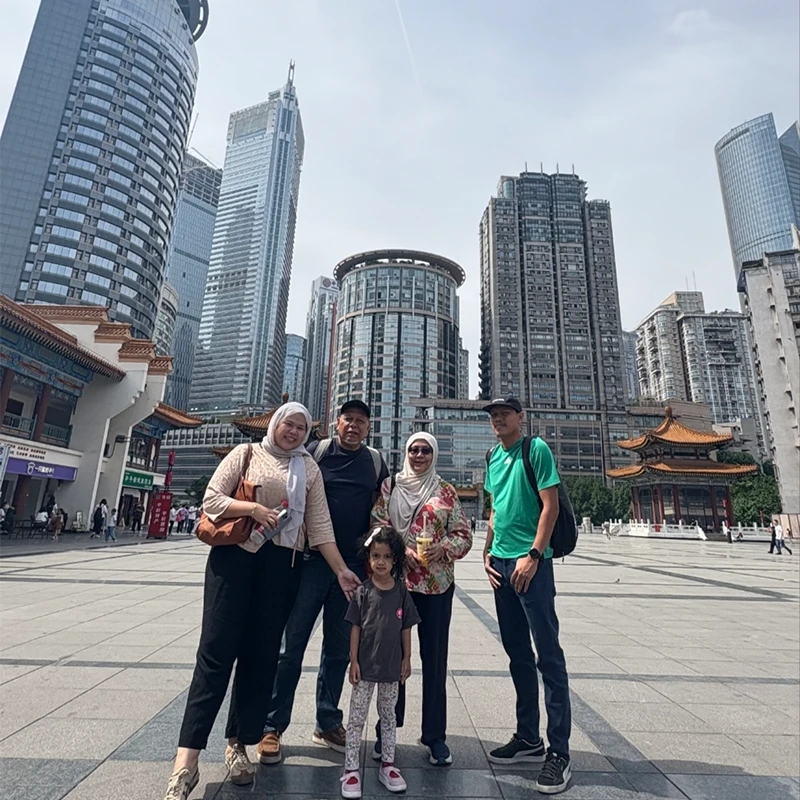
In the major cities, nothing happens. Staff serve you, crowds ignore you, and the only people who register your headscarf are other Muslims, who may greet you with a salam — Chinese Muslim restaurant owners often warm up noticeably once they realize who they are cooking for.
In smaller cities and rural scenic areas, the curiosity is more open. Some domestic tourists, especially older ones, may look longer than you are used to, and occasionally someone will ask — usually with gestures and a big smile — for a photo with you. It is friendly, a little clumsy, and in our experience never aggressive. If you would rather not be photographed, a smile and a wave of the hand ends it politely; it also helps to let your guide know you prefer privacy.
If You Are Traveling as a Family
Two notes for families, because most of our women guests travel with theirs. First, if you bring children, expect them to get more photo requests than your hijab ever will — cute kids are the real celebrities at Chinese tourist sites, so agree beforehand, as a family, on how you want to handle it. Second, if an older mother or grandmother who speaks no English is traveling with you, the intercity legs are usually the part families worry about. On our trips they work like this: the guide in each city sees you off at the station or airport, and in the next city the guide and driver are waiting at the exit. The only stretch you handle on your own is from the checkpoint to your seat — together, as a family, with clear directions from the guide.
Nobody can promise you what every stranger in a country of 1.4 billion will do. What we can say is that hostility over visible Muslim identity is not something our guests report back to us, in any city we operate in — and it is not a theme in what hijabi travelers write about China online either. The complaints are about the firewall and the smoking, not the headscarf.
ID Checks, Airports, and Your Visa Photo
The practical questions, in the order you will meet them:
Your visa photo. Religious head coverings are accepted in Chinese visa photos, provided your full face — chin to forehead — is clearly visible with no shadow across it. Wear your hijab pulled clear of your face, exactly as you would for a passport photo at home, and check the current photo specifications on the official Chinese Visa Application Service Centre site when you apply, as requirements do get updated from time to time.
Immigration and security. Anywhere in the world, an ID check needs to see the face that matches the passport, and China is no different. A hijab leaves your face fully visible, so there is nothing to remove and nothing to negotiate — you pass through immigration, hotel check-in (hotels photograph or scan every guest’s passport in China, regardless of what anyone wears), and train station ID gates without the headscarf ever coming up. Train travel in China is name-ticketed against your passport, so you will do this often; it is routine.
If you wear a niqab or full-face veil, the situation changes — see the next section.
On our own trips, the guide meeting you at the airport has your details and preferences in advance — though in honesty, headwear is a problem we prepare for far more often than we encounter.
Hijab vs. Niqab: the Distinction That Matters Here
If you wear a headscarf that shows your face, everything above applies and you can stop reading this section.
A niqab or other full-face covering is a different story in China, and we would rather tell you plainly now than have you find out at the airport. Face veils are extremely rare here, including among Chinese Muslim women, so a niqab will draw far more attention than a hijab. More concretely, any identity check — immigration, hotel registration, real-name train gates, some attraction entrances — will need your face briefly visible to match against your passport, so expect to lift the veil for a few seconds at each of those points, as you would at immigration in most countries. If this applies to you, tell us when we plan your trip: we will ask for female staff at checks where that option exists, and build in the time so it never becomes a scene. It is a request we would much rather receive early than improvise on the day.
Traveling as a Woman or an All-Women Group
Behind the “can I wear hijab there” question there is usually a bigger one: will I, as a visibly Muslim woman, be looked after properly? The honest answer to that is in how we work.
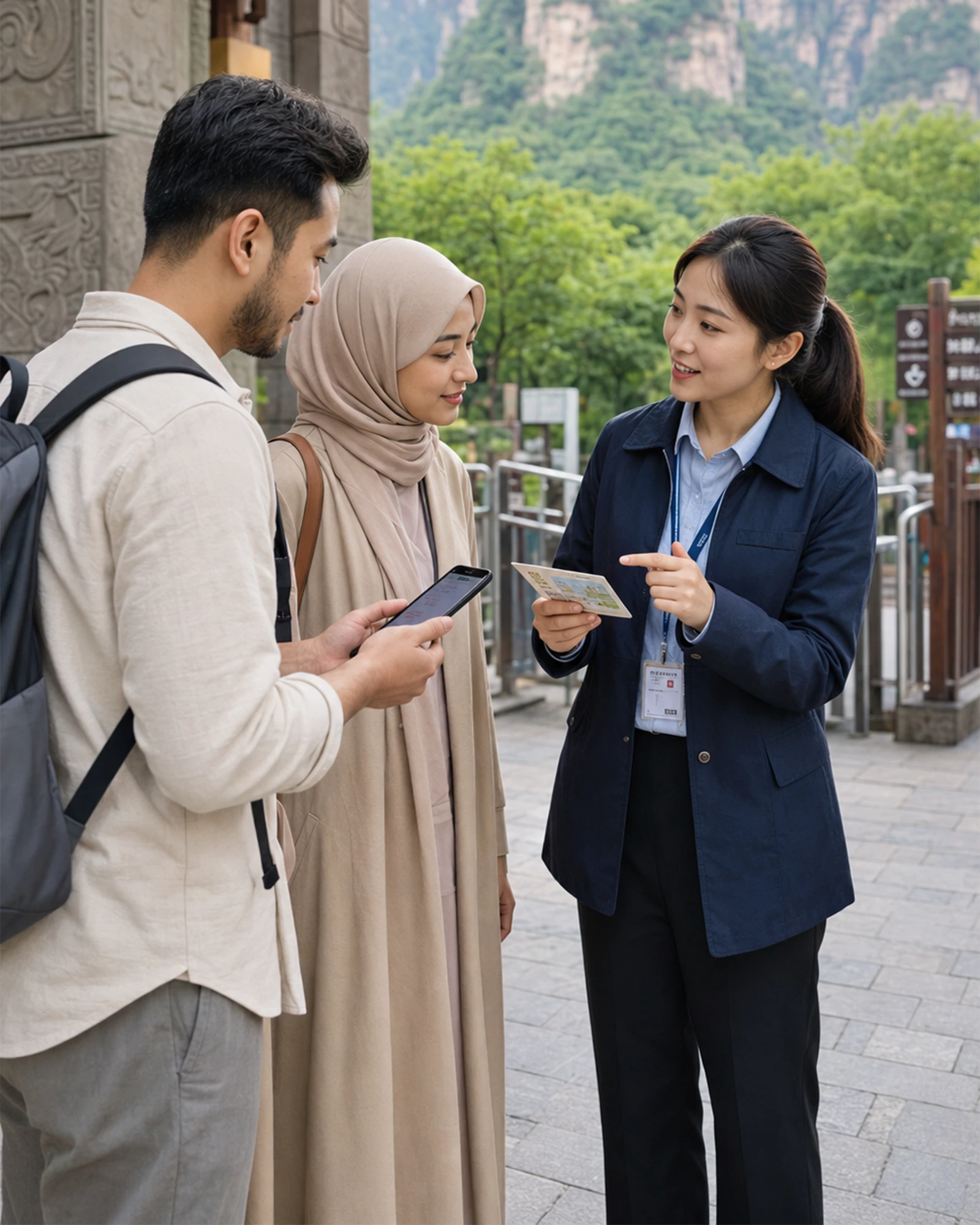
For all-women groups — sisters’ trips, mothers and daughters — we assign a female guide when asked, and for women-only groups we suggest it ourselves. This is not a hypothetical: one of our early bookings was a client who wanted a women-only day tour in Guangzhou, and a female English-speaking guide is exactly what we arranged. The limits deserve equal honesty: female guides are confirmed per city and per date, not promised as blanket coverage — which is why the request needs to reach us early in the planning, not the week you land.
The same principle runs through everything else: we understand what a hijabi traveler needs, but the hotel doorman or the boat operator may not. So the way it works is simple — you tell us your requirements once, and we brief each guide and driver on your route before you arrive. Prayer stops, restaurant choices, a female guide, no photos please: said once, handled throughout.
Common Questions
Is China friendly to Muslim travelers overall?
Broadly yes, with planning — halal food and prayer take more forethought than in Malaysia or the Gulf, and how easy it is varies sharply by city. See our honest city assessments of Chengdu and Chongqing for how we grade a city, question by question.
Will I have to remove my hijab at airport security in China?
No. Security and immigration need your face visible, which a hijab already allows. Metal detectors and pat-downs work the same as at any international airport.
Do Chinese Muslim women wear the hijab?
Many do, especially in Hui communities in the northwest and around mosques and halal districts elsewhere; styles range from loose scarves to full hijab. In those neighborhoods a visiting hijabi blends straight in.
The Bottom Line
Wear your hijab; pack your favorites. The headscarf is the part of a China trip that takes care of itself — the things worth planning are the ones nobody headlines: where dinner is, where you will pray at 1 pm on a travel day (usually the hotel room, or a quiet stop your driver builds into the route — it works, but only if it is planned), and whether your guide already knows your preferences before you land. Those are worth settling before you book anything. If you want to think them through with the team that would actually be arranging them, ask us how we plan trips for Muslim women and families — or keep reading about how halal food planning works across China to see what the day-to-day logistics look like.