Last Updated on October 5, 2026 by Aaron Chen
Yes — Malaysians can enter mainland China without a visa. If you hold an ordinary Malaysian passport valid for at least six months, you can stay up to 30 days per entry, with a cap of 90 days total within any 180-day period. This comes from the China–Malaysia mutual visa exemption agreement, in force since 17 July 2025 — and unlike the visa-free schemes many other nationalities rely on, it does not expire at the end of 2026. (Rules verified August 2026 against the Chinese Embassy in Malaysia and China’s consular service platform.)
That’s the short answer. The rest of this guide covers the details that decide whether your trip actually goes smoothly: how the 30 days are counted, when you still need a visa, the online arrival card, and the one thing visa-free entry doesn’t solve — eating and praying as a Muslim traveler once you’re in China.
How Long Is China Visa-Free for Malaysians? (Not Just Until 2026)
You’ll see many articles — and even Google’s AI summaries — say China is visa-free for Malaysians “until 31 December 2026.” That date is real, but it belongs to two different policies, and mixing them up causes unnecessary worry:
- The China–Malaysia mutual visa exemption agreement — this is the one that applies to you as a Malaysian. It is a bilateral treaty, effective 17 July 2025, valid for five years and automatically renewed for another five unless either government formally ends it. There is no 2026 deadline, as confirmed in the FAQs published by the Chinese Embassy in Malaysia.
- China’s unilateral visa-free policy for 45 countries (France, Germany, Australia and others) — this is the scheme currently set to run until 31 December 2026. Malaysians don’t need it; the treaty above is stronger.
- Malaysia’s visa exemption for Chinese citizens — also tied to 31 December 2026 on the Malaysian side. This affects Chinese visitors coming to Malaysia, not you going to China.
So if you’re holding off on booking because you think the window closes in 2026: it doesn’t. The treaty arrangement is the most stable footing Malaysia-to-China travel has had in years.
The 30-Day and 90-Day Rules, Explained With Real Dates
Two numbers govern your stay, and both are counted in ways most guides never explain.
The 30-day rule. Each entry allows a stay of up to 30 days — but officially, the count starts at 0:00 on the day after you enter and runs to 24:00 on the 30th day, per the agreement rules on China’s consular service platform. Your arrival day is effectively free. Land in Shanghai on 1 March, and you can stay through 31 March.
The 90-in-180 rule. Your visa-free days can’t exceed 90 within any 180-day period. The window is counted backward from each day of entry: on the day you fly, look back 180 days and add up your visa-free days in China; that total plus your planned stay must stay within 90. Days spent in China on an actual visa or residence permit don’t count toward the 90.
A worked example:
- You spend 10 days in China in early March, and 14 days in June.
- You plan another trip on 1 November. Looking back 180 days from 1 November reaches early May — so the March trip has already dropped out of the window. Only the June trip (14 days) counts, leaving 76 days of allowance.
In practice: a normal holiday pattern — one or two China trips a year of 5–14 days — never comes close to the cap. The 90-day limit only matters if you’re visiting almost monthly, typically for business or family reasons. If that’s you, keep a simple log of entry and exit dates; immigration counts precisely, and so should you.
If you genuinely need longer than 30 days in one stretch, that’s no longer a visa-free situation — see the next section.
What You Can Do Visa-Free — and When You Still Need a Visa
The agreement covers the purposes that fit almost all leisure and family travel: tourism and vacation, visiting family and friends, business activities, exchanges and visits, private affairs, and medical treatment.
You still need to apply for a visa in advance if any of these apply:
- A single stay longer than 30 days — for example, accompanying a child settling into a school term, or an extended family stay;
- Working, studying, or journalism — any activity that requires prior approval from Chinese authorities;
- Settling or residing in China.
For those cases, apply through the Chinese Visa Application Service Center in Malaysia before you travel. And if something unexpected keeps you in China beyond your 30 days — a medical situation, a cancelled flight chain — go to the local Public Security Bureau’s exit-entry administration before your period expires and apply for a stay permit; don’t simply overstay.
Before You Fly: Passport, Arrival Card, and What to Prepare
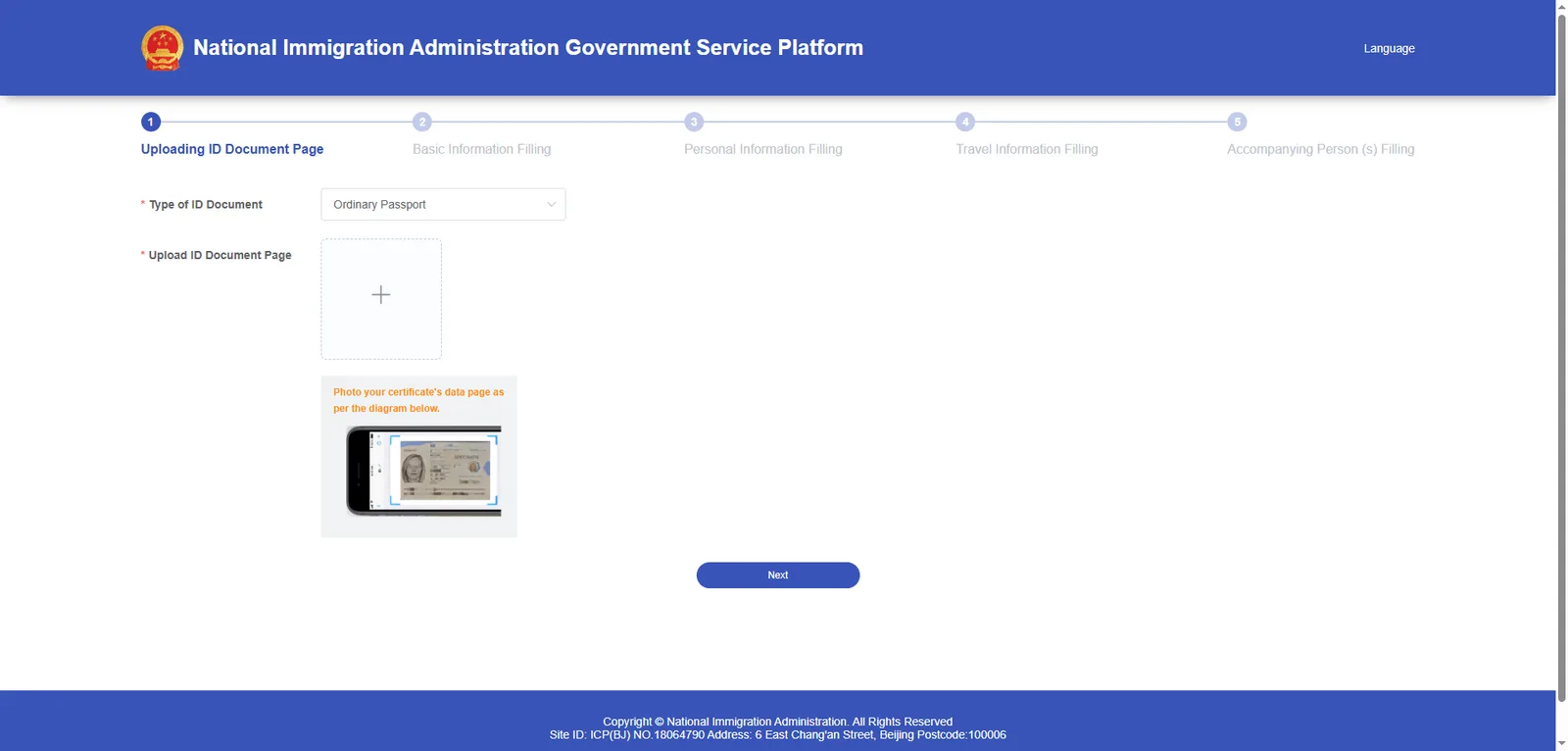
Three practical items cover nearly everything Malaysian travelers ask us about the border itself.
Passport. At least six months of validity remaining, undamaged. Check this the day you book flights, not the week you fly — Malaysian passport renewals are fast, but not same-week fast during school holidays.
The arrival card — now online. Since 20 November 2025, foreigners can fill in the China arrival card online before departure, through the National Immigration Administration’s official arrival card portal, the NIA 12367 app, or WeChat/Alipay mini-programs. Filing online before your flight is the single easiest way to cut your queue time at immigration. Three things worth knowing:
- It’s free. If a website asks you to pay a “service fee” for the arrival card, you’re on a copycat site — close it and use the official NIA portal;
- If you don’t manage to file in advance, you can still do it on arrival — by QR code at the immigration hall, or on a paper card;
- Travelers transiting China within 24 hours without leaving the port area are among the exempted categories and don’t need one, per the embassy notice.
At the border. Immigration officers may ask about your itinerary, where you’re staying, and your return flight. Ordinary questions with ordinary answers — have your hotel confirmations and return booking reachable on your phone. As with every country, final admission rests with the border officers; visa-free entry is a policy, not a promise. One more rule worth knowing so it never surprises you: China requires foreigners’ accommodation to be registered with the police. If you stay in hotels, the front desk handles this automatically at check-in — you’ll notice them scanning your passport; that’s it. Only if you stay somewhere that isn’t a hotel — a relative’s or friend’s home — do you need to register yourself at the local police station within 24 hours of arrival.
When our clients travel, we send a one-page pre-departure checklist covering exactly these items — it’s a small thing, but it’s the difference between a 40-minute arrival and a stressful one.
What Visa-Free Doesn’t Solve: Halal Food and Prayer on the Ground

Here’s the honest part most visa articles skip: the border is no longer the hard part of a China trip for Malaysian Muslims. The ground logistics are.
China is not Malaysia. Outside a handful of districts, halal food is something you plan toward, not something you stumble into. Big cities have genuine halal restaurants — Beijing, Shanghai, Xi’an, Guangzhou all have established Muslim communities and long-running halal kitchens — but they’re unevenly spread, and the gap widens fast near major scenic areas, where a certified halal meal can be an hour’s drive from the gate. Prayer facilities follow the same pattern: mosques exist in most large cities, but some destinations popular with Malaysian travelers — Zhangjiajie among them — have no public mosque at all, so prayer happens at your hotel or along the route, and the day’s schedule has to respect that.
Three principles that consistently save trips:
- Verify restaurants before you fly, not after you land. “Halal” tags on map apps in China are unreliable; a restaurant’s status can change, and English reviews lag reality. Confirm each planned dinner actually exists, is still halal, and is open on your dates.
- Plan prayer around the day’s route, not the other way around. With travel days and scenic areas, the workable pattern is prayer at the hotel morning and night, and a known clean stop midday — decided in advance, not improvised.
- Choose hotels by dinner distance. The most common self-planned mistake we see: a well-reviewed hotel that’s 40 minutes from the nearest halal food, three nights running.
This is the part of the trip we actually do for a living — every restaurant on a HalalChinaTrips itinerary is verified before you fly, and prayer time is built into each day’s plan. For the wider picture, see our guides to halal food across China and practical tips for Muslim travelers in China.
How to Use Your 30 Days Well: Itinerary Starting Points

Thirty days per entry is far more than most Malaysian travelers use — the typical trip we plan runs 5 to 10 days. Which means the real question isn’t “is the limit enough?” but “which China do you want first?” Two starting points that work well from KL:
- Nature first: Zhangjiajie + Fenghuang, 5–8 days. The Avatar mountains, glass bridge, and an ancient riverside town in one loop — with direct flights making this the lowest-friction first China trip from Malaysia. Our route notes are in the Kuala Lumpur to Zhangjiajie guide.
- Cities and heritage: Beijing or Shanghai + Xi’an, 7–10 days. The Great Wall or the Bund, then the Terracotta Army and China’s most storied Muslim quarter in Xi’an — the culture-and-food version of a first trip.

If you organize group trips — a surau community, an extended family, a company retreat of 10 to 30 people — the treaty applies to each traveler individually, with no group visa paperwork at all. Getting the group across the border is now the easy part; keeping twenty people fed halal, prayed on time, and moving on one schedule is where a ground team earns its keep. That’s a planning problem, and it’s solvable before departure, not at the restaurant door.
Not sure how your dates, group size, and must-sees fit together? Send them to us on WhatsApp and we’ll sketch how we’d arrange it — no obligation, and you’ll know within a day whether your plan fits comfortably inside the 30-day window. You can also start from our ready-made Muslim tour packages from Malaysia and adjust from there.
FAQ
Is China still visa-free for Malaysians in 2026?
Yes. The China–Malaysia mutual visa exemption is a bilateral treaty in force since 17 July 2025, valid for five years and automatically renewable. It does not expire on 31 December 2026 — that date applies to China’s separate unilateral scheme for other countries and to Malaysia’s exemption for Chinese citizens.
How many days can Malaysians stay in China without a visa?
Up to 30 days per entry, counted from midnight after your arrival day, and no more than 90 visa-free days within any 180-day period.
Do Malaysians need to fill in an arrival card before flying to China?
You can — and should — file it online for free via the National Immigration Administration portal or its WeChat/Alipay mini-programs before departure; it speeds up immigration considerably. If you don’t, you can still complete it on arrival by QR code or on paper.
Can Malaysians work or study in China under visa-free entry?
No. Visa-free entry covers tourism, family visits, business meetings, exchanges, private affairs, and medical treatment. Work, study, journalism, or any single stay over 30 days requires a visa applied for in advance.
Does visa-free entry guarantee admission into China?
No visa-free policy guarantees entry anywhere in the world — admission is always decided by border officers. In practice, ordinary travelers with a passport valid six months, an arrival card, and normal bookings clear immigration routinely.