Last Updated on October 5, 2026 by Aaron Chen
For a Muslim family, the thing that actually decides a Chengdu trip is not which attraction ranks first. It is where the halal food is.
In Chengdu the answer is unusually tidy. Most of it clusters in one pocket of Qingyang District around Huangcheng Mosque, so you can anchor every meal and prayer to a single walkable area.
That anchor is the honest reason Chengdu works well for a Muslim family, and it shapes how this guide is ordered. Fix the halal-and-prayer base first, then the pandas, teahouses, heritage sights, and day trips slot in around it.
For a Muslim family, that base is what turns a famous-but-daunting city into an easy three- to four-day trip.
Each attraction below carries its own family notes: what halal food sits within reach, how tiring the day runs for kids and grandparents, and where to build in prayer. The items run roughly in the order most families should tackle them, food and prayer first.
Huangcheng Mosque and the Qingyang Quarter
Huangcheng Mosque (皇城清真寺) sits at 2 Xiaohe Street in Qingyang District, within walking distance west of Tianfu Square station, and it is the largest mosque in Sichuan. It blends Islamic, Ming, and Qing architecture and remains an active Sunni mosque that welcomes visitors.
The mosque is your anchor. Prayer and the city’s densest run of halal restaurants sit in the same few blocks, which is why we tell families to plan the trip around it rather than around the pandas.
The reason to base yourself here is the food. A cluster of halal restaurants sits in and around this Qingyang pocket — beef sit-downs, halal Sichuan classics, and the hotpot too — so you are never hunting for a safe meal. Our Chengdu halal food guide names the restaurants and explains how to verify them on the ground.
See the Giant Pandas Early at the Chengdu Panda Base
The Chengdu Panda Base is worth arriving for at 7:15–7:30 am, because pandas are most active in the first two to three hours after opening and go sleepy by mid-morning.
A standard adult ticket runs around RMB 55. Here is the family gotcha most lists skip: book online in advance, tied to each passport — do not count on buying at the gate, where any leftover tickets sell out early on busy days.
For a family, the South Gate is the easier entrance and the West Gate is quieter. The site is far larger than people expect, so do not try to walk all of it.
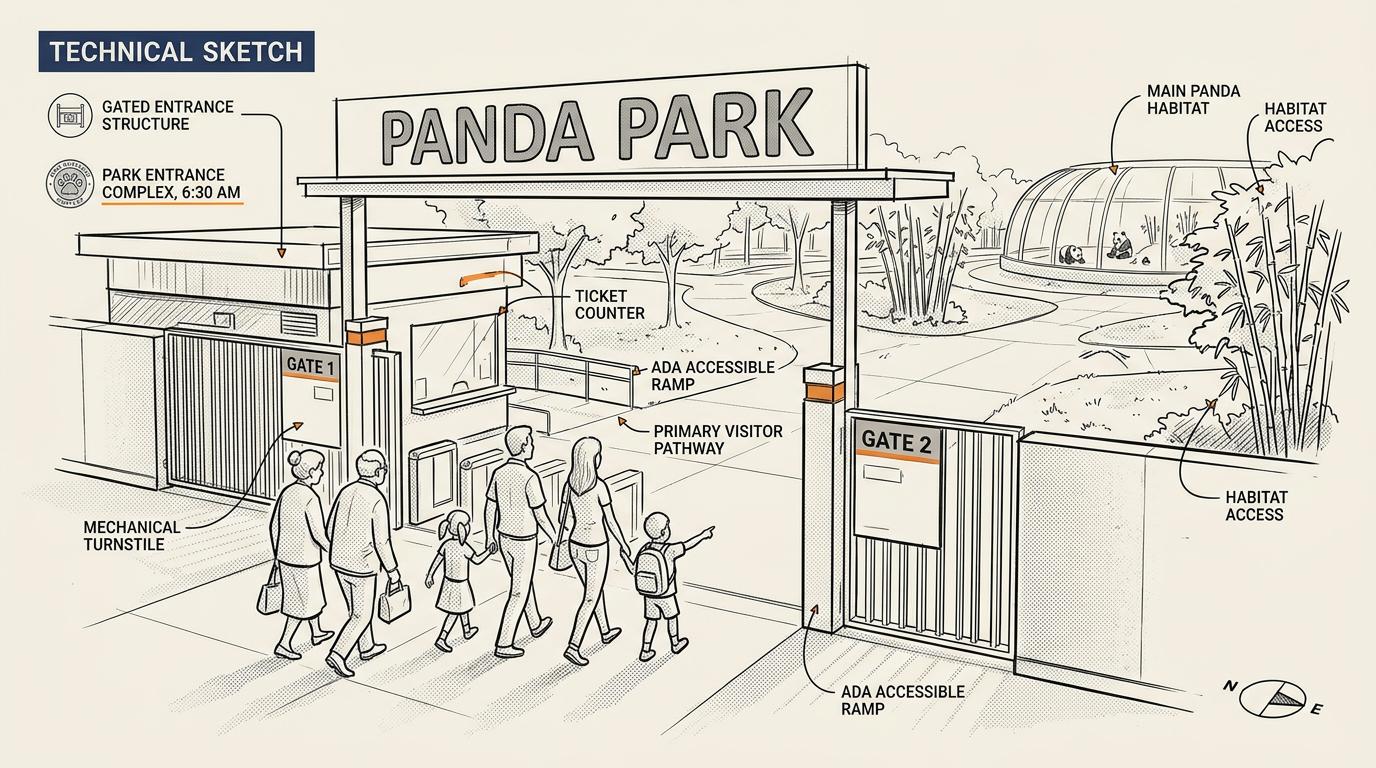
Pick one gate, one main loop, and one or two must-see enclosures. That plan spares tired kids and grandparents a punishing morning.
There is no halal food to count on inside, so eat before you go or carry snacks, and treat this as a morning-only outing. Spring and autumn, at 10–20°C, are the most comfortable seasons to stand around outdoor enclosures. Head back toward the Qingyang cluster for a proper halal lunch once the pandas nap.
People’s Park Teahouses and Chengdu Tea Culture
People’s Park is where you see how Chengdu actually relaxes, and it is the most family-easy stop in the city. At the Heming Teahouse you sit under the trees with a covered cup of green tea while locals dance, play cards, and run the famous matchmaking corner where parents advertise their children.
There is nothing to climb and nothing to rush. Order tea, not food, and this becomes a genuinely restful hour for grandparents and a place kids can roam a little.
Yuexiangcun, the halal restaurant near the park and Tianfu Square, makes an easy pairing when hunger hits. A relaxed teahouse hour near noon also lets you fit prayer timing into a full sightseeing day around midday, since the mosque and cluster sit a short ride away.
Kuanzhai Alleys and Jinli Street: What to Do and Where Not to Eat
Kuanzhai Alleys and Jinli Street are the two “food streets” everyone photographs, and the honest advice is to go for the atmosphere and eat your real meals elsewhere. Both are beautiful — Qing-dynasty lanes, teahouses, artisan shops, and Jinli’s snack carts selling sweet potato balls and fried sticky rice.
As street food, though, the stalls are mixed and uncertain for a Muslim traveler, so browse rather than graze. Do not feel you are missing out by skipping them.
The atmosphere is the attraction. The halal Sichuan food you came to China for waits at the Qingyang cluster a short ride away, from halal hotpot to dan dan noodles made with halal beef.
Kuanzhai also involves a fair bit of walking on stone lanes. It suits families better in a cooler part of the day, and it pairs well with an early or late visit to keep small children fresh.
Wuhou Shrine and Du Fu Cottage: Chengdu’s Heritage Sights
Wuhou Shrine is Chengdu’s main historical site, a ¥50 temple honoring the strategist Zhuge Liang that takes about 1.5 hours to walk. It sits right beside Jinli Street, so the two pair naturally into one half-day — heritage first, then the lanes for atmosphere.
Signage is mostly in Chinese, so a translation app helps the visit make sense for older travelers.
Du Fu Cottage, the tranquil former home of the Tang poet, is the quieter companion pick if your family prefers gardens over crowds. Neither site poses any food restriction, since you are not eating at either. Plan the meal back at the halal cluster, and slot afternoon prayer around the temple walk rather than inside it.
A Sichuan Opera Face-Changing Show in Chengdu
A Sichuan opera face-changing show is the one evening activity we recommend to almost every family, because it carries no food question at all. At a venue like Shu Feng Ya Yun you get unlimited tea and sunflower seeds while performers switch painted masks in a blink.
The show is visual, fast, and genuinely delightful for children and grandparents alike. Book ahead, since good seats go early.
Because the only refreshments are tea and seeds, there is nothing to check and nothing to skip. Have an early halal dinner at the cluster, then arrive relaxed for the performance.
Day Trips: Leshan Giant Buddha and Mount Emei
Leshan Giant Buddha and Mount Emei are the two big day trips from Chengdu, and the honest planning advice is to pick one per day rather than both. Chengdu to Leshan is roughly 130–150 km, about 1.5 to 2.5 hours by car; Leshan to Emei is another 45 km or so.
For a family, here is the quick contrast:
- Leshan Giant Buddha — the gentler choice. A boat tour of 30–50 minutes gives you the full view of the 71-meter Buddha without the long stair climb, far kinder than scrambling down the cliff path.
- Mount Emei — a bigger, steeper mountain day. Worthwhile, but treat it as its own day and go only partway up.
- Both in one day — skip it. Combining the two runs hectic and cuts the mountain short, which is rough on kids and elderly travelers.
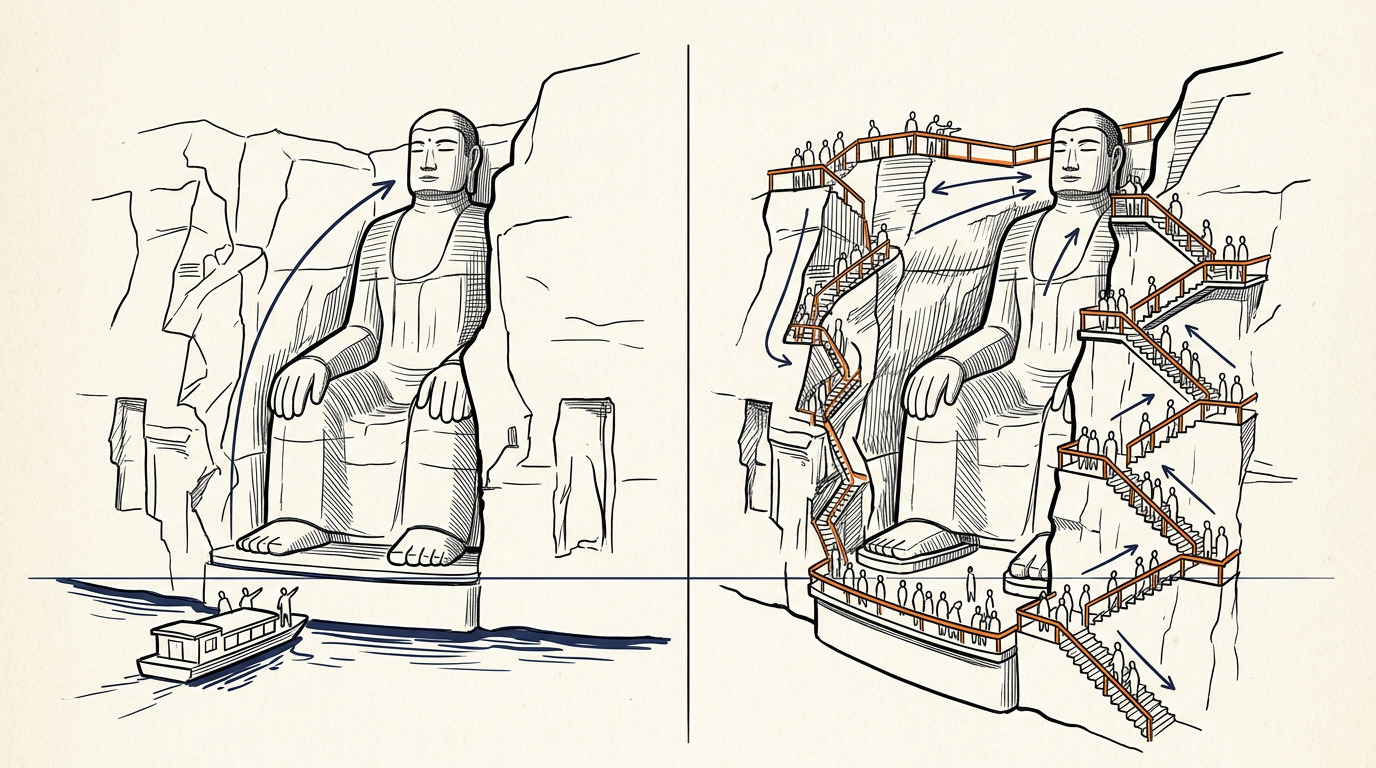
Drive times shift with traffic and season, so treat these as approximate and confirm before booking. There is no reliable halal food on either route, so carry lunch from the Qingyang cluster or eat a large halal breakfast before you set off.
How Many Days in Chengdu and How to Pace Them
Three to four days is the right length for Chengdu with a family, and the single best pacing rule is one big thing per day. A punishing itinerary is what actually ruins these trips — pandas at dawn, then two day-trip sights, then a late food street, and everyone is exhausted by day two.
Our Chengdu itinerary for Muslim families lays out a four-day plan day by day, with prayer stops and halal meals built into each route.
Making Chengdu Work for Your Family
The move that makes Chengdu easy is deciding your base before your sights. Lock Qingyang District as the meal-and-prayer anchor, and every attraction becomes a spoke you travel out to and back from.
Pandas at dawn, one day-trip site at a time, teahouses and heritage in between — none of them are a food problem once the cluster is your kitchen.
On a generic top-ten list the ranking of attractions is the whole story. For a Muslim family, where you eat and pray decides the rhythm of the trip instead. Get the anchor right, and the rest of the city opens up on its own. More on Chengdu is on our Chengdu destination page, and if you are wondering whether the city works for Muslim travelers at all, our guide to whether Chengdu is Muslim-friendly answers that directly.
If you’d rather hand the logistics to a team that books this route weekly, tell us your dates on WhatsApp — we’ll confirm timings and build the day around them, reply within 24 hours, usually faster.