Last Updated on October 5, 2026 by Aaron Chen
Furong Ancient Town is small: one stone street, one waterfall, one cliffside palace, one famous night view. You can see all of it in an afternoon and an evening. For a Muslim traveler, though, three facts shape that afternoon more than any sightseeing list: there is no halal-verified restaurant inside the town, no mosque anywhere in the region, and the night illumination starts at roughly the same time as Maghrib in summer. We plan Xiangxi routes from our base in Zhangjiajie, and in our experience the travelers who enjoy Furong most are the ones who solved food and prayer before the train, not after arrival. So this plan takes both seriously: what is genuinely worth your time inside the town, and the meal-and-prayer arrangements that let you enjoy it.
If you are still deciding whether Furong deserves a spot on your route at all, start with our Furong waterfall and night-view guide; this article assumes you are going and answers what to do once you are there.
Quick Answer: What Is Actually Worth Your Time?
Five things justify the trip, in this order: walking behind the waterfall, Wuli Slate Street, the night illumination, the Tusi Palace viewpoint, and the river view from the stepping stones or a short boat ride. Everything else in the town is pleasant filler. A focused visitor can cover the five in an afternoon and evening; that is why the practical planning unit for Furong is “arrive after lunch, stay past dark” rather than a full day.
The town earns its nickname honestly — the old quarter really is stacked on a cliff with a 60-meter, two-tier waterfall dropping straight beneath the stilted houses. That vertical layout is also the catch: connecting the sights means stairs, and the order you walk them in matters more than in a flat old town. The sections below take the sights one at a time, then put them into an hour-by-hour plan.
For background on the town itself — history, layout, seasons — see the Furong Ancient Town destination guide.
What Are the Main Things to Do in Furong Ancient Town?
Walk Behind the Waterfall
The walkway that passes behind the falling water is the single best thing in Furong, and it is included in the entrance ticket. The path runs along the cliff behind the two-tier curtain, so you look outward through the falling water toward the river. Expect spray — in high-water months you will get wet, so keep phones zipped and give cameras a wipe cloth. The walk itself takes 15–20 minutes, but budget 45 minutes with photo stops. One honest caution: after heavy rain the path can be slippery, and there are stretches with low clearance. It is fine for most adults and children who can walk stairs; it is not the place for a grandparent with knee trouble — the viewing platforms across the river give them the same waterfall without the wet stairs.
Wuli Slate Street
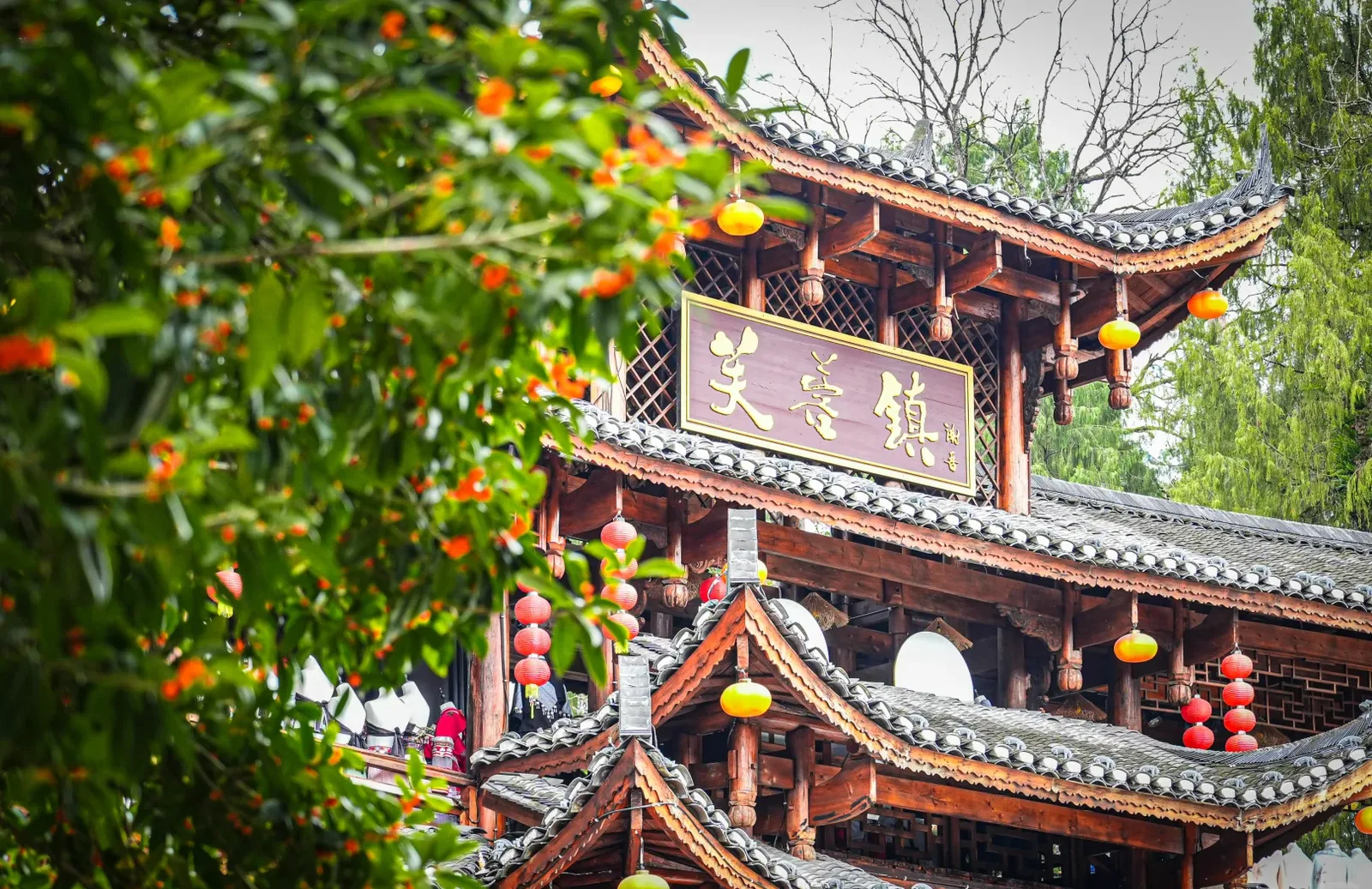
This is the spine of the old town: a stone-flagged lane of wooden shopfronts running downhill from the upper town toward the waterfall. The name means “five-li slate street” — about 2.5 kilometers, since a li is half a kilometer. Some English guides translate it as “five miles”; walk it and you will be glad they are wrong. Going downhill takes 40–60 minutes at browsing pace. The shops are the usual old-town mix — snacks, souvenirs, Tujia fabric — and the street gets its charm back in the early morning and after 9 pm, when day-trip crowds thin out. If you stay overnight, walk it twice: once in the evening bustle, once in the quiet morning.
Tusi Palace and the Xizhou Bronze Pillar
Two stops explain why this town existed long before tourism. The Tusi Palace (Tuwang Palace) is the timber complex perched directly above the waterfall — a cliffside palace of the Tusi chieftains who governed this region for centuries under the imperial system (their actual capital was at Laosicheng, the World Heritage site elsewhere in Yongshun County). Today its terraces double as the best top-down view of the falls. The Xizhou Bronze Pillar, kept nearby, records a 10th-century peace agreement between the Chu kingdom and the local chieftain — it is the region’s founding document, cast in bronze. Both stops together take about 45 minutes. They are worth that time: without them, Furong is a pretty waterfall with shops; with them, you understand whose territory you are walking through.
The Stepping Stones and the River View
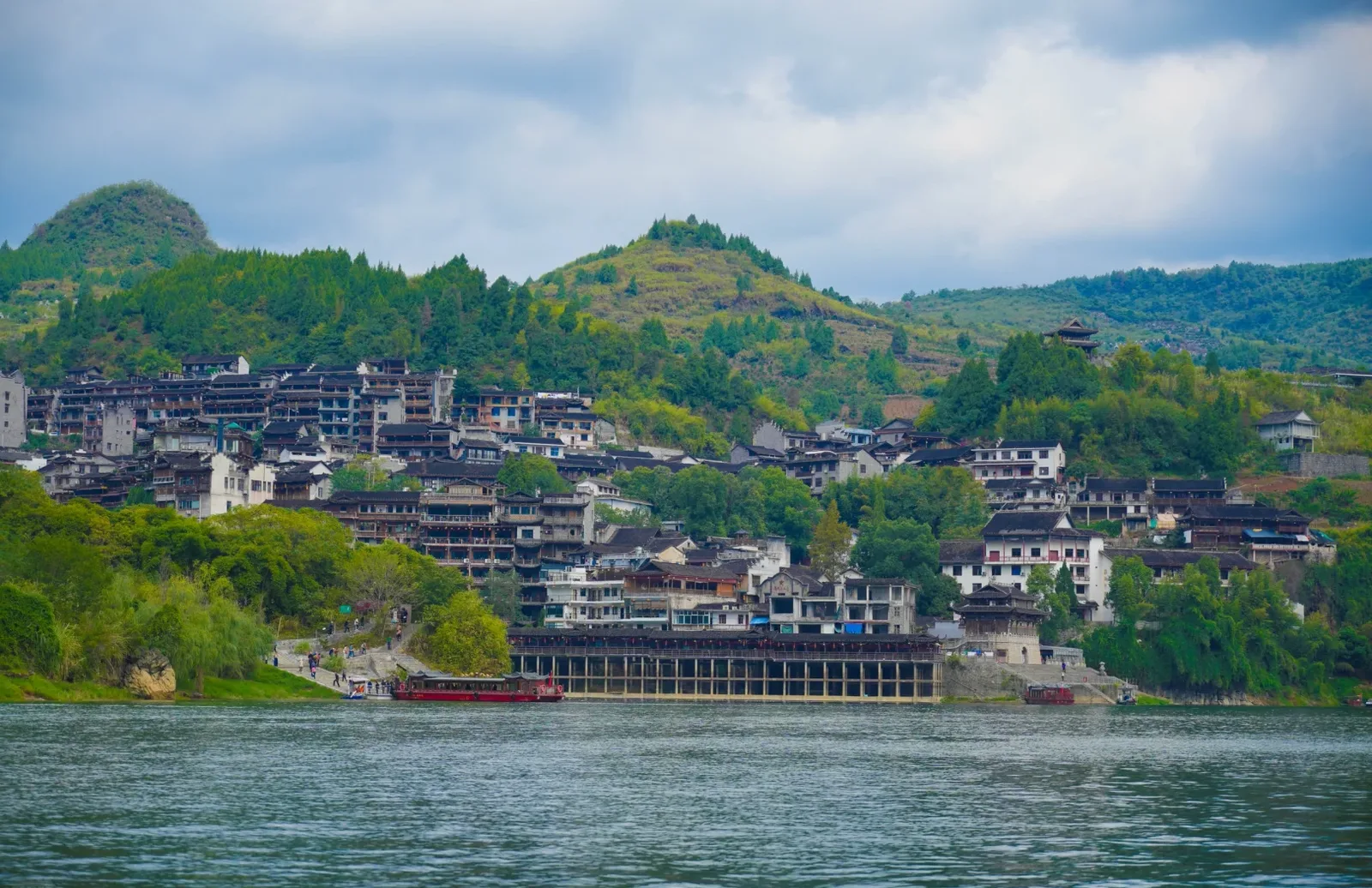
Near the falls, a line of stepping stones crosses the river — the classic foreground for the full-frontal waterfall photo. Crossing is easy in normal water and genuinely fun for kids, but there are no railings, so hold small children’s hands and skip it entirely after heavy rain. If the stones are closed or crowded, a short daytime boat ride from the pier gives a head-on view of the waterfall and the stilted houses from water level — the boats stop running before dark, so do this before dinner, not after. Either option takes 30–40 minutes.
The Night Illumination
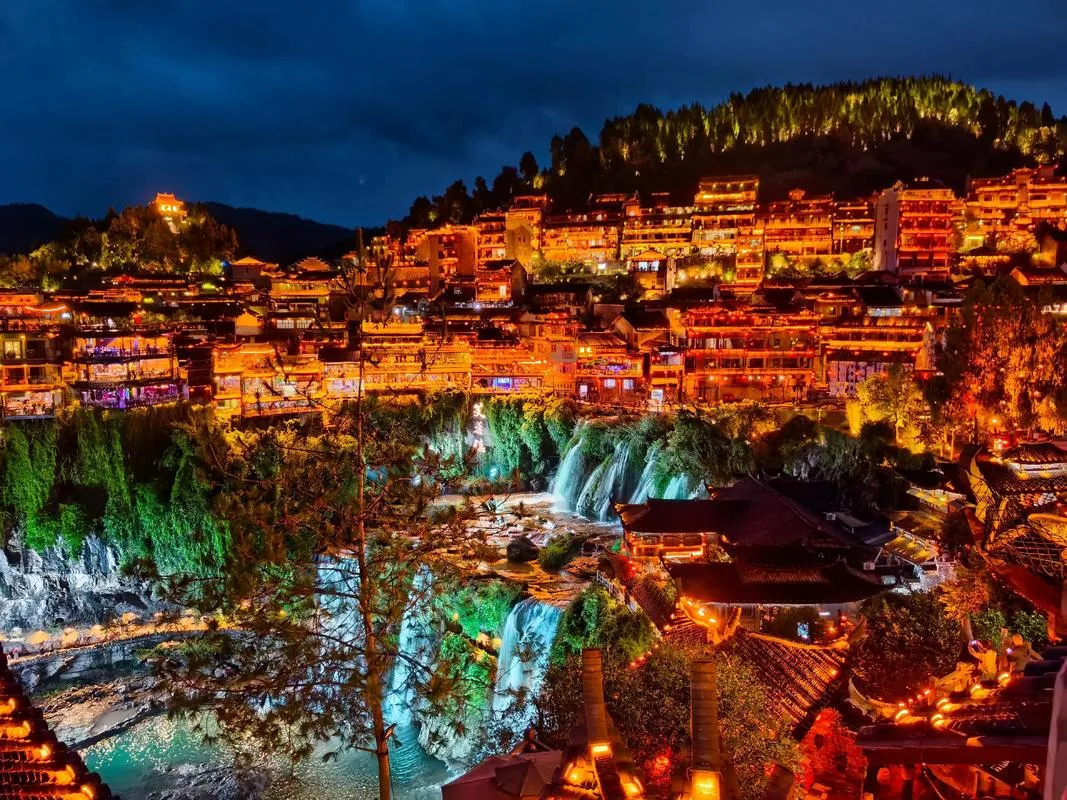
From around 7:30 pm — earlier in winter — the waterfall and the stilted houses light up, and this is the image that put Furong on overseas itineraries. The scenic area stays open until midnight, so the evening gives you a long window; there is no need to rush the sunset hour. Short folk performances are staged in the evenings in the old town; schedules shift with season and visitor flow, so treat any published show time as provisional and check on arrival. The full night-viewing strategy — which bank to watch from, how hotel position changes it — is in our night-view guide.
How Long Do You Need?
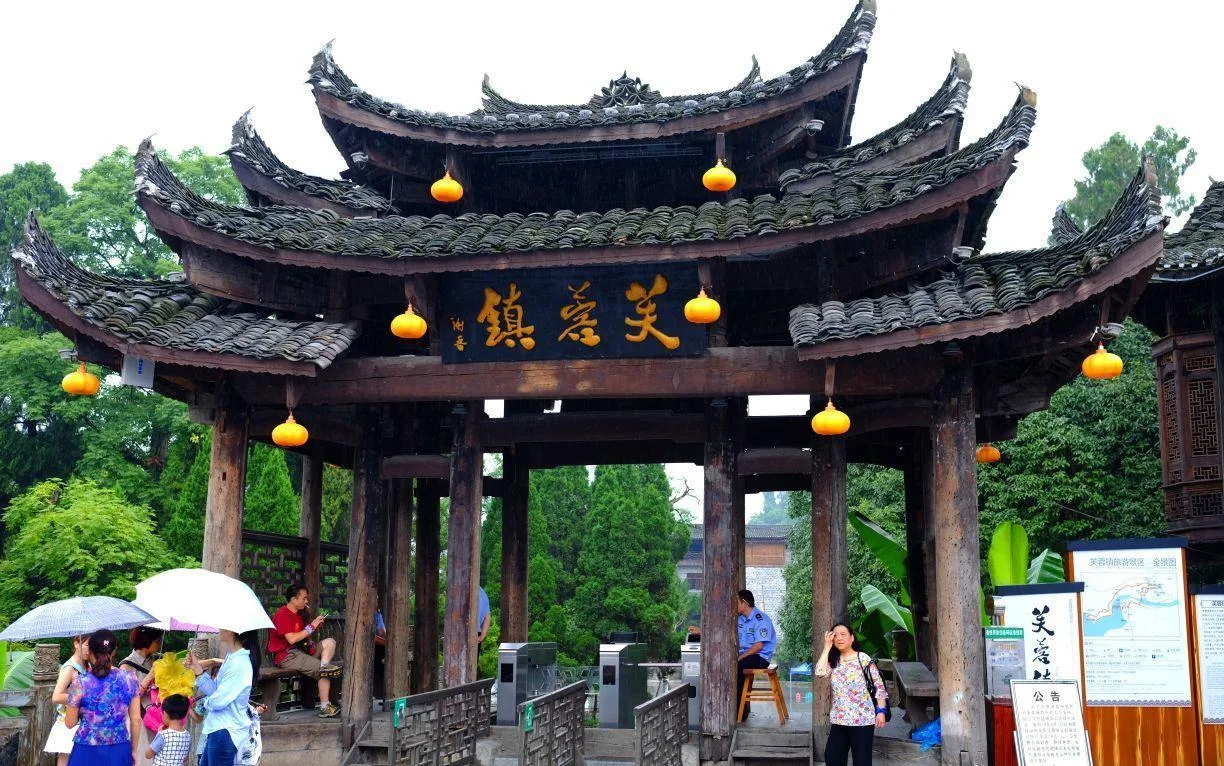
Half a day plus the evening. Arrive between 2 and 4 pm, and you can walk the street, do the waterfall path, and cover the Tusi Palace before dinner, then watch the illumination at leisure. That points to the real decision, which is not hours but logistics: whether you sleep in Furong or leave the same night.
Stay overnight if the night view is the reason you are coming — day visitors who must catch an evening transfer leave exactly when the town becomes what it is famous for. Leave the same day only if Furong is a route break between Zhangjiajie and Fenghuang and you have already accepted missing the lights. The standard entrance ticket is ¥108 and stays valid for 3 days after first scan, so an overnight stay costs nothing extra on the ticket side. Teens aged 14–18 and seniors aged 60–64 pay a half-price ticket of ¥54 — worth knowing if you are traveling with parents or older children (figures checked August 2026; prices can change).
What Can Muslim Travelers Actually Eat There?
Here is the honest answer: nothing inside Furong Ancient Town is halal-verified. Not the waterfall-view restaurants, not the guesthouse breakfasts, and not the street snacks. The local food culture is Tujia, and its kitchens use pork heavily — there is no halal-certified kitchen in the town for us to verify. We would rather tell you that plainly than let you discover it hungry at 8 pm.
The snack that tests people’s judgment is rice tofu (mi doufu), the town’s signature dish — a soft rice-and-lime curd that looks completely vegetarian. The curd itself is rice; the problem is everything on top. It is served under chili oil, pickles, and sauces prepared in kitchens that also handle pork, and no stall can document its ingredients. Our position: photograph it, skip eating it. If you want to taste Xiangxi flavors, do it at a restaurant we can verify, not from an unverifiable street pot.
What we actually do for clients, and what works if you plan alone:
- Eat a proper halal lunch in Zhangjiajie before the train. The city has restaurants we have verified — see halal food in Zhangjiajie — and the ride to Furong is only about half an hour, so a late, solid lunch carries you comfortably to dinner.
- Carry your dinner. Sealed halal instant meals, bread, fruit, nuts. Guesthouse rooms have kettles, and most hosts will not mind you eating your own food.
- Confirm the breakfast plan the night before. Guesthouse breakfasts are not halal; have your own morning food ready rather than negotiating at 7 am.
This is more preparation than a regular traveler needs, and we will not pretend otherwise. It is also only one evening — the tradeoff most of our Muslim clients accept for one of the most distinctive nights in Hunan.
Where Do You Pray?
There is no mosque in Furong, and none anywhere in Xiangxi or Zhangjiajie — this whole region has no public mosque for visitors, so the answer is private space, planned in advance.
- Overnight visitors have it easiest: your guesthouse room is your prayer space. Ask for a room with floor space clear of furniture when booking, or move a chair — Furong rooms are small.
- Day visitors should plan prayers around the transfer: pray before leaving Zhangjiajie, and use a private vehicle stop if your schedule crosses a prayer time. Inside the scenic area, quiet corners exist — upper-town courtyards, away from the main street — but they are public and offer no washing facilities, so treat them as a fallback, not the plan.
One timing detail we always flag for summer visits: Maghrib falls close to the 7:30 pm lighting time — in late August it is around 7:15 pm in this region. The clean solution is to be back at your guesthouse for Maghrib, pray, then walk out to the falls — the scenic area is open until midnight, so you lose nothing by starting your night viewing at 8:30. Tell us your travel date and we build the evening around your prayer times rather than squeezing prayers around the show; that is the request we ask clients to make before the trip, because your guide and driver will accommodate it precisely when they know in advance.
An Hour-by-Hour Plan That Works
This is the overnight version we use for families, assuming you come from Zhangjiajie (the high-speed train takes 23–30 minutes to Furongzhen Station, then a 10–15 minute taxi — details in the Zhangjiajie to Furong transport guide):
| Time | What you are doing |
|---|---|
| 12:00 | Verified halal lunch in Zhangjiajie city, unhurried |
| 14:00 | Train to Furongzhen, taxi to the town, luggage drop at guesthouse |
| 15:30 | Walk Wuli Slate Street downhill toward the falls |
| 16:30 | Behind-the-waterfall walkway while it is still daylight |
| 17:30 | Tusi Palace and Bronze Pillar, then stepping stones if water is low |
| 19:00 | Back to guesthouse: your own dinner, Maghrib |
| 20:15 | Out for the night illumination — full views, no rush |
| Morning | Quiet street walk before crowds, then onward transfer |
The day-trip version compresses the same order into 13:00–19:00 and accepts missing the lights; if that is your constraint, read our Fenghuang vs Furong comparison first, because Fenghuang may serve a lights-included plan better.
Taking Parents or Kids?
Furong is walkable for most families, but it is vertical, and that changes the plan more than any attraction list suggests. The honest picture:
- Stairs are unavoidable. The town connects its levels by stone steps, and every route we have walked between the upper town and the waterfall level involves them. For a parent who manages stairs slowly, plan the downhill direction — street first, falls second — and use the drop-off closest to your guesthouse.
- The behind-the-falls path is the one to skip for anyone unsteady on wet stone. The across-river platforms give the same view dry.
- Luggage is the hidden cost. Your vehicle drops you at the entrance area, not at the guesthouse door, so confirm the guesthouse’s porter arrangement before booking, not after arriving with three suitcases — our Furong hotel guide covers which areas minimize the carry.
When we place a three-generation group here, we shorten the walking loop to the street plus one waterfall viewpoint, and we put the night view on the guesthouse terrace instead of the riverbank. Less completionism, better evening.
Where Furong Fits in Your Route
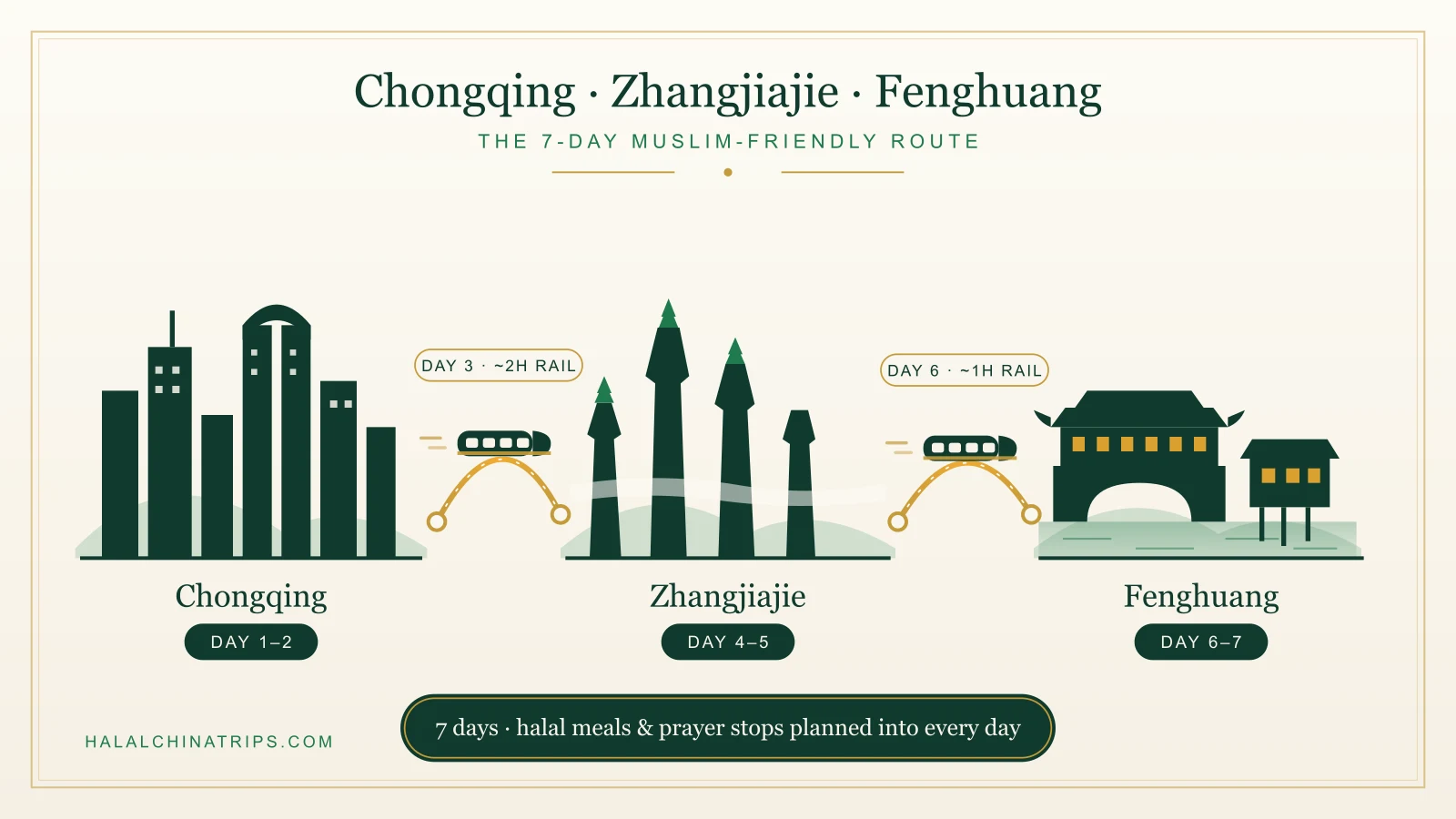
Furong works best as the middle stop of the classic Xiangxi line: Zhangjiajie for the mountains, Furong for the waterfall night, Fenghuang for the riverside old town. Each place does one job, and the transfers are short enough that the route suits families and older travelers.
That three-stop line is exactly what our 5-day Zhangjiajie and Fenghuang private tour runs, with halal meals verified in advance and prayer breaks built into each day — No forced shopping · No hidden fees. If your dates, group size, or pace do not fit a standard outline, send us your route and we will tell you honestly whether Furong deserves a night in it — sometimes the answer is that it does not, and Fenghuang alone serves your plan better.
FAQ
Is Furong Ancient Town actually ancient?
The site is genuinely old — it sat in the heartland of the regional Tusi chieftains, and the Bronze Pillar dates to the 10th century. But the town you visit is a restored and commercialized version, and its current name is recent: it was called Wangcun until it was renamed after the 1986 film Hibiscus Town (Furong Zhen), which was shot here. Expect a scenic-area experience with real history underneath, not an untouched village.
How much is the entrance ticket?
The standard ticket is ¥108, and a ¥54 discounted ticket applies to visitors aged 14–18 and 60–64. Tickets stay valid for 3 days after your first entry, and the scenic area is open 8:00 am to midnight. The night illumination is covered by the same ticket. Checked August 2026; prices and rules can change.
What time are the evening shows?
Schedules change with season and visitor numbers, so we deliberately do not publish fixed show times. The waterfall lights are the reliable constant from about 7:30 pm; treat folk performances as a bonus and check times at your guesthouse on arrival.
Is the rice tofu halal?
It cannot be verified, so we advise against it. The rice curd itself is plant-based, but toppings and sauces come from kitchens that also handle pork, and no stall documents ingredients.
Can I do Furong as a day trip from Zhangjiajie?
Yes — the train takes under half an hour, and an afternoon covers the main sights. You will miss the night illumination unless you stay past dark, which usually means an overnight stay makes better use of the ticket.