Last Updated on October 18, 2026 by Aaron Chen
Almost every time we send out an itinerary and quote, some version of the same question comes back: “Just to confirm, are the 12 lunches and dinners included in the tour price, or do we pay for the meals ourselves?” It’s the right question, because at HalalChinaTrips meals run on two different systems, and the meal line in your quote is what tells you directly which system you’re on. The short answer: on that trip, every one of those meals was included, pre-arranged at restaurants our team had verified as halal — because on a Muslim-friendly tour, meals aren’t found along the way; the day’s route is drawn around them. Here’s what each system looks like from the table.
The two ways meals work at HalalChinaTrips
We handle meals in one of two modes, and both are normal:
Dine-your-way. The itinerary is planned so that lunch and dinner land within reach of verified halal restaurants, but you order from the menu and pay the restaurant directly. No meal money sits inside the tour price, so there’s nothing to mark up. This is the default on our standard itineraries — most of our private groups are two to ten people, and at that size choosing from a menu beats any meal plan. It suits families especially: everyone at the table has their own needs — grandparents, young kids — and ordering to your own tastes and appetites usually works out better than anything we could arrange for you in advance.
Included set meals. A fixed number of group lunches and dinners is built into the package — that’s what “12 group lunch & dinner sets” means — priced into the per-person total. You sit down, the food arrives, nobody takes out a wallet.
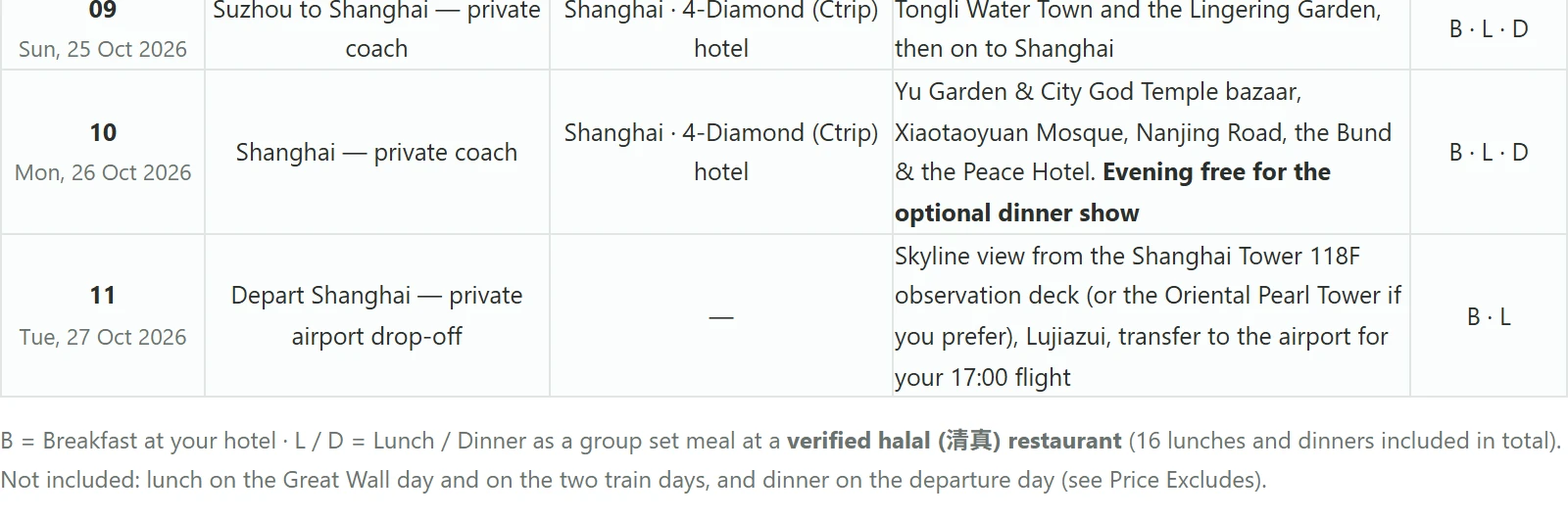
Neither mode is “better”; they suit different groups. Dine-your-way suits couples and small families who enjoy choosing; set meals suit larger groups and anyone who doesn’t want to think about logistics at 12:30 with hungry kids. The money side — how each mode shows up in a quote and why an itemized quote matters — is covered in our breakdown of what a private China tour actually costs; this article is about what reaches the table.
What an included set meal actually looks like
A Chinese group meal is a shared round table, not individual plates: a spread of dishes in the middle, rice, soup, and everyone serving themselves. The unit behind the pricing is the ten-seat table. In our own past group quotes the arithmetic reads like this: a set meal at RMB 800 per table of ten works out to RMB 80 per person. For reference, a conventional group-tour meal standard usually sits around RMB 60; ours runs RMB 80 for two reasons — halal catering generally costs a little more, and we’d rather hold the quality of the meals up than shave the standard down. A group of 15–20 books two tables per meal; and below roughly ten people several of our quotes simply switch to dine-your-way, because a set meal loses its economics at a half-empty table.
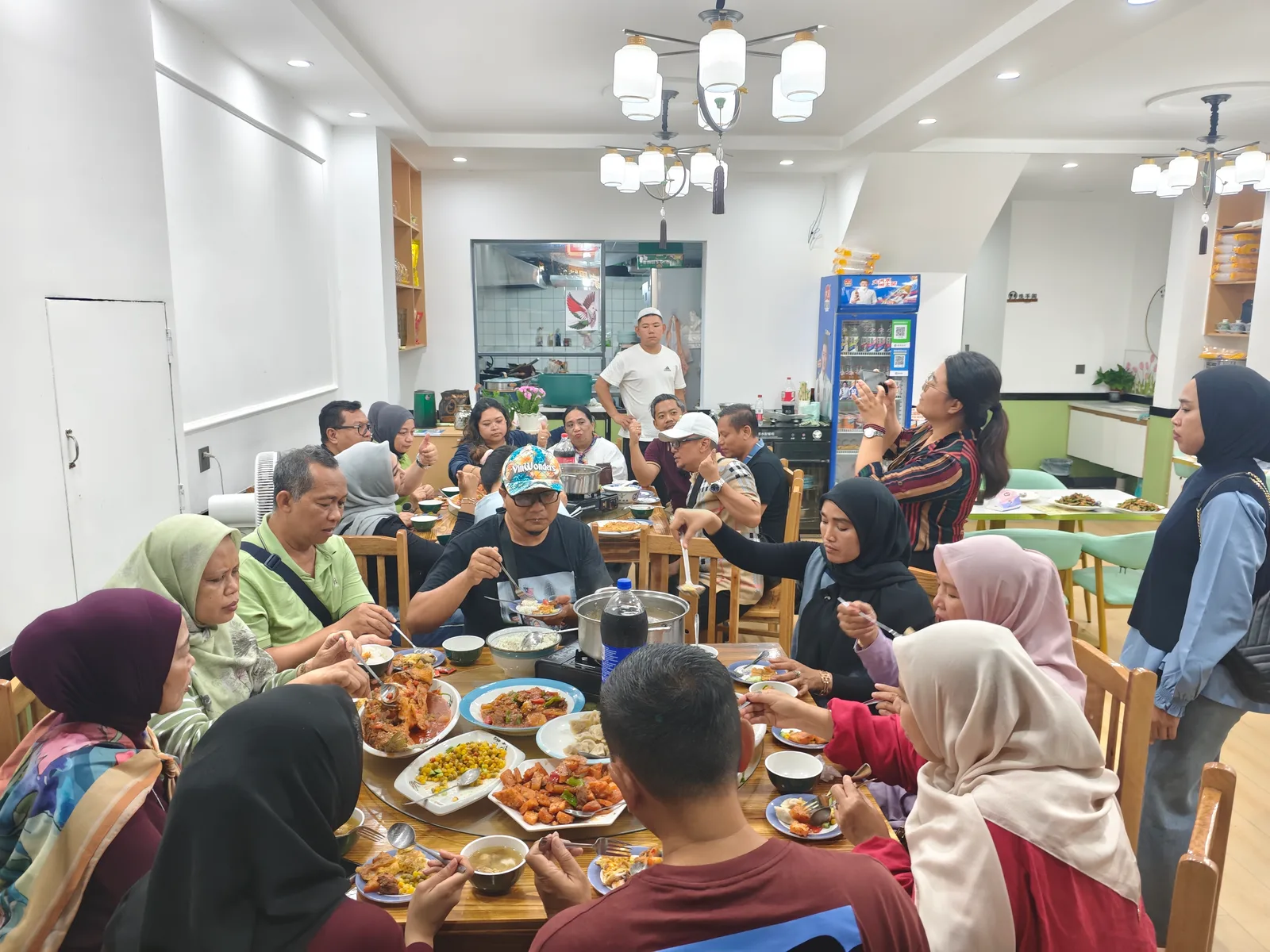
That RMB 80 sits inside the typical band we’ve quoted — roughly RMB 60–100 per person per meal, varying by city and standard. A “meal standard” is exactly what it sounds like: the per-person budget that decides how many dishes land on the table. When you compare two quotes with meals included, this is the number to ask for, because “meals included” at RMB 40 and at RMB 100 are two very different dinners.
The part most travelers don’t expect: the menu is settled before you ever arrive. Once an itinerary is confirmed, we collect the group’s dietary requirements, then fix the menu with each restaurant in advance — and adjust it where needed. Hunan food leans spicy, so for groups that can’t handle heat we tone the menu down restaurant by restaurant; the same applies to no-beef requests or seafood allergies. You’re not gambling on what a restaurant happens to serve that day; the restaurant is cooking to a sheet agreed before your flight lands.
Who picks the restaurants — and can you choose?
One traveler asked us this directly: “for halal meals, will you be giving us options on the restaurants, then we choose — or you will just bring us?” Fair question, and the honest answer is both, in sequence.
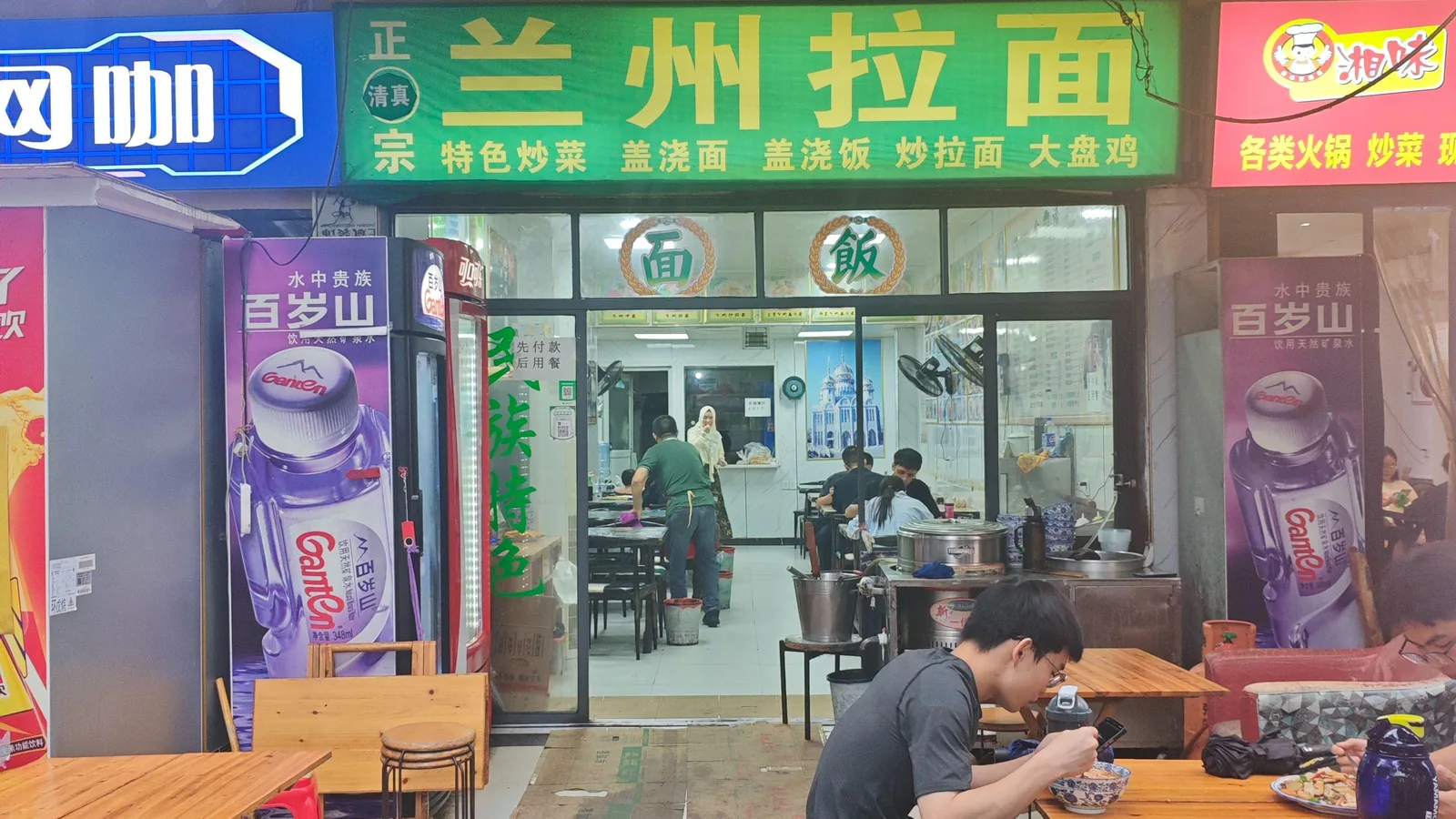
The shortlist is ours, because it has to be: every restaurant on a route goes through the same chain — halal certification as the hard standard, then a phone call to confirm, then a re-check shortly before your trip. One thing worth knowing about that first step: China has no single national halal body; certificates are issued locally, by Islamic associations and ethnic-and-religious-affairs authorities whose standards vary by province. That’s precisely why the chain doesn’t stop at the certificate — the call and the pre-trip re-check are what make “verified” mean the same thing in Shanghai as in Zhangjiajie, and they matter because a restaurant that was halal and open in March can have changed hands by October. How that verification works, dish by dish and city by city, is the subject of our halal food planning guide.
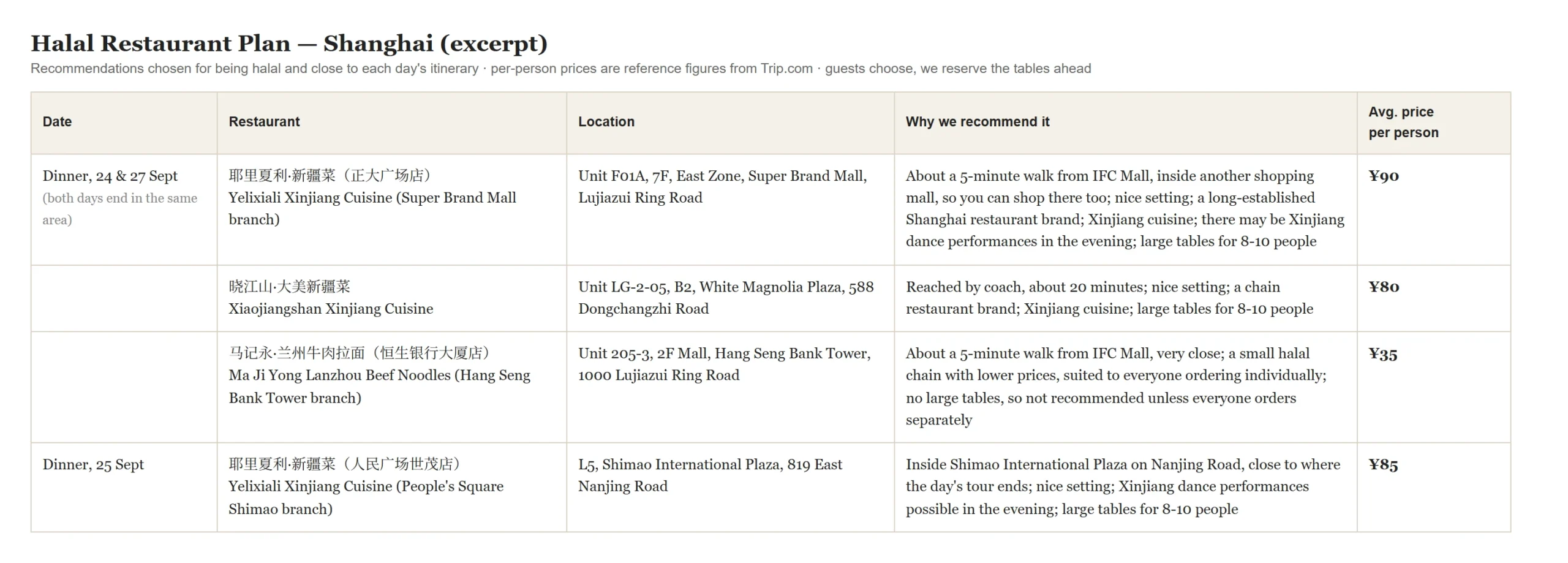
The choice inside that shortlist is yours. Ask for the restaurant names — you can look them up yourself. Ask for photos of the restaurants and past meals — when a client asked us exactly that, the photos went out in the same conversation, not after the deposit. And on dine-your-way days, “we’d rather hunt for food ourselves tonight” is a completely acceptable answer; the guide will point you to the verified options within reach and leave the evening to you.
The days with no halal restaurant at all
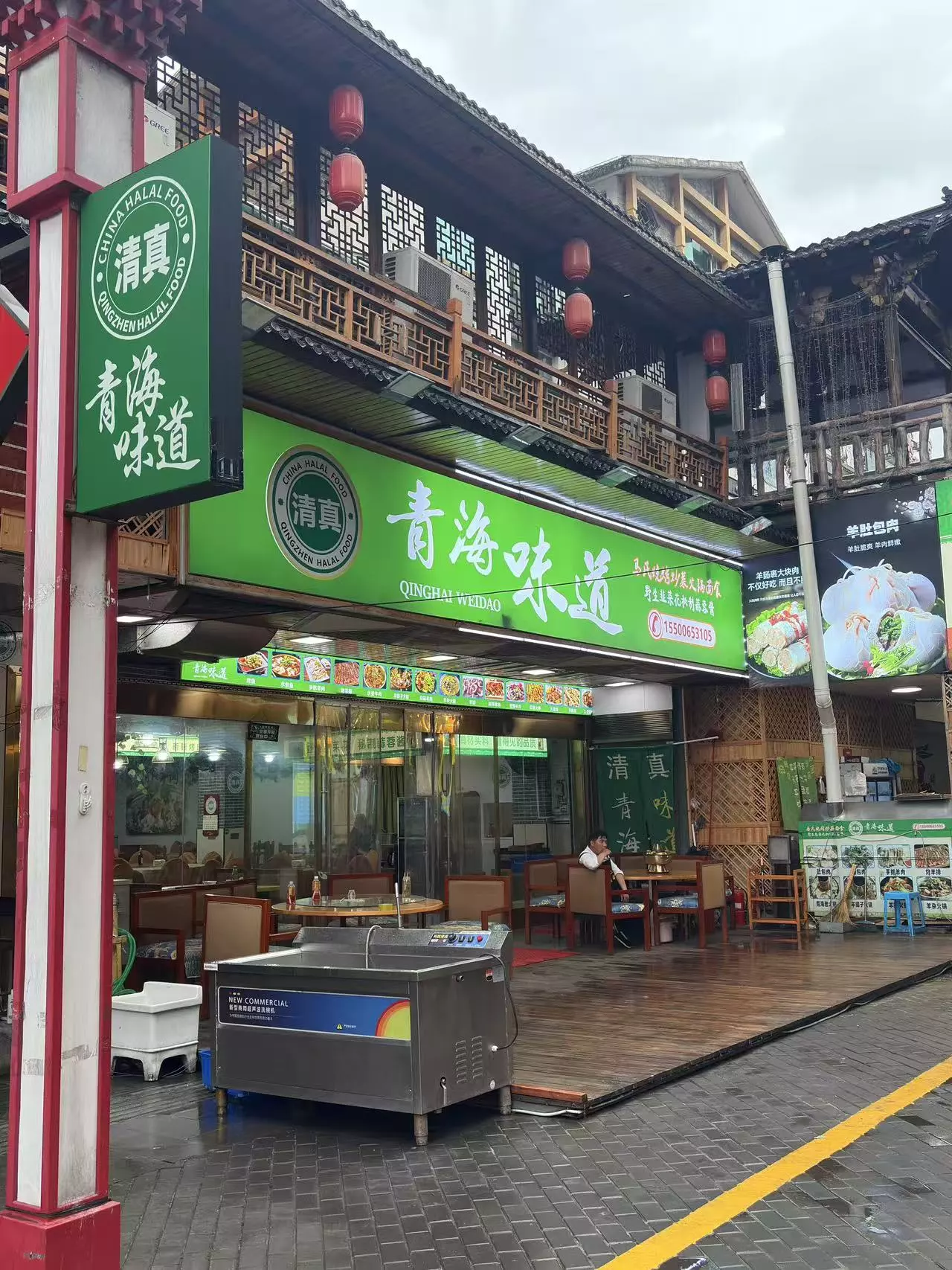
This is the section most tour pages skip, so let’s be direct: some places on popular China routes have no halal restaurant — not “hard to find,” none. Inside Zhangjiajie National Forest Park there is no halal food at all, and a day there runs on timing: eat before you enter, carry something, and route the day so you exit within reach of a verified restaurant at a sane dinner hour. Remote mountain areas can be thinner still.
What an operator does about those days tells you more than any “100% halal meals” banner. Three arrangements we actually use, in the order we reach for them:
- Redesign the day around the gap. Shift the route so the one meal that can’t be halal-catered becomes the meal you’ve already eaten — early lunch before the park, dinner back in town. Most gaps close with scheduling alone.
- Boxed halal meals. For days where the schedule can’t bend — long transfer days, sunrise starts — we arrange packed meals from a verified kitchen in advance. On one recent trip, two dinners ran as boxed meals by agreement, and two lunches were deliberately left free for snacks because the family preferred grazing through activity days.
- Self-catering, honestly priced. One family headed into a snow-mountain area asked whether halal food was truly arranged there. Our answer was no — the reliable options thinned out past the city — so they brought ready-to-eat and canned food from Malaysia, we arranged a rice cooker to borrow, and we marked that leg’s meals as optional in the quote so they weren’t paying for dinners nobody would eat. Less romantic than a banner claim; much better at 7 p.m. on a mountain.
If an agency tells you halal food is “no problem, everywhere in China,” they haven’t checked. The places without it are exactly where planning earns its keep.
For group organizers
Agencies bringing 10–40 travelers write “include halal meals” into almost every request we receive, and for good reason: at that size, dine-your-way collapses — forty people can’t order à la carte in a scenic-area restaurant at 12:40. Group dining is where per-table pricing and the pre-fixed menu stop being conveniences and become the only workable system: tables of ten at an agreed standard (a 15–20 pax group is two tables, booked as two tables), one menu agreed in advance, dietary exceptions — allergies, no-beef, children’s portions — flagged per table, and the restaurant briefed on arrival time so the food is on the table when the bus is.
Two things worth putting in your RFQ. First, the meal standard in writing, per city — it’s the line that keeps quality consistent between groups, and you’re entitled to a sample menu for that standard before you commit. Second, how consistency survives between departures: because menus are fixed per restaurant in writing and the pre-trip re-check runs before every departure — not once per contract — your March group and your October group eat to the same sheet, and if a restaurant on the route changes hands in between, the re-check is what catches it, and the substitution reaches you before your clients find out at the door.
FAQ
Are meals included in China tour packages?
Both models exist across the industry, sometimes within one operator. Read the quote line: a number of named “lunch & dinner sets” means included; no meal line usually means you pay restaurants directly. Our own standard itineraries default to dine-your-way with set meals available on request — the pricing logic is in our cost breakdown.
How much do meals cost on a China tour?
From our past quotes: included halal set meals mostly run roughly RMB 60–100 per person per meal depending on city and standard. Dining independently at verified halal restaurants, a comfortable sit-down meal in most tour cities lands in a similar range off the regular menu — there’s no “Muslim rate”; you pay what any guest pays.
Can we choose the restaurants, or do you decide?
We build the verified shortlist; you choose within it, and you can ask for names and photos of everything on it before booking. On dine-your-way evenings, eating off-plan is your call.
What if someone can’t eat spicy food, or has an allergy?
Menus are fixed with each restaurant before the trip, so adjustments happen there — milder dishes in spicy regions, allergy exclusions per table — not as an awkward negotiation at the table.
Do the guide and driver eat with us?
That’s up to you — if you’d like to invite them, they’re glad to join. When they eat separately, we budget a modest meal allowance for the guide and driver to keep the service quality up — it sits inside the operations fee rather than appearing as a surprise line mid-trip.
What about breakfast?
Almost always the hotel’s, and genuinely halal hotel kitchens are rare outside China’s northwest — which is why we pick hotels within walking distance of verified restaurants. The full logic, including how child breakfasts are charged, is in our guide to how Chinese hotel rooms work for Muslim families.
Reading the meal line in your own quote
Three questions tell you everything about the food on any China tour you’re comparing: Which meals are included, exactly — count them against the days? What’s the per-person meal standard behind “included”? and Which days have no halal option at all, and what’s the plan for those? Any operator who has genuinely planned your route can answer all three in one message.
If you’d like to see how your own trip answers them, send us your route or an existing quote on WhatsApp — we’ll map every lunch and dinner on it, name the restaurants we’d use, and flag the days that need a workaround, before you commit to anything.