Last Updated on November 22, 2026 by Aaron Chen
Can you rely on an itinerary an AI tool made for your China trip? In my view, only partly. Recently, a Muslim husband and wife from Malaysia, both in their early sixties, sent me the plan an AI tool had built for their week in Changsha and Zhangjiajie. When it arrived I was genuinely surprised by how good it looked, and I wondered whether one day AI might do my job. But once I checked it, the picture was clearer: the route was basically sound and most of the ticket prices were right, yet it missed a lot. How to handle the night they land at 1 am, how to time the trains, a Friday with no Jumu’ah, and a “halal dinner” address that turned out to be a whole food court. Those are exactly the things that go wrong for older Muslim travelers on their own.
To look at this case properly, below I focus only on the trip itself: what the AI got right, what it missed, why our quote cost more, and a checklist you can run on your own AI plan.
The trip, and why it reached us twice
The couple first contacted us in October 2026. They had found us through our Changsha halal food guide, had already booked a late-night flight from Kuala Lumpur, and hoped to start their China trip in December: a few nights in Changsha, then two or three nights beside Zhangjiajie National Forest Park. As we talked, their requirements became clear:
- a hotel in Changsha close to the mosque, so halal meals would be easy, and close to the railway station;
- first-class seats on the train;
- an English-speaking guide.
Once I had the full picture, I put together a Muslim-friendly private itinerary for them and sent it over. They went through it carefully and liked it, but unfortunately it was above their budget. I understand that completely: planning a trip is not only about comfort, it is also about what the trip costs. So I suggested they could use the itinerary I had made as a base and travel independently.
What surprised me next was that they sent me a plan they had made themselves with an AI tool. Its budget covered hotels, one train, four taxi transfers, tickets, meals, insurance and an eSIM. That in itself is not unusual. AI keeps getting better, and perhaps one day it really will replace people like us.
Because they had trusted us with it, I took the information our local team had verified on the ground and checked their plan against it, line by line.
First: planning and quoting cost you nothing
Before the comparison, one thing people often don’t realise: we don’t charge to plan your trip or to quote it. Once we have the basics, we build the itinerary and price it, and you decide afterwards.
The basics are your flight times, your dates, who is travelling and their ages, the pace you want, and your halal and prayer needs. The flight times come first, because they decide everything else. A 1 am arrival changes which night the hotel starts, whether day one has any sightseeing, when the last day has to end, and exactly when the airport pick-up and drop-off happen. That is why flight times matter so much.
What the AI plan got right
It would be easy to write a piece about how bad AI is, and perhaps it would even make more readers choose us. But honestly, this plan wasn’t bad. It only had gaps and problems in some of the details, so it is fairer to start with what held up.
- The route. Flying in and out of Changsha, two nights in the city, three nights in Wulingyuan right beside the Forest Park: that is how we would shape a week like this too. It didn’t try to squeeze in a third city.
- Most ticket prices. The Forest Park entry it used is the ¥236 combined ticket plus the optional ¥3 insurance. The Bailong Elevator at ¥65 and the Tianzi Mountain cableway at ¥72 match the published one-way fares. Full details are in our 2026 Forest Park ticket guide.
- Food inside the park. It warned that there is no halal food inside the Forest Park and told them to carry their own. That is correct.
- One restaurant. Its main halal pick in Wulingyuan was a noodle shop on Wuling Road. Our local team confirmed the address is a real Lanzhou noodle restaurant, Da Xibei Lanzhou Lamian, and that it is halal. The AI called it simply “Muslim Restaurant”, which is not a name you can show a taxi driver, but the place is real.
So the skeleton was right. The problems were in the details you only notice when you are standing there.
What it missed, in the order the trip happens
1. The first night
The flight lands at about 1 am. The AI booked the Changsha hotel from that same date and said it came to “exactly 5 nights, no extra night needed”. But a booking that starts on your arrival date gives you the room from afternoon check-in that day, not at 2 am. If you land at 1 am on the 23rd, the booking has to start on the night of the 22nd, and the hotel should be told you are arriving in the early hours. After a red-eye flight, this is the night that matters most.
2. The halal dinner addresses
For dinner in Changsha the AI gave two addresses on Wuyi Avenue. The first, “Ka Xi Mu”, sounds like a halal restaurant our team recommends, but our local team checked: the shop at that address is a different restaurant with a similar name. The real one, Kaximu Halal Restaurant, is on Laodong West Road. The second address is a food court. There are halal stalls inside, but the AI didn’t say which one, so after a long day you would be walking a whole food court at night looking for the right counter.
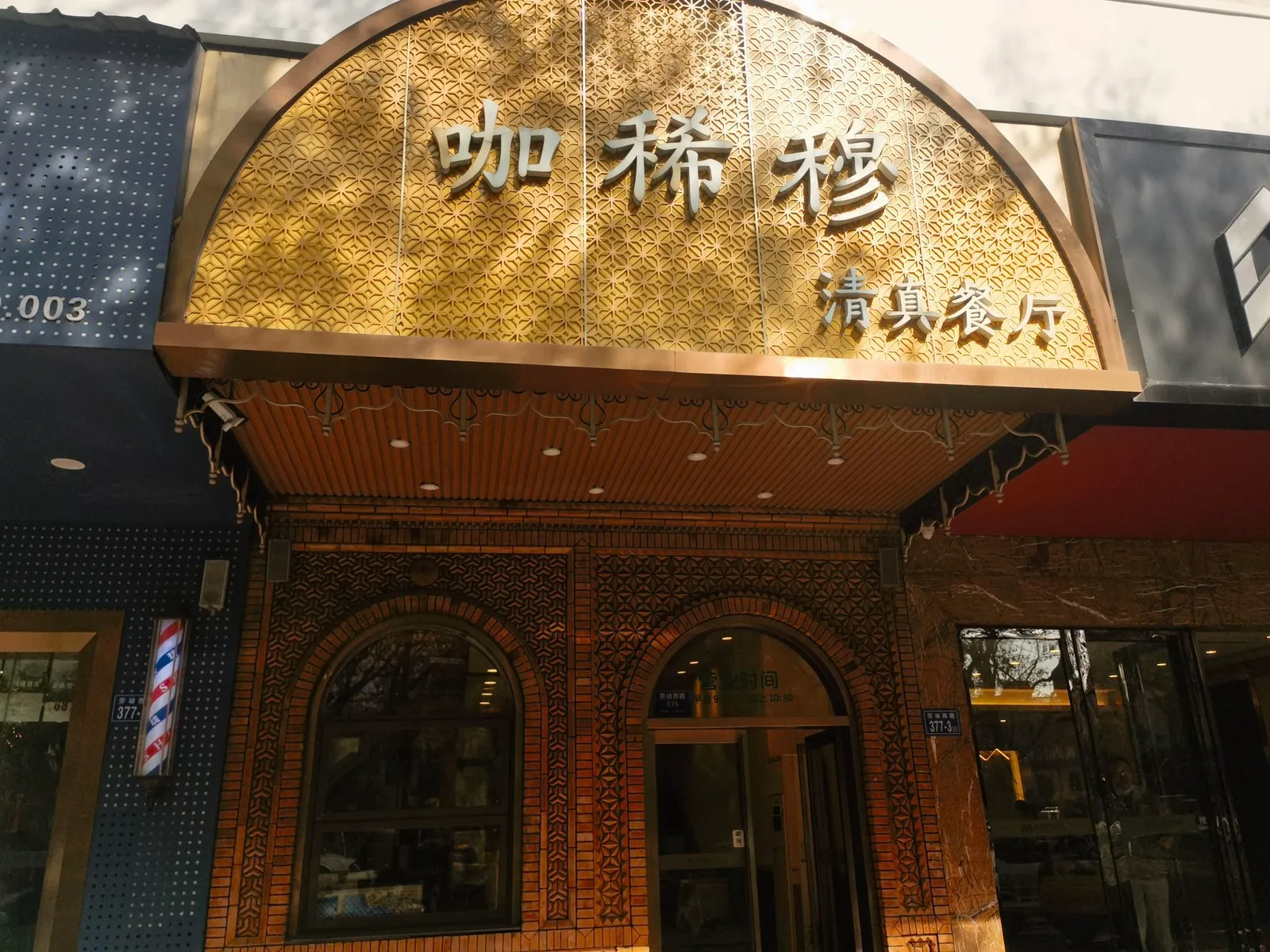
This is the pattern we see most with AI and restaurant tips: the address is real, the name sounds right, and the specific details are a guess. Our Changsha halal food guide lists the places our team has checked.
3. The hotel location
They had asked for a hotel near the mosque and near the railway station. The AI picked a chain hotel “at Wuyi Square”, the busy shopping area downtown. It isn’t close to either. The same chain also has at least three branches with “Wuyi Square” in the name, and the plan didn’t say which one.
When we choose a hotel, the guest’s reason comes first. Here it was halal food and prayer, so we look near the mosque or near a large shopping mall, because malls usually have a halal restaurant or two, and then check the hotel works for the train. For them we suggested a hotel beside Changsha Railway Station, a short ride from the mosque and the halal restaurants around Wuyi Avenue.
4. Friday
Their train day to Zhangjiajie fell on a Friday, and the AI didn’t mention it. Changsha Mosque, on Huilong Hill in Tianxin District, welcomes visiting Muslims for Jumu’ah. Zhangjiajie has no mosque open to visitors, so once you are on that train, Jumu’ah is gone for the week, and daily prayers there happen in the hotel or at a quiet stop along the route. Our plan also had them travelling that Friday, but we would choose an afternoon or even early-evening train, so they could attend Jumu’ah at Changsha Mosque first and then ride to Zhangjiajie. You can only make that choice if someone tells you it is there. More on planning prayers around transport in how to pray while traveling in China.
5. Tianmen Mountain: no car, and a changed route
Tianmen Mountain was in the ticket list but not in the transport list. It sits on the Zhangjiajie city side, about an hour by road from Wulingyuan, so that day needs a car or a taxi there and back. The AI’s four transfers didn’t include it.
The mountain itself has also changed. Since 13 October 2026 its main cableway has been closed for an upgrade, with no reopening date announced. Only Route C runs: the express cableway up to Tianmen Cave and the escalators through the rock, then back down the same way. The AI listed a ticket price but said nothing about which route is running. Nor did it mention that the escalator up to Tianmen Cave is not in the Route C ticket: it costs ¥32 extra, and without it the way up is 999 steps. With only one route open, expect queues. Our Tianmen Mountain guide is kept up to date as this changes.
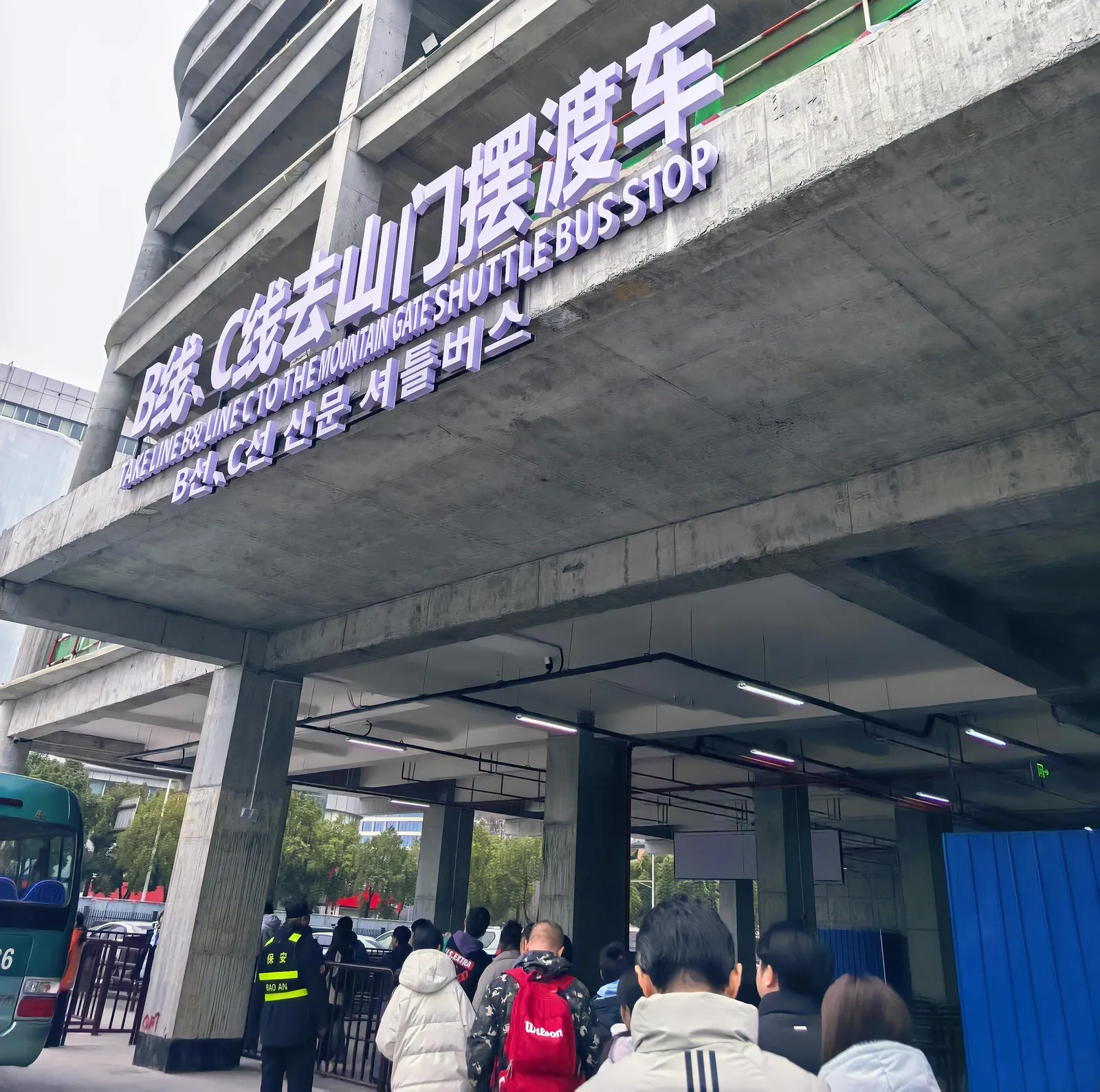
6. How the Forest Park actually lets you in
Forest Park entry is booked by real name for a time slot, and your passport is checked at the gate. The ticket is valid for four days, but the second day needs a new entry booking, and entry stops at 17:00. None of that was in the plan. Neither was the senior rate: visitors aged 60 to 64 can buy the ¥119 concession ticket instead of ¥236, and those 65 and over don’t pay the entry ticket at all (the park bus is still charged, at a reduced rate). Our local team confirmed foreign passports qualify; buy it at the ticket centre with your passport, and check the rate on the day.
7. December weather
Late December in Zhangjiajie can bring ice or fog, and either can stop a cableway, the Bailong Elevator or a glass walkway for the day. To be clear, that is only a possibility: in December it usually doesn’t happen. Still, the AI plan had no spare day and no plan B. In ours, we watch the forecast in the days before and, where the bookings allow, swap the mountain days so the best one gets the clearest weather.
8. The last day, and who does all of this
On the final day the plan has them leave Wulingyuan at 4 pm, reach Changsha airport around 8 pm, and wait for a flight at about 2 am, carrying some halal snacks because airport halal food is limited. That means six hours in a terminal at night. A day-use room in Changsha for a rest and a shower might change that evening completely.
And across all eight points, the person handling it is the traveler: a taxi at 1 am, a hotel front desk, a time-slot booking, a park bus at 4 pm, all in Chinese. An itinerary tells you where to be. It doesn’t stand next to you when something changes.
Why our quote was so much higher
Budget was the real issue: our quote was well above theirs, so choosing to travel on their own was completely fine, and travelling independently is entirely doable. I won’t put a private quote online, but I can be specific about where the difference went, because “you get what you pay for” explains nothing.
- An English-speaking guide for the whole week, trains included. This is the largest single difference. In a park this size, with several gates and many bus, cableway and elevator changes, the guide decides the order, handles the queues and keeps the pace gentle. The guide also asks about your prayer times and food needs in advance and passes them to everyone else on the ground. Our article on whether you need a tour guide in China covers what a guide does and doesn’t do.
- A private car every day, not four taxi rides. Airport pick-up at 1 am, the Tianmen day, every park gate in the morning, and the drive to the airport at night.
- More of the trip. Our plan also had Yuelu Mountain and Orange Isle in Changsha, two full Forest Park days including Yangjiajie, Huangshizhai, the Ten-Mile Gallery train and Golden Whip Stream, and the Grand Canyon Glass Bridge.
- Every booking done before they land. Trains, time slots, cableways and hotels, all in their passport names.
- Our planning and service fee. That is our margin, and it is part of the price you see.
What is not in the difference: shopping stops, or optional extras sold to you on the road. Lunches and dinners weren’t in our quote, while their own budget included them, so the real gap was wider than the two totals suggest. If you want the line-by-line numbers behind a quote like this, see what a private China tour actually costs, and for this exact region, Zhangjiajie DIY or private tour.
None of that makes the AI plan wrong for everyone. A traveler who is comfortable with time-slot bookings, Chinese-language taxis and a fixed plan in winter can take that route and have a good trip, as long as the eight gaps above are closed first. And it doesn’t have to be all or nothing: if you only want the 1 am airport pick-up, the car for the Tianmen day, or the ticket and train bookings, we quote those on their own too.
When they chose to go on their own
They decided to travel independently. That is a perfectly reasonable choice, and I told them so.
I also told them what I would want to know in their place, in three short points: book the Changsha room from the night before you land, and tell the hotel you will arrive in the early hours; at Tianmen Mountain only Route C is running, so buy the right ticket and expect queues; and the Forest Park needs a time-slot booking for each entry, with the senior ticket available for them. Then I wished them both a wonderful trip. They wrote back to thank us.
We think any travel agency or trip planner should work this way. Of course we hope to host more travelers, but we also want more travelers to enjoy China and go home with a trip they won’t forget. So the useful thing is to make their plan safer, not to talk them back into a quote.
How to check your own AI itinerary for China
If an AI tool has built your plan, go through these before you book anything. Each one is something we found missing in a real plan.
- Check the arrival night. If you land after midnight, the hotel booking must start the night before.
- Check every halal restaurant by its name, not only its address. An address can be a food court or a similarly named shop next door. Ask the hotel, or someone who has been, to confirm the name and that it is halal.
- Find your Friday. Note which city you are in on Friday and whether that city has a mosque that welcomes visitors.
- Check every leg has transport. For each sight, ask: how do I get there and back from where I’m sleeping?
- Search for current notices. Cableways close for upgrades and weather. Look for an official notice dated within the last few weeks.
- Read the booking rules. Real-name tickets, time slots, re-entry rules and last entry times, and ask about senior or child rates for your passports.
- Look at the last day hour by hour. Late flights leave long gaps. Decide where you will rest, pray and eat in that gap.
Frequently asked questions
Is AI reliable for planning a China trip?
It is reliable for the shape of a trip: which cities, how many nights, roughly what to see. It is not reliable for anything that changes, such as a closed cableway, or anything it can’t see from the internet, like whether a restaurant at a given address is the halal one. Use it to draft, then check the details. If you are willing to put in the time to check each one, I think it works perfectly well.
Can AI find halal restaurants in China?
It can find candidates, depending on what information is publicly available online. In the plan we checked, one of three was a real halal restaurant, one was a food court with halal stalls it didn’t name, and one was a different shop from the halal restaurant whose name it resembled. Confirm the name and the details before you go.
Do you charge to plan an itinerary or give a quote?
No. Once we have your flight times, dates, travelers and needs, we build the plan and price it for free. You decide afterwards.
Can you check an itinerary I made with AI?
Yes, and there’s no charge for it. Send it to us and we’ll tell you what we would change and why, whether or not you book with us.
Got an AI plan already?
Send it to us on WhatsApp and we’ll go through it the way we went through this one: what works, what’s missing, and what we’d change.