Last Updated on October 5, 2026 by Aaron Chen
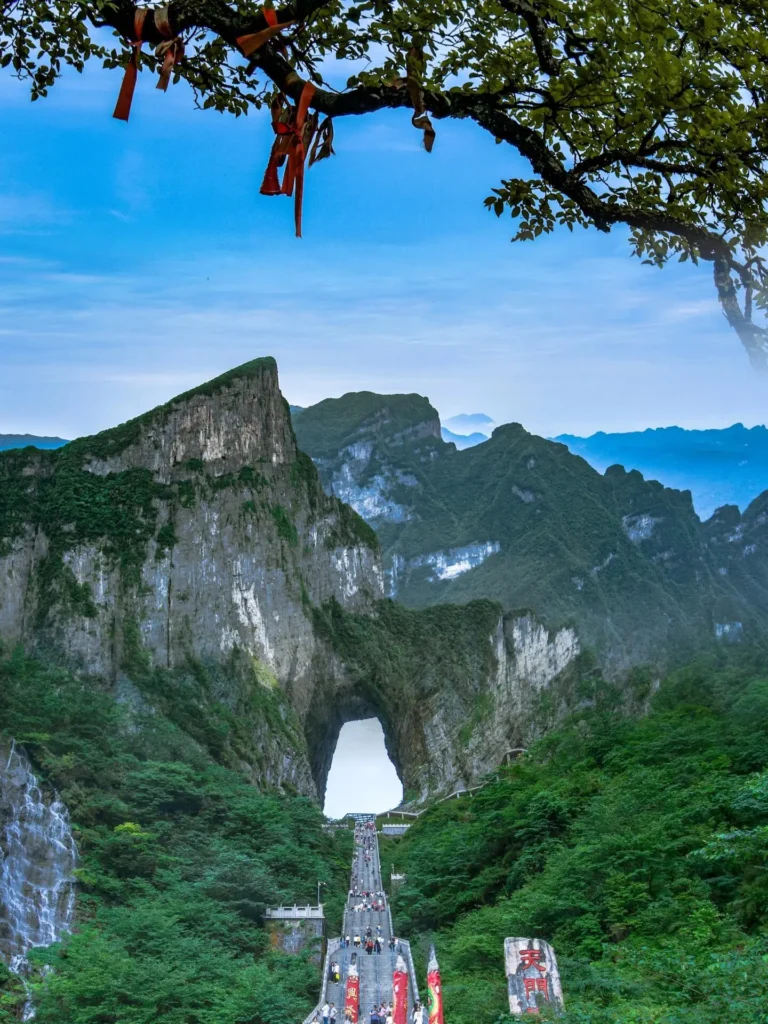
Heaven’s Gate is Tianmen Cave (天门洞), a natural arch 131.5 metres high punched straight through the summit ridge of Tianmen Mountain in Zhangjiajie. You reach it by what its operator calls the longest high-mountain passenger cableway in the world, and then you either climb the 999 steps or take the escalators that run inside the mountain — a detail most English guides never mention, and the one that decides whether your parents can come.
Most people can manage Tianmen Mountain. Whether you can, comfortably, depends on which of the two ways up you take and how you feel about heights. Our head office is in Zhangjiajie and we plan trips here for Muslim travellers, so this guide is about the experience itself: what each stage actually feels like, and how to tell in advance if it suits your group.
What Heaven’s Gate Actually Is
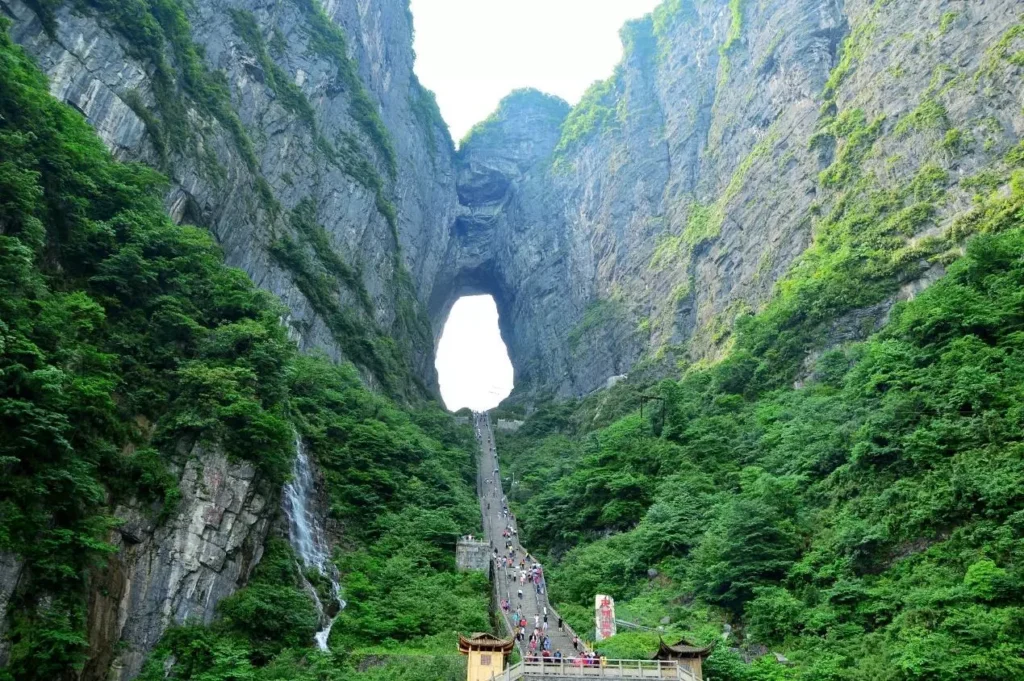
Tianmen Mountain rises to 1,518.6 metres directly beside Zhangjiajie city. Near the top, a hole goes clean through the rock: Tianmen Cave, 131.5 metres high, framing sky on the other side. That arch is what the world knows as Heaven’s Gate, and it is the reason the mountain appears in aerial footage and stunt videos.
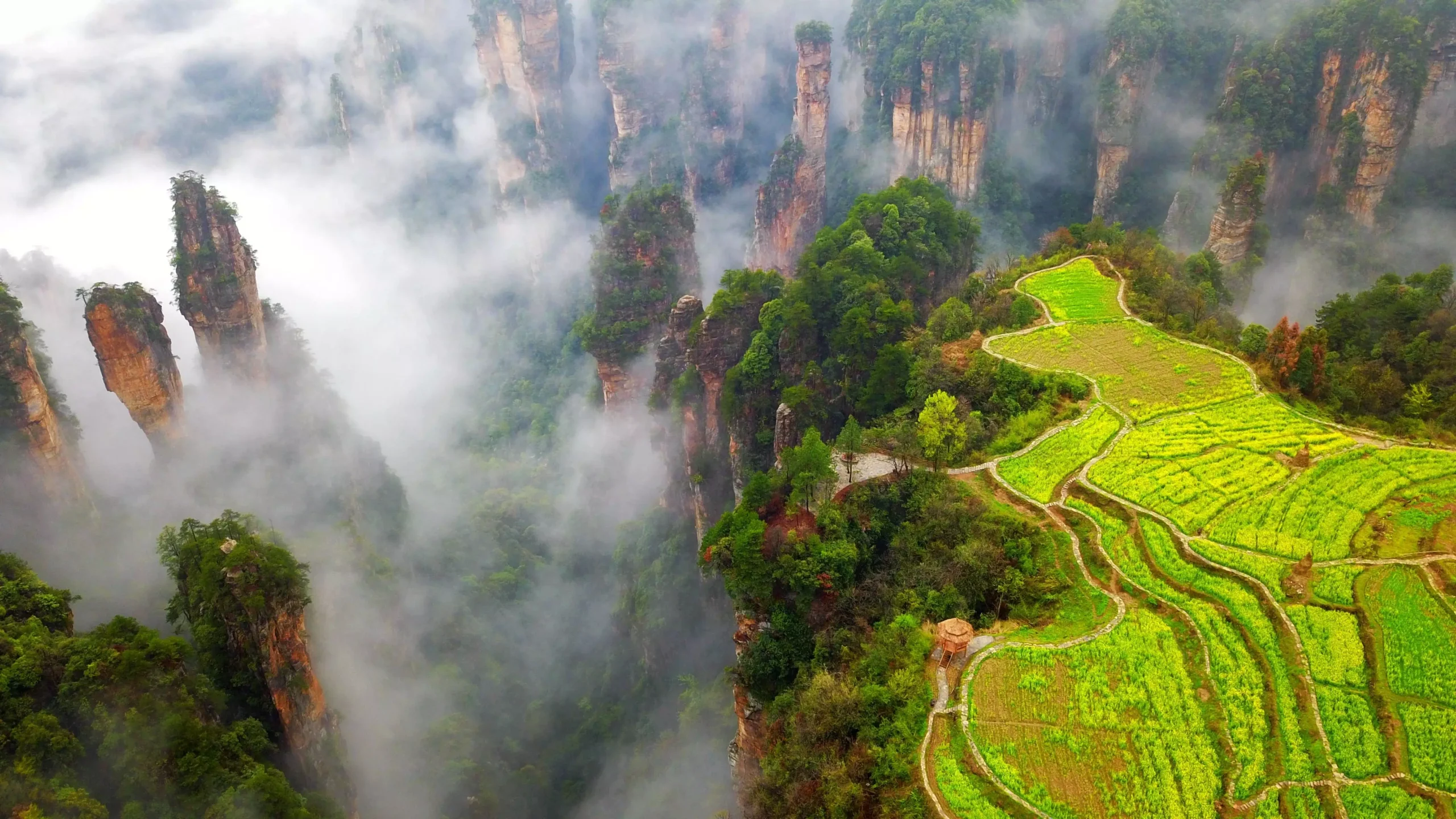
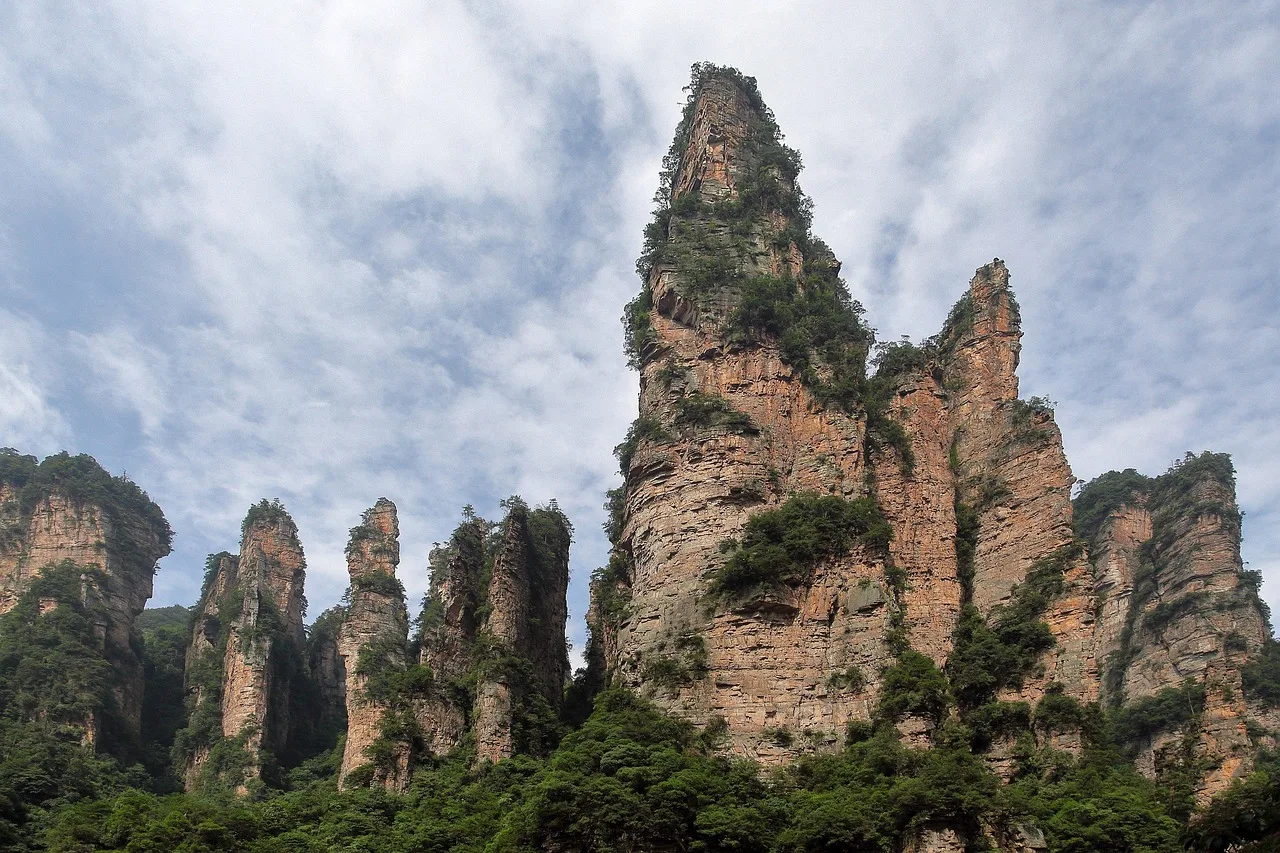
One thing to be clear about before you plan: this is not the Avatar scenery. The sandstone pillars from the film are in Zhangjiajie National Forest Park, a separate area roughly an hour away in the other direction — see what the Avatar Mountains actually are if that is what brought you here. Many visitors do both, on different days; our guide to what to pick and what to skip in Zhangjiajie explains how they fit together.
Figures on this page come from the Zhangjiajie Tourism Bureau and verified locally, checked July 2026.
Getting Up: Cableway, Road, or Both
The cableway is the signature approach. Built in 2005 by the French manufacturer Poma, it runs 7,455 metres and climbs 1,279 metres with 98 cars and a maximum gradient of 37 degrees. The lower half glides over the city and farmland; the upper half tilts up against the cliff face, and that is the section people remember. It is a long ride — plan for it rather than treating it as a transfer.
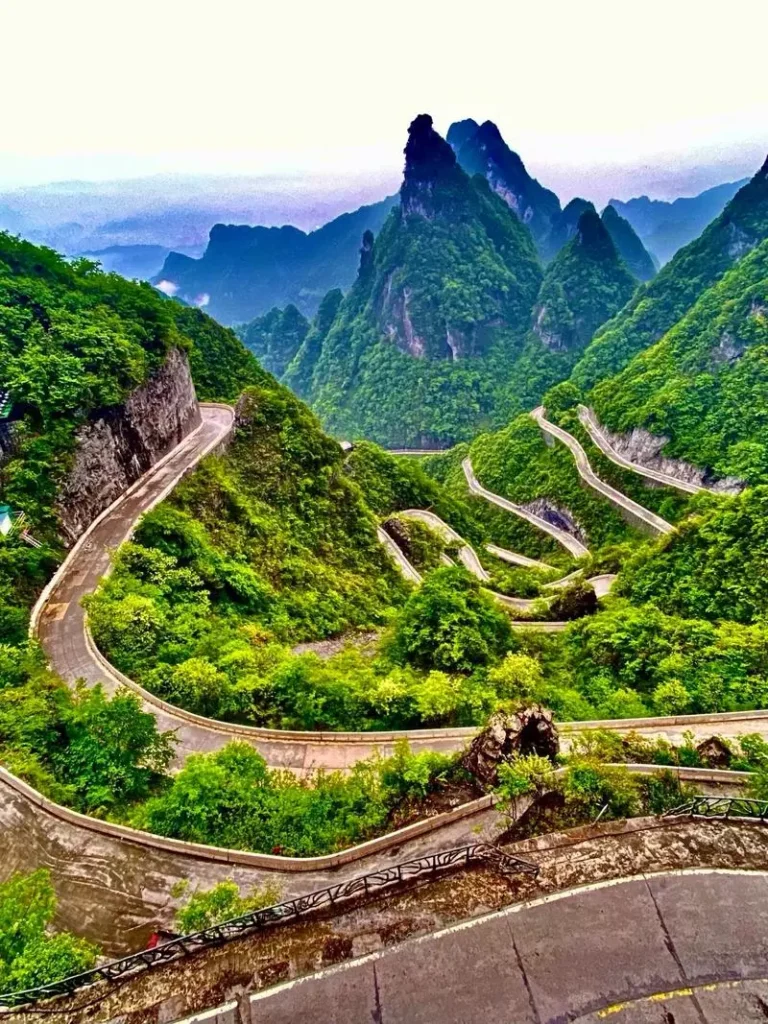
The road is Tongtian Avenue: 11 kilometres and 99 hairpin bends, taken by scenic bus. Visually spectacular, and genuinely uncomfortable if anyone in your group gets carsick — take this leg downhill rather than uphill if that is a concern, or avoid it entirely.
Most itineraries combine the two, and the scenic area offers set route combinations that change with season and visitor flow. Rather than reproduce them here, see the route notes on our Tianmen Mountain page, and confirm the current arrangement before you book — the combinations get adjusted.
The 999 Steps — and the Escalators Most Guides Don’t Mention
From the plaza below the arch, a staircase of 999 steps climbs to the cave mouth. It has a nickname — the Stairway to Heaven — and it is the image every guide uses. It is steep, exposed, and for a lot of visitors it is the highlight precisely because it is hard.
What almost no English guide tells you: you do not have to climb them. An escalator system runs inside the mountain itself — 12 sections totalling 897 metres, lifting 340 metres, opened in 2015. It carries you up through tunnels in the rock instead of up the exposed staircase.
This single fact changes who can visit. A traveller with bad knees, a grandparent, someone recovering from injury, a family with a tired six-year-old — all of them can reach Heaven’s Gate and the summit without the staircase. The stairs become a choice rather than a barrier.
Two practical notes: some escalator sections may carry a charge separate from your entry ticket, and arrangements change, so confirm when you book. And if you want the staircase for the achievement, take it down rather than up — the views are the same and your legs will thank you.
Coiling Dragon Cliff and the Glass Walkways
The summit area has walkways bolted to the cliff face, including the glass-floored Coiling Dragon Cliff section, which opened in August 2016 and looks down over Tongtian Avenue’s bends.
Honest description: the glass panels are the point, and they work — you can see the drop directly beneath your shoes. Staff hand out shoe covers. There are non-glass cliff paths for anyone who would rather not, so a group can split here without anyone missing the summit. The glass sections are short; nobody is trapped on them for long.
Can You Handle It? Honest Answers by Group
This is the question nobody answers directly, so here it is by group:
Afraid of heights. You can still do Tianmen Mountain. The cableway is enclosed and steady, and it is over quickly. Skip the glass sections and use the solid cliff paths — you lose one photograph and keep the entire experience. What genuinely troubles height-sensitive visitors is not the glass but the exposed 999 steps; use the escalators.
Elderly travellers or anyone with knee or stamina limits. Yes, with the escalator route: cableway up, escalators to the arch and summit, scenic bus or cableway down. Avoid the staircase in both directions. Build in more time than a guidebook suggests — queues and transfers, not the walking, are what tire people.
Families with young children. Manageable. Children generally enjoy the cableway and the escalators. Hold hands on the cliff walkways, and be realistic about the point in the afternoon when a small child stops enjoying anything.
Anyone who gets carsick. The 99-bend road is a real problem, not a mild one. Take the cableway both ways, or the road downhill only.
Anyone in a hurry. Do not attempt Tianmen Mountain and the National Forest Park on the same day. It is the most common planning mistake in Zhangjiajie and it ruins both.
What You’ll See — and What Fog Does
On a clear day: the arch with sky through it, the city far below, and layered ridges to the horizon.
On a heavily clouded day: possibly very little. Tianmen Mountain is the most fog-sensitive major attraction in Zhangjiajie — its highlights depend on visibility in a way the forest park’s do not, and thick cloud can hide the arch itself. In severe weather, high walkways and cable transport can also be adjusted temporarily for safety.
The defence is a flexible day in your plan rather than a fixed Tianmen booking. Our best time to visit guide covers which months carry the most fog risk.
Halal Food and Prayer at Tianmen Mountain
There is no halal food on the mountain. Eat before you go up and plan your real meal for after you come down — our guide to halal food near Tianmen Mountain covers the options at the base and in the city, and because the mountain starts from the city, getting back to a verified restaurant is easier here than from the park. Carry water and snacks for the summit.
On prayer: Zhangjiajie has no public mosque for visitors. There are no prayer facilities on the mountain either. What works is praying at your hotel before departure, using a quiet rest point on the summit or in your vehicle, and planning your descent so the evening is not a rush — cable car queues at closing time are the usual reason groups get back later than intended. Carry a compact prayer mat. Because Tianmen Mountain is close to the city, this is one of the easier attractions to fit around prayer times — see our Zhangjiajie city guide for how the city works as a base.
Tickets and Timing
Tianmen Mountain uses timed entry, and in peak season and around Chinese public holidays it sells out — book ahead rather than arriving hopefully. Ticket products bundle different combinations of cableway, road and escalator sections, and those bundles change, so check what yours actually includes. Current policy notes are in our 2026 Zhangjiajie ticket policy update.
We can help you understand which ticket option matches your route, and book on your behalf where availability allows.
Give the mountain most of a day. Half a day is possible if you take the cableway both ways and skip the staircase, but it will feel rushed.
Planning It With Us
We are a Chinese travel agency serving Muslim travellers, headquartered here in Zhangjiajie. For Tianmen Mountain that means practical things: choosing the route combination that matches your group’s knees rather than the one a listing recommends, timing your visit around prayer and meals, arranging a private transfer so you are not waiting for a bus after a long descent, and keeping a spare day so fog does not cost you the arch.
Tell us your dates and who is travelling on our Plan My Trip page, or message us on WhatsApp at +86-19118612939. You can also browse the wider Zhangjiajie destination guide.
Want this trip planned for you?
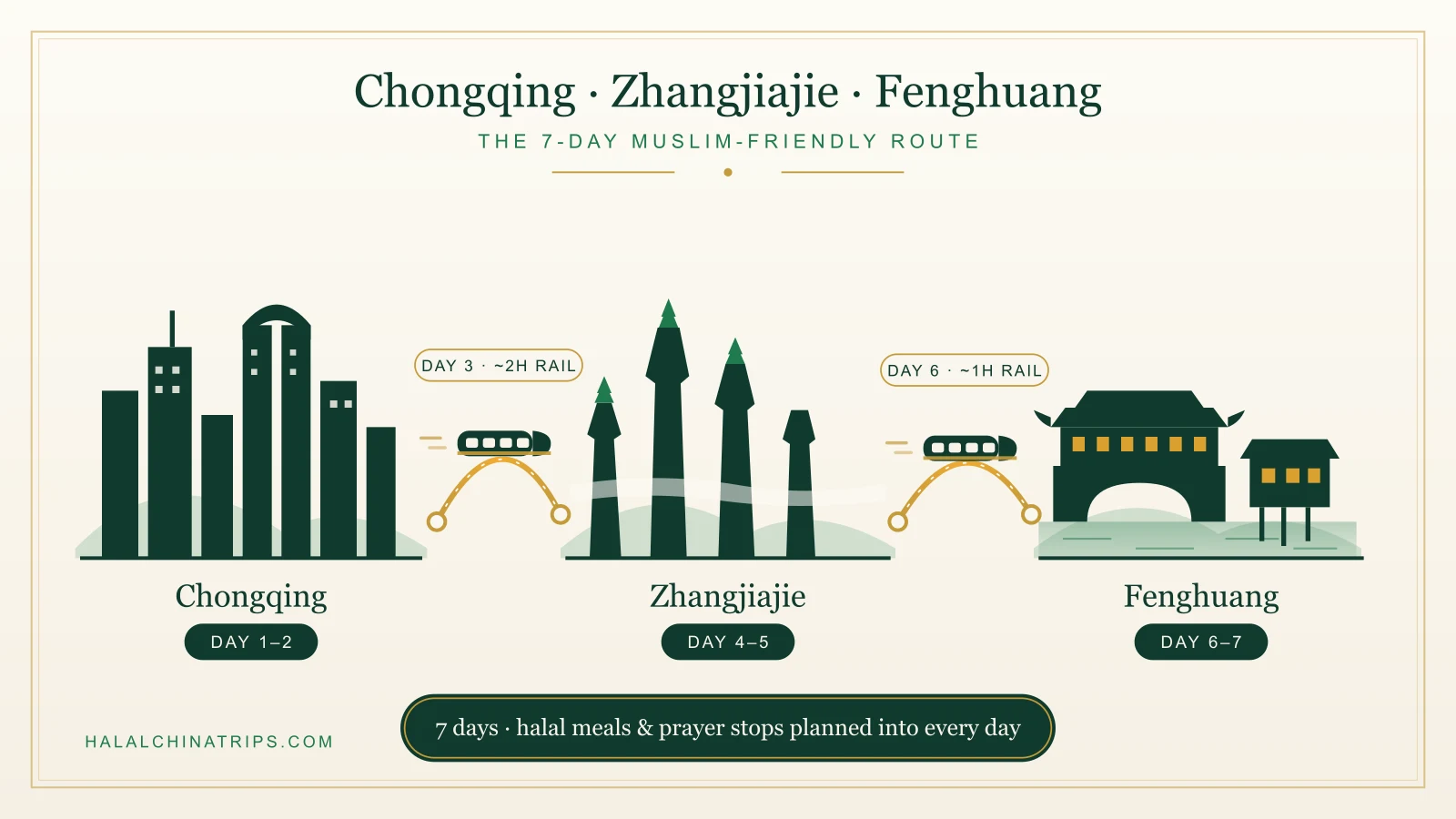
Our 5-day Zhangjiajie & Fenghuang private tour covers the Avatar mountains, Tianmen Mountain and Fenghuang Ancient Town — with airport pick-up, private driver and verified halal restaurants arranged for every day.
FAQ
What is Heaven’s Gate in China?
Heaven’s Gate is Tianmen Cave, a natural arch 131.5 metres high through the summit ridge of Tianmen Mountain in Zhangjiajie, Hunan Province. The mountain itself rises to 1,518.6 metres and is reached by cableway from Zhangjiajie city.
How many steps are there at Heaven’s Gate?
There are 999 steps from the plaza to the arch, nicknamed the Stairway to Heaven.
Do you have to climb the 999 steps?
No. An escalator system inside the mountain — 12 sections totalling 897 metres, lifting 340 metres — reaches the arch and summit without the staircase. Some sections may carry a separate charge, so confirm when booking. This is what makes Tianmen Mountain workable for elderly travellers and anyone with knee problems.
Is Tianmen Mountain suitable if you are afraid of heights?
Yes, with two adjustments: use the escalators instead of the exposed 999 steps, and take the solid cliff paths instead of the glass-floored Coiling Dragon Cliff sections. The cableway is enclosed and most height-sensitive visitors manage it comfortably.
How long do you need at Tianmen Mountain?
Most of a day. A rushed half-day is possible using the cableway both ways, but do not combine Tianmen Mountain with Zhangjiajie National Forest Park on the same day.
Want this mapped to your own dates? Message us on WhatsApp with your group size and travel month — we’ll reply within 24 hours, usually faster, with a day-by-day plan and an itemized quote.