
Last Updated on October 5, 2026 by Aaron Chen
The Avatar Mountains are the quartz-sandstone pillars of Zhangjiajie National Forest Park, part of the Wulingyuan Scenic and Historic Interest Area in Hunan Province, China. The single pillar most often photographed as “the Avatar mountain” stands in the Yuanjiajie area. Yes, it is worth the trip — with one honest condition: this is a large, multi-area park that rewards planning, not a single viewing platform you drop into for an hour.
Our head office is in Zhangjiajie. We are a Chinese travel agency that plans trips for Muslim travellers, and this is the destination we plan more than any other — so this guide is written the way we would answer you on WhatsApp: which name means what, whether it deserves your limited days, and how to actually get there.
The Five Names, Decoded
Most confusion about the Avatar Mountains is a naming problem. Five different names get used interchangeably online, and booking the wrong one costs you a day.
| Name | What it actually means |
|---|---|
| Zhangjiajie | The city — airport, railway stations, most hotels. Not the park itself. |
| Wulingyuan | The district and the UNESCO-listed area containing the park; also the town at the park’s main gate. |
| Zhangjiajie National Forest Park | The park with the famous sandstone pillars. This is “the Avatar Mountains.” |
| Yuanjiajie | The area inside the park with the most iconic viewpoints, reached by the Bailong Elevator. |
| Avatar Hallelujah Mountain | One specific pillar in Yuanjiajie — see below. |
| Tianmen Mountain | A separate mountain near the city — cable car, glass walkways, “Heaven’s Gate.” Not the Avatar scenery. |
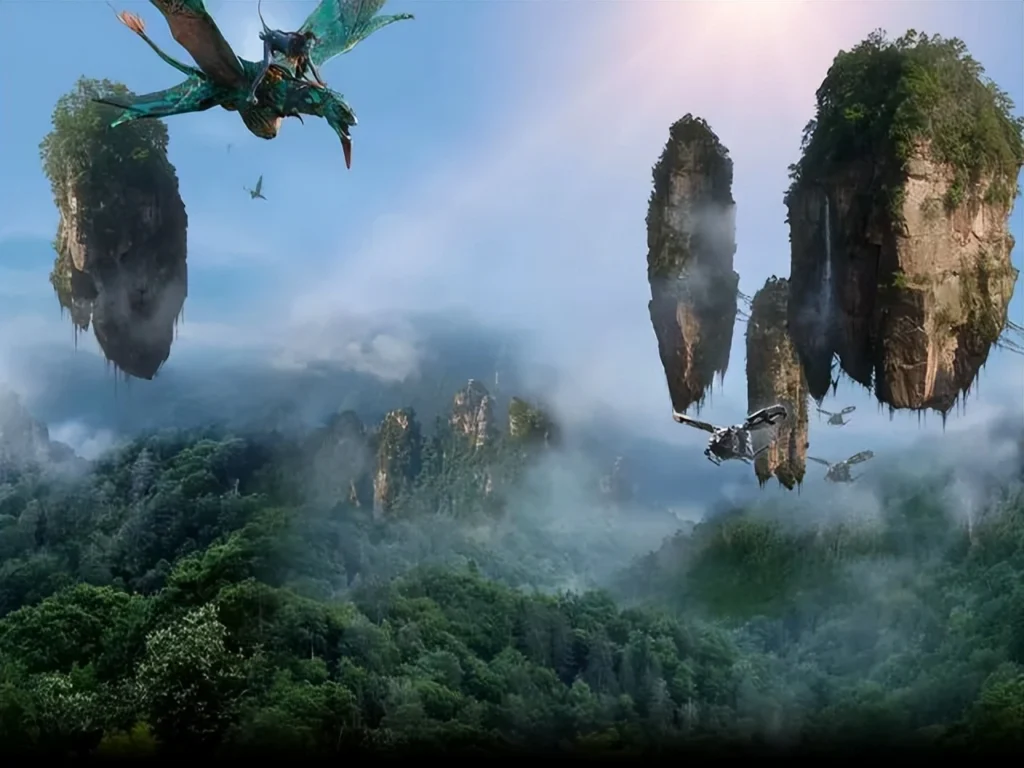
The pillar itself has a Chinese name: 南天一柱, the South Sky Pillar. On 25 January 2010, local scenic-area management renamed it “Avatar Hallelujah Mountain” after the film, as reported by China News Service at the time — and that is the name on the signage and in most tourism material today.
Worth knowing what you are actually looking at: UNESCO inscribed Wulingyuan in 1992 for a landscape of more than 3,000 narrow quartz-sandstone pillars, many over 200 metres high, across some 26,400 hectares — along with gorges, waterfalls, two large natural bridges and around 40 caves. The film connection is marketing. The geology is the reason to come.
If you want the full breakdown of routes, entrances and tickets inside the park, that lives on our Zhangjiajie National Forest Park page. If you are trying to decide between this and the “Heaven’s Gate” mountain, see the Tianmen Mountain guide.
Is It Worth Visiting? An Honest Answer
We would rather you arrive with correct expectations than book a trip that disappoints you. So, by group:
First-time visitors to China: yes, strongly. There is no substitute landscape elsewhere in the country. Two full days inside the park is the point at which most people stop feeling rushed.
Families with children: yes, with route discipline. Children handle cable cars and elevators well and long stair sections badly. Pick two areas, not five.
Elderly travellers: yes, if you use the transport. The park is designed around shuttle buses, cable cars and the elevator; a viewpoint-focused route with minimal walking is entirely realistic. A walking-heavy route is not.
Photographers: yes — and consider staying inside Wulingyuan so you can be at a viewpoint before the day-trip buses arrive.
“I have already seen a lot of mountains”: still yes, and here is why. This is not one summit with one view. It is a forest of thousands of vertical pillars that you see from above at Yuanjiajie and Tianzi Mountain, and from below in the valleys. That vertical layering is what no photograph conveys.
Who will be disappointed: anyone trying to do the Avatar Mountains and Tianmen Mountain in a single day, and anyone who books one fixed day and gets heavy fog. Thick cloud can genuinely hide everything. We build a swap day into itineraries for exactly this reason — see our guide to the best time to visit for which months carry the most fog risk, and how many days Zhangjiajie needs to size the trip before you book flights.
Where Exactly to Stand
Four places do most of the work. You do not need all of them in one day.
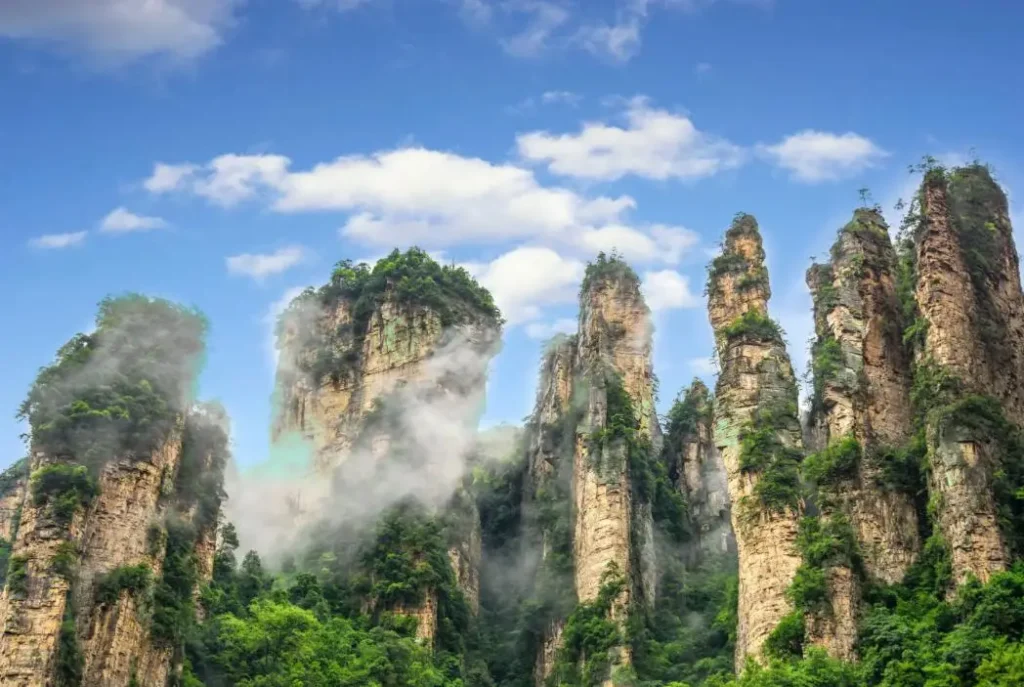
Yuanjiajie — the iconic one. The First Bridge Under Heaven and the Avatar Hallelujah Mountain pillar are here. Most crowded, and still the one to prioritise if you only have one morning.
Tianzi Mountain — the wide-angle counterpart, best for seeing the sea of pillars stretch to the horizon and for cloud-sea conditions after rain. Details in our Tianzi Mountain guide.
Golden Whip Stream — the valley floor. Flat, shaded, and the only route that shows you the pillars from underneath rather than across. The gentlest option in the park, and often the favourite of travellers who expected to be bored by it. See the Golden Whip Stream guide.
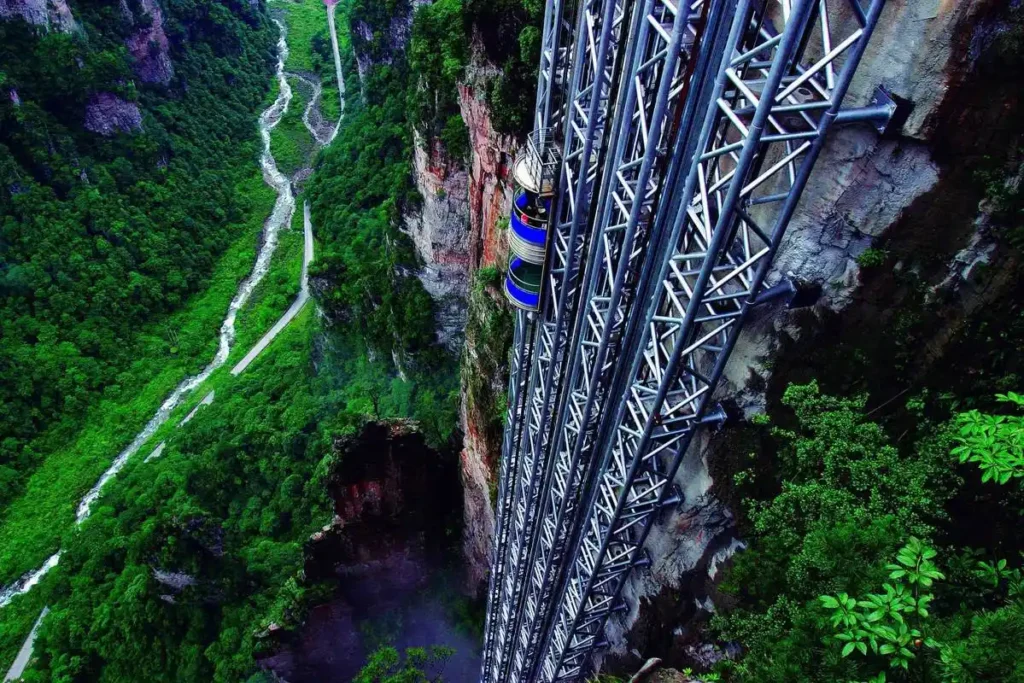
Bailong Elevator — the fastest way up to Yuanjiajie, and a queue point in peak season. Whether it is worth your time depends on the day and your group; we cover that decision in is the Bailong Elevator worth riding.
For a tested sequence rather than a list, our National Forest Park itinerary puts these in a workable order.
How to Get There
From Southeast Asia. Zhangjiajie Hehua International Airport takes some direct international flights, and Changsha is the larger gateway with far more connections — many travellers fly into Changsha and continue by high-speed rail. We have route-specific notes for Kuala Lumpur to Zhangjiajie and for the Changsha to Zhangjiajie leg.
From Beijing or Shanghai. Both work. Flying is faster door-to-door; high-speed rail is more reliable in bad weather and easier with large luggage. If your China itinerary already includes Changsha, Chongqing or Chengdu, rail usually wins — if you are coming straight from Beijing or Shanghai, fly.
Airport or station to the park. The park gates are in Wulingyuan, a separate town from Zhangjiajie city. This transfer is where independent travellers most often lose time, especially arriving in the evening or with elderly family members and luggage. We arrange private transfers for this leg as standard; if you prefer public transport, allow far more buffer than the timetables suggest. Arrival-side details are in our Zhangjiajie airport guide.
Where to Stay to See Them
This is a genuine trade-off, not a ranking:
Wulingyuan (at the park gate) — you can be at the first cable car before the tour groups. Best for photographers and anyone doing two park days. Fewer dining options.
Zhangjiajie city — more restaurants, easier transport connections, better for trips that also include Tianmen Mountain. Costs you 40–60 minutes each way to the park, twice a day.
Our usual recommendation for Muslim families: city base if food certainty matters most, Wulingyuan if early light matters most — and for a 3–4 day trip, split the stay. The full comparison is in where to stay in Zhangjiajie for Muslim travellers.
What Muslim Travellers Should Plan First
Three things decide whether a park day feels comfortable:
Food is a before-and-after decision. There is no halal food inside the park. Eat properly before you enter, carry snacks, and have your evening restaurant settled before the day starts — our list of verified halal food in Zhangjiajie is the starting point.
Prayer needs anchor points, not hope. The park is a nature reserve with no prayer facilities. Pray before departure, identify a quiet rest area for midday, and plan your descent so the evening is not a rush.
Pace beats coverage. Two areas done calmly will be remembered better than five done at speed — particularly with children or elderly travellers.
Planning It With Us
We are a Chinese travel agency serving Muslim travellers, headquartered in Zhangjiajie with branches in several Chinese cities. For this destination that means we can do the parts that are hard from abroad: choose the route and entrance that match your group’s walking ability, check halal restaurant options and time meals around them, arrange private transfers and airport or station pickup, assist with park tickets and scenic transport, and build the buffer day that protects you from fog.
We are not the scenic area and not a ticket platform, and we will tell you when the Avatar Mountains do not fit the trip you have described. Send us your dates and group on our Plan My Trip page, or start with the wider Zhangjiajie destination guide.
Want this trip planned for you?
Our 5-day Zhangjiajie & Fenghuang private tour covers the Avatar mountains, Tianmen Mountain and Fenghuang Ancient Town — with airport pick-up, private driver and verified halal restaurants arranged for every day.
FAQ
Where are the Avatar Mountains in China?
In Zhangjiajie National Forest Park, part of the Wulingyuan Scenic and Historic Interest Area in Hunan Province. The most photographed pillar, Avatar Hallelujah Mountain, is in the Yuanjiajie area of the park.
Is Avatar Mountain worth visiting?
Yes for almost every type of traveller, provided you give it two days rather than half of one and accept that fog can hide the view on any given day. It is the only landscape of its kind in China.
What city is closest to the Avatar Mountains?
Zhangjiajie city has the airport and railway stations, but the park gates are in Wulingyuan, a separate town closer to the entrances. Staying in Wulingyuan puts you nearest the mountains; staying in the city gives you more restaurants and transport options.
Which month should I avoid?
Avoid China’s national holiday weeks — May 1–5 and October 1–7 in 2026 — when queues are at their worst. Our best time to visit guide covers the month-by-month picture, including fog risk.
Do I need a guide for the Avatar Mountains?
Not strictly — signage and scenic transport are workable independently. A guide or planned route earns its cost when you have limited days, mixed walking abilities, halal meal requirements, or want someone handling transfers so the park day is not spent solving logistics.
Want this mapped to your own dates? Message us on WhatsApp with your group size and travel month — we’ll reply within 24 hours, usually faster, with a day-by-day plan and an itemized quote.