Last Updated on October 5, 2026 by Aaron Chen
Zhangjiajie has a subtropical monsoon climate: warm and rainy from April to October, mild and drier in autumn, and cold — sometimes icy on the mountain tops — from December to February. July and August are the hottest months, with city temperatures often above 33°C, while the heaviest rain falls between April and July. For most Muslim travelers, the most comfortable months are September to November and March to May.
This guide explains what the weather is actually like month by month, and — more importantly — what it means for your scenic routes, halal food timing, prayer planning and packing. If your real question is which month to choose, see our guide to the best time to visit Zhangjiajie.
Zhangjiajie Weather Quick Reference Table
Temperatures below are city-level averages from China Meteorological Administration climate normals (1991–2020). Mountain areas such as Tianmen Mountain and Tianzi Mountain sit up to about 1,300 m higher than the city and feel noticeably cooler all year.
| Month | Avg High / Low (°C) | Rainfall | What It Means for Your Trip |
|---|---|---|---|
| January | 10 / 3 | Low | Cold; possible ice on summits; quiet parks |
| February | 12 / 5 | Low | Cold, gradually warming; Chinese New Year crowds vary |
| March | 17 / 9 | Moderate | Spring opens; cool mornings, comfortable walking |
| April | 23 / 14 | High | Green season begins; carry rain gear |
| May | 27 / 18 | High | Warm and wet; misty peak views |
| June | 31 / 22 | Very high | Hot, humid, frequent rain |
| July | 34 / 24 | Very high (peak) | Hottest month; storms and mist |
| August | 34 / 24 | Moderate | Hot but less rain than July |
| September | 29 / 20 | Moderate | Heat eases; excellent walking weather |
| October | 23 / 15 | Moderate | Clear, mild; peak season crowds in early October |
| November | 18 / 10 | Low | Cool, often clear; autumn colors |
| December | 12 / 5 | Lowest | Cold; occasional snow or ice on mountain tops |
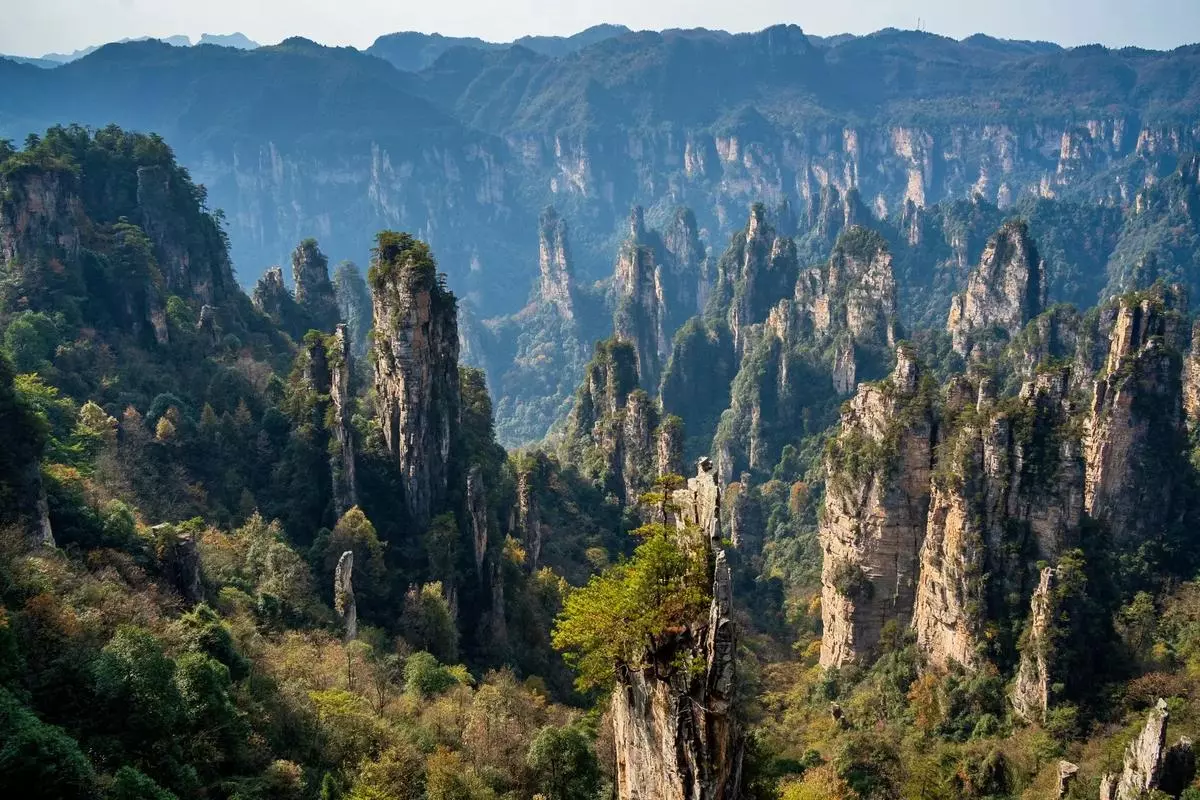
The short version: do not plan a Zhangjiajie trip as if every day will be dry — but do not cancel because of rain either. Mist after rain is when the sandstone peaks look most dramatic.
Zhangjiajie Weather Month by Month
Zhangjiajie Weather in January
The coldest stretch of the year, with city lows around 3°C and summit areas colder still — icy paths are possible after cold snaps. Parks stay open and are at their quietest. Muslim travelers should plan shorter daylight routes and confirm halal dinner options near the hotel, since evenings are cold for walking far.
Zhangjiajie Weather in February
Still cold — highs around 12°C and lows near 5°C — warming slowly late in the month. If your dates overlap Chinese New Year, book hotels and transport early. Indoor options such as Huanglong Cave work well on the coldest days.
Zhangjiajie Weather in March
Spring arrives: daytime highs around 17°C and increasing visitor numbers from late March. Mornings on the mountain remain cold, so layer up for the first cable car of the day. A comfortable month for elderly travelers who dislike heat.
Zhangjiajie Weather in April
The green season — and the start of the main rainy period. Expect a mix of clear days and showers. Trails are lush and waterfalls fill up. Keep one flexible day in your plan in case heavy rain shifts your mountain day.
Zhangjiajie Weather in May
Warm (highs around 27°C) and reliably wet. This is classic misty-peak weather: valley fog can hide viewpoints in the morning and lift by midday. Build slack into your schedule rather than stacking viewpoints back to back.
Zhangjiajie Weather in June
Hot, humid and rainy, with highs above 30°C. Start scenic days early, plan a midday rest, and keep prayer and meal stops indoors where possible. Quick-dry modest clothing matters more than in any other month.
Zhangjiajie Weather in July
Statistically the hottest and wettest month (average high 33.5°C; rainfall peaks near 227 mm). Thunderstorms can pause cable cars briefly and thick fog can hide views for an hour or a day. Our detailed Zhangjiajie summer tips for Muslim travelers cover how to structure days around the heat.
Zhangjiajie Weather in August
Still hot, but rainfall drops sharply compared with July. School-holiday crowds are the bigger planning factor: pre-book tickets and start early. Hydration and shaded rest stops matter for families with children.
Zhangjiajie Weather in September
One of the best months. Heat eases to highs around 29°C, rain becomes occasional, and walking is comfortable all day. A strong choice for travelers who want full-day mountain routes without summer strain.
Zhangjiajie Weather in October
Mild, often clear, and visually superb — but the first week is China’s National Day holiday, the busiest week of the year. From mid-October, crowds thin while weather stays excellent.
Zhangjiajie Weather in November
Cool, dry and often clear, with autumn colors in the forest. Mornings are cold on the summits. A quiet, comfortable month for slower-paced groups.
Zhangjiajie Weather in December
Cold and the driest month of the year. Occasional snow or ice can appear on mountain tops, which occasionally leads to temporary safety adjustments on high walkways — check conditions on the day and keep a flexible backup. Crowds are minimal and snow-dusted peaks are a rare reward.
If your dates fall between November and January, the numbers above are only half the decision — our Zhangjiajie winter guide covers what closes in icy spells and how to plan around fog days.
The Four Seasons at a Glance
Spring (March–May)
Comfortable temperatures, rising rainfall, misty views. Best for travelers who accept some rain in exchange for green scenery and moderate crowds.
Summer (June–August)
Hot, humid, dramatic. Manageable with early starts, indoor midday breaks and flexible routing — thousands of families travel in summer successfully every year.
Autumn (September–November)
The most reliable weather of the year: mild, drier, clear. If your dates are free, aim here — and see the best time to visit Zhangjiajie for how to choose between autumn months.
Winter (December–February)
Cold and quiet. City sightseeing is straightforward; mountain routes need warm layers and a check on ice conditions. Winter offers the lowest prices and occasional snow scenery.
How Weather Affects the Main Scenic Areas
Zhangjiajie National Forest Park. Rain rarely closes the park, but it slows shuttle queues and makes long stair sections tiring. On wet days, choose a shorter loop with fewer transfers — our National Forest Park itinerary shows how the routes break down.
Tianmen Mountain. The most weather-sensitive site, because its highlights depend on visibility. In thick fog or storms, check conditions before committing your ticket time; the Tianmen Mountain guide explains the route options.
Baofeng Lake and Huanglong Cave. The classic bad-weather alternatives. The cave is unaffected by rain, and the lake often looks better in light mist than in harsh sun. Swapping a fogged-out mountain day for one of these keeps a trip on track.
Rain, Fog and Muslim Travel Planning
Weather in Zhangjiajie is not only a sightseeing question — it changes how meals, prayer and rest fit into the day.
- Plan halal meals before the day starts. Do not count on finding halal food inside the mountain scenic areas. Eat a solid breakfast, carry snacks, and confirm your dinner restaurant in advance — see our guide to halal food in Zhangjiajie for verified options.
- Anchor prayer times to fixed points. Scenic areas are nature attractions without dedicated prayer rooms. Pray at the hotel before departure, identify a quiet rest point for midday, and time your return around evening prayers rather than squeezing one more viewpoint.
- Rain argues for private transport. Taxis get scarce in downpours and shuttle queues grow. For families and elderly travelers, a private transfer keeps meal and prayer timing under your control.
- Keep one flexible day. A 3–4 day plan with one buffer day absorbs almost any weather problem — our 3-day Zhangjiajie itinerary is built with this logic.
What to Pack for Each Season
Year-round: non-slip walking shoes, compact umbrella, portable prayer mat, power bank, snacks and water, waterproof phone bag.
Spring / Summer (March–August): lightweight rain jacket, quick-dry modest clothing, extra socks, small towel, sun protection for clear days. For Muslim women, avoid abaya fabrics that become heavy when wet — loose quick-dry layers are far more comfortable on mountain trails.
Autumn (September–November): light layers for warm afternoons and cold summit mornings; a windproof jacket for cable car stations.
Winter (December–February): warm coat, hat and gloves, thermal layers, and shoe grips if visiting after a cold snap. Summit temperatures run well below the city figures in the table above.
How HalalChinaTrips Plans Around Weather
We plan Zhangjiajie routes around real conditions, not just attraction lists. When your travel dates carry weather risk, we build the trip so it bends instead of breaking: shorter mountain loops with indoor alternatives on standby, halal restaurants confirmed before each day starts, prayer and rest timing built into the route, and private transfers so rain never strands your group. If fog hides Tianmen Mountain on your planned day, your itinerary already knows what to do instead.
Tell us your dates, group and food requirements on WhatsApp, and we will match the route to the season you are actually traveling in — or start with the full Zhangjiajie destination guide.
Decided when to go? Here’s the easiest way to do it.
Our 5-day Zhangjiajie & Fenghuang private tour covers the Avatar mountains, Tianmen Mountain and Fenghuang Ancient Town — with airport pick-up, private driver and verified halal restaurants arranged for every day.
FAQ
What is the best month to visit Zhangjiajie?
September to November offers the most reliable combination of mild temperatures, lower rainfall and clear views. March to May is a good second choice if you accept some rain. See our full guide to the best time to visit Zhangjiajie for a month-by-month comparison.
How hot is Zhangjiajie in July and August?
City highs average around 33–34°C with high humidity. Mountain areas are cooler but still warm. Early starts, midday indoor breaks and quick-dry modest clothing make summer trips workable.
Does it snow in Zhangjiajie in December?
Occasionally, mainly on the mountain tops. December is the driest month, so cold clear days are more common than snow. Icy paths are possible after cold snaps, so check conditions before mountain routes.
Is Zhangjiajie still worth visiting in the rain?
Yes. Mist moving through the sandstone peaks after rain is some of the best scenery Zhangjiajie offers. Plan shorter routes, keep indoor alternatives ready, and treat thick fog — not rain itself — as the real view-blocker.
What happens at Tianmen Mountain in fog or storms?
Visibility-dependent highlights may be hidden, and high walkways or cable transport can be adjusted temporarily for safety in severe weather. Check conditions on the morning of your visit and keep a swap day or an indoor alternative in your plan.
Can HalalChinaTrips adjust my itinerary because of weather?
Yes. Share your dates, group size, hotel area and food requirements, and we will build a route with weather backups, confirmed halal meals and prayer-friendly timing already included.