Last Updated on August 20, 2026 by Halalchinatrips
Stay in Yuzhong District, near Jiefangbei or Jiaochangkou. That is the short answer, and the reason is structural: almost all of Chongqing’s halal restaurants cluster around Zhongxing Road at Jiaochangkou — and Jiaochangkou sits at the southern edge of the Jiefangbei pedestrian zone, a 10–15 minute walk from the monument, or a short metro hop. Book a hotel here and halal dinner is a walk, not a river crossing.
Most “where to stay in Chongqing” guides recommend three areas: Jiefangbei, Guanyinqiao in Jiangbei, and Nanbin Road in Nan’an. For a traveler who can eat anywhere, all three work. For a Muslim traveler, they are not equal — and this guide explains why, area by area.
| Area | Best for | Getting to halal food (Jiaochangkou) |
|---|---|---|
| Jiefangbei / Jiaochangkou (Yuzhong) | First visit, families, groups | Walking distance |
| Hongyadong riverside (Yuzhong) | Night views as top priority | 10–15 min by taxi or metro |
| Guanyinqiao (Jiangbei) | Shopping, modern city feel | Around 30 min by metro, with a transfer |
| Nanbin Road (Nan’an) | River views, quieter evenings | 20–30 min by taxi, crossing the river |
Why “Best Area” Means Something Different for Muslim Travelers
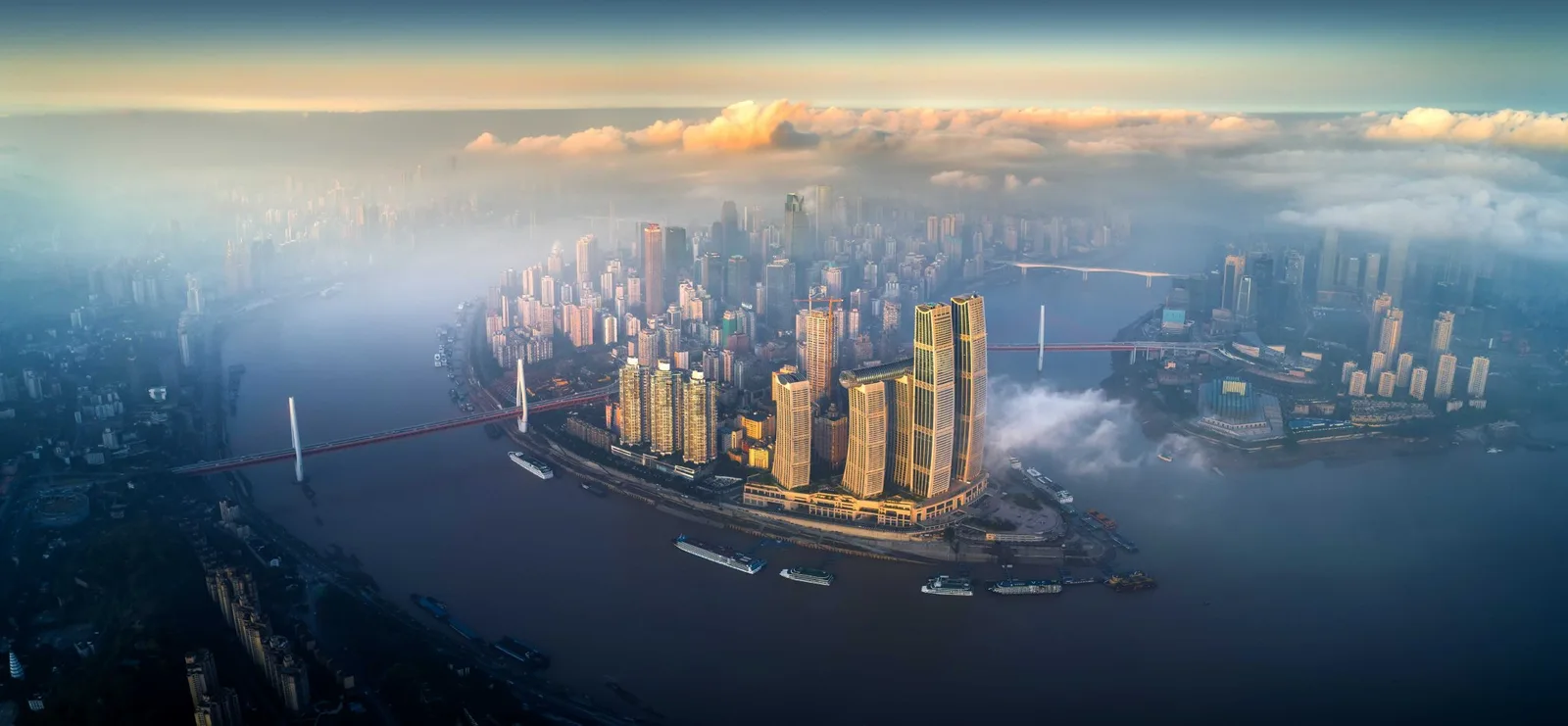
Chongqing is a mountain city split by two rivers. Districts that look adjacent on a map are separated by bridges, tunnels and serious elevation, so a “short trip across town” routinely takes half an hour. That geography punishes a bad hotel decision harder here than in most Chinese cities.
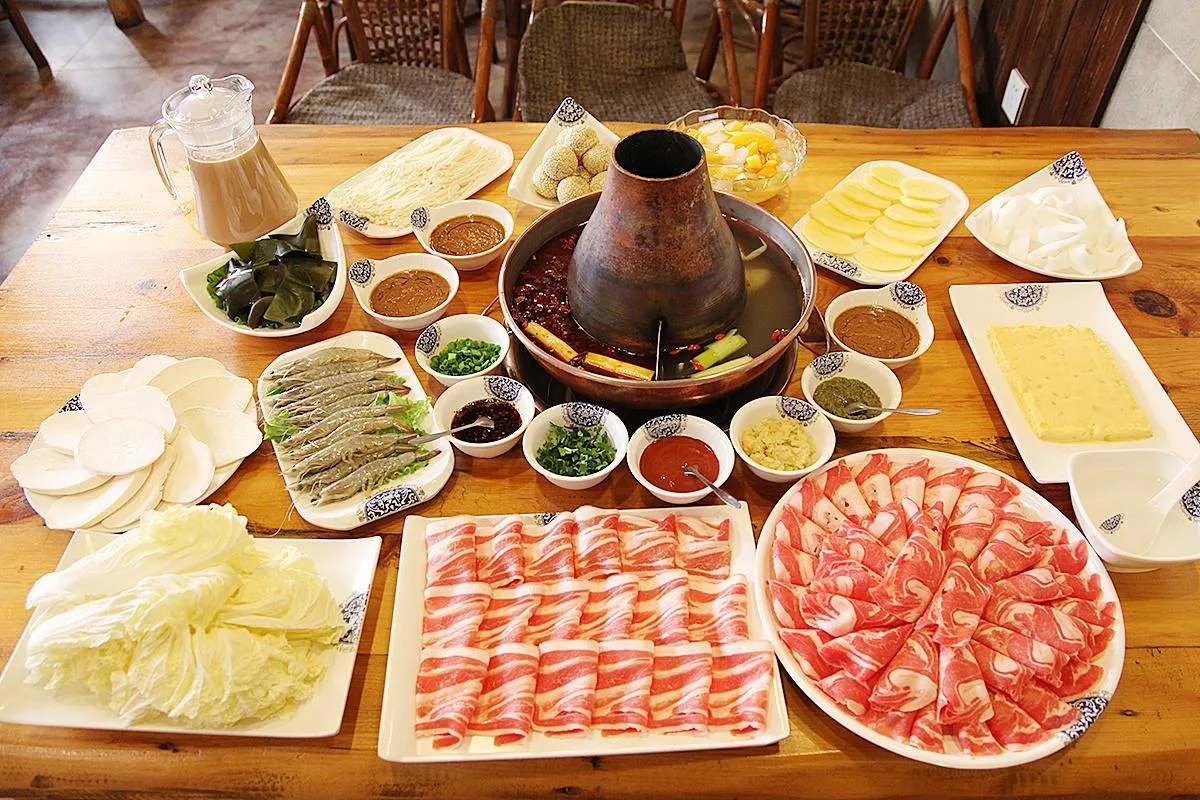
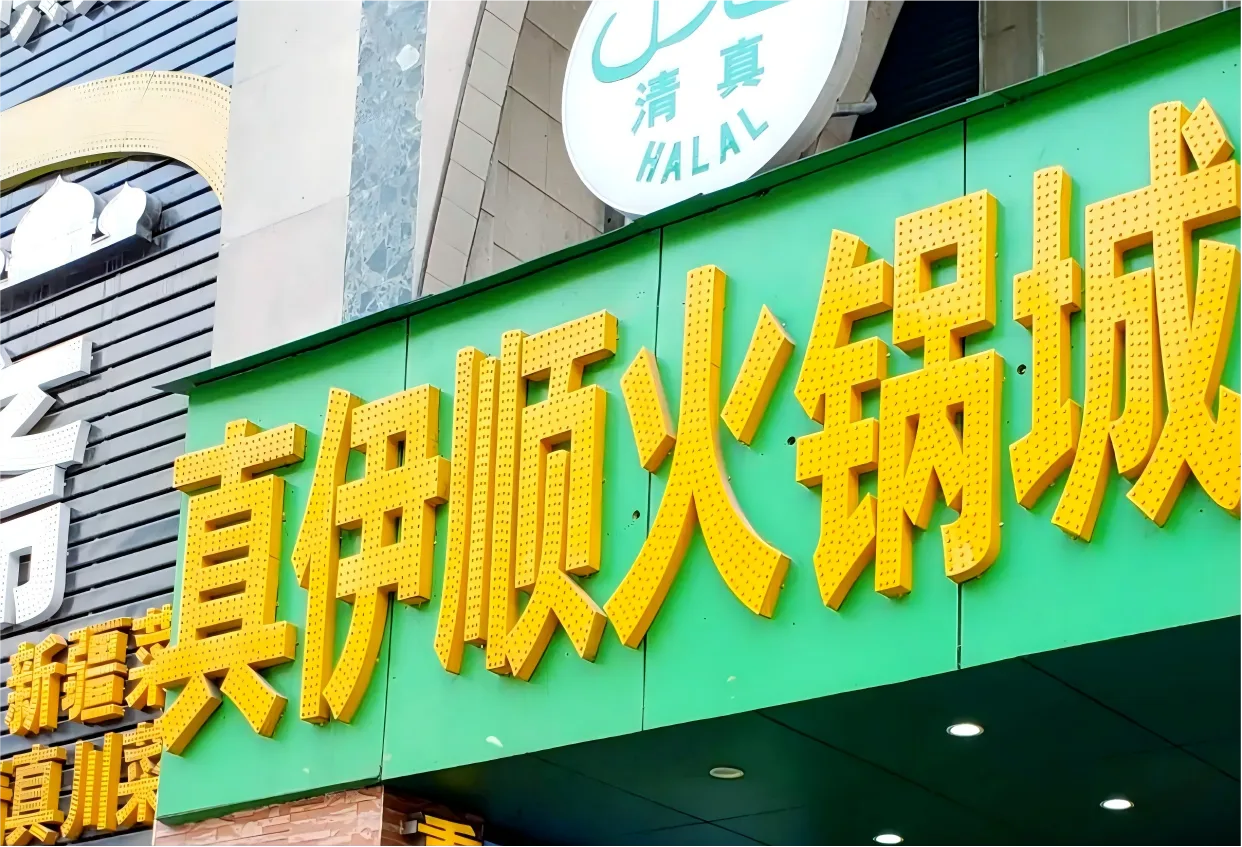
Now add the halal constraint. Chongqing’s halal restaurants are not spread evenly across the city — they concentrate in one compact cluster around the Muslim Building on Zhongxing Road, Jiaochangkou, with halal hotpot houses, noodle shops and snack places a few doors from each other. Our guide to halal food in Chongqing covers the cluster in detail. What matters for your hotel decision is simpler: you will eat at or near Jiaochangkou at least once a day, probably twice. Every kilometer between your hotel and that cluster is a cost you pay two times daily.
So the ranking logic changes. For a general tourist, the first variable is views or shopping. For a Muslim traveler in Chongqing, the first variable is distance to Jiaochangkou; views and shopping come second. When we plan trips for our travelers, we fix the meal routine first and choose the hotel around it — the rest of this guide applies the same logic.
Jiefangbei / Jiaochangkou: The Best Overall Base
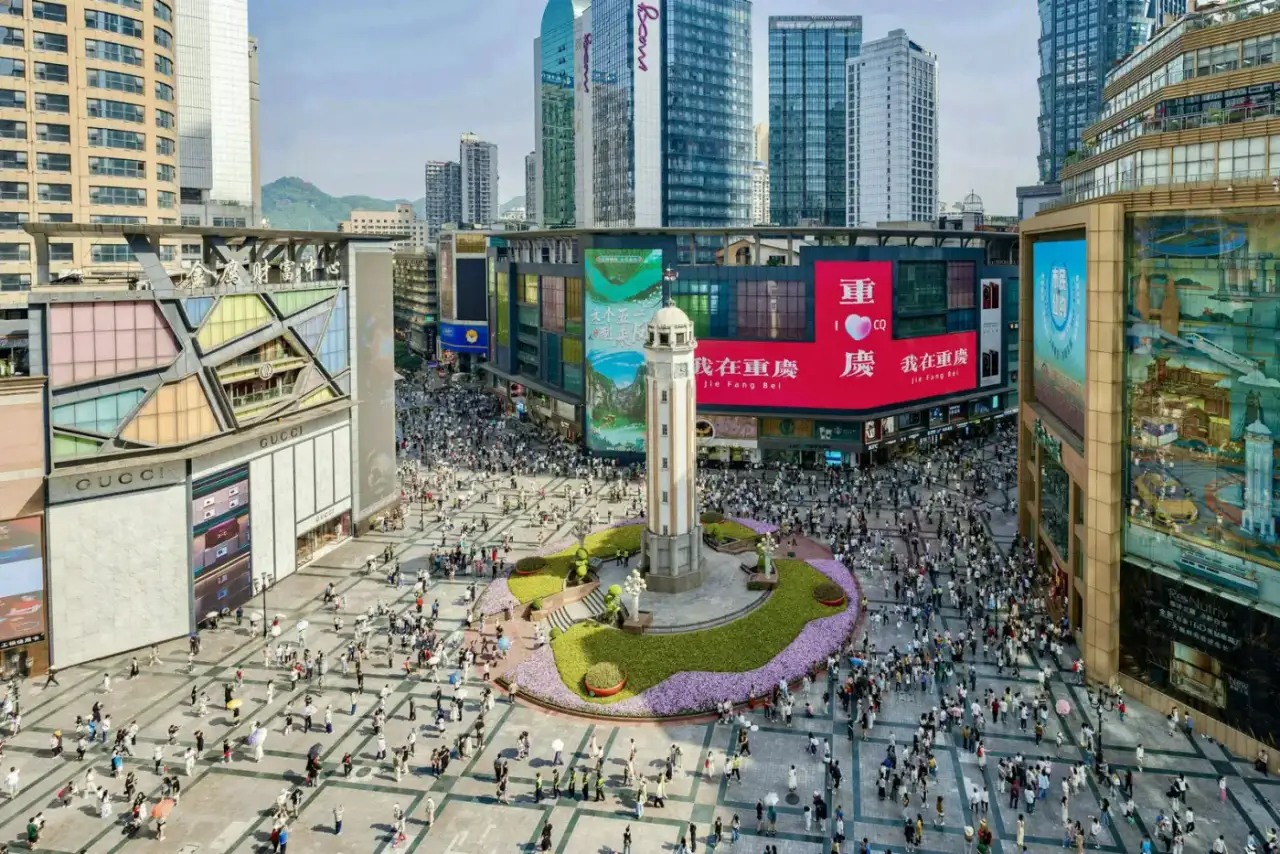
This is the center of Yuzhong District and the obvious first choice. From a hotel here you can walk to the Jiefangbei pedestrian street, walk to halal dinner at Jiaochangkou, and reach Hongyadong on foot for the night views. Jiaochangkou station connects Metro Lines 1 and 2, which puts Ciqikou, the Liziba “train through the building” and the main railway stations within direct reach.
What you get:
- Halal meals on foot. The Jiaochangkou cluster — halal hotpot in the Muslim Building, xiaomian noodle shops, snack places — is a 10–15 minute walk from the heart of Jiefangbei. No taxi negotiations at 9 pm, no metro with tired children after a full day.
- Sightseeing without transit. Jiefangbei, Hongyadong, Raffles City and the Yangtze cableway are all in the same district.
- Hotel depth. This is Chongqing’s densest hotel zone at every level. If you want familiar international names as reference points: The Westin Chongqing Liberation Square sits directly on the pedestrian street, and InterContinental Chongqing Raffles City occupies the landmark towers above Chaotianmen. Between them are dozens of solid mid-range options.
Trade-offs: this is the busiest part of the city — expect crowds and noise around the pedestrian zone at night, and remember that Yuzhong is vertical, so a hotel 400 meters from the metro can still involve a steep climb. If stairs are a concern for older travelers in your group, check the hotel’s street access before booking; it is one of the details we verify when we shortlist hotels for clients.
Hongyadong Riverside: Views First, Still Workable
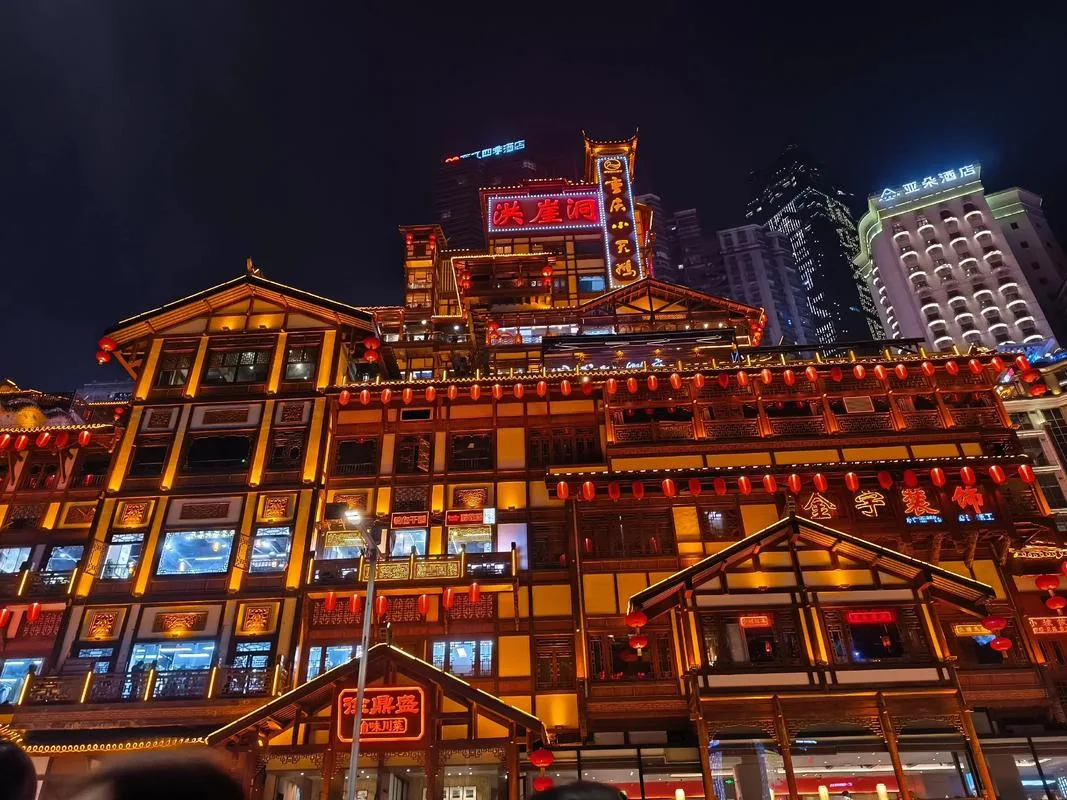
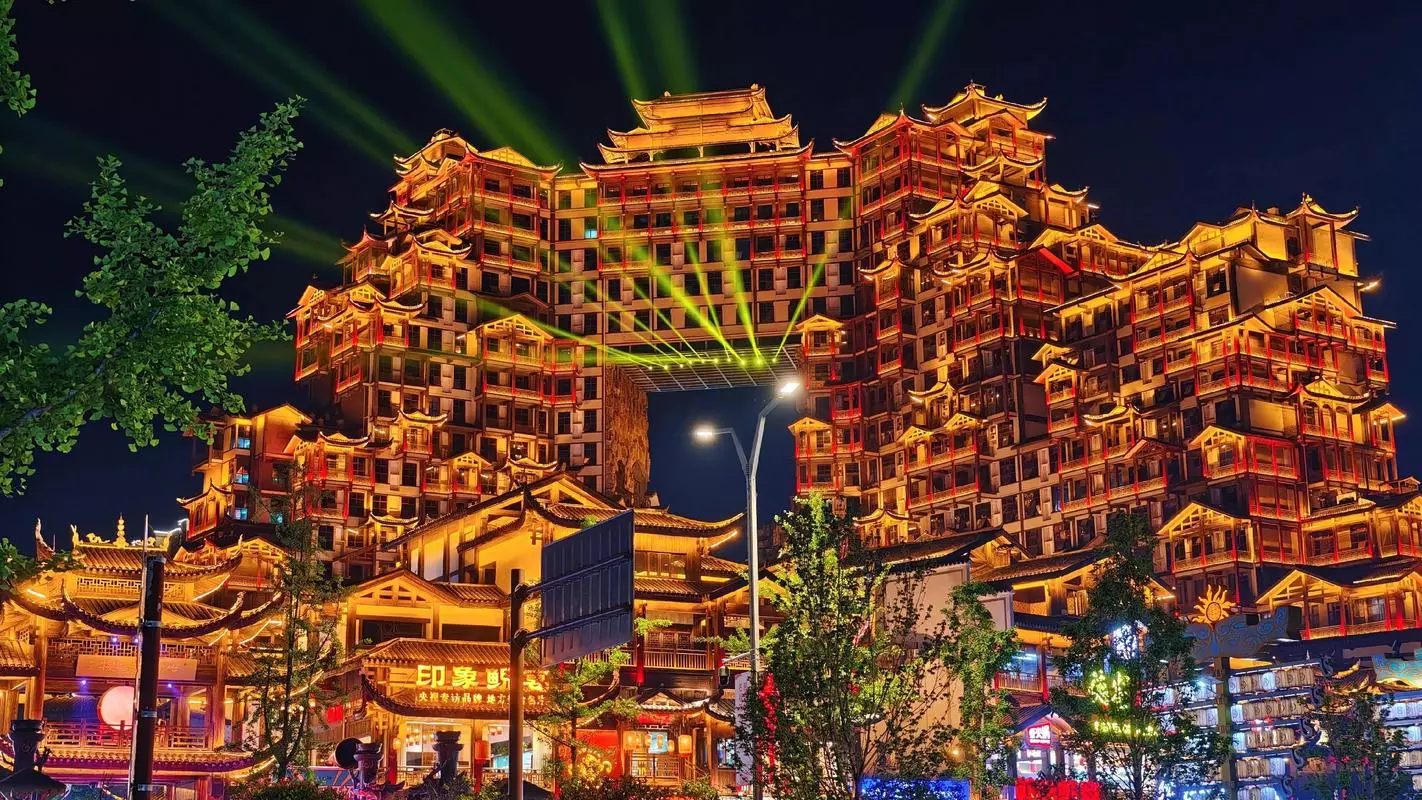
Hotels around Hongyadong and Qiansimen Bridge sell one thing: waking up inside the postcard. If the stilted-house night view is why you are coming to Chongqing, staying here delivers it — and you are still in Yuzhong, about 10–15 minutes from Jiaochangkou by taxi or metro.
One honest warning: the food stalls in and around Hongyadong itself are not halal. The workable pattern, which we use in our own Chongqing itinerary for Muslim travelers, is to eat properly at Jiaochangkou and then come to Hongyadong for the views, not the snacks. Staying here just reverses the direction of that trip.
Guanyinqiao and Nanbin Road: Where Generic Guides Send You
Both areas earn their place in mainstream guides. Guanyinqiao in Jiangbei is the modern shopping heart of the city — the massive pedestrian street, a younger local crowd and fewer tour groups; the nearby Jiangbeizui CBD holds the IFS tower with the Niccolo hotel. Nanbin Road in Nan’an is the opposite mood: a long riverside promenade looking back at the illuminated skyline, anchored by river-view hotels like the Chongqing Marriott, quieter at night and popular with couples.
Here is what those guides do not say: from either area, every halal meal is a river crossing. From Guanyinqiao, reaching Jiaochangkou means roughly 30 minutes on the metro with a transfer, each way. From Nanbin Road, it is a 20–30 minute taxi across the bridge, longer in evening traffic — and evening is exactly when you will be making the trip. Over a three-day stay that is six to ten crossings, most of them when you are already tired.
Our take: neither area is wrong, but they only make sense if their specific advantage matters to you more than one to two hours of daily meal commuting. A reasonable compromise we sometimes build into itineraries: spend your main nights in Jiefangbei, and move to a Nanbin Road river-view hotel for a final night tied to the Two Rivers cruise and the skyline.
Where Not to Stay
Ciqikou. The ancient town is worth a daytime visit, but as a base it leaves you far from halal food — there are no verified halal restaurants in or around Ciqikou — and commuting 30–40 minutes on Line 1 for every dinner gets old fast.
The airport area. Only for a very early flight out. There is nothing to walk to and no halal dining nearby; treat it as a transit night, not part of your stay.
Prayer Logistics by Area
For daily prayers, your hotel room is the practical default anywhere in the city, so no area choice changes that — bring a travel mat and check the qibla direction on arrival.
Chongqing does have several mosques, all open and functioning. Rather than choosing your hotel around a mosque, the sensible approach is the reverse: choose the mosque visit that fits each day’s route. When we plan a Chongqing trip we place sightseeing, halal meals and mosque visits on the same daily line so nothing requires a special detour. If Friday falls within your stay, tell us — Jumu’ah needs the day’s route planned around it, not squeezed in.
Booking for a Group: What Changes with 10+ People
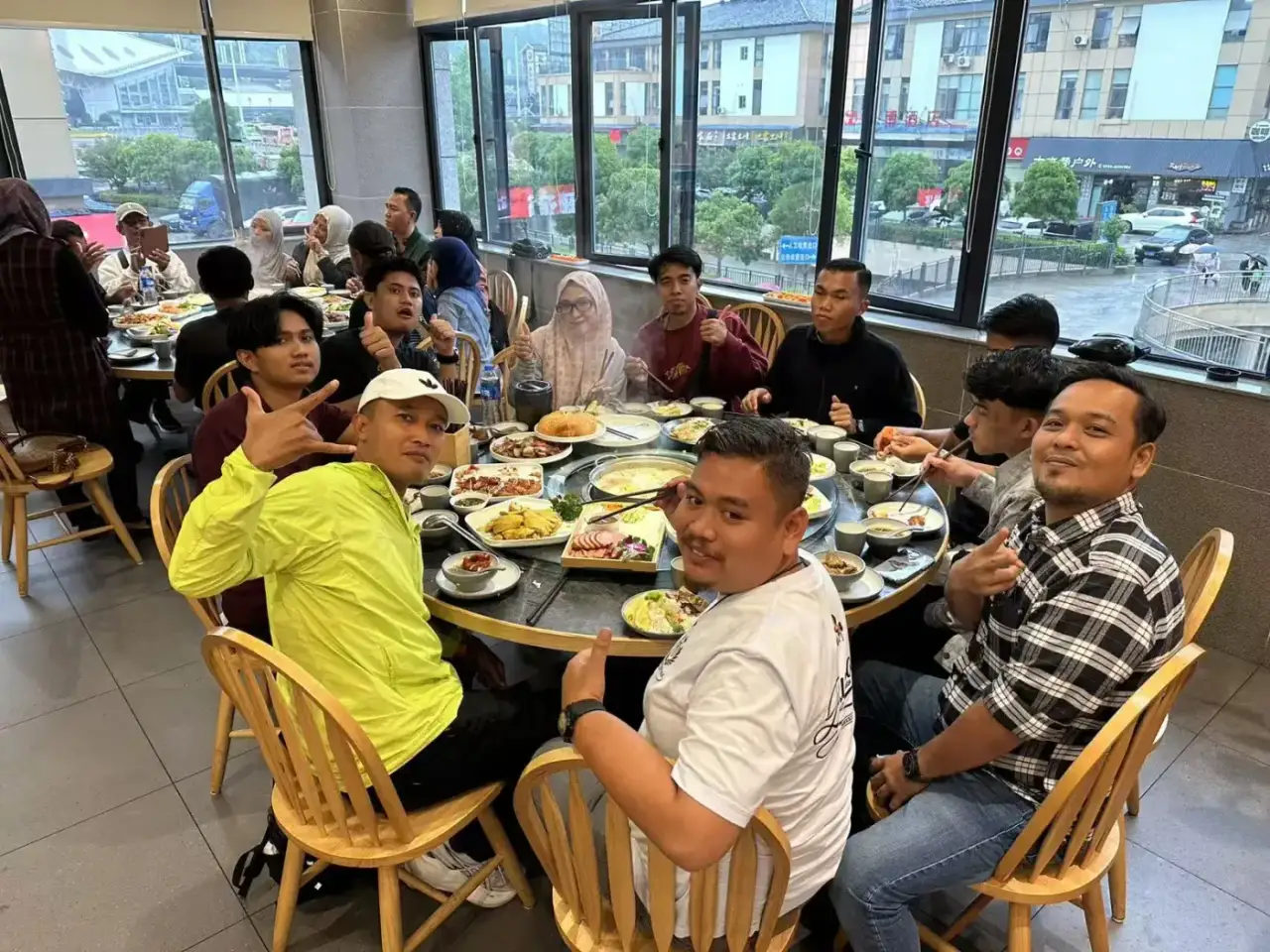
Most advice on this page assumes two to six travelers. Group organizers — whether it is an extended family or a 20–30 person tour from your local community — face three extra constraints:
- Breakfast. Hotel buffet breakfasts in China are not halal-certified. For groups we coordinate halal breakfast arrangements — either with the hotel or at the Jiaochangkou cluster nearby — so the day does not start with thirty people improvising. This is another reason Jiefangbei wins for groups: the fallback is a ten-minute walk away.
- Coach access. The Jiefangbei core restricts large-vehicle stopping. A group hotel needs a workable coach drop-off point, which rules out some otherwise good addresses; we check this when shortlisting.
- Room blocks. Holding 10–15 rooms at a consistent standard narrows the field quickly, especially in high season.
If you are organizing a group, this is exactly the planning we do as part of a packaged trip: hotel shortlist with coach logistics checked, halal meals booked ahead, prayer time built into each day, and one per-person quote covering hotels, transport, tickets, guides and meals — with no shopping stops added to subsidize any of it. See our Chongqing destination page for how we combine Chongqing with Chengdu, or message us on WhatsApp with your group size and dates and we will send a hotel shortlist that actually fits a Muslim group.
FAQ
What is the best area to stay in Chongqing for Muslim travelers?
Yuzhong District, near Jiefangbei or Jiaochangkou. The city’s halal restaurant cluster is at Jiaochangkou, so staying here puts halal meals within walking distance while keeping Jiefangbei, Hongyadong and the metro hub at your door.
Is there halal food near Jiefangbei hotels?
Yes — the Jiaochangkou halal cluster on Zhongxing Road is a 10–15 minute walk from the Jiefangbei pedestrian street, with halal hotpot, xiaomian noodles and snack shops in one compact area.
Can Muslim travelers stay in Jiangbei or Nan’an?
Yes, but accept the trade-off: every halal meal requires crossing the river — about 30 minutes by metro from Guanyinqiao or 20–30 minutes by taxi from Nanbin Road, each way. Choose these areas only if shopping or river views outweigh that daily commute.
Where do Muslim travelers pray in Chongqing?
Daily prayers are most practical at your hotel. Chongqing has several mosques, all open; the best approach is to fit a mosque visit into each day’s route rather than choosing a hotel around one. For Jumu’ah, plan Friday’s route around the prayer.
How many nights should I stay in Chongqing?
Three to four nights covers the city plus a Wulong or Dazu day trip at a comfortable pace. Our 3–4 day Chongqing itinerary for Muslim travelers shows how the days break down.
Do Chongqing hotels serve halal breakfast?
Standard hotel buffets are not halal-certified. Practical options: stick to clearly suitable items, have breakfast at the Jiaochangkou cluster (xiaomian for breakfast is the local way), or — for groups — ask us to coordinate halal breakfast in advance as part of the trip plan.