Last Updated on September 15, 2026 by Halalchinatrips
Yes — Guangzhou is one of the easiest cities in southern China to eat halal, and it has been for over a thousand years. Arab and Persian traders settled here in the Tang dynasty, and today the city feeds a large Muslim community of traders from the Middle East, Africa and South Asia. The catch is distribution: halal restaurants cluster heavily around Xiaobei in Yuexiu district, while the areas where most visitors actually spend their days — Beijing Road, Tianhe’s business district, the Canton Fair complex in Pazhou — are much thinner. This guide is organized around where you’ll actually be, not just a list of restaurant names.
Xiaobei and Baohan Street: Guangzhou’s Halal Hub
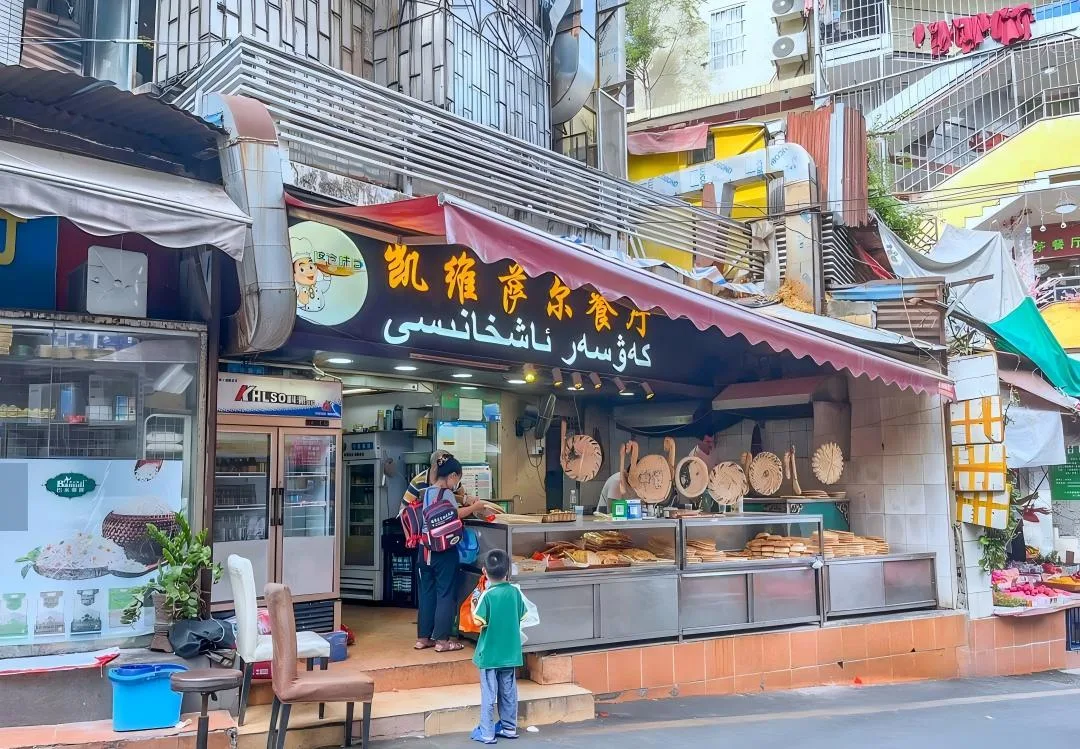
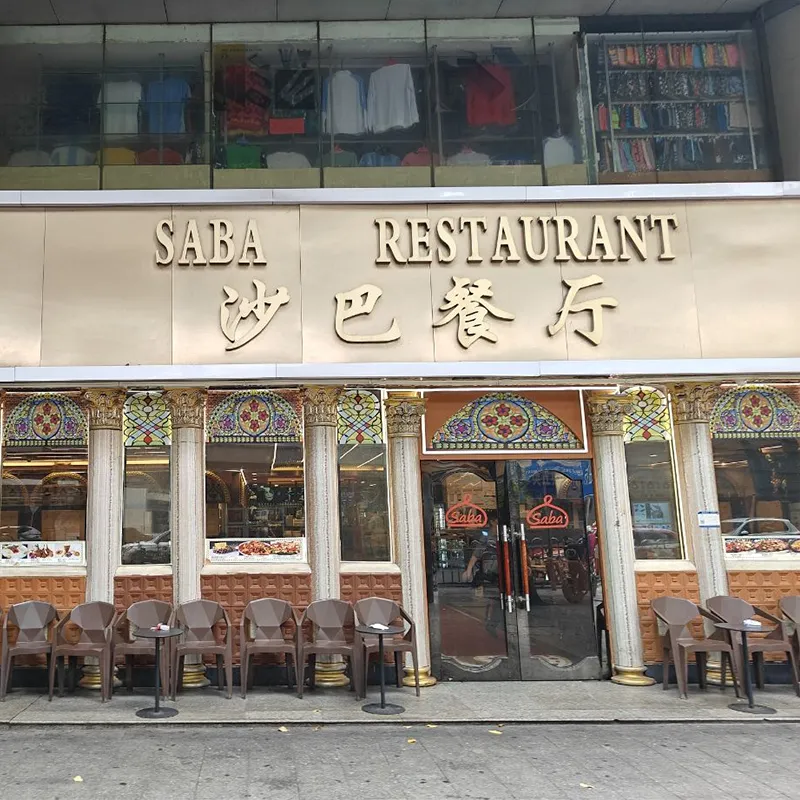
If you only remember one place name from this article, make it Xiaobei (小北), on Metro Line 5 in Yuexiu district. The streets around Xiaobei station — especially Baohan Street (宝汉直街) — are the closest thing China has to an international Muslim food quarter. Within a ten-minute walk you’ll pass Lanzhou beef-noodle shops run by Hui families, Xinjiang restaurants grilling lamb skewers and baking fresh naan, Turkish grills, Arabic restaurants with shisha terraces, and African eateries serving West African and East African dishes. For the neighborhood in full — the exact walk from the station, how to read the fringes of the street, and where to pray nearby — see our Xiaobei Muslim Street guide.
A few practical notes from planning trips through this neighborhood:
- Baohan Street is best in the evening. Many of the smaller shops and naan bakeries hit their stride after sunset, and the street stays lively late — convenient if your day runs long.
- This is a working trade neighborhood, not a tourist attraction. Expect wholesale luggage shops and freight agents between restaurants, not souvenir stalls. That’s exactly why the food is reliable: the customer base is resident Muslims, not tourists.
- Long-standing anchors include Turkish restaurants such as Bosphorus and Sultan (both operating for years and consistently reviewed by Muslim travelers as of August 2026). For Chinese halal, the Lanzhou noodle shops with Arabic or qingzhen (清真) signage are the everyday standby.
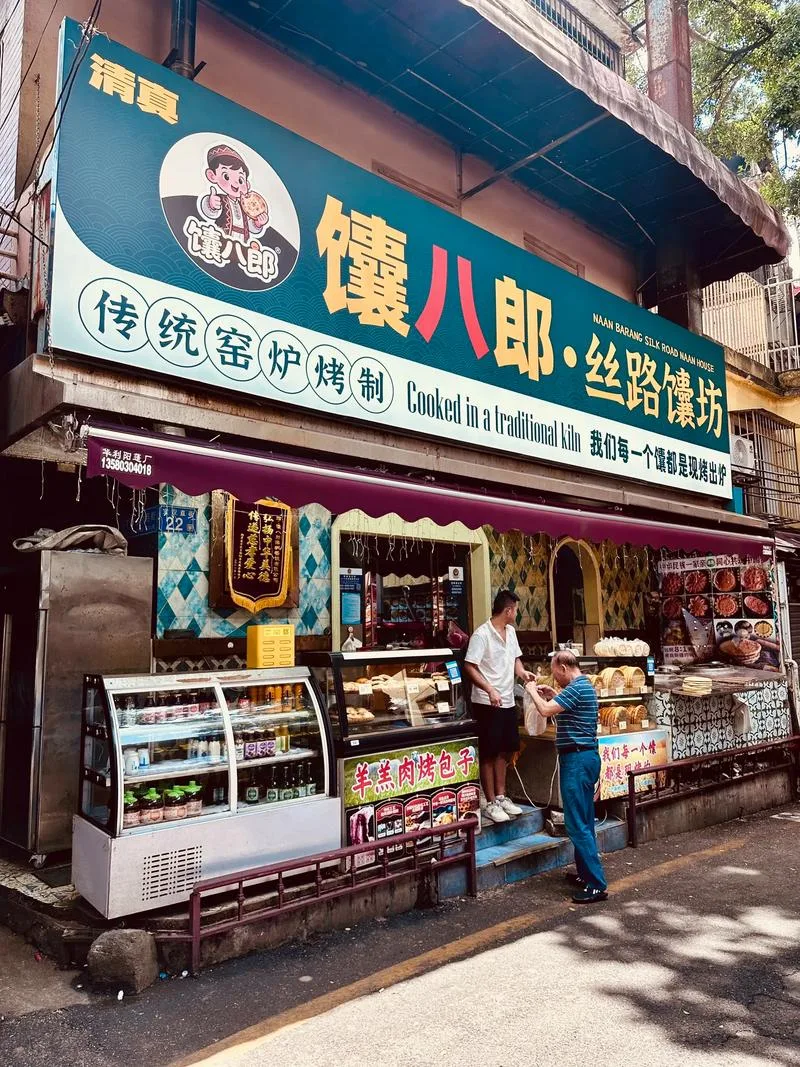
Individual shops on a street like this open and close frequently. Treat specific storefronts as a snapshot, and judge by the signage, the clientele and the open kitchen when you arrive — our guide to halal Chinese food explains how the qingzhen system works. Or simply ask us to point you to the places we currently use for our own groups.
Halal Cantonese Food and Dim Sum: Guangzhou’s Unique Answer
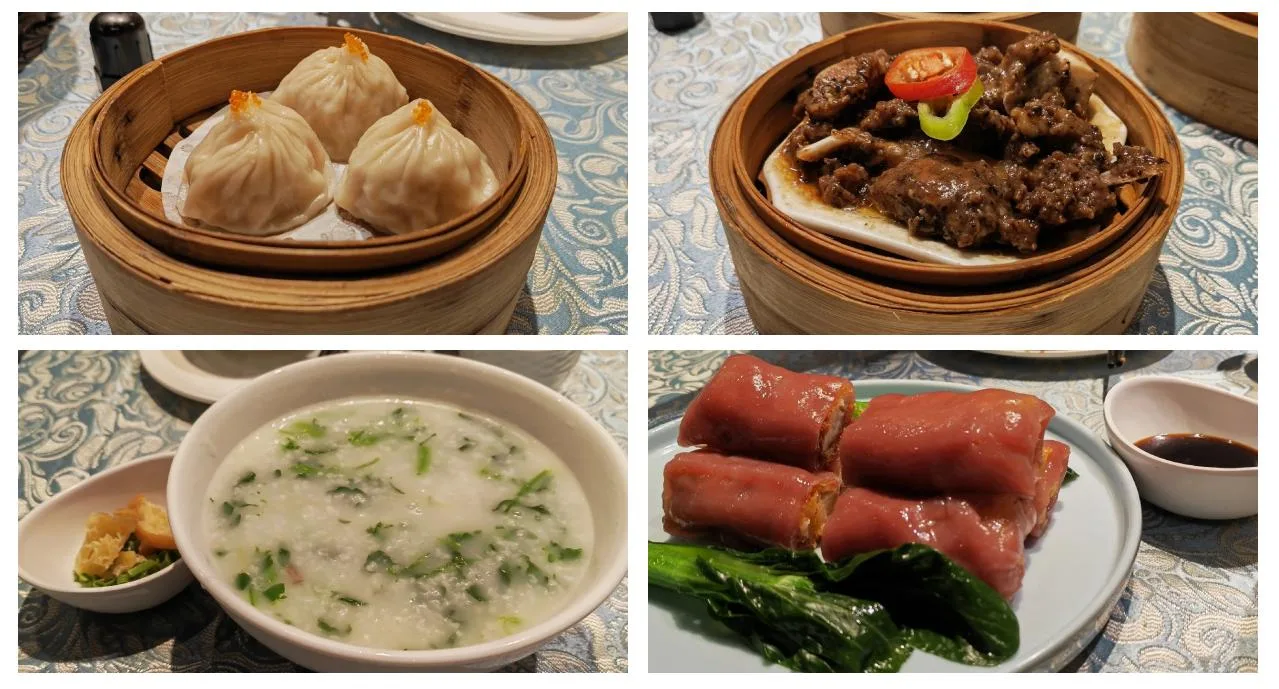
Most cities in China offer you Lanzhou noodles and Xinjiang lamb. Guangzhou offers something you will struggle to find anywhere else: halal Cantonese cuisine, including halal dim sum.
The landmark here is the Huimin Restaurant (回民饭店) on Zhongshan Liu Road in the old city — a halal institution dating back decades, serving morning tea from around 7am the traditional Cantonese way: trolleys of steamed dumplings, rice rolls, buns and turnip cake, all prepared halal (status checked August 2026; hours and menus change, so confirm before a special trip). Beef and lamb replace pork throughout, and the kitchen is Hui-run.
If you’ve been told that visiting Guangzhou without yum cha (morning tea) is like visiting Beijing without the Great Wall — this is how you do it without compromising. Two suggestions:
- Go for breakfast or brunch, not dinner. Dim sum is a morning culture; the selection is widest before 11am.
- Order the beef versions of the classics: beef siu mai, beef rice rolls (cheung fun), pan-fried turnip cake. They are not “substitutes” — halal Cantonese kitchens have been perfecting these for generations.
This one meal is the strongest argument for giving Guangzhou a full day even on a business-focused trip.
Eating Halal Near Beijing Road, Tianhe and the Canton Fair
This is where most guides go quiet, because the honest answer takes more work than a restaurant list.
Beijing Road and the Old City
Beijing Road’s famous snack stalls — like those on Shangxiajiu — are almost entirely not halal: shared fryers, cooking wine and pork-based sauces are standard. Don’t graze here. The good news: you’re close to the old city’s halal spots, including the Huimin Restaurant (about 15 minutes’ walk from Beijing Road) and the area around Huaisheng Mosque on Guangta Road. Plan a proper sit-down meal instead of street snacking, and you lose nothing.
Tianhe CBD
Tianhe has scattered halal options rather than a cluster — mostly Lanzhou noodle shops and a few Xinjiang restaurants tucked between office towers, plus halal-friendly choices near the East Railway Station area. They exist, but they’re spread out and change often; if you’re staying in Tianhe for business, it’s usually faster to take Metro Line 5 about 20 minutes to Xiaobei for dinner than to hunt for a good option nearby.
Pazhou and the Canton Fair
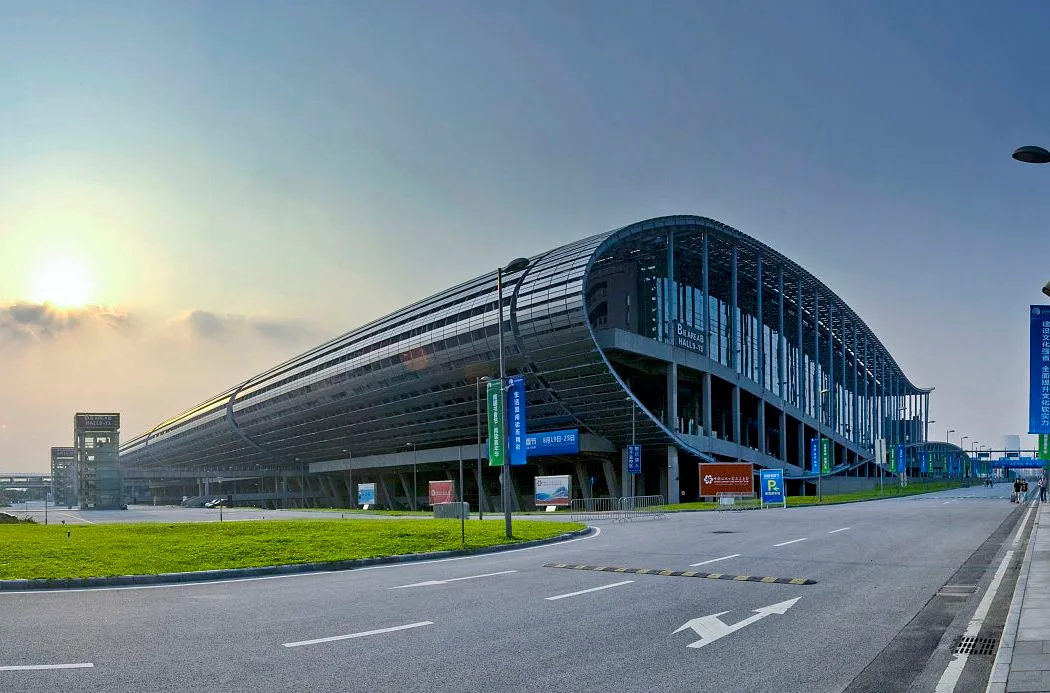
The Canton Fair complex in Pazhou is the thinnest halal area of the three — inside and around the venue, reliably halal food is scarce, and the 140th Autumn Session (October 15 – November 4, 2026, per the official Canton Fair site) brings tens of thousands of Muslim buyers who all discover this at lunchtime on day one. Realistic options:
- Plan lunch light and dinner properly. Carry dates, fruit and packaged snacks for the exhibition hours, then eat well in Xiaobei or the old city in the evening (Pazhou to Xiaobei is roughly 30–40 minutes by metro or taxi, depending on traffic).
- Stay near Yuexiu rather than next to the venue. Many experienced Muslim buyers deliberately book hotels around Xiaobei or Huanshi Road and commute to the fair — evenings are simply easier.
- Group booking solves it completely. For delegations, we pre-book halal group dinners and arrange transport timed around the fair schedule, which removes the nightly “where do we take twelve people” problem.
Mosques and Prayer Between Meals
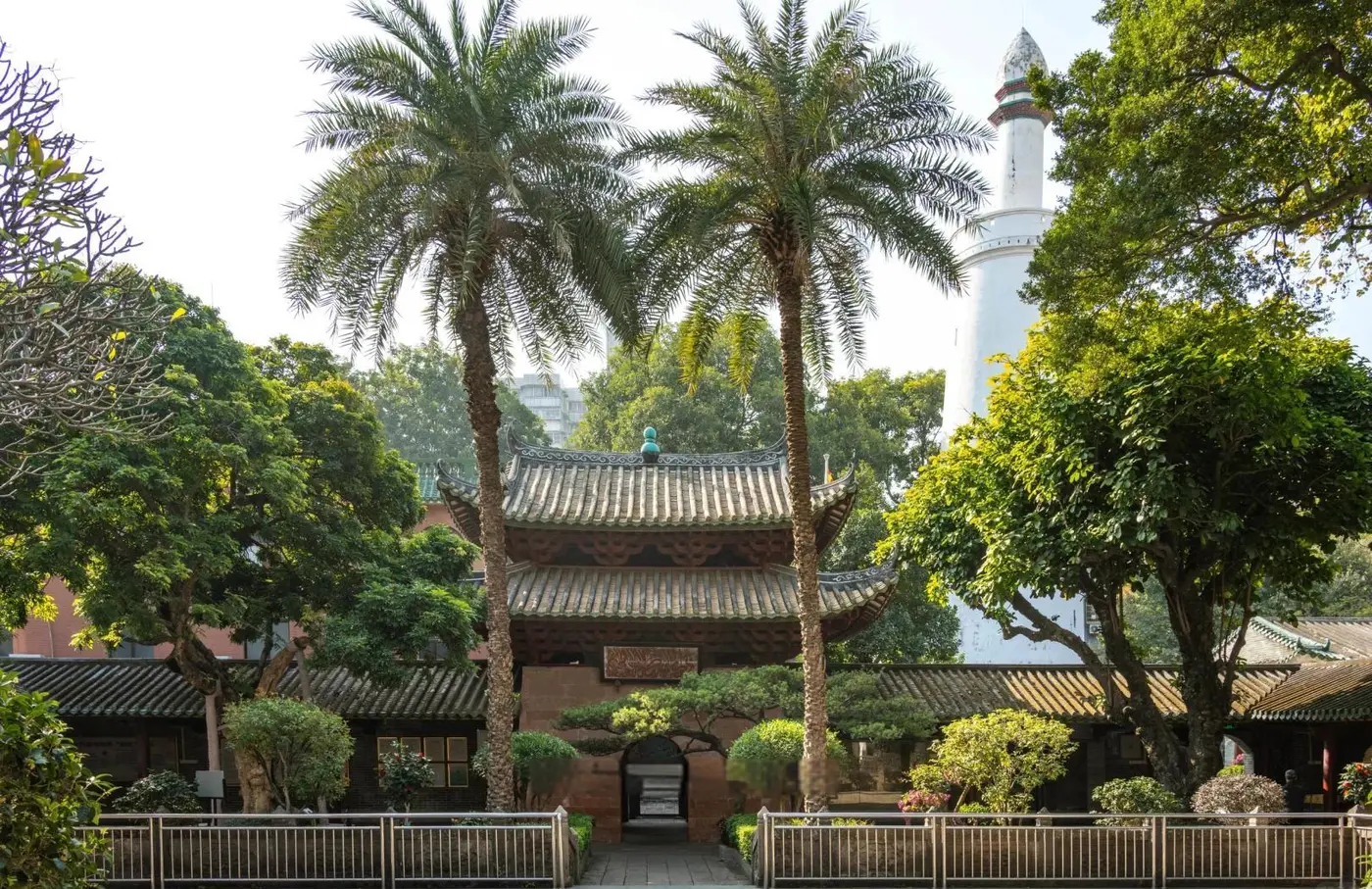
Guangzhou’s mosques sit conveniently close to its best halal food, which makes combining prayer and meals straightforward:
- Huaisheng Mosque (怀圣寺), on Guangta Road in the old city, is one of the oldest mosques in China — its origins trace to the Tang dynasty. It’s an active place of worship: Muslims can join the five daily prayers, while non-Muslim visitors are generally limited to the courtyard outside prayer times (checked August 2026). Friday Jumu’ah is busy, and the surrounding lanes have halal eateries.
- Xianxian Mosque (先贤清真寺), on Jiefang North Road near Yuexiu Park, is revered as the burial site associated in tradition with the companion Sa’d ibn Abi Waqqas, and holds regular prayers.
A workable rhythm for a sightseeing day: Dhuhr at Huaisheng Mosque, lunch in the old city, afternoon sights, then Maghrib and dinner around Xiaobei. When we plan Guangzhou itineraries, prayer stops are built into the daily route rather than left for you to improvise — the same way we handle the rest of a Guangzhou visit.
Halal Food at Guangzhou Baiyun Airport
Baiyun Airport (CAN) is a major transit point for Muslim travelers connecting between Asia, Africa and the Middle East. As of August 2026, Terminal 2 has a dedicated halal restaurant (Xiang Man Lou, serving Chinese Muslim dishes) and a prayer room; travelers also report Lanzhou beef-noodle outlets in the food courts. Airport dining changes frequently — treat this as “halal food exists at CAN, confirm the current spot when you land” rather than a fixed promise, and carry backup snacks for tight connections or late arrivals.
Planning Halal Meals for a Business Trip or Group
Individual travelers can wing it in Guangzhou more easily than in most Chinese cities. Groups can’t — and Guangzhou sees more Muslim group travel than almost anywhere in China, between Canton Fair delegations, sourcing trips and family tours built around Chimelong.
What actually goes wrong for groups: the restaurant that fit six people can’t seat twenty; the fair runs late and the kitchen closes; half the group wants Chinese food and half wants Arabic; nobody booked the private room, so there’s nowhere to pray before dinner. None of this is hard to solve — it just has to be solved before the trip, not at 8pm in Pazhou.
That’s the part we handle. Our team pre-verifies every restaurant on the route — we’re the same people behind the halal food planning guides across China — books group tables and private rooms, matches dinner locations to where your day actually ends, and builds prayer times into the schedule. If you’re bringing a delegation to the fair or planning a family trip through Guangzhou, tell us your dates and group size on WhatsApp (+86-19118612939) and we’ll show you how the meals and prayer stops would fit your days.
FAQ
Is Guangzhou Muslim friendly?
Yes — more than most Chinese cities. It has a Muslim community with over a thousand years of history, several active mosques including Huaisheng Mosque, and one of China’s densest halal dining clusters around Xiaobei. You still need to plan by area: halal options thin out fast in Tianhe and Pazhou.
Is it easy to find halal food in Guangzhou?
In Yuexiu district (Xiaobei, Baohan Street, the old city), very easy — you can walk into a halal meal at almost any hour. Near the Canton Fair complex or in the newer business districts, options are scarce and you should plan meals in advance.
Where can I eat halal dim sum in Guangzhou?
The Huimin Restaurant on Zhongshan Liu Road is the established halal Cantonese house, serving halal morning tea (dim sum) from early morning (checked August 2026). Go before 11am for the full selection.
Is there halal food at Guangzhou Baiyun Airport?
Yes — as of August 2026, Terminal 2 has a halal restaurant and a prayer room. Airport outlets change, so reconfirm on arrival and keep backup snacks for tight connections.
Where should I stay in Guangzhou to be near halal food?
Yuexiu district is the practical answer — anywhere within a short ride of Xiaobei station puts hundreds of halal options at your door. Canton Fair visitors often prefer staying here and commuting to Pazhou rather than staying next to the venue.
Is the street food on Baohan Street halal?
The overwhelming majority of food on Baohan Street is halal — the street serves a resident Muslim community. Look for qingzhen (清真) or Arabic signage as normal practice, and note that a few general Chinese shops operate on the fringes of the neighborhood.