Last Updated on September 15, 2026 by Halalchinatrips
The Muslim street you keep seeing in Guangzhou videos has a name and a metro stop: Xiaobei (小北), on Line 5, one station from Guangzhou Railway Station. The lanes around it — Baohan Street (宝汉直街) above all — hold one of the densest concentrations of halal food in southern China: Lanzhou beef noodles, Xinjiang lamb skewers, Turkish grills, Arabic restaurants, West and East African kitchens. One thing is worth understanding before you go, because it changes how you use the place: Xiaobei is not a tourist attraction dressed up as a Muslim street. It is a working neighborhood that feeds a resident Muslim community every day — which is exactly why the food is reliable. The parts the videos don’t show — the walk from the station, the fringes of the street that aren’t halal, where you’ll actually pray — are what decide whether your evening there goes smoothly.
What Is Xiaobei? Guangzhou’s International Muslim Quarter
Xiaobei is a neighborhood in Yuexiu district, named after its metro station on Guangzhou Metro Line 5, sitting under Huanshi East Road. Since the 1990s it has grown into the commercial center for Muslim traders living and working in Guangzhou — Hui families from northwest China, Uyghurs, Turks, Arabs, and large West and East African communities, most of them connected to the export trade that runs through this city. Between the restaurants you’ll pass wholesale luggage shops and freight agents, not souvenir stalls; the customers at the next table are residents and buyers, not tourists.
Ask where the “Muslim area” of Guangzhou is, and Xiaobei is the first answer. The second is the old city around Huaisheng Mosque — a quieter, more historical cluster that pairs better with sightseeing. Our Guangzhou halal food guide covers how the two relate across a full trip.
How to Get to Xiaobei Muslim Street
Take Metro Line 5 to Xiaobei Station. Baohan Street lies on the other side of the railway line from the station: cross to the far side and you are on it within about five minutes on foot. Typical journeys:
- From Guangzhou Railway Station: one stop on Line 5 — about ten minutes door to door. If you arrive in Guangzhou by train hungry, this is the fastest good halal meal in the city.
- From Beijing Road / the old city: around 20–30 minutes by metro or taxi, depending on where you start.
- From Pazhou and the Canton Fair complex: roughly 30–40 minutes by metro or taxi. Reliably halal food around the venue itself is scarce, so during fair season Xiaobei is where experienced buyers eat dinner — our Canton Fair guide for Muslim buyers covers the fair side of that equation.
Go in the evening if you can. The street runs all day, but the naan bakeries and smaller grills hit their stride after sunset, and the neighborhood stays lively late. With children or elderly parents, aim for the earlier end of the evening, before the after-dark crowd peaks. Two practical notes for first-time China visitors: ordering works fine without Chinese — picture menus and pointing at the grill or the noodle station are the normal way even locals order here — and payment is the same mobile-payment-first system as the rest of China, which our guide to paying in China sets up in ten minutes before your trip.
What to Eat: From Lanzhou Noodles to Turkish Grills
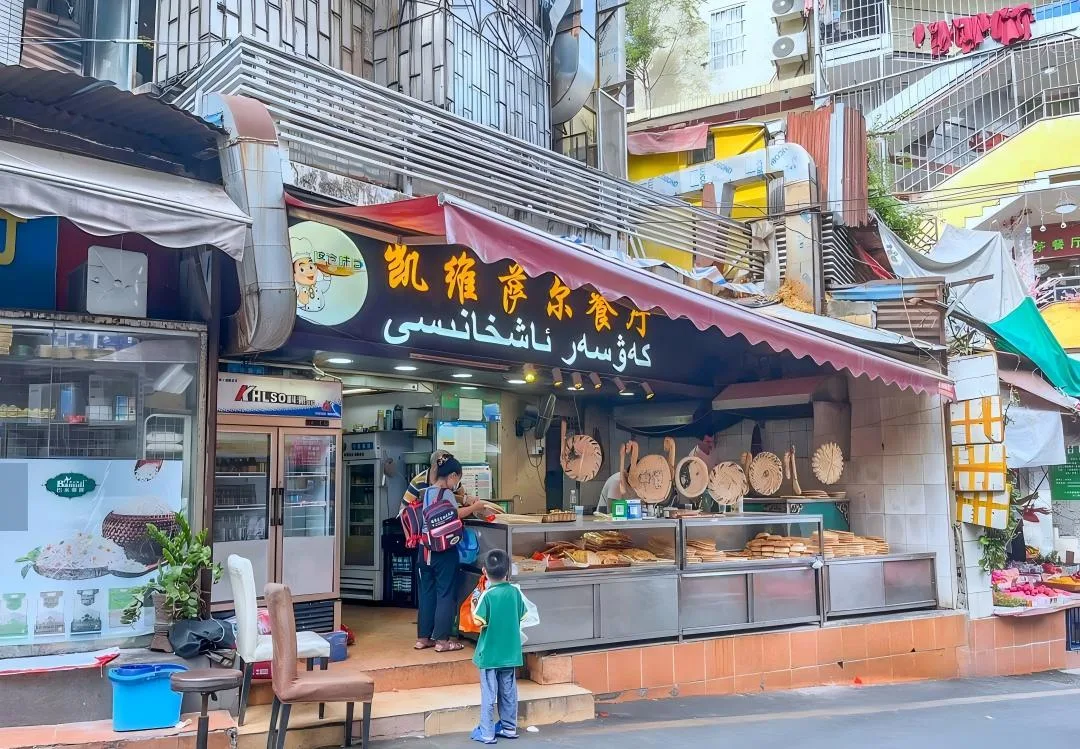
The honest way to describe Baohan Street is by kitchen, not by a list of shop names that may have changed by the time you land:
- Lanzhou beef noodles — the everyday standby, run by Hui families, cheap and fast. Look for the 清真 (qingzhen) sign; most of these shops hand-pull noodles in an open kitchen facing the street.
- Xinjiang restaurants — lamb skewers, big-plate chicken, and naan baked through the day in street-facing kilns. This is the food most first-time visitors remember.
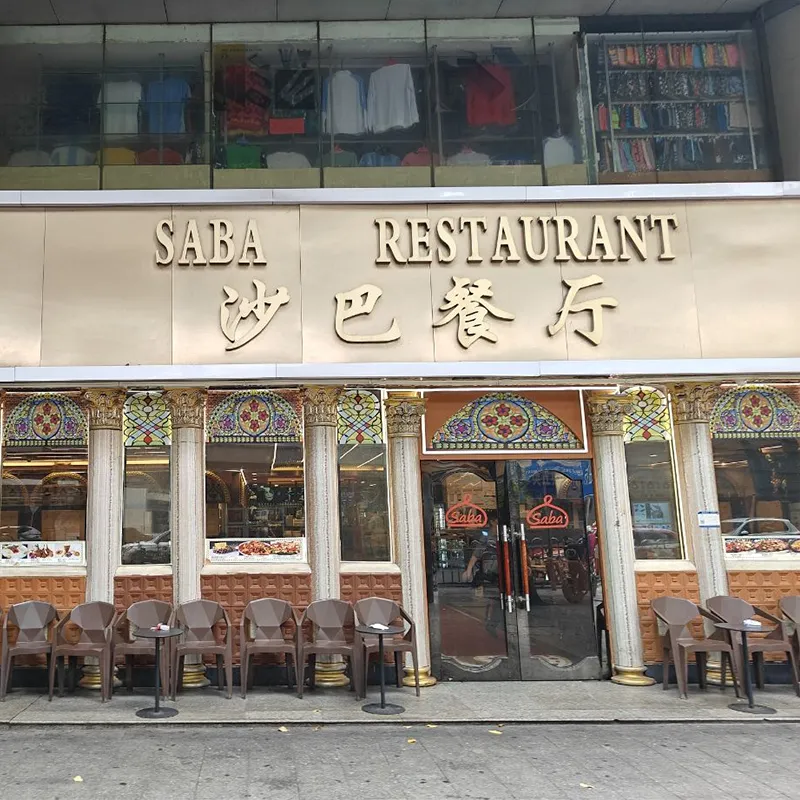
- Turkish and Arabic restaurants — proper sit-down meals, grills and mezze, several with shisha terraces. Long-standing anchors in the wider Xiaobei area include Bosphorus and, a short walk east along Huanshi East Road, Sultan — both operating for years and still in business as of August 2026.
- African kitchens — West and East African dishes serving the resident trading community, the least documented part of the street online.
The order above is also a rough price ladder: a noodle bowl is a fraction of the cost of a full Turkish grill dinner, so one street covers both a quick family lunch and a proper evening out. Individual storefronts open and close often — treat any specific name as a snapshot, and judge by the signage and the open kitchen in front of you.
Is Everything on the Street Halal? How to Tell
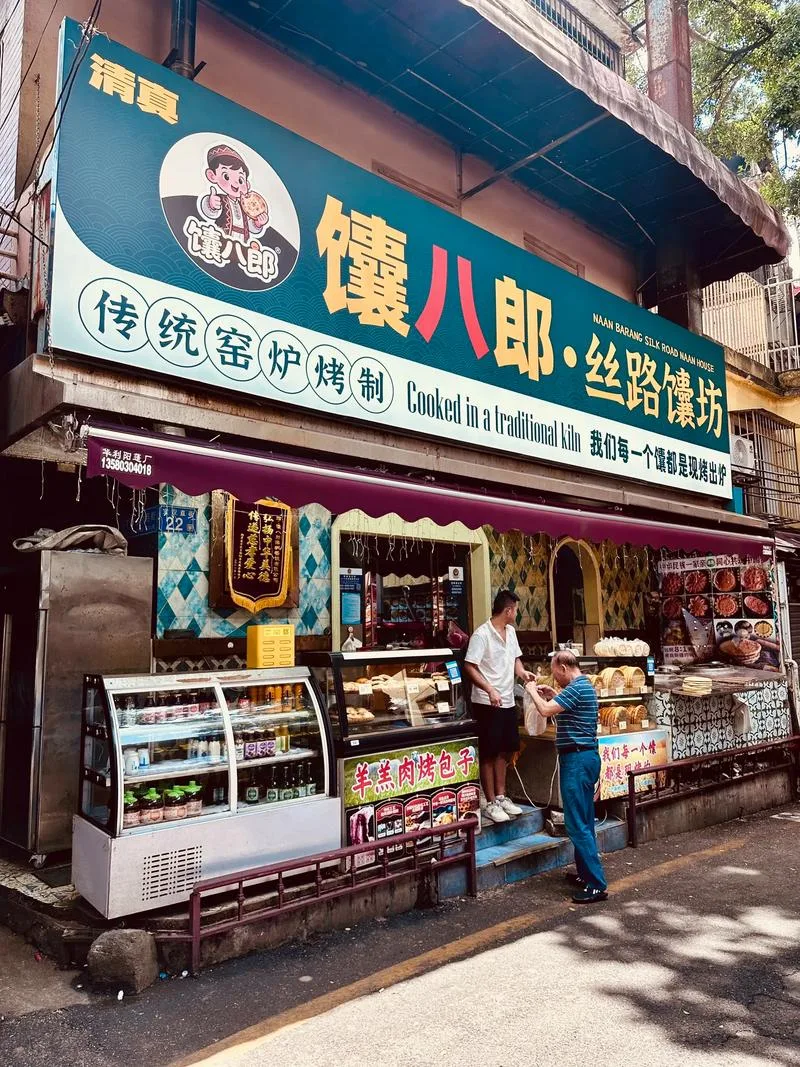
The overwhelming majority of food around Baohan Street is halal, because the street’s daily customers are Muslims. But the neighborhood does not have a gate, and ordinary Chinese restaurants operate on its fringes — so “it’s on the Muslim street” is not by itself a guarantee. The working method:
- Look for the 清真 (qingzhen) sign or Arabic signage at the entrance. One thing Malaysian and Singaporean readers should know: China has no national halal certification body, so you will not find a JAKIM-style logo here. Qingzhen is a community standard — it means a Muslim-run kitchen holding itself to halal practice, not merely a “no pork” menu — and in a neighborhood like this it is enforced by the people who eat there daily. Our halal Chinese food guide explains the system nationwide.
- Read the room. A dining hall full of hijab-wearing families, Arab traders and African regulars tells you who this kitchen answers to.
- When in doubt, walk on. On this street you are rarely more than a minute or two from an unambiguous alternative, so there is no reason to compromise.
This is the same distinction we apply when verifying restaurants for our own groups: a qingzhen kitchen serving its own community is a different level of assurance than a downtown restaurant offering a convenience “no pork” menu. Xiaobei is full of the former.
Praying While You’re There
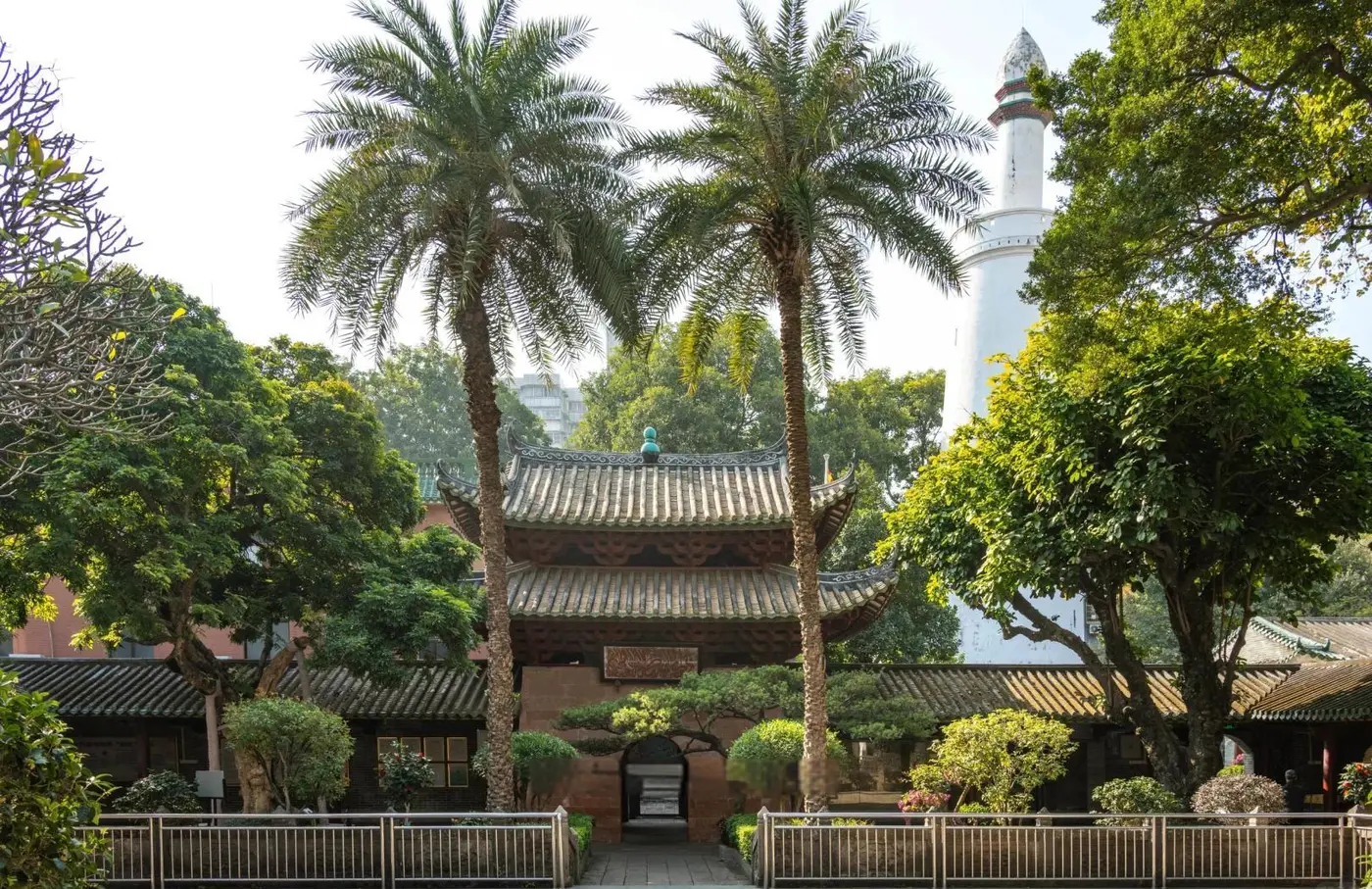
Don’t count on finding a formal prayer room on the street itself — the reliable anchors are two mosques and your hotel:
- Xianxian Mosque (先贤清真寺) sits on Jiefang North Road near Yuexiu Park, a short ride from Xiaobei. It is an active mosque holding the five daily prayers, and its cemetery is traditionally associated with Sa’d ibn Abi Waqqas, a companion of the Prophet — which makes it a meaningful stop in its own right, not just a convenient one.
- Huaisheng Mosque (怀圣寺), on Guangta Road in the old city, is one of the oldest mosques in China and holds the five daily prayers with a busy Friday Jumu’ah.
A rhythm that works on a Guangzhou day: pray Dhuhr or Asr at one of the mosques, sightsee in between, then arrive at Xiaobei around Maghrib time and stay for dinner. When we build Guangzhou itineraries, that pairing — mosque, then Baohan Street at sunset — is a fixed evening block, because it solves prayer and dinner in one movement instead of two problems. For how prayer works across the rest of China, see our guide to mosques in China.
Should You Stay Near Xiaobei?
For most sightseeing visitors: it helps but it isn’t necessary — anywhere in Yuexiu district puts you within a short ride of the street, and hotel choice is better decided by your overall route.
For Canton Fair buyers and group organizers, the answer is more definite. Many experienced Muslim buyers book hotels around Xiaobei or Huanshi Road and commute to Pazhou, because evenings are easier when dinner is downstairs instead of 40 minutes away. If you are bringing a delegation, plan one more thing ahead: the small restaurant that fits four people cannot seat twenty, and fair days run late. We pre-book halal group dinners around Xiaobei and the old city and time transport around the fair schedule — if that’s the trip you’re planning, tell us your dates and group size on WhatsApp and we’ll show you how the evenings would work.
FAQ
Is there a halal food street in Guangzhou?
Yes — the streets around Xiaobei Station on Metro Line 5, especially Baohan Street, form Guangzhou’s halal food quarter, with Chinese Muslim, Turkish, Arabic and African restaurants side by side.
Where are the Muslim areas in Guangzhou?
Two main clusters: Xiaobei in Yuexiu district (the living commercial center, best for food) and the old city around Huaisheng Mosque on Guangta Road (the historical cluster, best combined with sightseeing).
How do I get to Xiaobei Muslim Street by metro?
Metro Line 5 to Xiaobei Station — one stop from Guangzhou Railway Station. Baohan Street is about five minutes on foot from the station, across the railway line.
Do I need to speak Chinese to eat at Xiaobei?
No. Picture menus, open kitchens and pointing cover almost everything, and many shopkeepers here deal with international customers daily. Learning to say “qingzhen” helps, but the 清真 sign does the real work.
Is Xiaobei worth visiting during the day, or only at night?
It works all day — noodle shops and bakeries open from morning — but the street is at its best from late afternoon into the night, when the grills and naan kilns are in full swing. Families with young children may prefer the quieter early evening.
Is Xiaobei worth visiting if I’m staying near the Canton Fair?
Yes, and many experienced Muslim buyers treat it as their default dinner plan: Pazhou to Xiaobei is roughly 30–40 minutes by metro or taxi, and reliably halal food near the fair complex itself is scarce.