Last Updated on September 16, 2026 by Halalchinatrips
Here is the answer up front: standard hotpot in China is not halal, and no amount of “we can do a separate pot” changes that — the problem sits in the kitchen, not just in the pot. But halal hotpot is not a compromise you settle for. It is an established category with its own restaurants, its own history, and in the north, a copper-pot tradition that Hui Muslim houses have run for over a century — halal beef and lamb, hand-sliced, in broths made without alcohol. Our team books these restaurants for the trips we plan, and the difference between a genuinely halal hotpot house and a “no pork option” is the first thing worth learning — starting with the most-asked brand of all. If you only need restaurant names, the city-by-city list is further down.
Why Standard Hotpot Isn’t Halal — and What Makes One Halal
Three things disqualify a mainstream hotpot restaurant, in descending order of visibility:
- The kitchen is shared. Non-halal meats are stored, sliced and cooked with the same equipment as everything else. This is the core problem, and it is why a “separate pot for you” offer solves nothing — the pot may be separate, the kitchen is not.
- The broth. The classic Sichuan-Chongqing base is built on beef tallow, which sounds fine until you ask what else goes into the vat and what the vat also cooks. Some broths and house sauces include alcohol.
- The menu. If pork is on it anywhere, the restaurant is not halal, whatever accommodations it offers.
A genuinely halal hotpot house is a different business, not a modified one: a Muslim-run or halal-certified operation where the entire kitchen — meat supply, broth, sauces, utensils — is halal. In China these carry the green 清真 (qīngzhèn) sign at the door. Treat the sign as your starting point and the questions “is the whole kitchen halal? is there alcohol in the broth?” as your confirmation. A restaurant that merely advertises a vegetarian pot, a “no-pork option,” or a separate burner is answering a different question than the one you asked.
For how this fits into eating across a whole trip, our overview of halal food planning in China sets the wider picture.
Is Haidilao Halal? No — and It’s Worth Understanding Why
This is the brand question we hear most, because Haidilao is the hotpot name travelers from Malaysia, Singapore and the Gulf already know. For mainland China, the answer is no: Haidilao’s restaurants here are mainstream operations — pork is on the menu and no mainland outlet holds halal certification. Part of the confusion is that Haidilao does run halal operations in some Muslim-majority markets (it opened a halal sister brand in Indonesia in early 2026, for one), which is exactly why travelers assume the China branches must be fine too. They are not — and in Malaysia, none of its branches holds JAKIM certification either: pork is served there and diners may bring alcohol. The famous service does not change what comes out of the kitchen.
The useful part is the rule behind the answer, because the same question comes up for whichever hotpot chain is trending on your feed this season. Apply the same test every time: is the entire kitchen halal-certified or Muslim-run, or is the offer actually a side-pot accommodation in a non-halal kitchen? If a brand’s halal status needs a comment-thread debate to establish, the practical answer for a traveler is no. The dedicated halal houses below need no debate.
Halal Hotpot Is Its Own Tradition — Two Styles to Know
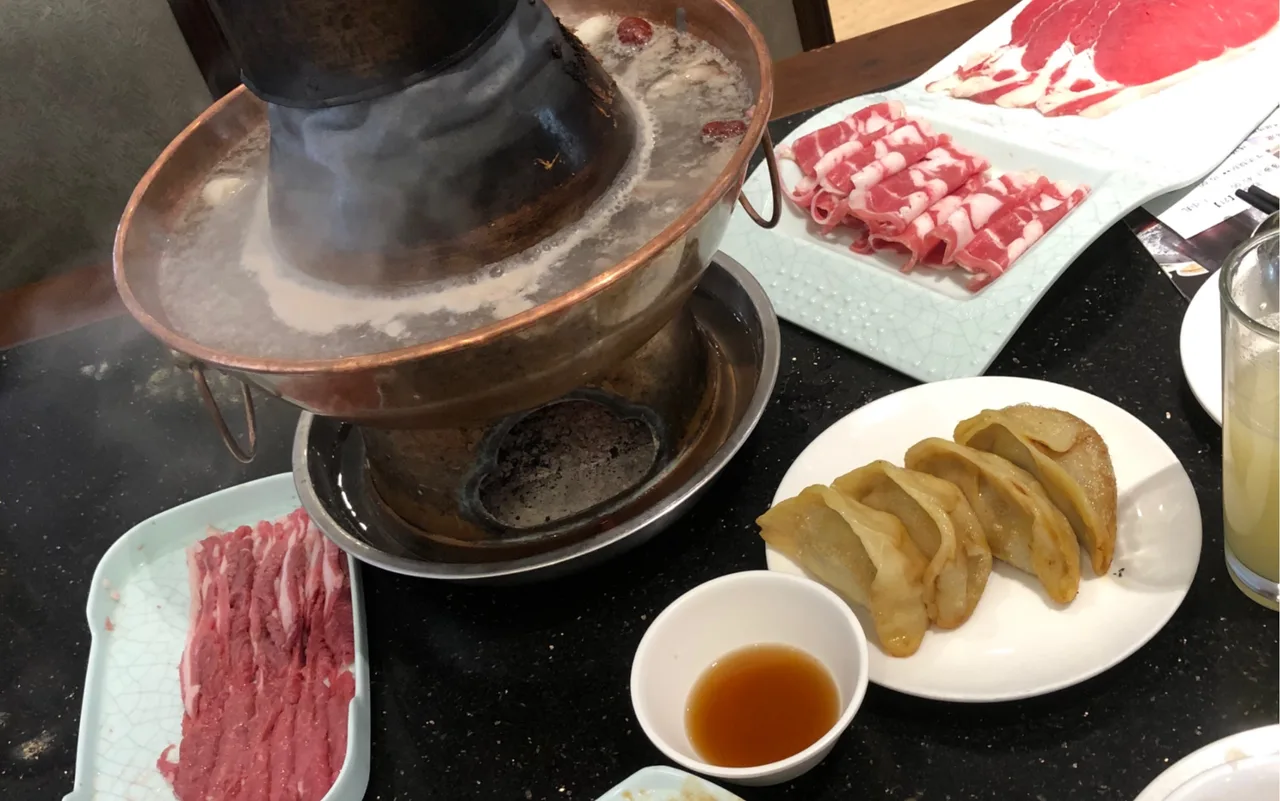
Halal hotpot in China is not an adaptation for visitors. It comes in two distinct styles, and the defining houses of one of them have been Muslim-run for more than a century.
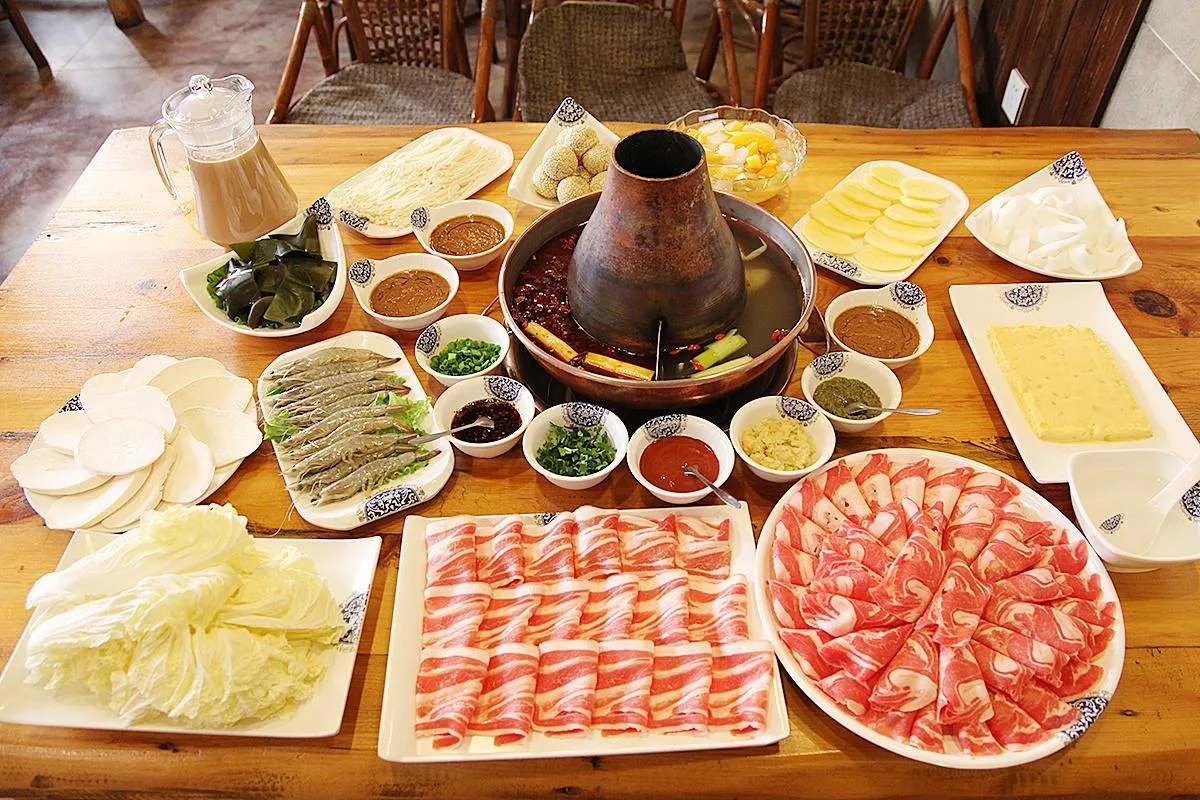
Northern copper-pot mutton (涮羊肉). A clear, light broth in a charcoal-fired copper pot, hand-sliced fresh lamb, sesame dipping sauce. This style was perfected and made famous by Hui Muslim houses: Donglaishun, founded in Beijing in 1903 by the Hui restaurateur Ding Deshan, carried it so far that its instant-boiled mutton technique entered China’s national intangible cultural heritage list in 2008; Shanghai’s Hong Chang Xing has served the same tradition since 1891. When you eat copper-pot mutton at one of these houses, you are not eating a halal adaptation — the defining restaurants of the style have been halal all along.
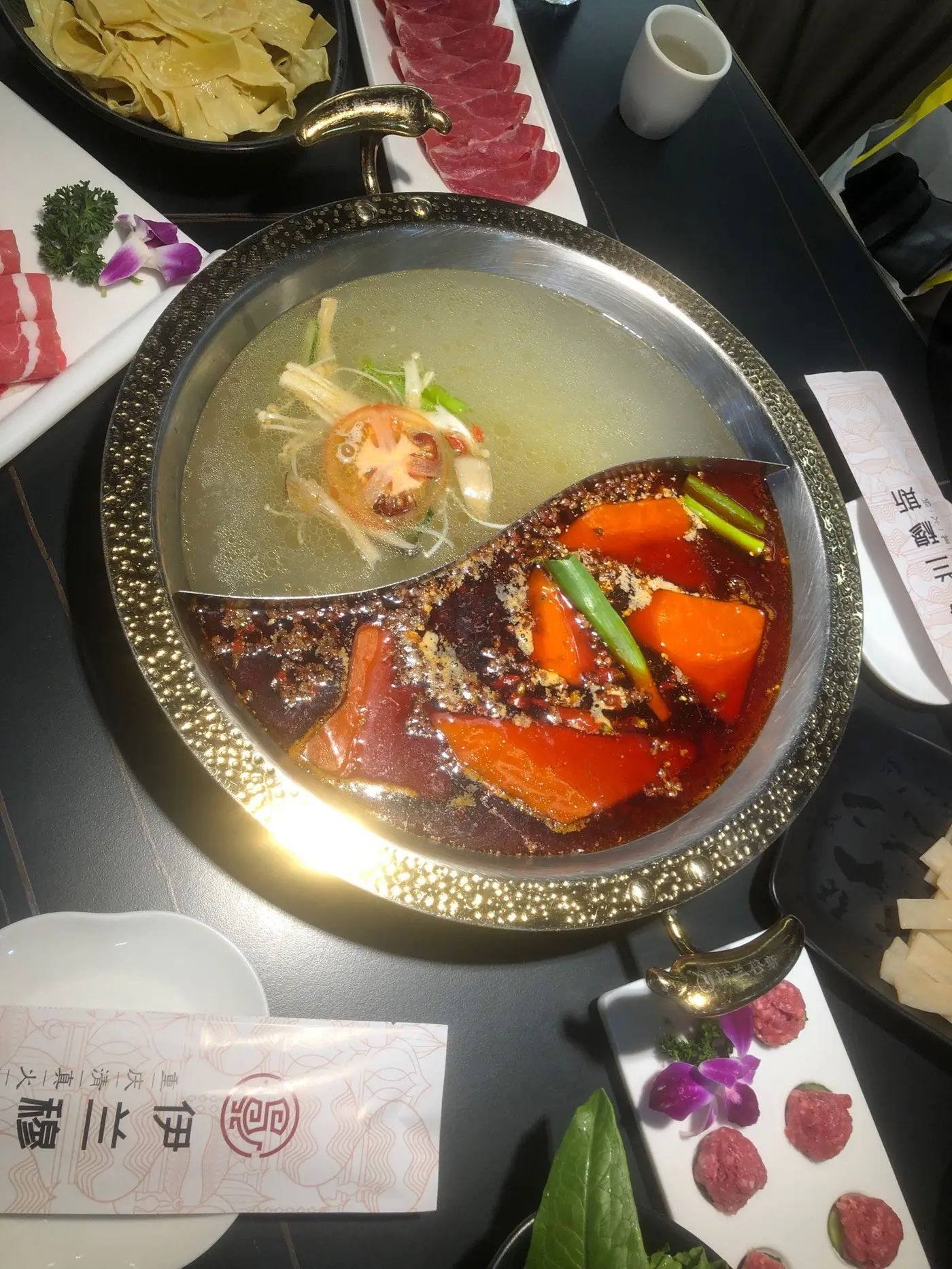
Sichuan-Chongqing málà, halal. The numbing-spicy red broth the videos are made of. Dedicated halal hotpot houses in Chongqing and Chengdu run fully halal kitchens serving exactly this: halal beef and lamb, hand-made beef balls, tripe, málà broth without alcohol. Same fire, same numbing spice, no compromise on either side.
Families splitting the difference should know the split pot (鸳鸯, yuānyāng): one side málà, one side mild broth, one table, everyone fed. It is the single most useful thing to order with children or grandparents along.
Where to Eat Halal Hotpot, City by City
Every pick below comes from our own city dining guides, where each restaurant was individually re-checked before publication — the city links carry addresses, the streets around them, and the rest of each district.
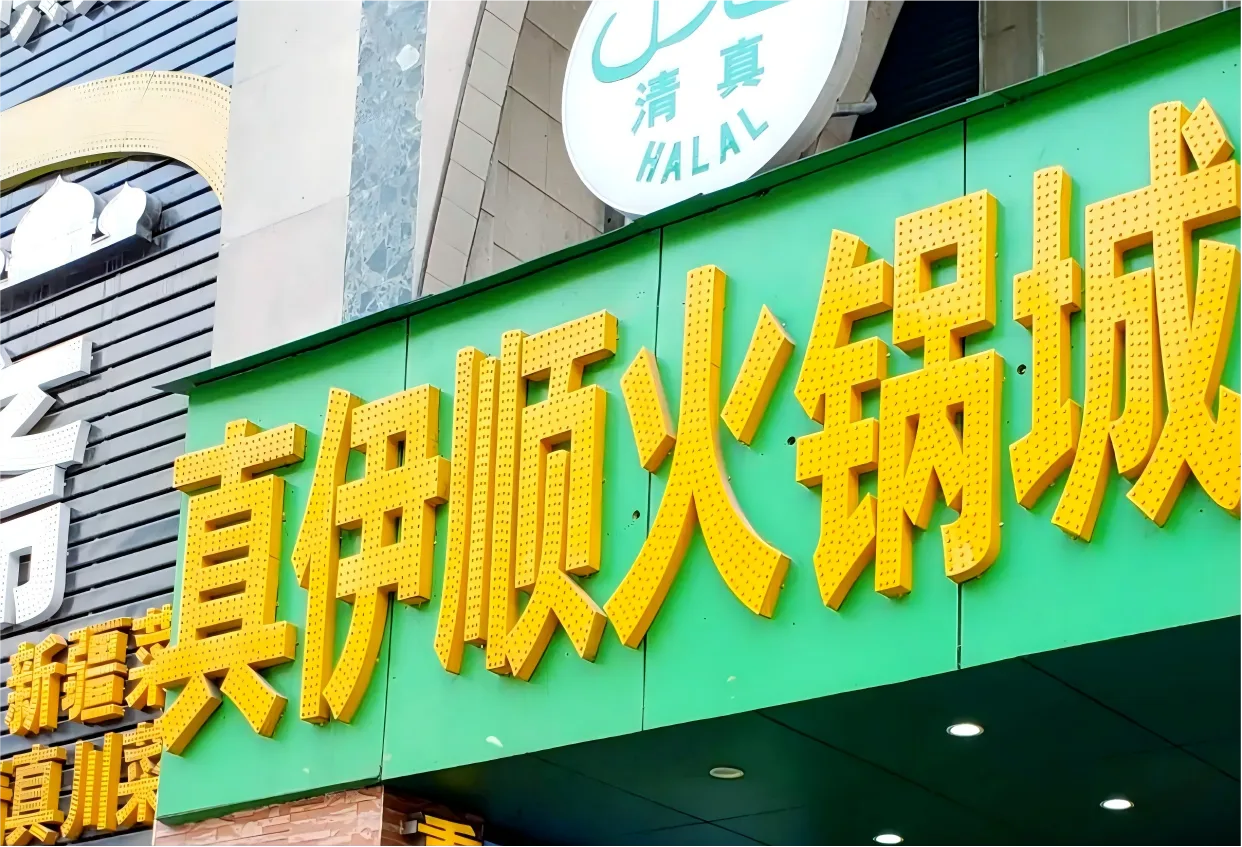
- Chongqing — the Muslim Building at No. 5 Zhongxing Road, Jiaochangkou, anchors a cluster of dedicated halal hotpot houses: Zhen Yishun, Magic 8D and Ma Duizhang, all in or just around the building. This is the full beef-tallow málà experience from a halal kitchen. Details in our Chongqing halal food guide.
- Chengdu — dedicated halal hotpot sits inside the Qingyang cluster around Huangcheng Mosque, alongside the beef sit-downs; the málà broth comes from a fully halal kitchen and the split pot is available. Our Chengdu halal food guide names the houses and the streets.
- Beijing — Donglaishun for copper-pot mutton; branches across the city make it easy to slot in after the Forbidden City or Temple of Heaven. Our Beijing halal food guide covers which verified restaurant fits which sightseeing day.
- Shanghai — Hong Chang Xing, mutton hotpot since 1891, with branches around Nanjing East Road; it is the meal we book most often for groups in winter. More in our Shanghai halal food guide.
Outside these cities, the picture varies too much for a list to be honest: some cities have a strong halal hotpot house, some have none, and directories go stale fast. If hotpot matters to your route, ask us about the cities on your itinerary — when we build a trip, restaurants get a phone call before we put them on your schedule, and a second one shortly before you travel.
How to Order: A Five-Minute Primer
- Spice level: order 微辣 (wēi là, mild) your first time in Chongqing or Chengdu — the local “mild” already has a reputation, and you can always add heat, not remove it.
- The sauce station: hotpot restaurants run a self-serve dipping-sauce counter. In a dedicated halal house it is stocked by the same halal kitchen as everything else; the local default of sesame paste or sesame oil with garlic also tames the spice. If any jar is unlabeled and you want certainty, ask — 清真吗? (qīngzhèn ma? — “is this halal?”) works everywhere in this article.
- One pot feeds different needs: the yuānyāng split pot solves the family-table problem; northern copper-pot houses solve the “no chili at all” problem for older travelers.
- Book the popular houses for dinner. Evening seatings at the well-known halal hotpot houses fill up, especially on weekends and holidays, and reservations are taken by phone, in Chinese. When hotpot is a priority for travelers we plan for, we reserve ahead and build that evening’s route around the table — in Chongqing that usually means hotpot at Jiaochangkou first, then a short taxi to Hongyadong for the night view, in that order, not the reverse.
For a group organizer the same logistics scale up: a halal hotpot house seats a 15-person group around shared pots in a way that a street of small noodle shops cannot, which is why we often anchor group dinners in Chongqing and Shanghai on a hotpot evening.
FAQ
Is Chongqing hotpot halal?
Not at standard restaurants — but the dedicated halal houses around Jiaochangkou’s Muslim Building serve the real beef-tallow málà, and locals eat there too; it is a working halal food street, not a tourist arrangement.
Is shabu shabu or Japanese-style hotpot halal in China?
Assume not. Japanese-style hotpot chains in China are mainstream businesses, and mirin or sake in the dipping sauces and sukiyaki-style broths adds an alcohol problem on top of the shared-kitchen one. The halal alternative for a clear-broth craving is the northern copper-pot mutton style.
Can children handle hotpot in China?
Yes, with two tools: the split pot for a mild side in Sichuan-style houses, and the northern mutton style, which has no chili at all. Halal hotpot dinners work well as family meals precisely because everyone cooks their own plate at their own pace.
Hotpot is the one Chinese meal most travelers assume they will have to skip. You don’t — you just have to walk into the right building. If you are putting an itinerary together and want the hotpot evenings placed where they fit — near that day’s sights, booked ahead, with prayer times left clear — tell us your route on WhatsApp and we will slot them in.