Last Updated on September 13, 2026 by Halalchinatrips
Yes — of China’s big cities, Shanghai is probably the easiest first stop for a Muslim traveler, and it is one of the cities where our own office sits. One condition decides how easy: Shanghai’s halal life concentrates in a small pocket between People’s Square and the old city. Stay inside it and a working mosque, a halal hotpot house that has served since 1891, and an early halal breakfast are all a short walk apart. Stay across the river and every proper sit-down halal dinner means a 40–60 minute crossing by metro or taxi. Here is the full judgment — food, prayer, Disneyland — including the three limits worth knowing before you book anything.
The Short Answer — and the Three Real Limits
Shanghai works well for Muslim travelers: six working mosques plus a separate women’s mosque, an established base of Hui-run halal restaurants, halal meals available at Disneyland, and a metro that connects all of it. Most first-time visitors leave surprised by how manageable it was.
That is the honest “yes.” Here is the honest rest, because these three gaps are what actually catch people:
- There are no reliable prayer rooms outside the mosques. Neither airport has a prayer room we could verify through official sources (traveler directories list rooms, but their locations conflict and the airports themselves publish none), and you should not count on finding one at attractions, malls or Disneyland. On most days, Dhuhr and Asr happen at your hotel, in a quiet corner with a travel mat, or — on our private trips — in the vehicle between stops. It works, but only if you plan for it rather than hoping a prayer room appears.
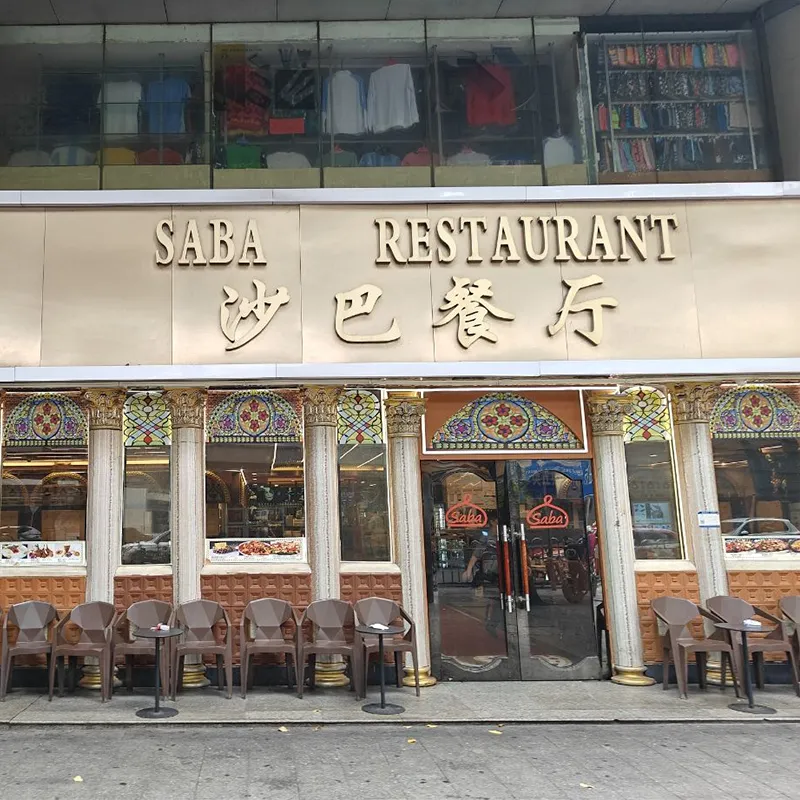
- There is no national halal certification in mainland China. The working standard is the green 清真 (qingzhen) sign displayed by Muslim-owned restaurants, backed by community trust. For most travelers that standard is enough; if you follow a stricter rule, stay with the established Hui and Uyghur restaurants and say so when you book.
- The famous food streets are not your food streets. The snack lanes around Yu Garden run heavy on pork and shellfish, with no verified halal restaurant among them, and mainstream chains like KFC and McDonald’s are not halal in Shanghai or most of mainland China. Enjoy Yu Garden for the garden; eat before or after.
None of these three make Shanghai a hard city. They make it a city where the plan matters — which is a fair one-line summary of Muslim travel in eastern China generally.
Eating Halal: Easier Than You Expect — Inside One Pocket
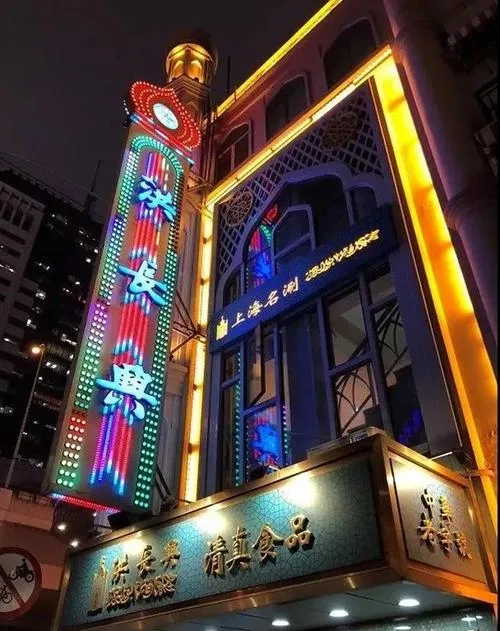
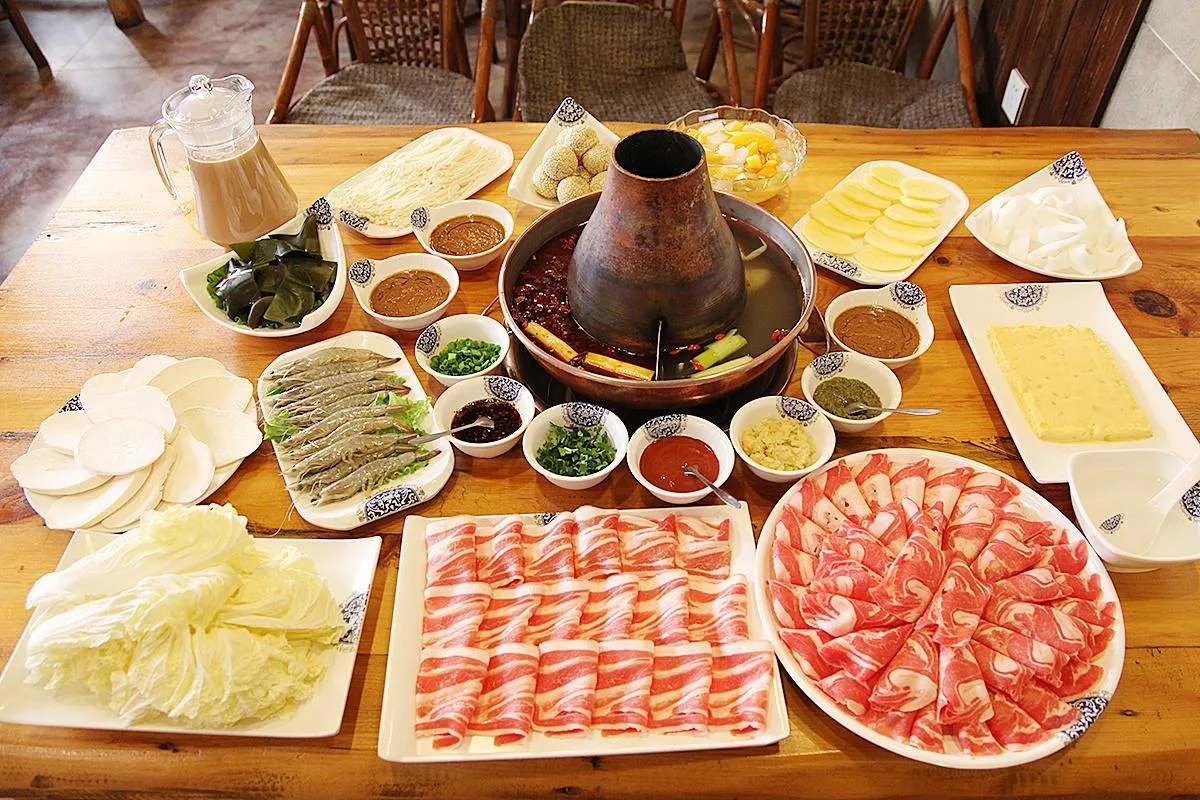
Shanghai will not hand you a Muslim quarter the way Xi’an does. What it has instead is a compact cluster around People’s Square and Nanjing East Road where the city’s most established halal restaurants sit within a 15–20 minute walk of each other: Hong Chang Xing, serving halal mutton hotpot since 1891; Yershari for Xinjiang lamb and hand-pulled noodles; and Guanguanji on Zhejiang Middle Road, a three-floor Lanzhou-style place that opens at 6:30 in the morning — earlier than most hotel breakfast rooms, and hotel buffets in Shanghai are rarely halal anyway.
Closest to the Bund itself is MADO on Jiujiang Road, a five-to-eight-minute walk from the riverfront — a Turkish brand with no pork on the menu but no halal certification, which is enough for some travelers and not for others. We tell clients that plainly and let them decide.
To be clear about what concentrates where: day to day you will not go hungry anywhere in Shanghai, because green-sign Lanzhou beef noodle shops cover every district, and most are on Meituan and Ele.me — the two delivery apps — so a halal dinner can reach your hotel lobby after a long park day. It is the established sit-down dinners — the hotpot table, the Xinjiang spread that ends a family day properly — that live in the pocket. With children, hand-pulled noodles and lamb skewers are usually the easiest sell. Addresses, floors and what to order are in our halal food in Shanghai guide.
Prayer: Six Working Mosques, and the Days in Between
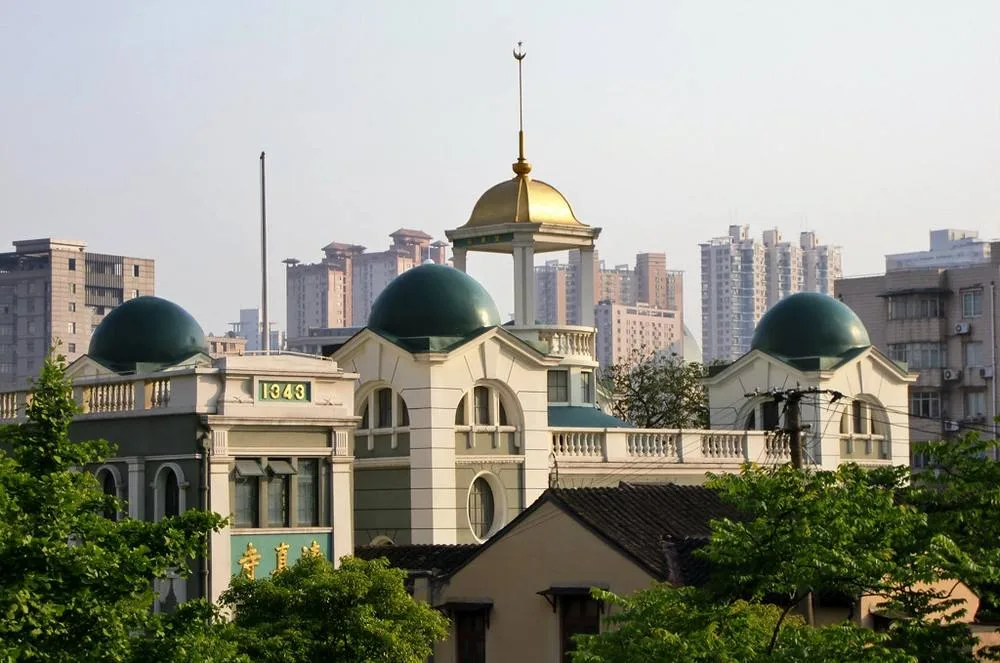
Shanghai’s six main mosques are active and spread usefully across the city, and one of them sits exactly where tourists already are: Fuyou Road Mosque borders the Yu Garden bazaar, which makes the classic old-city sightseeing day the one day of your trip where Dhuhr in a mosque costs you no detour at all. Xiaotaoyuan Mosque, the city’s largest, is a short walk further — and a few doors from it stands a separate women’s mosque, a building from 1920 that almost no travel guide mentions. When we bring a family or a group of sisters, confirming access and times at the women’s building is a phone call we make before anyone lands, because English signage there is minimal. Traveling independently, ask at the main mosque’s office when you arrive — they handle the question routinely.
The rest of the week is where honesty matters. On a Pudong tower day, a French Concession afternoon or a Suzhou day trip, no mosque is on your route, and the realistic rhythm is: Fajr and Isha at the hotel, Dhuhr and Asr wherever the day puts you. The difference between an awkward day and a smooth one is usually that someone told the guide and driver in advance where the prayer pauses fall — your guide will not automatically know. That briefing is standard on our trips; if you are traveling independently, our Shanghai mosque guide covers which mosque fits which day, Jumu’ah timing, and how to keep a Friday intact.
Where You Stay Decides How Friendly Shanghai Feels
If we could give Shanghai first-timers only one instruction, it would be this: book your hotel around People’s Square or Nanjing East Road. That pocket holds the halal restaurants, sits one metro stop or a 20-minute walk from the old-city mosques, and crosses four metro lines for everything else.
The most common regret we hear is the opposite choice — a hotel in Pudong or out by Hongqiao booked for the skyline view or the airport, followed by three days of 40–60 minute crossings every time the family wants a verified halal dinner. Shanghai does not punish many mistakes, but it punishes that one daily. Our Shanghai Muslim itinerary builds the whole trip from that base.
Disneyland, Day Trips and the Airports: The Three Plan-Ahead Items
Disneyland is the part families worry about most, and the mechanism is simple but unforgiving: halal meals exist by advance request only — you phone the resort at least 48 hours before your visit, and the meal is prepared and served at an assigned restaurant. Nothing on the standard menus should be assumed halal, and there is no prayer room. The workable day: pre-book the meal, bring permitted dry snacks and fruit through bag check (full meals are not allowed), and plan proper dinners back in the city. We make that booking call for our clients; if you are arranging it yourself, the phone numbers and step-by-step are in our Disneyland halal guide.
Day trips follow one rule: assume nothing halal en route. Zhujiajiao water town and the Suzhou gardens are both excellent and both halal-thin, so we pack meals or time the day to eat back in Shanghai. Suzhou itself is 25–40 minutes by high-speed rail with your passport as the ticket — logistically the easiest inter-city day in China, as long as lunch is decided before you board.
The airports are the weakest link: halal dining at Pudong and Hongqiao is thin and rotates, and there is no prayer room we could confirm. Land prepared — pray at the hotel or with a travel mat at a quiet gate, and keep sealed snacks for late arrivals.
Who Shanghai Suits — and Who Should Start Somewhere Else
Shanghai is the right first China stop if you are testing the water: a first family trip, parents who need flat streets and a gentler pace rather than mountain paths — a pace we slow down day by day when we plan for three generations — or children set on Disneyland. Getting in is the easy part for many of our readers: Malaysians, for one, enter China visa-free for up to 30 days. Shanghai also pairs naturally with Beijing — about 4.5 hours by high-speed rail — for the classic two-city first visit; our Beijing Muslim itinerary covers that half.
Choose differently if what you want is immersion in Muslim China — streets where the halal signs outnumber everything else and the mosque is the neighborhood’s center of gravity. That is Xi’an’s offer, not Shanghai’s, and pretending otherwise sets up the wrong expectations. Where each city stands on that spectrum is the subject of our country-level guide, Is China Muslim-friendly?
Bringing a Group of 10 or More?
Shanghai handles Muslim groups well, but three things stop being spontaneous. Halal tables of ten-plus need booking a day or two ahead, with menus agreed in advance — Hong Chang Xing and Yershari both take large groups, and hotpot turns the group dinner into the evening’s event. Above roughly 8–10 people, a private coach beats the metro and quietly doubles as luggage storage and a clean prayer space. And per-person costs drop as the group grows, which is why organized groups consistently travel better here than pairs do.
This is also where being local stops being a slogan: our own office is in Shanghai, the restaurants above are ones our team re-verifies on the ground, and the guide-and-driver prayer briefing happens because we are the ones briefing them. If you are organizing a family reunion, a masjid group or a company trip — or a family of five — send us your dates and group size on WhatsApp and we will return a day-by-day Shanghai plan with meals and prayer windows already placed. Or start from the Shanghai destination overview.
FAQ
Is there a halal hotel in Shanghai?
No — mainland China has no certified halal hotel system, in Shanghai or anywhere else. What works instead: choose a hotel in the People’s Square–Nanjing East Road pocket, treat your room as your main prayer space, and solve breakfast with the early-opening noodle shops or halal delivery to the lobby rather than the hotel buffet.
Where is the Muslim area in Shanghai?
There is no Xi’an-style Muslim quarter. The closest things are the old city around Fuyou Road and Xiaotaoyuan mosques — Shanghai’s historic Muslim heart — and the small halal cluster on Zhejiang Middle Road near People’s Square.
Can you wear a hijab in Shanghai?
Yes, everywhere and without restriction — street, metro, attractions, hotels. Our full answer, including ID checks and visa photos, is in Can you wear a hijab in China?
Is Shanghai safe for Muslim travelers?
Yes. The questions our clients raise after a trip are almost always about food logistics, not acceptance — the typical reaction to visibly Muslim travelers in China is curiosity, occasionally a photo request, not hostility. The two things to expect and shrug off: cigarette smoke in public places, and alcohol served openly at ordinary restaurants. We plan around both; neither is aimed at you.
Is KFC or McDonald’s halal in Shanghai?
No. In Shanghai — as in most of mainland China — mainstream fast-food chains are not halal and make no halal claim. The green-sign Lanzhou noodle shops are the fast, cheap alternative.