Last Updated on October 24, 2026 by Aaron Chen
The first question almost every client asks our team — before dates, before cities, before price — is some version of this one. So here is the answer we give them: yes, China is a safe, workable destination for Muslim travelers, and millions of Chinese Muslims live, pray, and eat halal here every day. But “Muslim-friendly” is not really a country-level answer in China. It is a city-level answer. Xi’an will feel easier than most non-Muslim countries you have visited; Zhangjiajie has some of the most spectacular scenery on earth and not a single public mosque. Our team plans trips for Muslim travelers across China every week — booking pre-verified halal restaurants, timing days around prayer windows, briefing drivers and guides — so this guide gives you the answer the way we give it to clients: the honest overall verdict first, then city by city.
What “Muslim-Friendly” Actually Means in China
China has a Muslim population in the tens of millions, concentrated historically in the northwest but present in every major city. That is why halal food in China is not an imported tourist service — it is a domestic ecosystem that has existed for centuries, run mostly by Hui Muslim families.
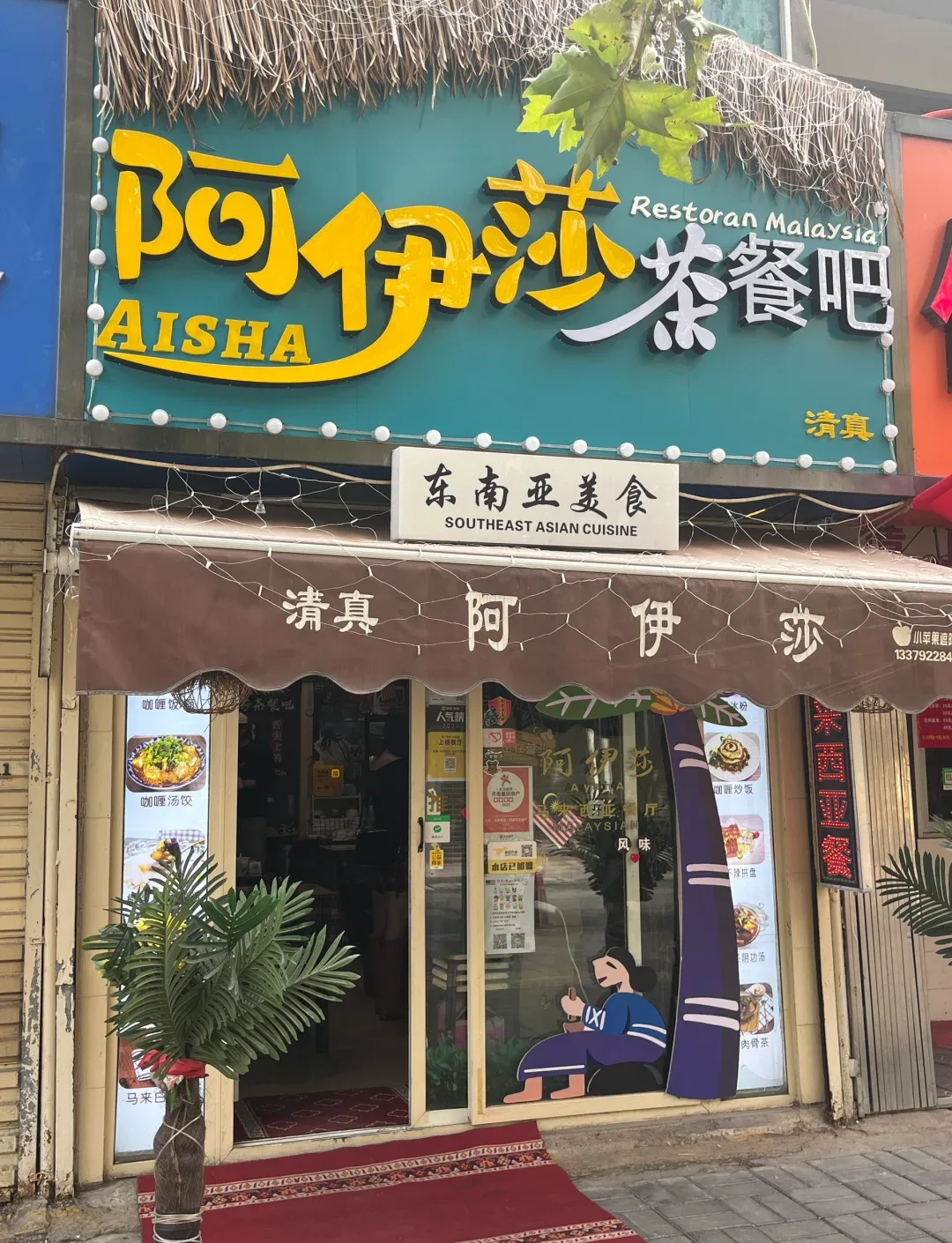
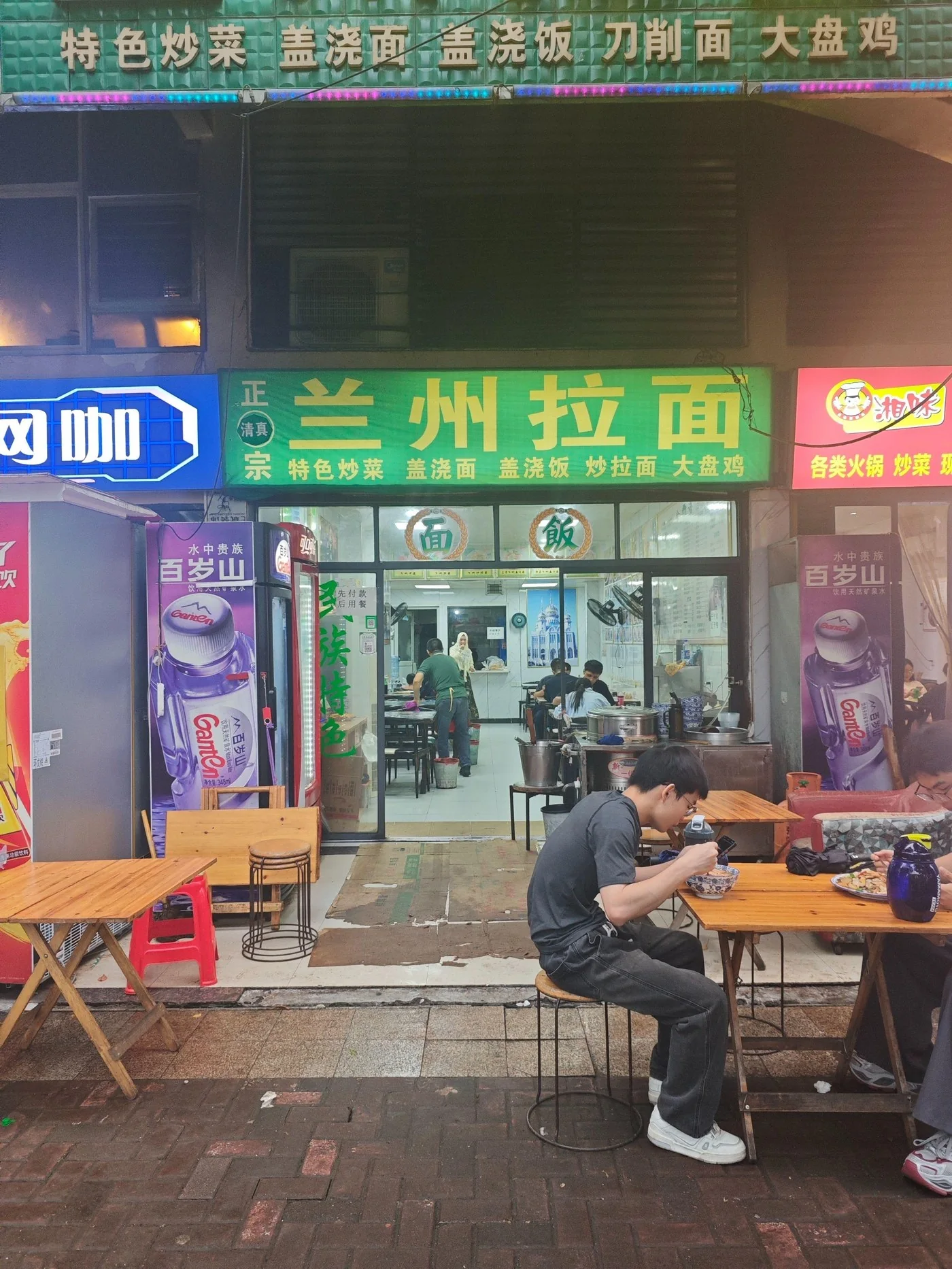
One thing to understand before anything else: China has no national halal certification body. A restaurant’s halal status rests on the 清真 (qingzhen) sign, Muslim ownership, and the trust of the local Muslim community — not on a government certificate like JAKIM in Malaysia or MUIS in Singapore. For most long-established Hui restaurants this community system works well. For a random restaurant that hung up a green sign to attract tourists, it proves less. This is why we phone-verify restaurants before putting them in an itinerary, and verify again shortly before the meal — the sign is where checking starts, not where it ends. Our guide to halal Chinese food explains how the system works dish by dish.
So the honest framing is: China is workable everywhere and comfortable in specific places. The rest of this article is about knowing which is which before you book flights.
Is China Safe for Muslim Travelers?
This is the first question behind most searches, so here is the direct answer: for foreign Muslim tourists, China is safe — including for visibly Muslim women in hijab. There is no restriction on wearing hijab anywhere our clients travel, and street crime against tourists is rare.
You may have read alarming things about the treatment of Muslim minorities in Xinjiang. We are not going to pretend that debate does not exist, and we are not asking you to settle it — that is yours to weigh. What we can report is narrower and first-hand: on the trips we have operated, including itineraries through Xinjiang, our clients’ hijabs have never caused a problem at a police checkpoint, hotel check-in, attraction, or train station. The tourist experience and the political debate are two different things, and conflating them leads travelers to skip a country where, as visitors, they are welcomed.
Two honest caveats, because “safe” is not the same as “effortless”:
- You will be noticed. In smaller cities and scenic areas, a woman in hijab may draw curious looks and occasional photo requests. In our experience this is curiosity, not hostility — but if you have never traveled somewhere Muslims are a small minority, it can feel intense on day one.
- Alcohol and cigarettes are part of daily life. Alcohol is sold and served everywhere, and although major cities like Beijing and Shanghai have indoor-smoking bans, smoking still happens — including in some hotels. We plan restaurant and hotel choices around this, and ask hotels to change rooms when a room smells of smoke — but we cannot make the smell of the street disappear.
If hijab is your specific concern — airport security, ID photos, what women actually experience — we wrote a full, first-hand answer in Can you wear a hijab in China? The same conclusion applies to Muslim students and business travelers, not just tourists.
Can You Actually Eat Halal Every Day?
In every city we operate in: yes — if you know where the halal food actually is, because it clusters.
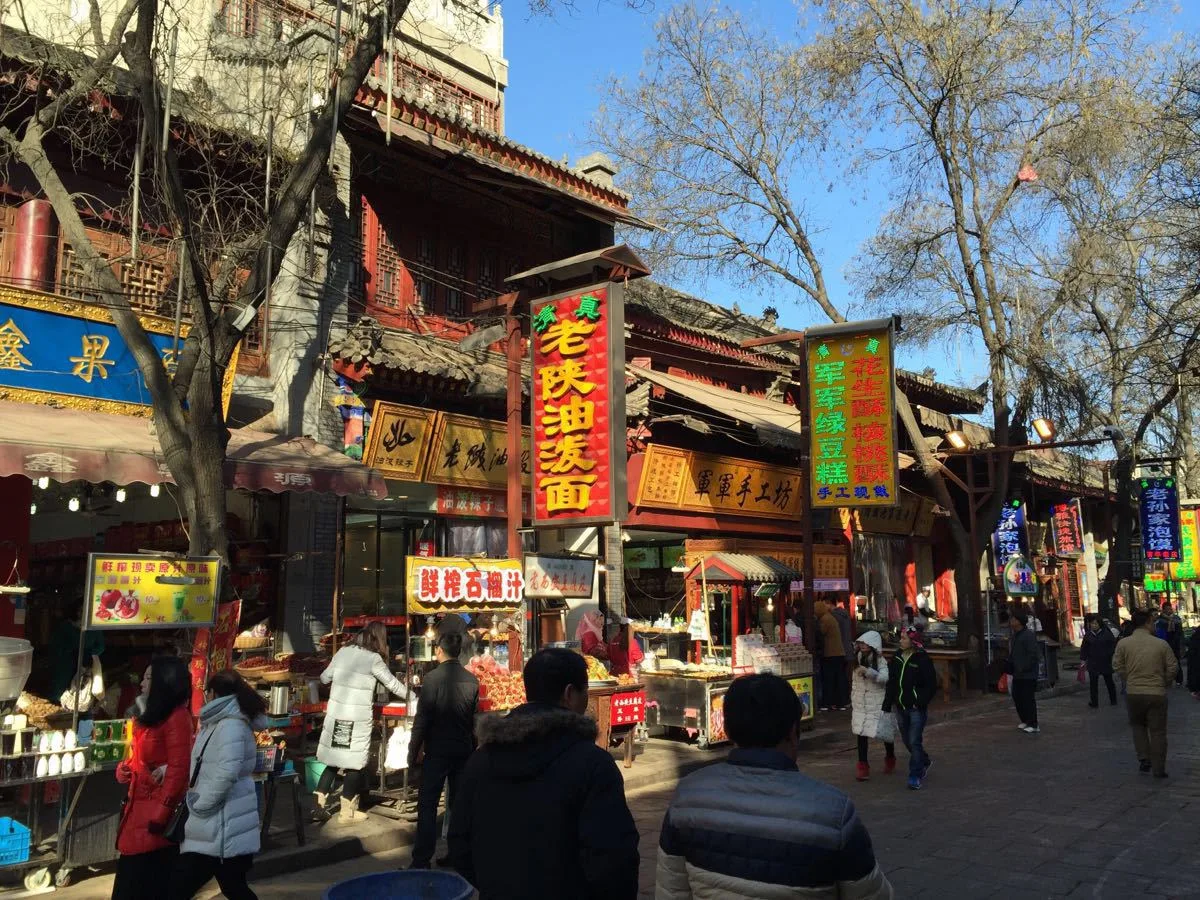
This is the single most useful pattern for planning: Chinese halal food concentrates into districts, usually around a city’s main mosque. In Chengdu, halal restaurants cluster around Huangcheng Mosque near Tianfu Square. In Chongqing, they concentrate on Zhongxing Road near Jiaochangkou. Xi’an has an entire Muslim Quarter. Stay near the cluster and every meal is a short walk; book a hotel in the wrong district and every dinner becomes a 30-minute crosstown trip. This is why “which hotel” matters more than “which restaurant” — and why we choose the hotel base first when we plan.
The gaps, stated plainly:
- Fast-food chains are not a fallback. KFC and McDonald’s in Beijing and most of mainland China make no halal claim, and we can’t confirm certification for any outlet — ask the staff first if you ever need one.
- Scenic areas and day trips are the real challenge, not cities. A national park or an ancient town may have no verified halal restaurant at all. For those days we arrange packed halal meals the evening before — a client’s Great Wall day, for example, gets lunch sorted before the bus leaves.
- Hotel breakfasts are usually not from a halal kitchen, even in five-star properties. The practical routine our clients settle into: fruit, bread, and eggs from the buffet, with the serious meals at verified restaurants. It is not glamorous, but it removes the daily guesswork.
For the full picture — what to eat, how the qingzhen system works city by city — start with our halal food in China guide.
What About Prayer?
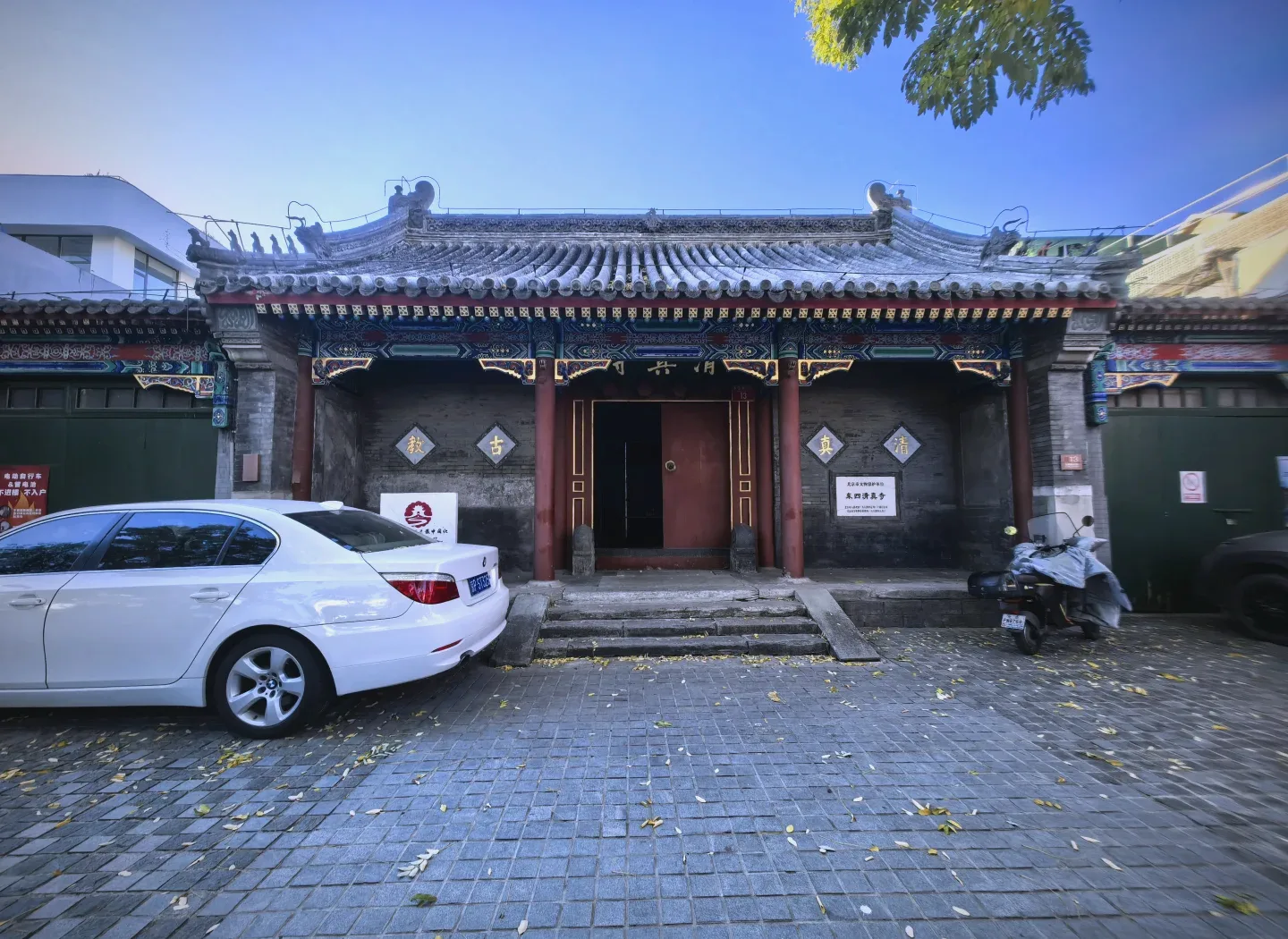
Every major tourist city has at least one active mosque open to visiting Muslims — in Beijing, for example, Dongsi Mosque in the city center receives foreign Muslims for daily and Friday prayers. One current note for Beijing planning: the famous Niujie Mosque is under heritage renovation until around 2027 and closed for visits — don’t plan a day around it — though the halal restaurants on Niujie street are open as usual.
Just as important: some of China’s best destinations have no mosque at all. Zhangjiajie — the Avatar mountains, and our home base — has no public mosque for visitors, and neither does the wider Xiangxi region including Fenghuang. We would rather say that plainly than let you discover it on arrival.
What prayer actually looks like on a well-planned trip, mosque or no mosque:
- Tell your planner your prayer requirements before the trip, not during it. We pass them to each guide and driver on the route — we understand what maghrib timing means for a day plan, but that does not mean every driver in China does, so we brief them one by one.
- Prayer happens at three levels: a mosque visit written into the itinerary where one exists; your hotel room for morning and evening prayers; and a clean, private spot beside the vehicle on travel days — on a Great Wall or national park day, that is the realistic option, and a good driver builds the stop into the schedule.
- Build the day around prayer windows, whoever plans it. If you are planning yourself: check maghrib time for your travel dates first, then decide where the late afternoon puts you — that one habit prevents most of the sight-versus-salah conflicts.
Which Cities Are Easy — and Which Take More Planning?
Ranked by how much planning effort they demand from a Muslim traveler, based on the trips we actually run:
| Tier | Cities | What to expect |
|---|---|---|
| Easiest | Xi’an | A living Muslim Quarter, historic mosques, halal food as street culture run by the Hui community itself — the one Chinese city where halal eating takes almost no planning |
| Straightforward with the right base | Beijing, Chengdu, Chongqing, Shanghai, Guangzhou | Established halal districts and open mosques; comfort depends almost entirely on choosing a hotel near the halal cluster |
| Spectacular but plan around constraints | Zhangjiajie, and most scenic regions | Top-tier scenery, thin or zero halal/mosque infrastructure; realistic with packed meals, verified restaurants where they exist, and prayer arranged around the day |
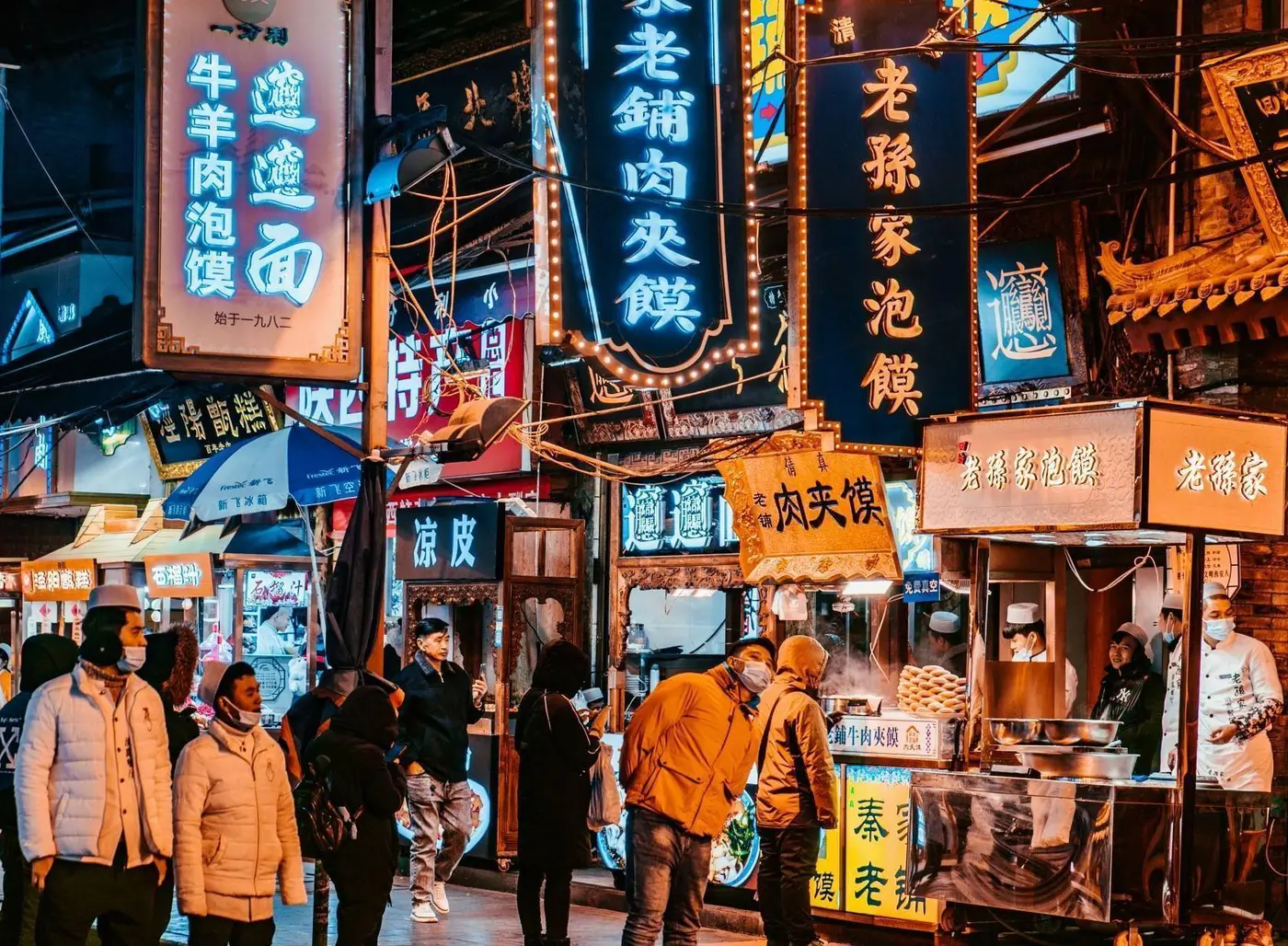
A note for families: the tier table doubles as an “elderly parents and small kids” map. The easy-tier cities are flat-city sightseeing with meals a short walk away; the constraint-tier destinations involve mountain terrain and long drives between meals, which is exactly where pacing for grandparents needs to be designed in rather than improvised.
Where to go deeper, depending on which city is pulling you:
- Is Beijing Muslim-friendly? · Is Chengdu Muslim-friendly? · Is Chongqing Muslim-friendly? · Is Shanghai Muslim-friendly?, Guangzhou · Is Xi’an Muslim-friendly? — the same honest assessment, city by city;
- Xi’an’s Muslim Quarter if food culture is the point of your trip;
- the Zhangjiajie Muslim travel guide if the Avatar mountains brought you here — it is our home turf, and shows how a halal trip works in a region with no mosque.
Visas, Payment, and Staying Connected
Getting into China is easier right now than it has been in years. At the time of writing (checked October 2026), citizens of Saudi Arabia, Oman, Kuwait, and Bahrain have 30-day visa-free entry through 31 December 2026; the UAE and Qatar have mutual exemptions with no announced end date; and Malaysians enter visa-free for up to 30 days under a mutual agreement — details in our visa-free guide for Malaysians, and in our guides for Saudi travelers, UAE travelers and Qatar travelers. Indonesian passport holders still need a visa for a normal round trip. Policies shift, so confirm your country’s current status on an official source before booking.
Payment is far easier than it used to be: Alipay and WeChat Pay have accepted foreign cards since 2024, and our payment guide covers the ten-minute setup that saves a week of friction — do it before you fly, because the setup is the part people get wrong.
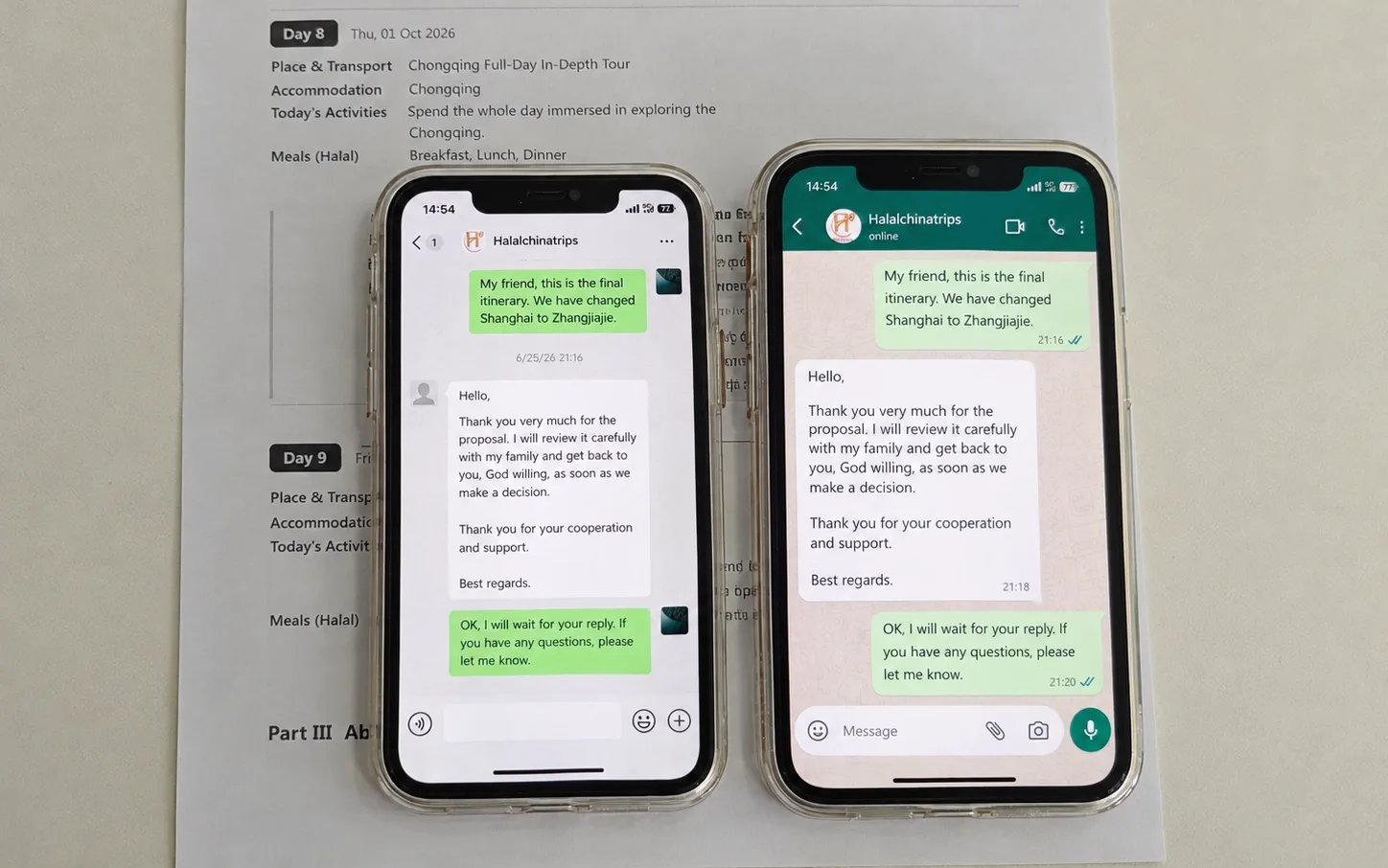
One thing to arrange before you land: WhatsApp does not work on regular local Chinese networks. It works fine on international roaming or a properly configured travel eSIM — which is how our clients message us throughout their trips — so sort your data plan before departure, not after. Our guide to using WhatsApp in China compares roaming, travel eSIMs and local SIMs side by side.
Where It Still Gets Hard — and What That Looks Like
No country is friction-free, and we would rather you land with accurate expectations:
- Smoke smell in some hotels and restaurants, as covered above — manageable, not erasable.
- Friday prayers vs. itineraries. Jumu’ah at a city mosque takes a real chunk out of a sightseeing day. We plan lighter Fridays or route the day past the mosque; a self-planned trip often discovers this conflict at 11 a.m. on the day.
- Things go wrong even with verification. A restaurant we had verified once closed unexpectedly on the day our clients arrived. Finding a replacement took about fifteen minutes, because our route notes already listed verified alternatives nearby — not because nothing ever fails. That is the honest value of local planning: not a promise that nothing goes wrong, but a short recovery time when it does.
FAQ
Are Muslims accepted in China?
As travelers, yes — Chinese Muslims have been part of the country for over a thousand years, and foreign Muslim tourists are treated like any other visitors. The one adjustment worth expecting: in less-visited places you may be a curiosity, which is different from being unwelcome.
Which city in China is most Muslim-friendly?
Xi’an, without much competition — Muslim heritage is part of the city’s identity, and halal food is the mainstream street food. See the tier table above for how the other majors compare.
Is China a Muslim country?
No. Muslims are a minority of tens of millions in a population of 1.4 billion. That is exactly why the city-by-city difference matters: you are traveling in a non-Muslim country that contains centuries-old Muslim communities.
Can I visit China during Ramadan?
Yes — mosques in major cities hold taraweeh and communities break fast together, but restaurant timing and day plans need real adjustment. Tell your planner you will be fasting; it changes how a good itinerary is built.
So — Should China Be on Your List?
Yes, with the one adjustment this whole article argues for: choose your cities the way you would choose them as a Muslim traveler, not the way a generic top-ten list ranks them. Xi’an and the big five are comfortable. Zhangjiajie is worth the extra planning. Small-town China is where you will want help.
If you are still at the “is this realistic for my family?” stage, the city verdicts linked above are the next thing to read, and our halal travel in China overview shows what a fully planned trip includes. And if you would rather just describe your dates and group and hear how we would run it, ask our team on WhatsApp — prayer requirements, picky eaters, grandparents’ pace and all. That is the part of the job we like.