Last Updated on October 30, 2026 by Aaron Chen
When families start planning a trip to China, many want to bring their parents along, and the first worry is whether the parents will actually be comfortable. Our answer at HalalChinaTrips is yes. Parents in their sixties and seventies can enjoy China, and most of the big sights are easier than the photos suggest, because cable cars, lifts and shuttle buses take care of most of the climbing. What really tires older parents is three other things. On the days you visit the Great Wall, the Terracotta Army or Zhangjiajie National Forest Park, there’s no halal restaurant on site that we’ve been able to verify, so lunch has to come with you. The walking that hurts isn’t up the mountain; it’s between transfer points and along the long routes through palaces and parks. And the first day after an overnight flight, along with every hotel change, takes more out of them than any single sight. When our Zhangjiajie-based team plans a trip with parents, we sort out those three things first.
Most families who ask us about bringing their parents are bringing the children too, so this guide is written with three-generation trips in mind.
Which Cities and Sights Are Easiest With Elderly Parents?
| City and sight | Where the walking is | What takes the strain off | Halal food that day |
|---|---|---|---|
| Shanghai, city sights | Mostly flat city walking | Short car rides between sights | Halal restaurants in the city |
| Chengdu, Panda Base | Paths across a large park | All-day sightseeing bus between the gates; over-60s enter free | None reliable at the base; halal food around the Huangcheng Mosque |
| Beijing, Forbidden City | One-way route through a palace almost 1 km long | Free wheelchairs for over-60s, borrowed inside the Meridian Gate | Back in the city |
| Beijing, Great Wall | Steps and slopes between watchtowers | Cable car at Mutianyu or Badaling | No halal restaurant we can verify on site |
| Xi’an, Terracotta Army | Two separate parts of the site | Free shuttle between them; free wheelchairs | None we’ve verified on site; the Muslim Quarter is in the city |
| Zhangjiajie, National Forest Park | Golden Whip Stream (about 7.5 km on foot) and the steps up Huangshi Village | Bailong Elevator, cableways and the Ten-Mile Gallery tram; over-65s enter free on the main ticket | None we can recommend inside the park; dinner in town |
Shanghai and Chengdu are the easiest. The Great Wall day and Zhangjiajie need the most planning, but both go well once the lifts are part of the day’s plan rather than an optional extra. Keep in mind that the lifts, buses and trams are ticketed separately from entry. And if this is your parents’ first time in China, pairing one easy city with one harder one usually works better than taking on two hard ones.
What We Ask Before We Plan Anything
Our first message to every family asks the same few things: your dates, how many of you are travelling (including any parents or children), which cities you have in mind, and whether your flights are booked. When parents are coming, four more questions shape the whole trip.
- How far can each person walk before they need a rest, and how long a rest? Ask anyone whether their parents can walk and the answer is nearly always yes. What actually helps us is the length of one stretch. One traveller told us she couldn’t manage hiking or walking very far, and that single line shaped her whole Zhangjiajie plan: cable cars, lifts and shuttle buses wherever the route allows, and as little uphill walking as possible.
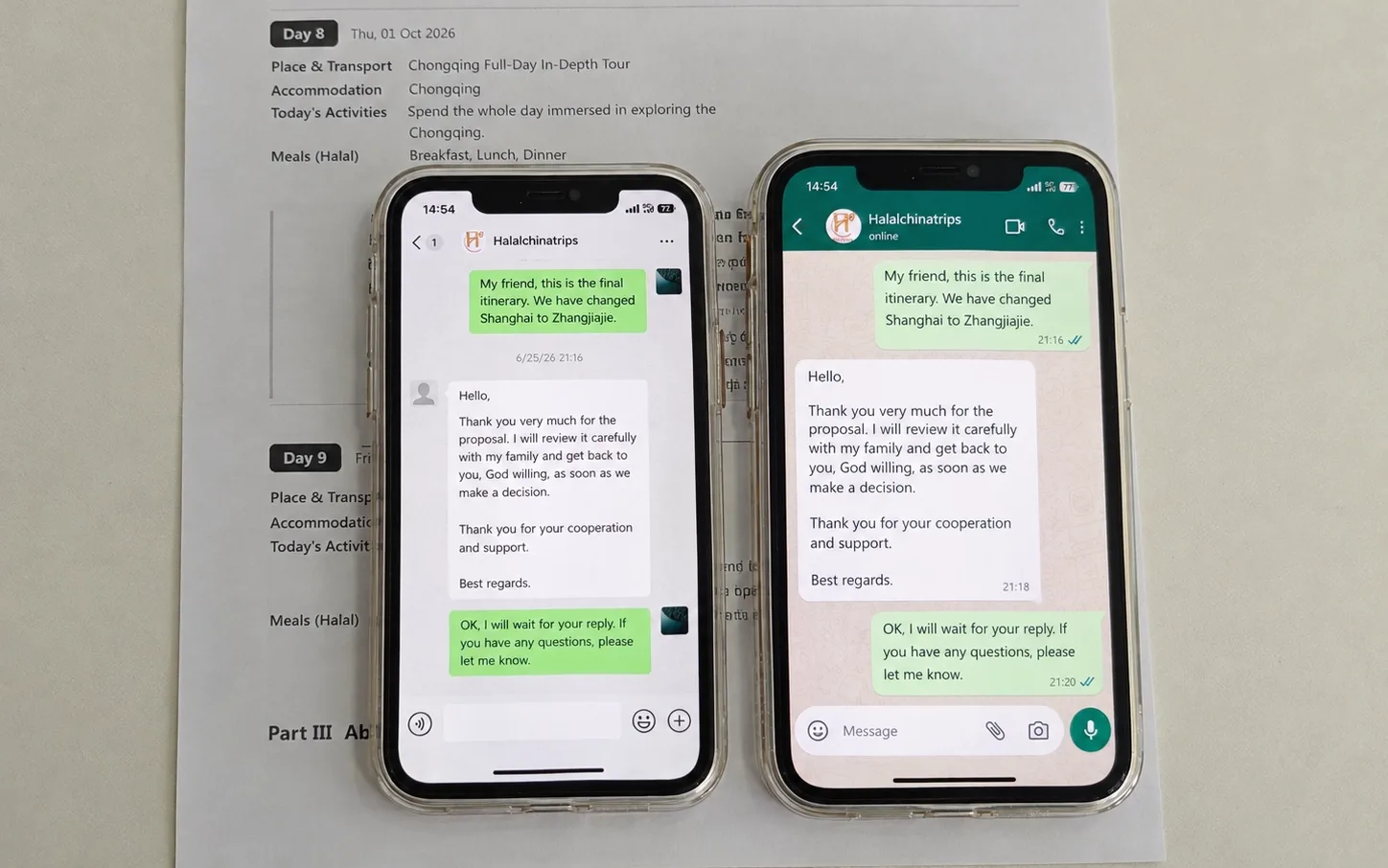
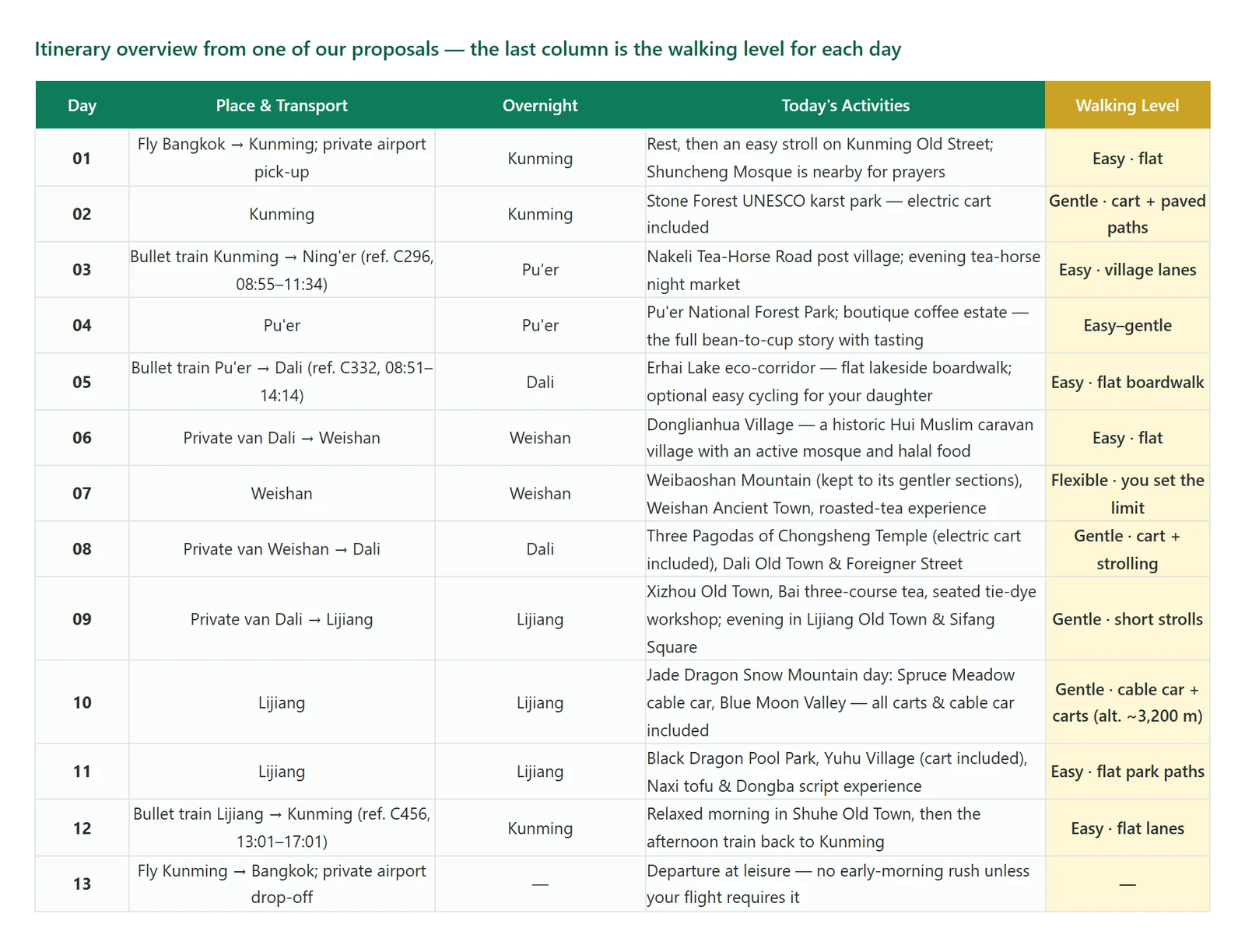
- Bad knees, a walking stick or a wheelchair? Tell us at the start. We pass it on to the guide before the trip, asking them to cut the walking and add rest stops, so the lift is already in the plan and nobody has to negotiate it on the day. For one traveller who walks with a stick, the itinerary we sent marked a walking level for each day.
- Who prays where? Some parents like to pray at a mosque whenever there’s one nearby; others are happy at the hotel. Let us know which prayers matter where, whether Friday prayer at a mosque is a must, and anything that needs arranging at the stop, a chair for example. We’ll pass it all on to the guide.
- What language do your parents speak? We can promise an English-speaking guide in every city. Malay, French and other languages we can look for, but we can’t guarantee them, and we don’t have Arabic-speaking guides we can reliably book. We confirm the guide’s language once your dates are fixed, and if it’s going to be English, we’ll tell you straight. If one of your parents speaks little English, let us know, so the guide is ready for it from day one.
The First Day: Early Landings and Where to Sleep
Several families we’ve planned for recently were landing in China early in the morning, at 05:50, 06:35 and 07:15. Walking out of the arrivals hall straight into a day of sightseeing, after a night on the plane, makes for the hardest day of the trip for a 70-year-old who didn’t sleep.
When one group was due to land in Chengdu at 05:50, we offered to book the hotel from the night before, so they could go straight up to their rooms. If that isn’t in the budget, we keep the first day light: somewhere close to the hotel, lunch, then prayer and a rest, with the big sights starting on day two. We plan that day around your actual landing time, not a template.
Sharing rooms across three generations is a question of its own. Our guide to China hotel rooms for Muslim families explains family rooms, triples and how children are charged.
Where the Walking Really Is, City by City
Beijing: the Forbidden City and the Great Wall
The Forbidden City only runs one way. You go in through the Meridian Gate in the south and come out at the north or east gate, and the palace is 961 metres from end to end, so once you’re inside there’s no quick way back to the car. The museum lends wheelchairs free of charge to visitors over 60 and anyone with limited mobility. You pick one up just inside the Meridian Gate and drop it off at the north or east exit. If a parent tires easily, take one from the start rather than halfway round.
On the Great Wall, the hard part is the climb between the towers. At Mutianyu, a shuttle bus with its own ticket takes you from the visitor centre towards the lifts, and the enclosed cable car goes up to Tower 14. The open chairlift and the toboggan are sold by a different company, so decide which you want before you buy. Mutianyu’s own notice says the cable car isn’t advisable for some elderly visitors with limited mobility, or for anyone with heart disease or high blood pressure. If either of your parents falls into those groups, have a word with their doctor before you travel. And if the cable car is ruled out, we would rather swap the Great Wall for an easier day than push it.
Badaling has both a cableway and a ground funicular. For one family travelling with a 73-year-old, the cable car up and back was in the plan from the very first draft. Our guide to halal food in Beijing covers what to eat on the Great Wall day.
Xi’an: the Terracotta Army
The Terracotta Army site comes in two parts, the museum with the pits and the Lishan Garden, with a free shuttle running between them. You can borrow a wheelchair free of charge at the visitor centre to use inside the site, but there aren’t many, so ask for one as soon as you arrive. The site is about an hour’s drive east of the city.
Chengdu: pandas, Dujiangyan, and a trip we advised against
The panda base opens at 7:30 (8:00 from November to February), and mornings are the time to go. Over-60s get in free, and the base lists passports among the IDs it accepts. The sightseeing bus runs all day between the South Gate and the West Gate on a separate ticket, and the base asks that older passengers have someone with them on board. Our Chengdu Panda Base guide has the timings in detail.
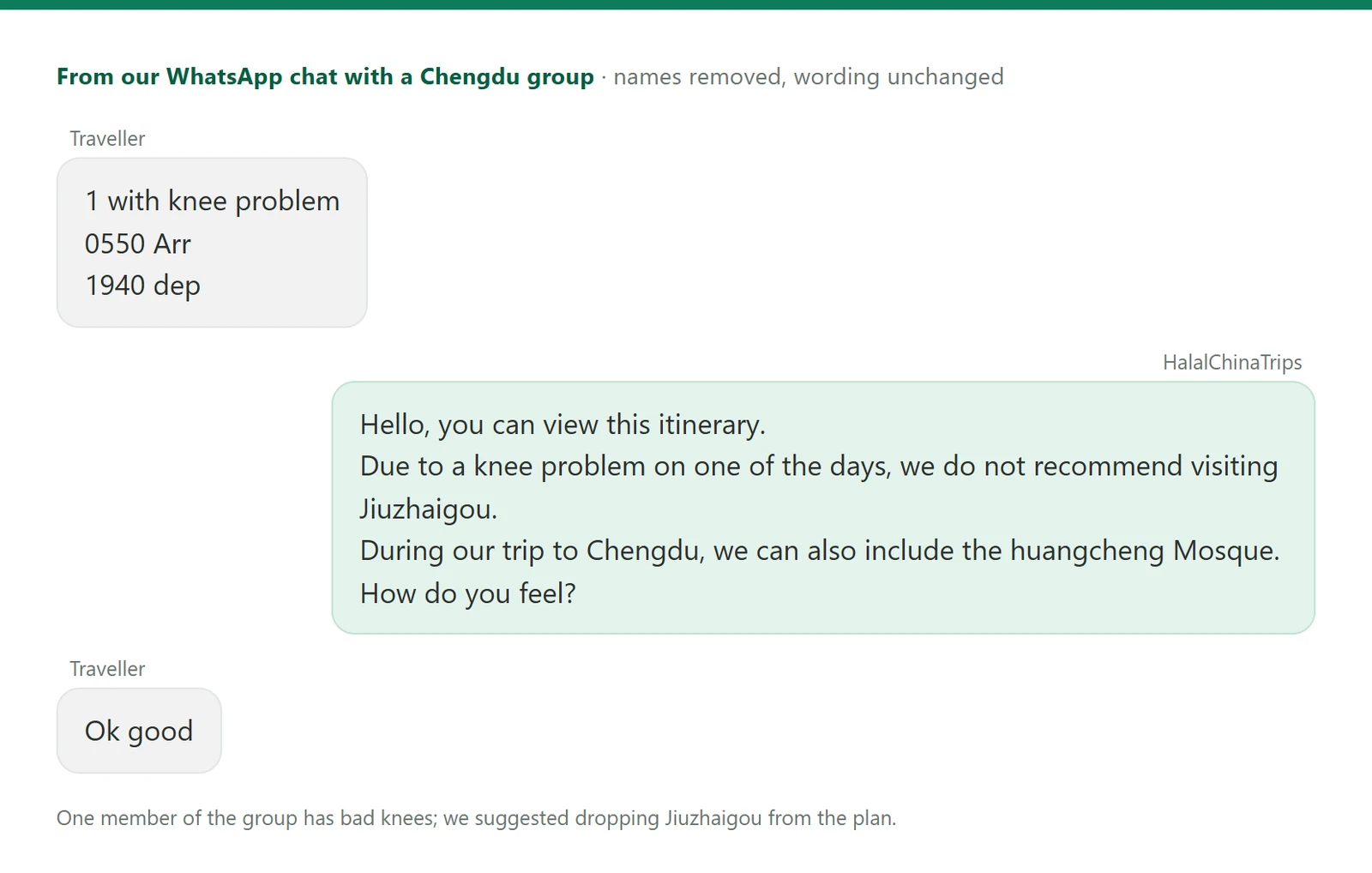
In a Chengdu group we’re planning for, one member has bad knees and can’t walk for long. Because of the knee, we advised against adding Jiuzhaigou and suggested the Huangcheng Mosque instead. Their reply was “Ok good”. In the plan we sent next, the panda base and Dujiangyan days use the sightseeing buses, and the escalator up to Yulei Pavilion instead of the climb.
Zhangjiajie: let the lifts do the climbing
In Zhangjiajie National Forest Park, visitors aged 65 and over get in free on the main ticket, and those aged 60 to 64 pay half. The lifts are ticketed separately, and they’re what make the park work for older parents. The Bailong Elevator, the cableways up Tianzi Mountain, Huangshi Village and Yangjiajie, and the Ten-Mile Gallery tram take out most of the climbing. The 2026 ticket policy has the full list.
Two stretches decide how tiring the day feels. Golden Whip Stream runs about 7.5 km along the valley floor, level and shaded but long. Huangshi Village without the cableway means thousands of stone steps. For the traveller with bad knees we mentioned earlier, the note on her booking says: tell the guide in advance, cut the walking, add rest time. Between December and February the mountain tops can be icy, and our Zhangjiajie weather guide goes through it month by month. Our Bailong Elevator guide explains when to ride, and our piece on how many days Zhangjiajie needs explains why families with grandparents should add a day.
A small thing about toilets
Many public toilets at scenic areas and transport hubs in China are squat toilets, while hotels, airports, shopping malls and chain restaurants mostly have sit-down ones. If a parent has bad knees, make a stop at the hotel, a restaurant or a mall before heading into the site.
Halal Food on the Long Sightseeing Days
The places where older parents spend their longest days are often the ones without a halal restaurant we can verify on site: the Great Wall at Mutianyu, the Terracotta Army, Zhangjiajie National Forest Park and the Chengdu panda base. A fit 30-year-old can get through a day like that on a packed lunch. A grandmother who’s been on her feet since 8am often can’t, and a cold sandwich at 1pm isn’t much of a meal.
So we plan those days in two halves. Lunch comes from the city: on a Great Wall day we arrange halal food from town the evening before, and in Zhangjiajie, families on our trips bring their own lunch into the park. Dinner comes early: on the way back, the guide takes everyone to a halal restaurant in town, so the children and grandparents get a proper hot meal before they’re too tired to enjoy it.
The restaurants we take families to are ones we’ve checked ourselves: certification first, then a phone call, then another check before your trip. If the hotel kitchen isn’t halal, breakfast is fruit, bread and eggs. Our article on halal meals on a China tour explains how meals are counted in a quote, and what “meals not included” means on days like these.
Praying When a Parent Can’t Walk Far
On the road, prayer mostly comes down to distance and timing, and both count for more when someone can’t walk far.
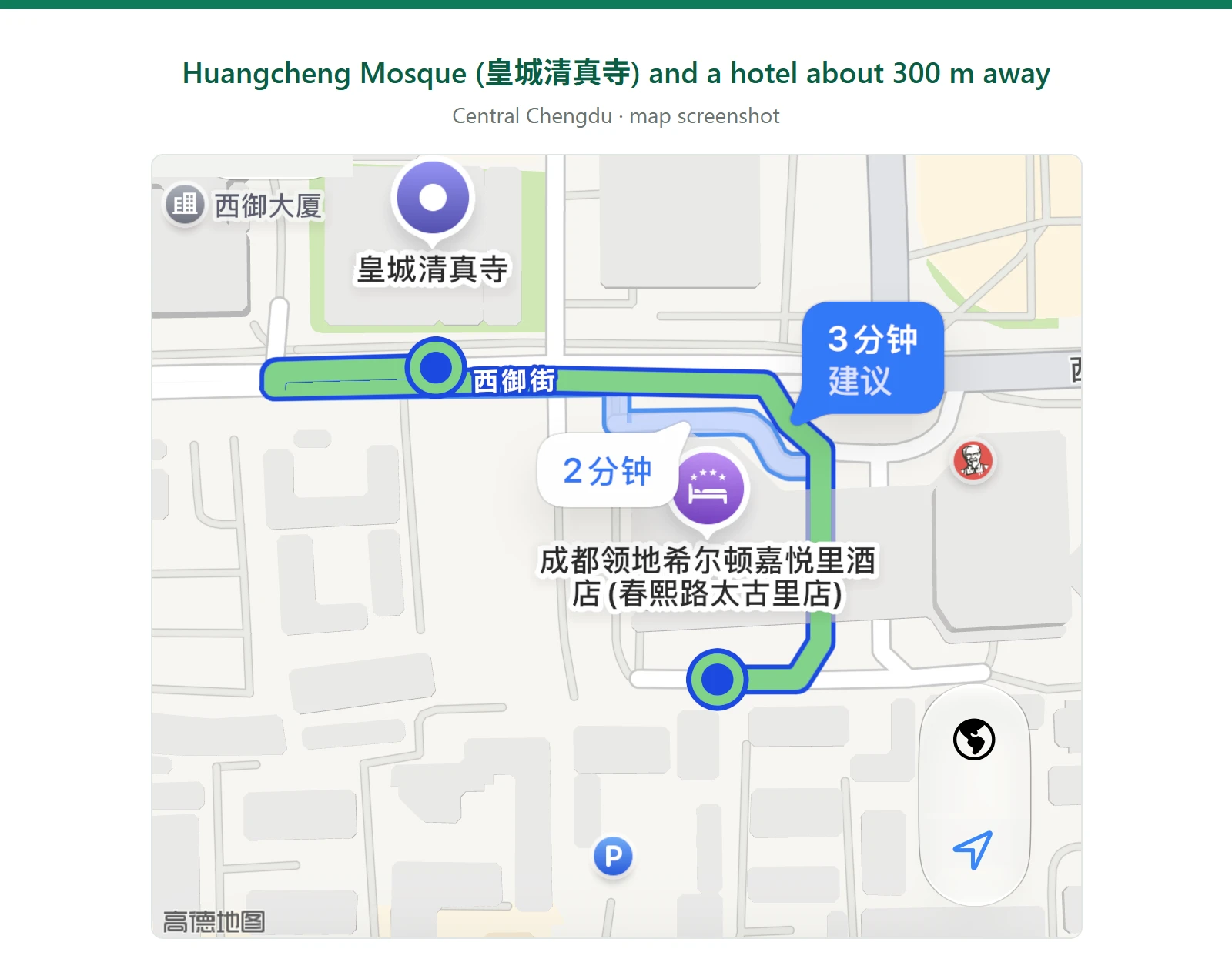
Start with the hotel, and choose it for how close it is to a mosque, not just to the sights. For the Chengdu group with one member who can’t walk far, the hotel we picked is within walking distance of the Huangcheng Mosque, and Dhuhr at the mosque is part of every day. For an older traveller, a mosque you can walk to is a mosque you’ll actually use.
Then there’s the day itself. Prayer times are fixed points in our plans: we don’t put sightseeing over them, and the Dhuhr stop doubles as lunch and a rest, so nobody has to hurry back from a viewpoint. Long sightseeing days need thinking about too. On a Great Wall day, wudu is usually at a motorway service area, with prayer beside the car or back at the hotel. And if Friday prayer at a mosque matters, we put Friday in a city with a mosque and keep the rest of that day light.
How each person handles prayer on the road follows their own practice. We simply plan the stops around what your parents tell us. Our guide to praying while travelling in China covers places, times and direction city by city.
Fewer Hotel Moves, and “Is It Worth Going?”
It’s easy to underestimate what moving hotels costs. One family travelling with two grandparents and a four-year-old put it simply: “we try to lessen our packing and unpacking”. They also asked whether Furong Ancient Town was worth adding, with two elderly travellers and a tight itinerary.
Our answer to a question like that is a choice rather than a yes. Skip it, and that day stays easy from the hotel you’re already in. Go as a day trip, and it’s doable but a long day for grandparents. Stay the night, and you see the town after dark, but it’s one more check-in and check-out. When fewer hotel changes is what a family cares about most, we lean towards skipping. With older parents, one base and a few day trips often beats a new hotel every night.
Senior Tickets, Child Tickets and Help at Train Stations
China has no single rule giving foreign seniors the same discounts as Chinese citizens. Each site and province sets its own age line, usually 60 or 65, and takes its own view on passports.
In Zhangjiajie National Forest Park, we price travellers aged 65 and over at the free senior rate on the main ticket, and the Chengdu panda base gives free entry from 60 and lists passports among its accepted IDs. At the Forbidden City and the Terracotta Army, the senior rules are written around Chinese ID, so it’s best not to build your budget around them. The senior rate also doesn’t cover Mutianyu’s shuttle and cable car, or the panda base’s sightseeing bus.
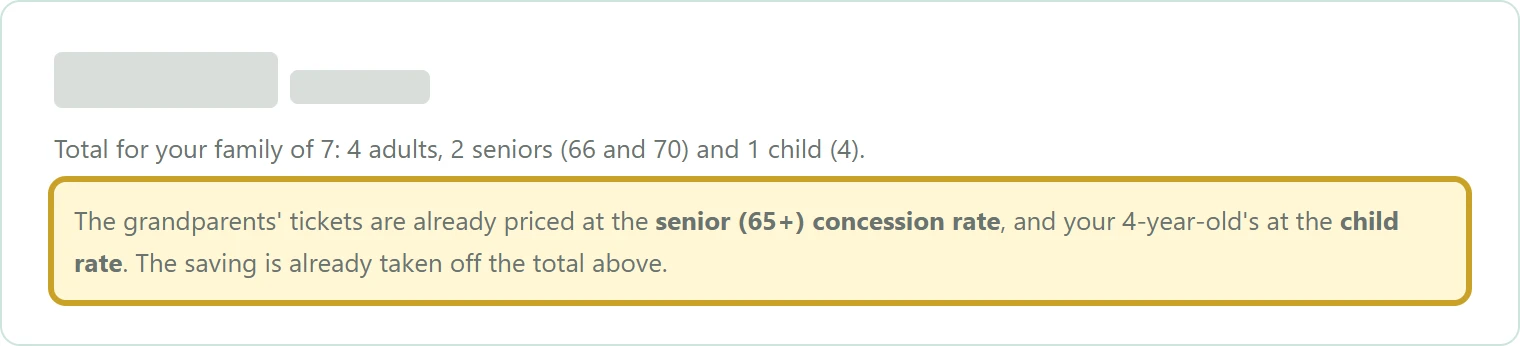
When a family with grandparents aged 65 and 70 and two children under 120 cm asked us about discounts, we re-priced the quote with the senior and child tickets, and the total came down. On trains, children under 6 travel free without their own seat, one per adult, and children aged 6 to 14 pay half price for a seat.
At stations, China Railway runs an assistance service for passengers who need help, including wheelchair users and older passengers travelling alone. It covers priority through security and ticket checks, help getting on the train, and a free station wheelchair. You can book it in the Chinese 12306 app up to six hours before departure, or at the station’s 12306 service desk no later than an hour before. The English 12306 website can’t book it, so if one of your parents needs a wheelchair, get to the station early and head to the service desk first.
Quick Answers
Is China suitable for parents over 70?
For most of the big sights, yes, because lifts and shuttles do most of the climbing. What decides it isn’t their age so much as how far each of them can walk at a stretch.
Do foreign seniors get free entry at Chinese attractions?
At some sites. Zhangjiajie National Forest Park and the Chengdu panda base are two where it works. Elsewhere it varies from site to site, and some senior rules are written for Chinese ID only.
Is the Great Wall OK for elderly parents?
Usually, if you take the cable car at Mutianyu or Badaling. If a parent has heart disease, high blood pressure or very limited mobility, check with their doctor first.
Can I get a wheelchair at a Chinese train station?
Yes, free of charge, through China Railway’s assistance service. Book it in the Chinese 12306 app up to six hours before departure, or at the station’s 12306 desk at least an hour before.
Which part of China is easiest with elderly parents?
Shanghai and Chengdu. For a first trip, pair one of them with somewhere a little harder, such as Beijing’s Great Wall day or Zhangjiajie.
Before You Book
Plan the trip around your parents rather than around the list of sights: how far they can walk at a stretch, where and when they pray, and how many times they’ll have to pack a suitcase. Tell us your parents’ ages, how far each of them can comfortably walk and how they’d like to pray on the road, and our team will build the days around that on WhatsApp. If a place on your list isn’t worth the effort for them, we’ll tell you.