Last Updated on August 20, 2026 by Halalchinatrips
If you are a Muslim traveler planning a trip to Xi’an, the Muslim Quarter is the one place where eating is easy instead of a daily research project. It is a working Hui Muslim neighborhood in the center of the city — not a themed attraction — and the food sold inside it is halal by community norm: beef, lamb, and no alcohol on the core streets. The area is also home to the Great Mosque of Xi’an, where you can pray in the middle of a sightseeing day.
That said, most guides to the Muslim Quarter are written for tourists who come for the spectacle. This one is written for travelers who need to know three practical things: what is actually halal, where and when to pray, and how to fit the Quarter into a Xi’an itinerary without fighting the crowds.
What Is the Muslim Quarter?
The Muslim Quarter (回民街, Huimin Jie — often just called Huifang) is a cluster of streets just north of the Drum Tower in central Xi’an. Hui Muslim families have lived and traded here for centuries; the community traces back to Silk Road merchants who settled in the Tang dynasty capital more than a thousand years ago. Today roughly a dozen lanes — Beiyuanmen (the main street), Xiyangshi, Dapiyuan, and Huajue Lane among them — form a dense grid of food stalls, restaurants, and shops, with working mosques scattered through the neighborhood.
For Muslim visitors, that history matters in a concrete way: this is not a food street that added halal options for tourists. It is a Muslim neighborhood that became a food street. If you only have one evening in Xi’an, spend it here. For how the city fits into a longer route, see our Xi’an destination guide.
Where It Is and How to Get There
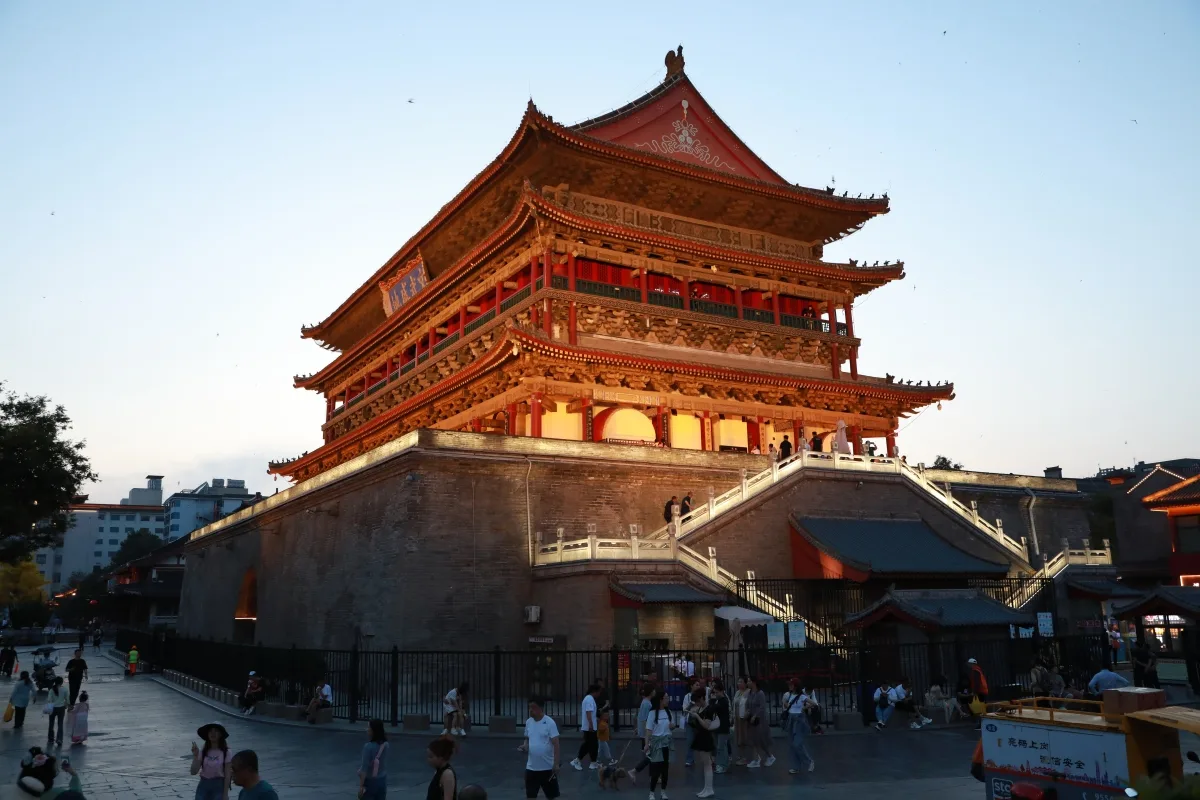
The Quarter sits in Lianhu District, wedged between the Bell Tower and the Drum Tower — the exact center of the walled city.
- By metro: Take Line 2 to Bell Tower (Zhonglou) station. From the exit, the Drum Tower is visible; walk past it and Beiyuanmen street begins directly behind it. About 10 minutes on foot in total.
- From Xi’an North railway station (where high-speed trains arrive): Line 2 runs directly to Bell Tower, around 40 minutes door to door.
- On foot: 5 minutes from the Drum Tower, 10 minutes from the Bell Tower.
There is no gate and no ticket — the streets are public and open at all hours. Individual stalls and restaurants keep their own hours, which we cover below.
Is Everything in the Muslim Quarter Actually Halal?
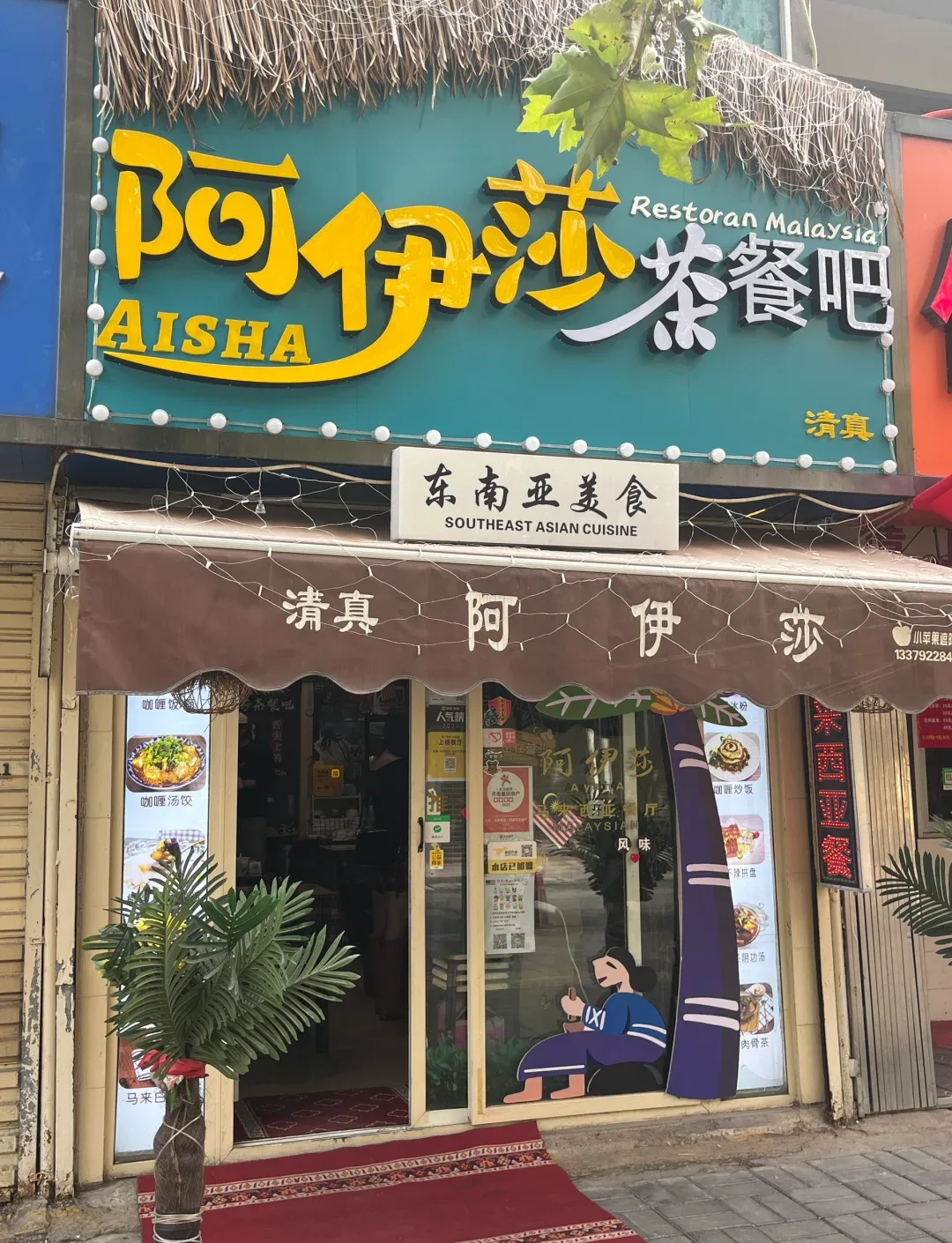
The short answer: on the core streets of the Quarter, yes. The neighborhood is run by Hui Muslim families, and pork and alcohol are absent from the food streets. You will see beef and lamb everywhere, 清真 (halal) signs on shopfronts, and butchers and bakeries serving the local Muslim community itself — the strongest practical signal that standards are kept for religious reasons, not marketing ones.
Two honest caveats, because we plan trips for Muslim travelers and get asked this constantly:
- Halal here is community-based, not certificate-based. China has no national halal certification system like JAKIM in Malaysia or MUI in Indonesia. Trust rests on the fact that vendors are Hui Muslims serving their own community. For most travelers this is reassuring in person — you will see the community praying at the neighborhood mosques. If you follow a strict certificate-only standard, you should know in advance that paper certification is not how it works anywhere in China.
- The Quarter has edges. A block or two beyond the core lanes, you are back on ordinary Xi’an streets where nothing should be assumed. The practical habit: look for the 清真 sign and Arabic script on the shopfront. Inside the core streets this is nearly universal; on the fringes it tells you exactly where the neighborhood ends.
This is the same verification logic we apply when planning meals across China for our clients — in cities without a Muslim quarter it takes real work, which is why we pre-verify every restaurant on our routes. Our halal travel in China guide explains how this differs city by city.
What to Eat: Signature Dishes and Where to Look
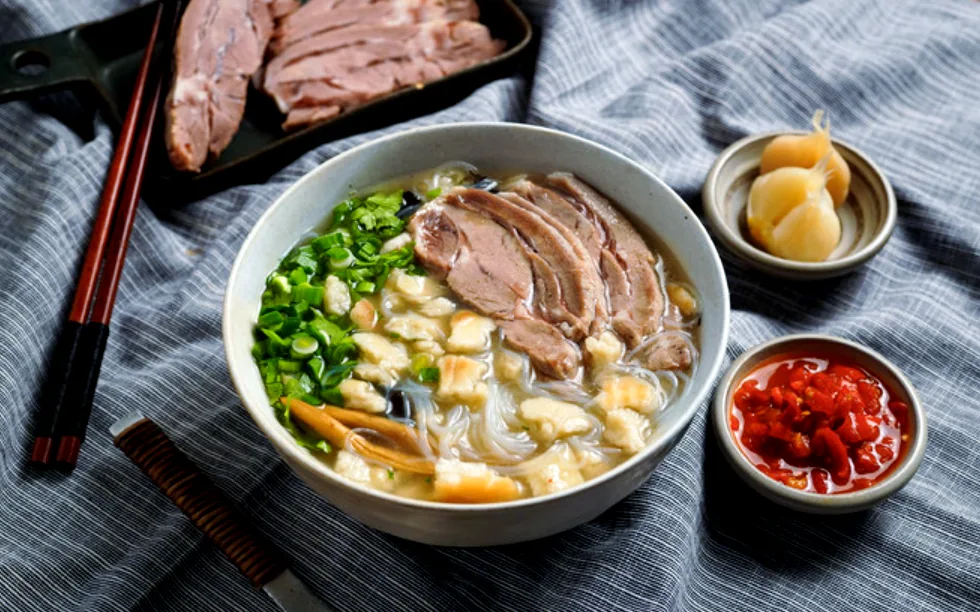
Skip the checklist mentality — you cannot eat everything in one visit. These are the dishes worth prioritizing, all standard halal fare on the core streets:
- Yangrou paomo (羊肉泡馍): Xi’an’s signature dish — flatbread you tear into crumbs yourself, drowned in slow-cooked lamb soup. A sit-down meal, not street food. Order it at an established restaurant on Beiyuanmen or Dapiyuan rather than a tourist window.
- Roujiamo (肉夹馍): Often called the Chinese burger — chopped braised beef or lamb stuffed in a crisp flatbread. In the Quarter it is made with beef or lamb; elsewhere in China the default is pork, so this is the place to try it.
- Biangbiang noodles: Wide, hand-pulled belt noodles with chili and garlic. Watch them being slapped against the counter — the noise is the name.
- Grilled lamb skewers (烤串): Cumin-crusted, grilled over charcoal in front of you. Busiest stalls turn over fastest — join the longest queue of locals.
- Liangpi (凉皮): Cold rice-flour noodles in sesame and chili dressing. The Quarter’s best hot-weather lunch.
- Persimmon cakes (柿子饼): Fried dough made from Lintong persimmons, filled with sweet pastes. A local specialty you will not easily find outside Shaanxi.
- Jinggao (镜糕): Small steamed rice cakes on a stick, dusted with rose sugar — the Quarter’s classic walking dessert, alongside fresh pomegranate juice in autumn.
Local eating pattern worth copying: the main Beiyuanmen drag is the show; the side lanes — Dapiyuan and Xiyangshi in particular — are where prices drop and locals actually eat. Walk the main street, then eat one lane over. For halal food planning in other Chinese cities, our halal food guides cover them one by one.
Praying at the Great Mosque of Xi’an
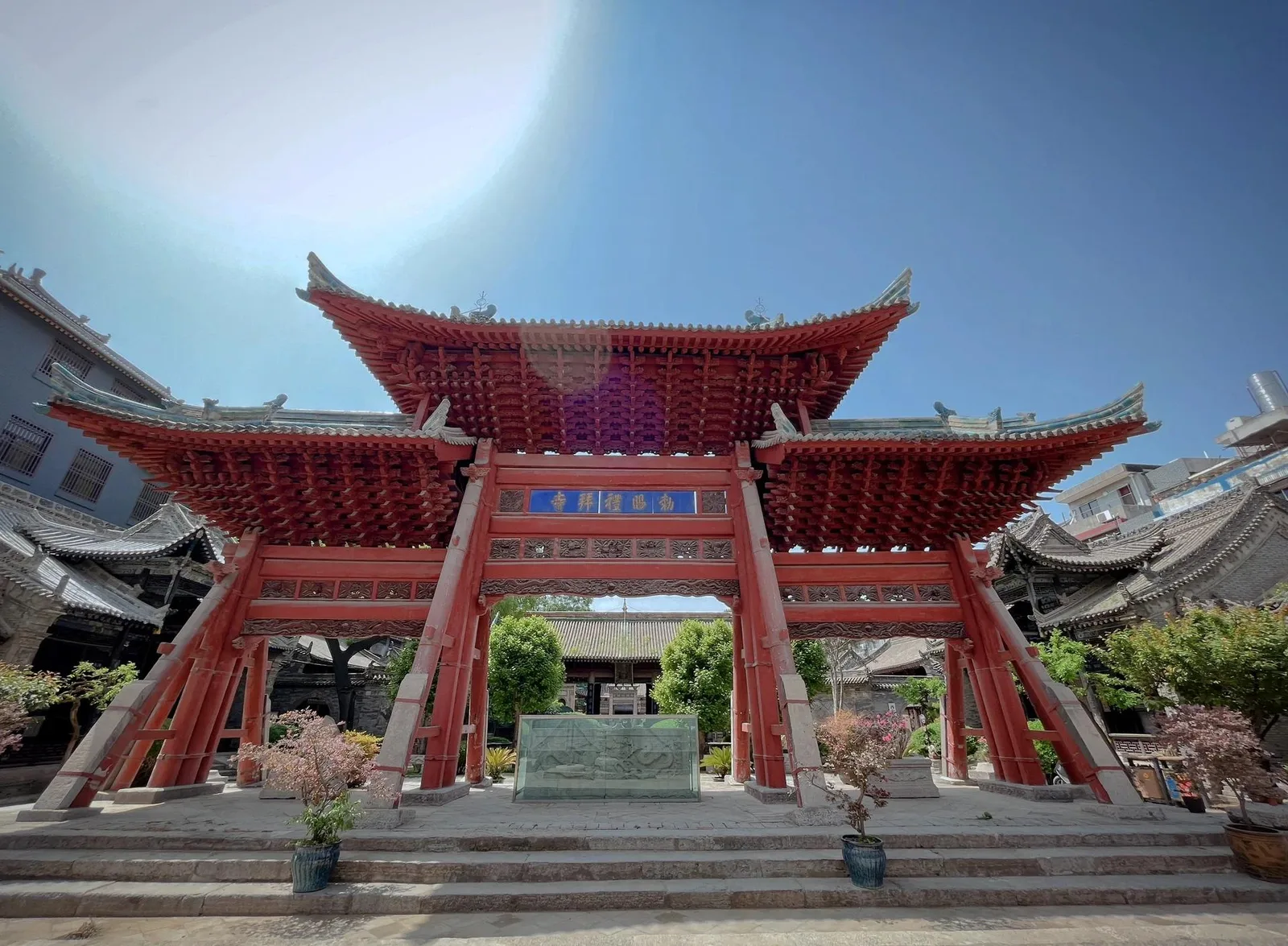
The Great Mosque on Huajue Lane is one of the oldest and largest mosques in China, founded in 742 AD and built entirely in Chinese courtyard style — pavilions and gardens rather than domes and minarets. It is both a functioning mosque and a historic site, and the two roles work differently:
- Muslim visitors are admitted free to pray — tell the gate staff you have come for prayer. All five daily prayers are held; the mosque serves the surrounding Hui community, so you will be praying with the neighborhood.
- Non-Muslim visitors need a paid ticket and can walk the courtyards, but may not enter the prayer hall.
- Hours: the complex opens at 8:00 and closes in the evening — sources list 20:00–21:00 depending on season. If you are aiming for a specific prayer, arrive with margin rather than at the last minute.
The entrance is easy to miss: Huajue Lane is a narrow souvenir alley off the main food streets — follow the signs from Beiyuanmen. Several smaller neighborhood mosques also operate within the Quarter, so a Muslim traveler here is never far from a prayer space — a rarity worth appreciating; in many Chinese tourist destinations, prayer has to be planned around the hotel room and the car. Xi’an is the easiest major tourist city in China in this respect.
Modest dress applies, and ask before photographing worshippers.
Best Time to Visit: Hours, Evenings, and Ramadan
- Stall hours: most food stalls and restaurants run from mid-morning (around 9–10 am) to about 10 pm. Early morning is quiet — good for photos, bad for eating.
- Evenings are the spectacle — lights, grill smoke, full crowds. It is genuinely lively and genuinely packed, especially on weekends and Chinese public holidays. If crowds drain you, go for a late lunch around 2 pm instead: same food, half the people.
- Seasons: the Quarter is open year-round. Summer evenings are hot and crowded; autumn (September–November) is the most comfortable window, which also matches the best overall season for Xi’an.
- Ramadan: the Quarter does not shut down — it is a working commercial street with heavy tourist trade — but travelers report some family-run stalls running shorter daytime hours, and the mosques fill for maghrib and taraweeh. Being here for iftar, breaking fast in a neighborhood that has done so for over a thousand years, is a genuinely special experience if your dates line up. If you are traveling during Ramadan and worried about daytime logistics as a fasting visitor, this is exactly the kind of thing we plan around.
Fitting the Muslim Quarter into Your Xi’an Trip
Most travelers give Xi’an two to three days. The pattern that works:
- Terracotta Army day: the site is over an hour east of the city and takes most of a day with travel. You will be back in the city by late afternoon — this evening is the natural Muslim Quarter evening: pray maghrib at the Great Mosque, then eat your way down Beiyuanmen.
- City wall day: the ancient city wall, Bell Tower, and Drum Tower are all within walking distance of the Quarter. Cycle the wall in the afternoon, enter the Quarter as the lights come on.
- Time needed: 2–3 hours covers the food streets and the Great Mosque without rushing. Food-focused travelers happily spend a full evening.
One practical note for group organizers: the lanes are narrow and the good restaurants are small. For groups of ten or more, a single sit-down dinner in the Quarter needs booking ahead, or the group splits into smaller tables — this is a coordination detail we handle when we plan group itineraries, along with keeping prayer times fixed in the schedule while everything else flexes.
Xi’an is also the classic starting point of the Silk Road route — many of our Muslim travelers pair it with Kashgar for a journey that follows the same road the Quarter’s founding merchants once traveled. If you want help fitting the Muslim Quarter, the Great Mosque, and prayer times into a route that actually flows, message us on WhatsApp (+86-19118612939) and tell us your dates — planning this is what we do all day.
FAQ
Is Xi’an a Muslim city?
No. Xi’an is a majority Han Chinese city, but it has one of the oldest urban Muslim communities in China. The Hui neighborhood around the Great Mosque has existed for over a thousand years, which is why halal food and working mosques are easier to find here than in almost any other major Chinese tourist city.
Is the food in the Muslim Quarter halal?
On the core streets, yes — vendors are Hui Muslims and the neighborhood standard excludes pork and alcohol. Note that halal in China is community-based rather than certificate-based, and the standard applies to the Quarter’s core lanes, not to ordinary streets at its edges. Look for the 清真 sign.
What is the Muslim Quarter called in Chinese?
回民街 (Huimin Jie), and locals often call the wider neighborhood 回坊 (Huifang). Taxi drivers and map apps recognize both, as well as “Beiyuanmen” for the main street.
What are the Muslim Quarter opening hours?
The streets are public and always open. Food stalls mostly run from around 9–10 am to about 10 pm, with evenings busiest.
Can non-Muslims visit the Great Mosque?
Yes, with a paid ticket, but only the courtyards — the prayer hall is reserved for worshippers.
How much time do you need?
2–3 hours for the food streets plus the Great Mosque. Food-focused travelers should budget a full evening.