Last Updated on October 5, 2026 by Aaron Chen
Xi’an is the easiest major city in China to eat halal — and that is exactly why so many Muslim travelers misplan it. The Muslim Quarter behind the Drum Tower is home to a Hui Muslim community that has cooked halal food here for over a thousand years, so visitors assume food will take care of itself. Then the real trip happens: a full day at the Terracotta Warriors with no halal lunch in reach, a hotel across town from every halal kitchen, and three straight dinners of street-food skewers because nobody planned a proper sit-down meal.
When we plan Xi’an for Muslim clients, we treat the Muslim Quarter as one evening’s experience, not the whole food plan. The plan that actually works has three layers: the Quarter for atmosphere and street food, established halal restaurants for real meals, and a clear answer for the one day when halal food is genuinely scarce — the Terracotta Warriors day. There is also one ordering rule that keeps you halal after you leave the Quarter, and it matters more than any restaurant list.
Why Xi’an Is China’s Easiest City for Halal Food
In most Chinese cities, halal food is something you seek out — a Lanzhou noodle shop here, a Xinjiang restaurant there. In Xi’an it is a native cuisine. The Hui Muslim community settled here when the city was the eastern end of the Silk Road, and the dishes Xi’an is famous for — yangrou paomo (flatbread crumbled into lamb soup), beef roujiamo, cumin-heavy lamb skewers — grew out of Hui kitchens. You are not looking for a halal version of local food; the local food is halal at its origin.
The practical marker is the same everywhere in China: the characters 清真 (qingzhen) on the shopfront, often alongside Arabic script. Inside the Muslim Quarter you will see it on nearly every shop. Outside the Quarter, it is the sign to look for before you sit down — our guide to halal food across China explains how to read the signage and what it does and does not guarantee.
One honest caveat: “easiest in China” does not mean effortless. The Quarter is compact and central, but Xi’an’s headline sights — the Terracotta Warriors, the City Wall, the Big Wild Goose Pagoda — are spread across and beyond the city, and none of them sits next to a halal restaurant cluster. That geography is what the rest of this guide solves.
The Muslim Quarter: Eat It Like a Local, Not a Checklist
The Muslim Quarter (Huimin Jie) is a web of streets behind the Drum Tower, in the center of the walled city. Most visitors only walk Beiyuanmen, the main north–south lane — which is also the most touristy stretch. The better eating starts when you turn off it: Xiyangshi and Dapiyuan run east–west with more locals in the queues, and North Guangji Street holds some of the most respected paomo kitchens in the city. We covered the layout, timing and etiquette in detail in our Xi’an Muslim Quarter guide; this section is about what to eat.
The dishes worth your stomach space, in rough order of priority:
| Dish | What it is | Planner’s note |
|---|---|---|
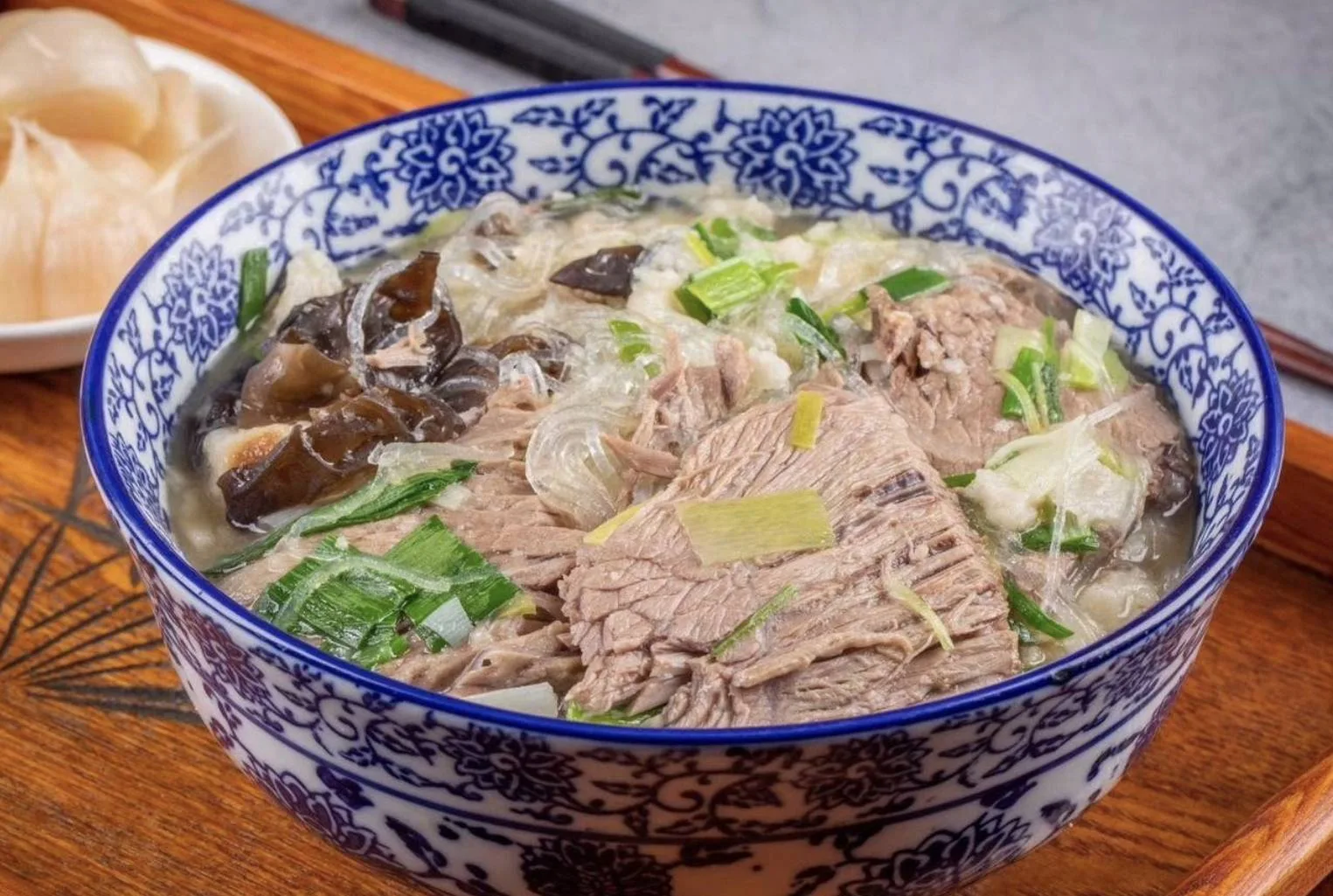
| Yangrou paomo (羊肉泡馍) | Flatbread you crumble yourself into lamb or beef broth with glass noodles | A full meal, not a snack — make it lunch or dinner, and expect to sit 40+ minutes |
| Roujiamo (腊牛肉夹馍) | Xi’an’s “burger”: spiced braised beef stuffed in a crisp flatbread | In the Quarter this is beef; outside the Quarter the default is pork — see the rule below |
| Lamb skewers (烤肉串) | Charcoal-grilled, dusted with cumin and chili | Best eaten standing in the evening crush; order in tens |
| Liangpi (凉皮) | Cold noodle sheets — wheat-based in most Quarter shops, rice-based in some — in vinegar, garlic and chili oil | The refresher between heavier dishes; Dapiyuan’s versions are the local pick |
| Guantang baozi (灌汤包) | Steamed dumplings holding hot broth — the Quarter’s versions use beef and lamb | Bite a corner first; the soup is scalding |
| Persimmon cakes (柿子饼) | Fried sweet cakes of Lintong persimmon | Dessert on the walk — buy them where they fry to order |
Two mistakes we see over and over. First, arriving hungry at noon: the Quarter is at its dullest midday and at its best from late afternoon into night, when the grills light and the crowds give it its energy. Second, trying to “do” it in one pass — order one dish per stall, share everything, and stop at five or six stalls rather than loading a tray at the first famous name you see.
The Roujiamo Rule: How to Stay Halal Outside the Quarter
Here is the single most useful thing this guide can tell you, because no menu will: the same dish changes meat depending on where you order it.
Roujiamo inside the Muslim Quarter is made with braised beef (腊牛肉, la niurou). The citywide version sold everywhere else in Xi’an — and across China — is made with pork (腊汁肉, lazhi rou) by default. Same name, same look, different meat. The famous biangbiang noodles follow the same pattern: Hui-run shops make them halal, but in shops outside the Quarter the standard meat topping is pork mince (meat-free versions like oil-splashed or tomato-and-egg exist, though the kitchen still handles pork). Neither menu will flag this in English.
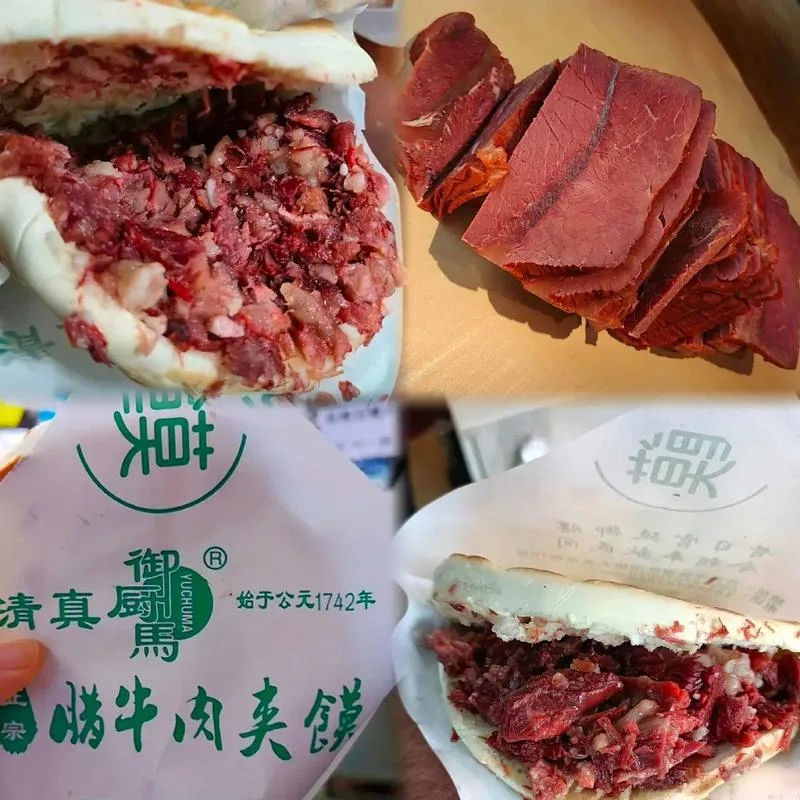
So the working rule when you eat anywhere beyond the Quarter: qingzhen sign first, dish second. If the shopfront carries 清真, the roujiamo is beef and the kitchen carries no pork. If it doesn’t, assume the default is pork regardless of how the dish is transliterated on the English menu. This one habit — checking the sign before the menu — does more for halal eating in Xi’an than any restaurant list, because lists go stale and the signage system doesn’t. Our halal Chinese food guide applies the same logic dish by dish nationwide.
Sit-Down Halal Restaurants for Proper Meals
Street food carries the atmosphere, but on a multi-day trip — especially with elders, children or a group — you need tables, chairs and full menus. Xi’an is unusually strong here because its halal restaurants include century-old institutions, not just noodle counters:
- Lao Sun Jia (老孙家) — serving yangrou paomo since 1898, one of the city’s time-honored names; the Beiyuanmen branch sits a short walk north of the Drum Tower. A proper first-night dinner: paomo plus a spread of beef and lamb dishes.
- Tongshengxiang (同盛祥) — the other grand paomo house, at Bell and Drum Tower Square since 1920, with a menu that runs far beyond paomo into full Hui banquet cooking. The practical choice for a group dinner where not everyone wants soup and bread.
- Lao Mi Jia (老米家) — the paomo shop locals argue for, on North Guangji Street in the Quarter. Less polish, more queue, and many would say the better bowl — treat it as a lunch stop, not a dinner plan, and expect it to sell out.
- Jia San Guantang Baozi (贾三灌汤包子) — the Quarter’s best-known soup dumpling house and an easy sit-down lunch that children reliably eat.
Restaurant status and hours change; we re-check our Xi’an list before each client trip, and you should confirm any single restaurant is open before building an evening around it. For a group of ten or more, the two paomo institutions are the ones that can actually seat you together — walk-in group seating in the Quarter’s small shops is the thing that fails first on busy nights.
Eating on the Terracotta Warriors Day
The Terracotta Warriors sit in Lintong District, roughly an hour’s drive east of the city center, and this is the day halal planning genuinely matters. The site area is built for volume tourism — restaurant rows aimed at tour buses — and we have not verified a dedicated halal restaurant at the site that we would send clients to. Rather than gamble a day on an unverified option, we plan around it, and you can copy the structure:
- Eat a real breakfast before you leave. This is the day to use your hotel’s full breakfast or grab beef noodles near your hotel, not the day to skip the morning meal.
- Carry sealed halal snacks and water. Nuts, dates, sealed bread — enough to make the museum’s three pits comfortable without depending on site restaurants.
- Time the visit so a real meal lands on one side of it. The clean pattern is: early start, three to four hours at the site, then back to the city for a late lunch or early dinner in the Muslim Quarter — arriving just as the Quarter wakes up for the evening.
When we run this day privately, the driver’s return route ends at a checked halal restaurant rather than a hotel lobby, so the group steps out of the car into dinner — a small sequencing detail that turns the most tiring day of an Xi’an trip into one of the best. If your Terracotta day also includes Huaqing Palace or an evening show, meal timing gets tighter and is worth planning to the hour; ask us how we sequence a full Lintong day with halal meals and we’ll map it against your dates.
Prayer and Meal Timing: The Great Mosque Routing
Xi’an lets you do something rare in China: combine prayer and lunch in one unhurried stop. The Great Mosque of Xi’an on Huajue Lane — inside the Muslim Quarter, a few minutes’ walk from the food streets — is an active mosque holding all five daily prayers, built in Chinese courtyard style with a prayer hall that accommodates around a thousand worshippers. Muslim visitors attend prayers there; non-Muslim companions pay a modest entry fee to visit the courtyards (¥25 in high season, ¥15 in winter; checked August 2026).
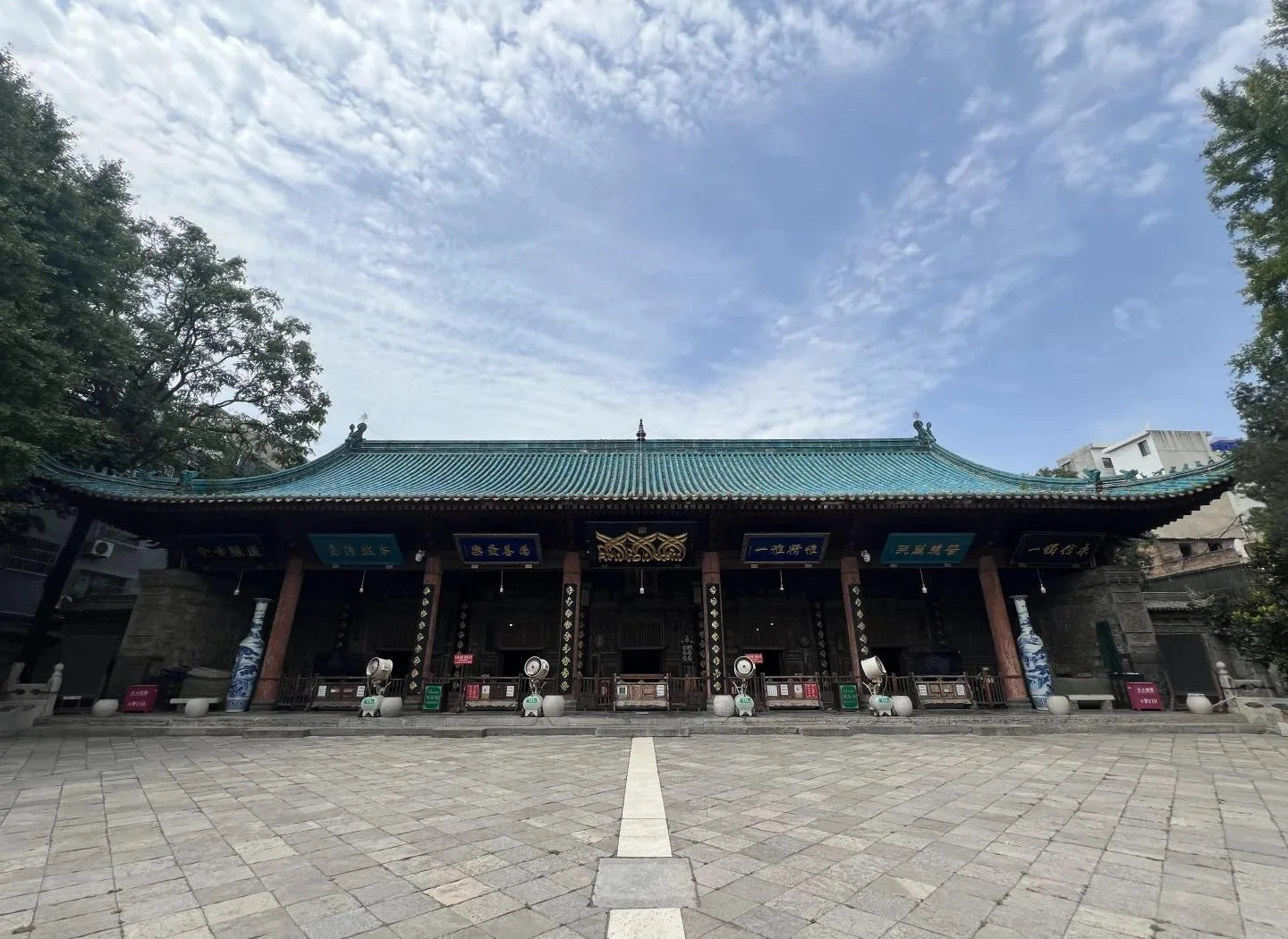
The routing that works: plan sightseeing in the walled city for the morning — Bell Tower, Drum Tower, City Wall south gate — then reach Huajue Lane for Dhuhr, and walk out of the mosque straight into lunch on Xiyangshi. If your trip includes a Friday, this becomes the anchor of the whole day: Jumu’ah at the Great Mosque followed by the Quarter at Friday-afternoon pace is, for many of our clients, the single most memorable stop in China. Evenings reverse the pattern — pray Maghrib at the mosque or your hotel, then eat the Quarter at night.
The general timing habits are the same ones we use across China — pray before long queues and shows, eat after — and our China travel tips for Muslim travelers covers the toolkit (prayer apps, qibla, payment setup) that makes them easy to keep.
FAQ
Is everything in the Muslim Quarter halal?
The Quarter is a Hui Muslim neighborhood and its food culture is halal — you will not find pork sold on its food streets, and shops overwhelmingly carry qingzhen signage. As anywhere, travelers with strict standards should still look for the 清真 sign on each shop rather than treating the district boundary itself as the certification.
Are Western fast-food chains in Xi’an halal?
KFC, McDonald’s and similar chains in Xi’an serve pork items, and we can’t confirm halal certification for any outlet in China — if you ever need to use one, ask the staff first. In Xi’an there is no reason to fall back on them anyway — a qingzhen beef noodle shop is nearly always closer.
Can a group of 15–30 people eat well in Xi’an?
Yes, and more easily than in most Chinese cities — the large, established halal restaurants are where a group that size can realistically be seated together, and the way to make it work is to agree the menu and seating with the restaurant before the day, not to walk in. Street-food evenings work for groups too, but as free time with a meeting point rather than a seated meal. This is exactly the kind of arrangement we handle for group organizers — we confirm the restaurant, set the menu in advance and fit the meal to the day’s route.
Does Xi’an work during Ramadan?
Yes — with the Quarter’s rhythm shifting toward the evening, iftar in a neighborhood that is itself breaking fast is a highlight rather than a compromise. Confirm restaurant daytime hours for non-fasting family members, and expect the Great Mosque and the food streets to be at their liveliest after sunset.
Plan the Eating Before the Sightseeing
Most Xi’an itineraries are built attraction-first, with food as an afterthought — workable in Xi’an’s center, painful on its day trips. Flip the order and the city rewards you: one evening given fully to the Muslim Quarter, proper sit-down meals booked where the group can actually sit, the Terracotta day bracketed by real meals, and Dhuhr at the Great Mosque flowing into lunch. That is a food plan you can hand to anyone in your group and defend.
Xi’an also rarely travels alone — it pairs naturally with Beijing, Chengdu or the Silk Road route west to Kashgar, and each pairing changes where the halal-easy and halal-hard days fall. If you’re deciding how Xi’an fits into a longer China trip, tell us your dates and group size and we’ll sketch the route with the meals and prayer stops already in it — we reply within 24 hours, usually faster. For the city’s sights beyond the food, start with our Xi’an destination page.