Last Updated on October 5, 2026 by Aaron Chen
Seven days is the right length for a Chongqing Zhangjiajie itinerary that also includes Fenghuang Ancient Town: two days in Chongqing, one travel day, two full days in Zhangjiajie, and a night in Fenghuang before you head out. Start in Chongqing, not Zhangjiajie — the bullet train runs the route in as little as two hours, and going in this direction lets Fenghuang’s riverside night view close the trip instead of sitting awkwardly in the middle. Our team is based in Zhangjiajie and took a group along this exact line this year, so the plan below is the one we actually run: where the halal meals are thin, where prayer needs to be arranged in advance, and where first-time visitors most often get the route wrong.
If you only need the train details between the two cities, our Chongqing to Zhangjiajie transport guide covers schedules and stations. This article is about the whole week.
Quick Answer: How to Split 7 Days
| Day | Where | Focus |
|---|---|---|
| Day 1 | Arrive Chongqing | Land, settle in, easy evening at Hongya Cave viewpoint |
| Day 2 | Chongqing | City day: old streets, river views, halal dinner planned ahead |
| Day 3 | Chongqing → Zhangjiajie | Morning bullet train, afternoon arrival, quiet evening |
| Day 4 | Zhangjiajie | National Forest Park (the Avatar scenery) |
| Day 5 | Zhangjiajie | Tianmen Mountain or Grand Canyon, by weather and energy |
| Day 6 | Zhangjiajie → Fenghuang | Short high-speed hop, old town walk, night view, overnight |
| Day 7 | Depart from Fenghuang | Morning lanes, then onward by rail or back to Zhangjiajie’s airport |
The order matters more than most people expect. Chongqing first means your one long travel day lands mid-trip, when the group still has energy, and the two mountain days come before the gentler old-town finish. Run it backwards and you end the week with your heaviest city and your longest train day stacked together — a tiring way to finish, especially with parents or children along.
Is 7 Days Enough for All Three?
Yes — seven days covers Chongqing, Zhangjiajie and Fenghuang properly, without the daily repacking that ruins multi-city trips. What seven days does not allow is a fourth destination. We are sometimes asked to fit Chengdu into the same week; we advise against it, and we say so early in the planning conversation. Adding Chengdu turns two one-night stays into four, doubles the packing cycles, and cuts Zhangjiajie — the reason most travelers book this route — to a single rushed mountain day.
Five days is the other request we push back on. A five-day version means either skipping Fenghuang or turning it into a same-day dash, and Fenghuang without its evening is most of the ticket price for half the experience. If five days is genuinely all you have, do Chongqing and Zhangjiajie alone, and keep Fenghuang for a future trip — our Greater Zhangjiajie route guide shows what the Xiangxi extension looks like when it has the time it needs.
With ten days, the natural additions are a second Chongqing day and Furong Town between Zhangjiajie and Fenghuang, not more cities.
Days 1–2: Chongqing
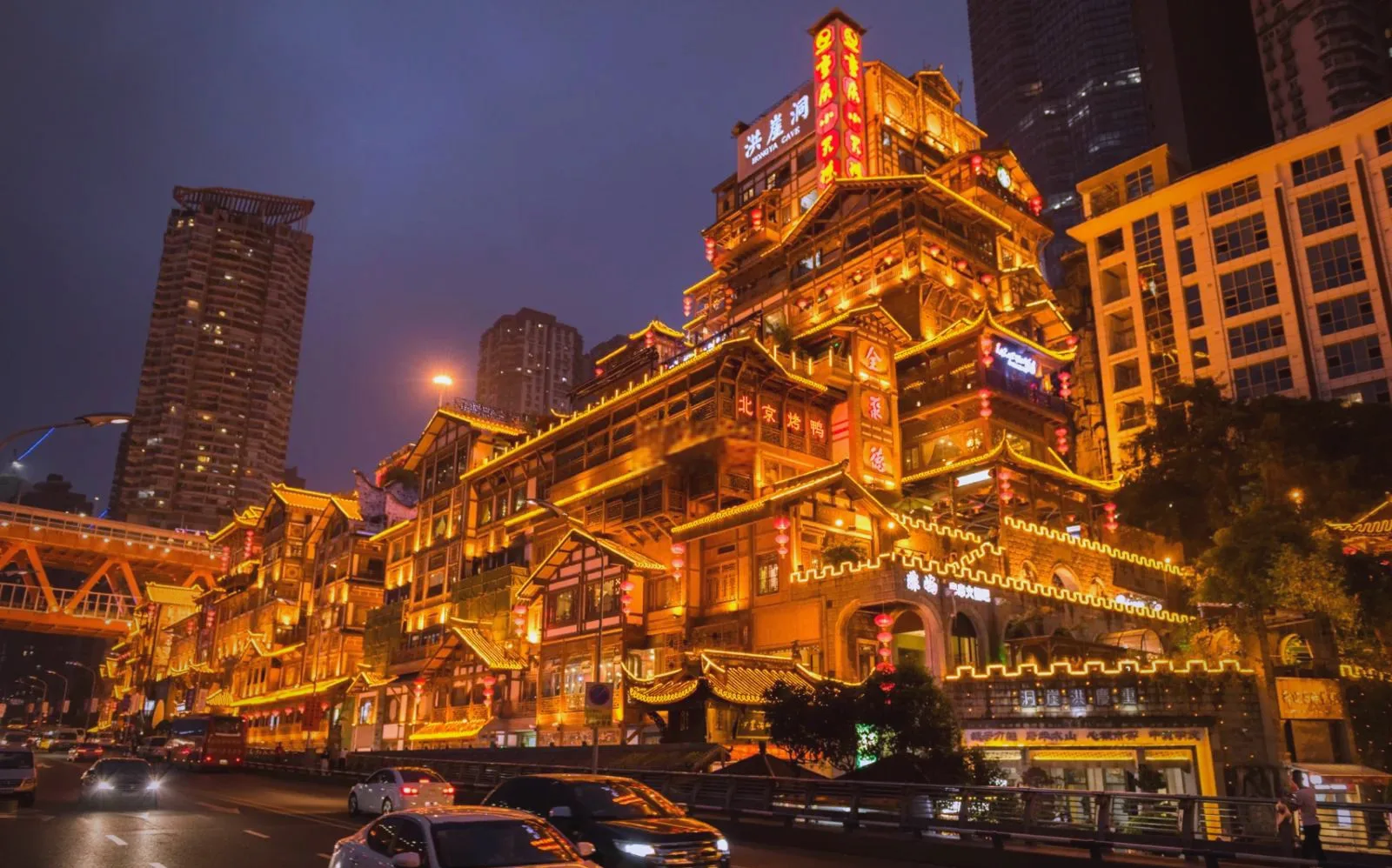
Chongqing is the easiest of the three stops for a Muslim traveler, and it makes a forgiving landing point: an international airport, big-city hotels, and a real choice of halal food. The city has several mosques in regular use; which one fits your visit depends on where your days take you, which is exactly how we plan it — sightseeing, meals and the mosque stop drawn as one route rather than three separate lists.
Spend Day 1 gently. Most arrivals reach the hotel by afternoon; an evening walk to the Hongya Cave river viewpoint is enough. Day 2 is the real city day — old streets, cable car or river views, and the kind of steep, layered cityscape that makes Chongqing worth two days rather than one. Our Chongqing itinerary for Muslim travelers lays out the day in detail, and the Chongqing halal food guide covers where to eat near the main sights.
One planning note that saves an argument later: Chongqing’s most famous dish is hotpot, and most hotpot restaurants are not halal. A halal hotpot dinner exists, but it is something you locate and confirm before evening, not something you find by walking hungry through a food street at 8 pm. Decide your Day 2 dinner in the morning.
Day 3: The Bullet Train Day
Direct bullet trains link Chongqing and Zhangjiajie West in roughly two to four hours depending on the service — the fastest schedule runs just over two hours — with second-class seats from around ¥199. Fifteen to seventeen direct trains run daily, most of them from Chongqing East station, so treat “which station” as part of the booking, not an afterthought. Full schedule detail, luggage notes and the station-by-station picture are in the dedicated transport guide; check live times on the official 12306 railway site before you commit to a departure.
The train is the simple part. The travel day around it is what we actually design. A late-morning departure is the comfortable pattern: unhurried hotel checkout, an early halal lunch in Chongqing — easier there than anywhere later in the trip — and Dhuhr prayed before boarding rather than gambled on mid-journey. On the two-hour fast service the afternoon prayer window usually lands after arrival; on a slower train, a quiet pair of seats works if it must. By design, the group steps off at Zhangjiajie West with only two tasks left: the short transfer to the hotel and dinner.
Dinner is why the evening should stay empty. Zhangjiajie’s halal restaurants sit in a small downtown cluster, not scattered near every hotel, so the sensible pattern is hotel first, then one planned trip to the cluster — our Zhangjiajie halal food guide maps the options. Groups that try to squeeze a sight into the arrival evening usually end up eating late, badly, or both.
Days 4–5: Zhangjiajie
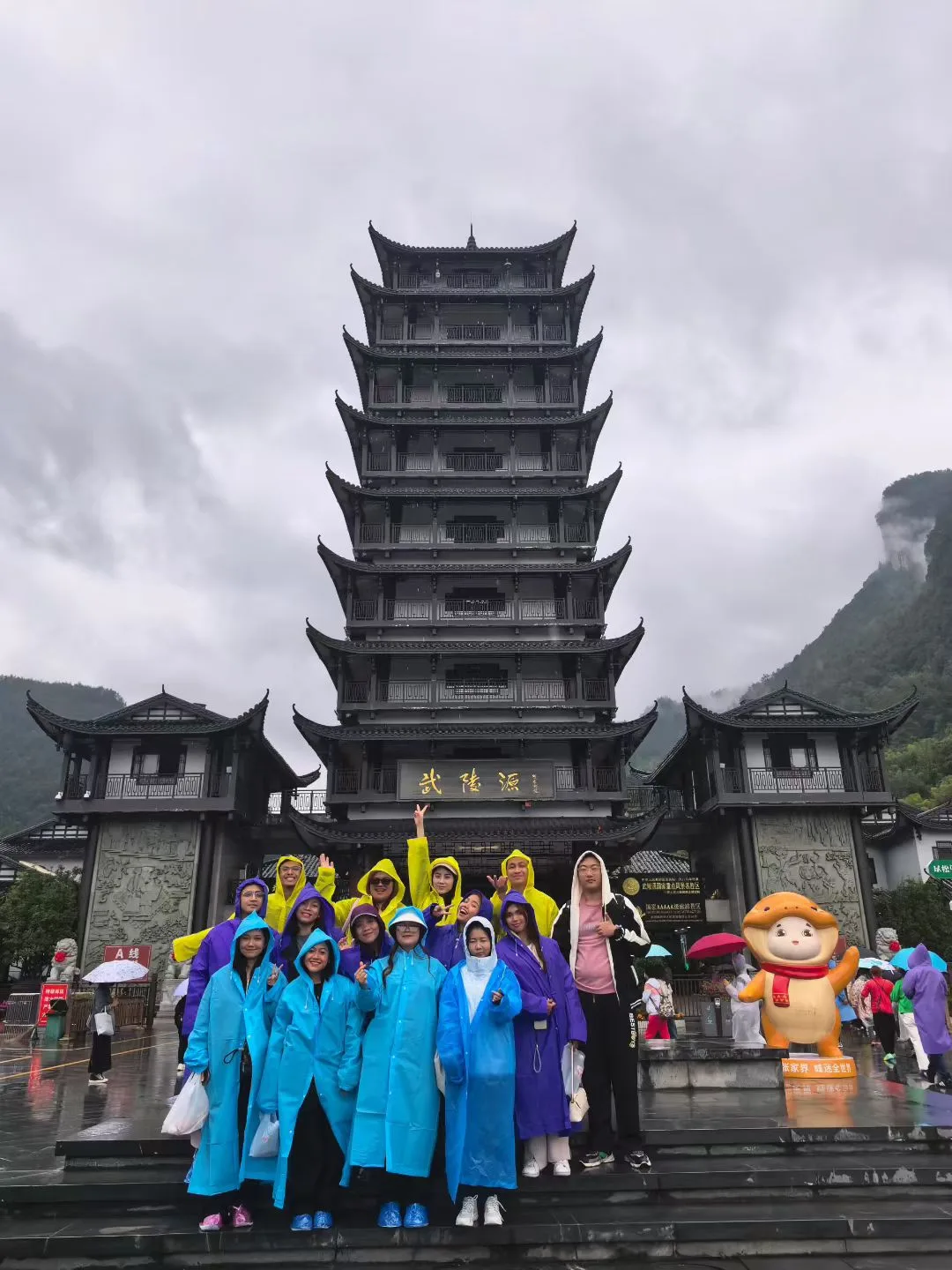
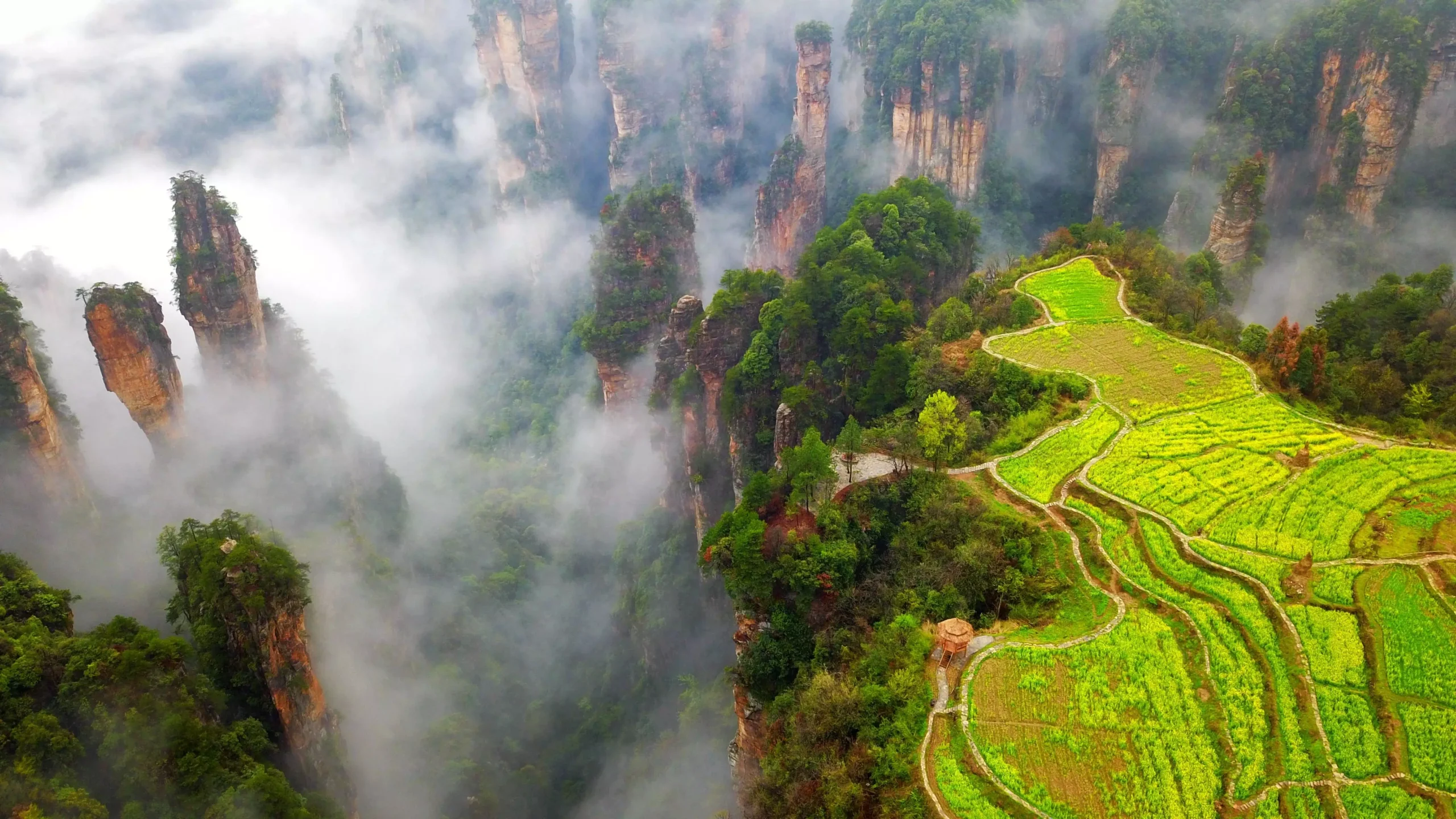
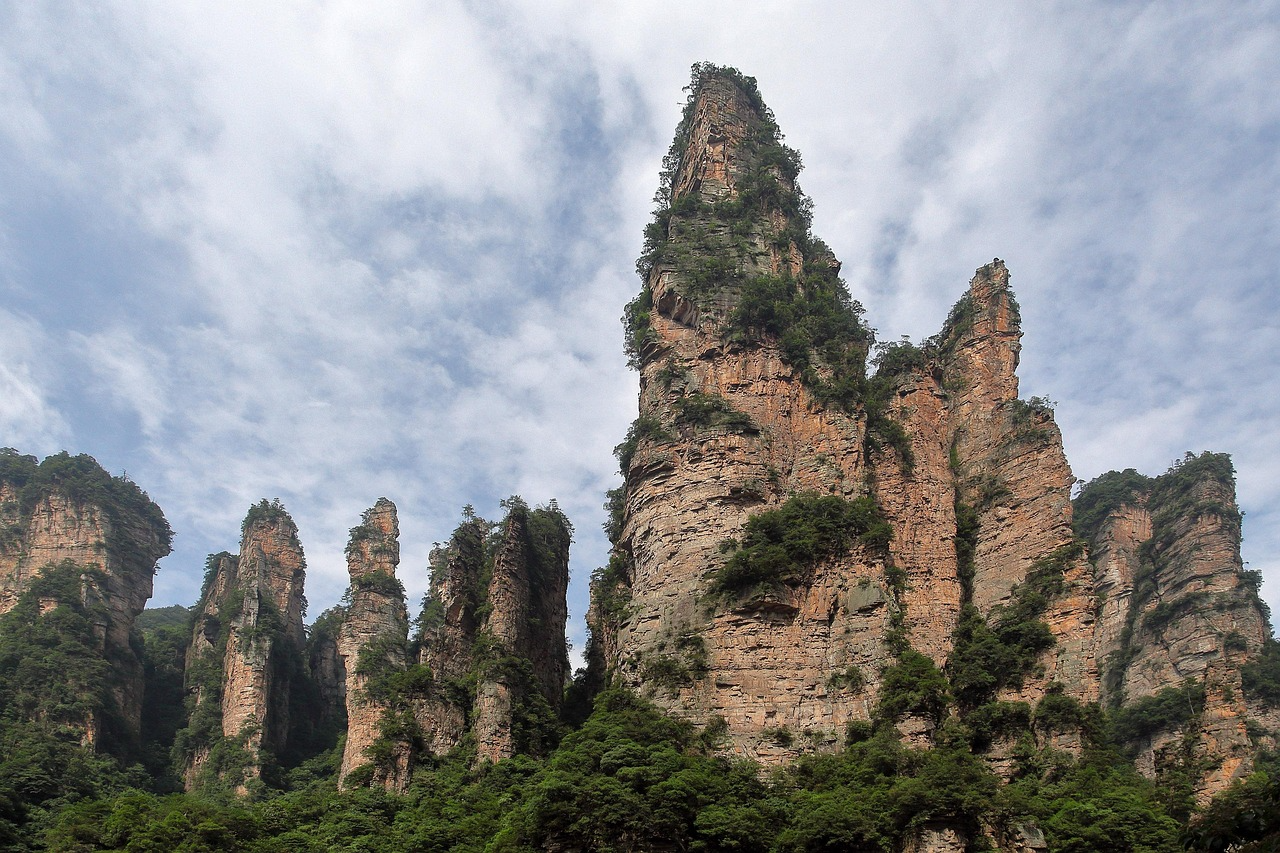
Day 4 belongs to Zhangjiajie National Forest Park — the sandstone pillars that stood in for the floating mountains in Avatar. Start early: the park rewards the first two hours of the morning more than any other time, and the cable car and elevator queues grow from mid-morning. Day 5 is a choice between Tianmen Mountain (the cliff-hugging glass walkways and the cable car above the city) and the Grand Canyon with its glass bridge. We hold this decision until the night before and make it on the weather forecast — Tianmen in low cloud is an expensive ride into fog, and having a second option ready is worth more than any fixed plan. The Zhangjiajie destination guide compares the parks in detail.
Now the honest part. Zhangjiajie has no mosque open to visitors — no Friday congregation, no prayer room at the parks. Prayer here is something you arrange, not something you find: room prayer at the hotel morning and night, and for the daytime windows either the vehicle (a private car makes this straightforward) or a quiet corner we pick along the route. On park days we time the mountain schedule so Dhuhr and Asr fall at natural pause points — a viewing platform rest, the drive between gates — rather than mid-queue for a cable car. This is also where telling your guide in advance matters: we brief drivers and guides on prayer stops before the day starts, because a guide who has not been told cannot leave slack in the schedule for it.
For a family with older parents, we usually make Day 5 the lighter mountain day — Tianmen’s walkways involve real stairs, and the Forest Park can be routed to lean on the cable cars. Two big mountain days back-to-back at equal intensity is the most common self-planned mistake we correct.
Days 6–7: Fenghuang
The hop from Zhangjiajie West to Fenghuang Ancient Town Station is a short high-speed ride on the Zhangjiajie–Jishou–Huaihua line, followed by a road transfer into town — station to old town is a drive, not a walk, so arrange the last leg before you travel. Details are in our Zhangjiajie to Fenghuang train guide. Leave Zhangjiajie after a proper halal lunch; you will see why in a moment.
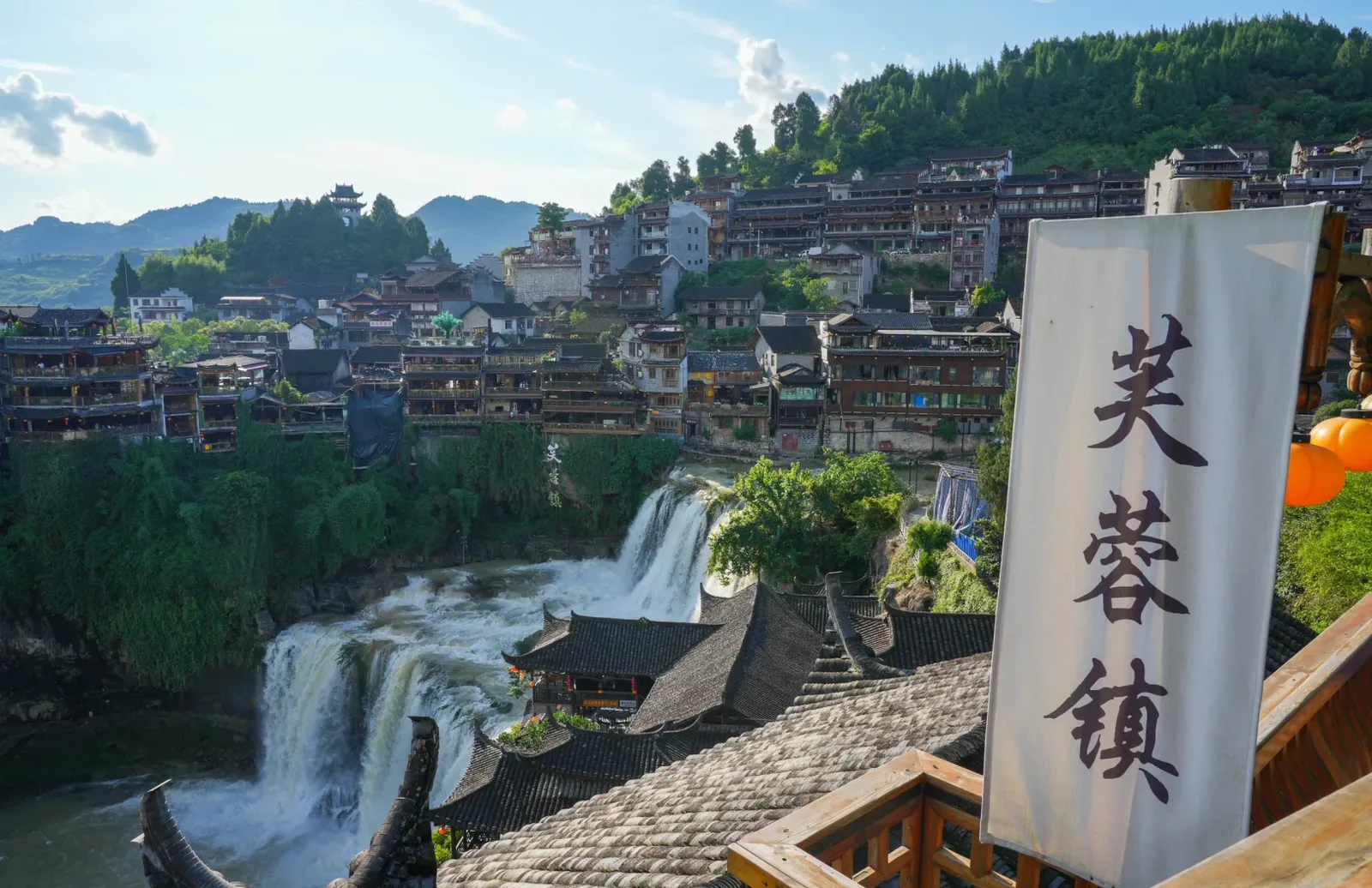
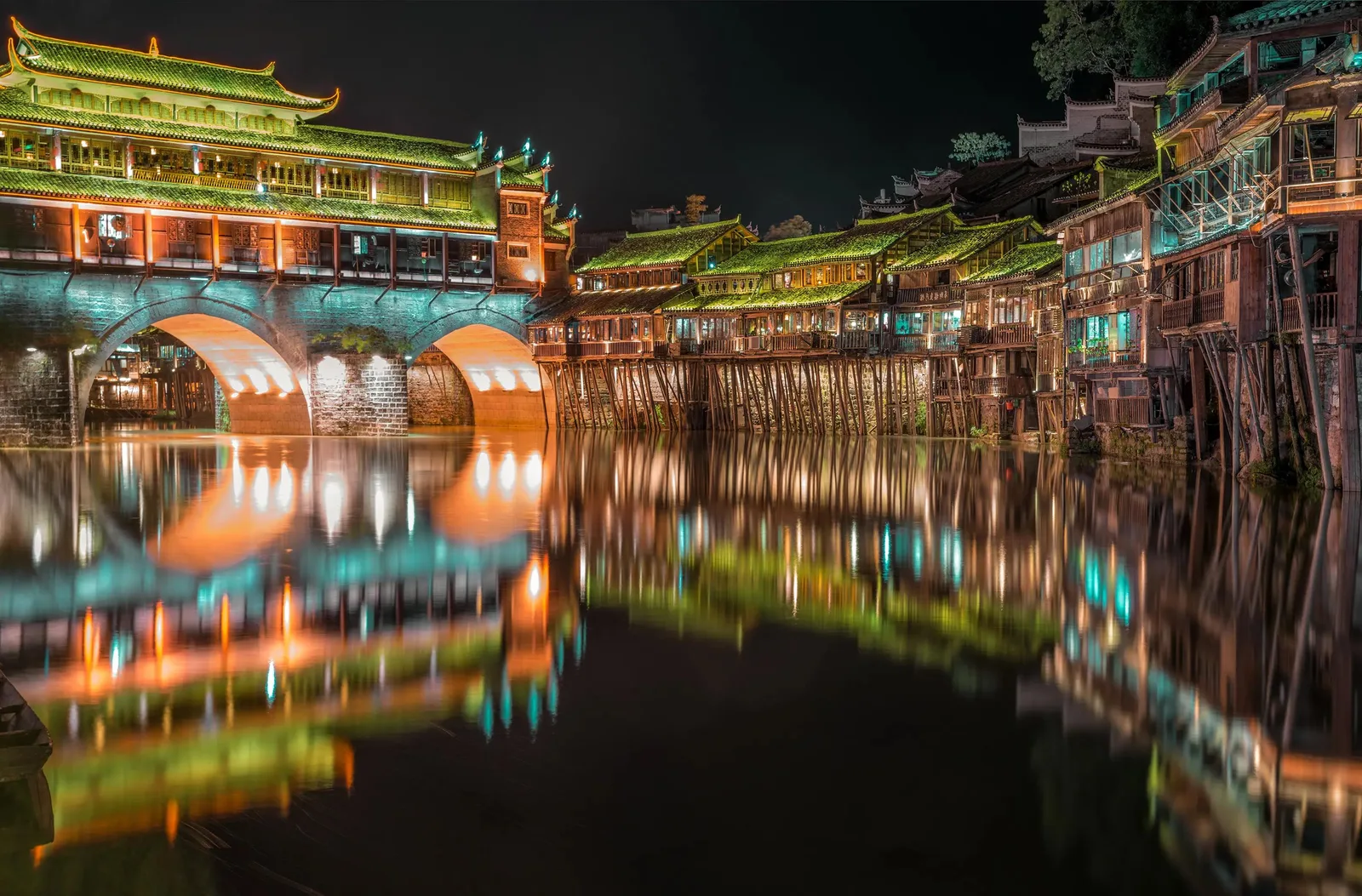
Fenghuang is the most atmospheric stop of the week — stilted houses over the Tuo River, lantern light on the water after dark — and the night view is the whole argument for sleeping there instead of day-tripping. Check in, walk the old town in the late afternoon, and be near the river when the lights come on. Where you sleep changes the experience more than in most towns: the riverside bar street is loud past midnight, and a quieter block a few minutes back serves prayer and rest far better — our Fenghuang hotel area guide settles that choice.
Food needs the same honesty as Zhangjiajie’s prayer situation. Fenghuang does have halal restaurants — more than one — but the choice is far thinner than Chongqing’s, and small-town opening hours change without notice, so confirm your chosen restaurant is open that day rather than build dinner around it sight unseen. Our standing advice: eat a proper halal lunch in Zhangjiajie before the train, know which Fenghuang restaurant you are aiming for and check it that morning, and carry backup food so a closed door does not decide your evening.
Day 7 morning is the quiet reward — the old town before the day-trip crowds, mist on the river if the season cooperates. From Fenghuang you have two exits: continue by rail toward Huaihua and the main high-speed network for Changsha and onward connections, or run back to Zhangjiajie for its airport. Which one is right depends on your next flight, and it is worth deciding when you book the trip, not on Day 6.
Where This Route Goes Wrong
The failures we see are consistent enough to list, in the order of how often they happen:
- Fenghuang as a day trip. The town’s value is concentrated in the evening and early morning. Day-trippers pay the same transport cost for the crowded midday hours only.
- Running the route backwards for no reason. Ending with the long train day and the biggest city means finishing the trip at your most tired. The direction matters; choose it deliberately.
- No weather fallback for the mountain days. Tianmen Mountain in fog disappoints; groups locked into a fixed Day 5 have nowhere to move. Keep Days 4 and 5 swappable.
- Prayer left out of the schedule design. In cities with mosques, a missed window self-corrects. In Zhangjiajie and Fenghuang there is no mosque to fall back on — if prayer stops are not built into the day and told to the driver, they get squeezed out by queues and cable car timings.
- Assuming halal dinner exists at every stop. It reliably does in Chongqing, in one planned cluster in Zhangjiajie, and only thinly in Fenghuang. The eating pattern should get more deliberate as the week goes on, not less.
Booking This Route: On Your Own or With Us
Everything above is bookable independently — trains on 12306, park tickets through official channels at current prices, hotels anywhere. The self-planned version works best for confident travelers without elderly parents or young children, in seasons when queues are short.
The version we run is this exact 7-day route with the friction removed: a private vehicle from arrival in Chongqing to departure from Fenghuang, halal meals confirmed with the restaurants before each day (not just found online), prayer stops briefed to the driver and guide in advance, and the mountain-day weather call made for you the night before. The quote is a single per-person price with the cost of each part listed — tickets, guide, hotels, vehicle, meals — so you can see what you are paying for and drop anything you would rather arrange yourself. No forced shopping, no hidden fees. Group size moves the per-person price more than any other factor, which is why organisers bringing ten or more usually find the quote lower than they expect.
If you want this route priced for your dates and group, tell us your travel month and group size on WhatsApp and we will send back a day-by-day quote — reply within 24 hours, usually faster.
FAQ
Which is the best month for this route?
April–May and September–October offer the best balance: clear mountain views in Zhangjiajie, comfortable walking weather in the old towns, and manageable crowds outside the national holidays. Summer works but brings heat in Chongqing and afternoon rain in the mountains; winter brings occasional fog that can close mountain views for a day at a time. Avoid the first week of October — China’s National Day holiday fills every park on this route.
Can I do the route in reverse, starting in Zhangjiajie?
Yes, and if your international flights price dramatically better into Zhangjiajie or out of Chongqing, reverse it. The cost is comfort at the end of the week: you finish with the long train day and the busiest city instead of a riverside morning. With a free choice of flights, Chongqing-first is the better week.
Is this itinerary manageable with elderly parents?
Yes, with adjustments we make routinely: cable cars over stairs in the Forest Park, a lighter Day 5 choice, a hotel in Fenghuang picked for drop-off distance rather than river view, and a slower Day 3 with lunch before the train. The route’s stairs concentrate in Tianmen Mountain and Fenghuang’s lanes — both have gentler alternatives if we know the group in advance.
Can I add Chengdu with three more days?
With ten days total, yes — Chengdu joins at the front (Chengdu → Chongqing is a short high-speed hop) rather than the middle, keeping the packing cycles down. See our Chengdu to Chongqing guide for how the two cities connect.