Last Updated on August 20, 2026 by Halalchinatrips
Chongqing deserves two to three days. The city core is a night city — its best sights are free or cheap and look ordinary in daylight — and one full-day trip out (Wulong Karst or the Dazu Rock Carvings) rounds it out. This guide goes attraction by attraction and answers the questions generic lists skip: which spots are worth your time, what hour to show up, where halal food and prayer fit around each one, and what you can drop without regret.
Two planning facts shape everything below. First, Chongqing’s halal dining concentrates around Jiaochangkou, next to Jiefangbei in the city center — our guide to halal food in Chongqing covers it street by street. If you base yourself there, almost every sight in this list is a short metro ride from a reliable halal meal. Second, Chongqing has several mosques that welcome visitors. We don’t recommend picking one in advance from a map; the practical way is to choose the mosque that sits along that day’s route, and to use your hotel room or a private vehicle for prayers that fall mid-sightseeing.
Hongyadong: Go at Night, Eat Before You Go
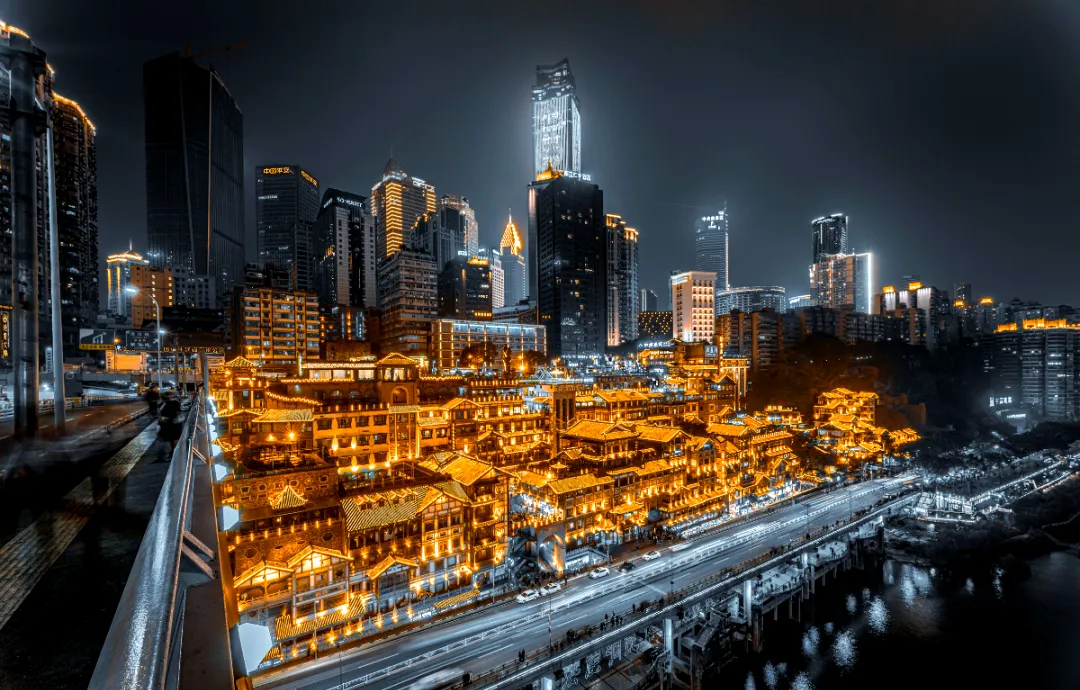
Hongyadong (Hongya Cave) is the stilted riverside complex you’ve seen in every Chongqing photo, and it’s the one sight where timing decides everything. In daylight it’s a crowded mall built into a cliff. After the lights come on at dusk, it becomes the best free view in the city.
Do it in this order: eat dinner first at one of the halal restaurants around Jiaochangkou — the cluster is one metro stop away — then walk or ride to the river around sunset. The food stalls inside Hongyadong itself are almost entirely non-halal, so arriving hungry puts you in the worst position: surrounded by food you can’t eat, in the densest crowd in Chongqing.
For the photo, don’t stand inside the building. The full lit-up facade is best seen from across the Jialing River on the Jiangbei side, or from Qiansimen Bridge just east of it. The bridge gets packed on summer weekends; going before 21:00 on a weeknight is noticeably calmer. Entry is free.
Jiefangbei and the Raffles City Skywalk: The Daytime Anchor
Jiefangbei is the pedestrianized commercial heart of Chongqing, built around the Liberation Monument. As a sight it’s a 20-minute walk-through, but as a base it’s the most useful location in the city: it borders Jiaochangkou’s halal restaurants, sits on two metro lines, and most of this list radiates out from it. Our guide on where to stay in Chongqing explains why we put most Muslim travelers here.
The Raffles City Exploration Deck rises directly above Chaotianmen, where the two rivers meet. The observation level runs around CNY 120 and the outdoor glass skywalk around CNY 180, open roughly 10:00–21:00 (both figures move with promotions — check on the day). Our honest read: if the weather is clear, the deck ticket is worth it once, ideally in the hour before sunset so you get daylight, dusk, and the city lighting up in one visit. The extra cost of the skywalk buys a thrill, not a better view. On a hazy day, skip both and put the money toward the night cruise below.
Liziba and Eling Park: Two Photo Stops, One Hour Total
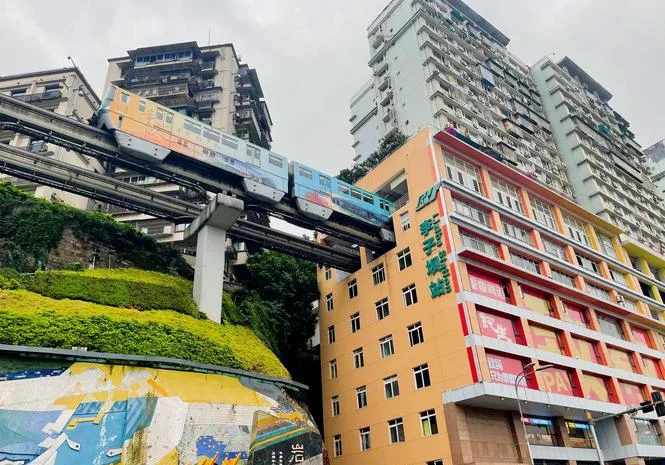
Liziba is the metro station where Line 2 runs through the middle of a residential tower. There’s a purpose-built viewing platform at street level, trains pass every few minutes, and it costs nothing. Fifteen minutes is enough. It’s a genuine only-in-Chongqing sight; it’s just not an outing.
Pair it with Eling Park, a hilltop park two stops away with a pagoda view over both rivers. Entry is free, and late afternoon light is the best. Together they fill the awkward gap between lunch and the evening sights without eating a half day.
Yangtze Cable Car vs. the Two Rivers Night Cruise: Pick One
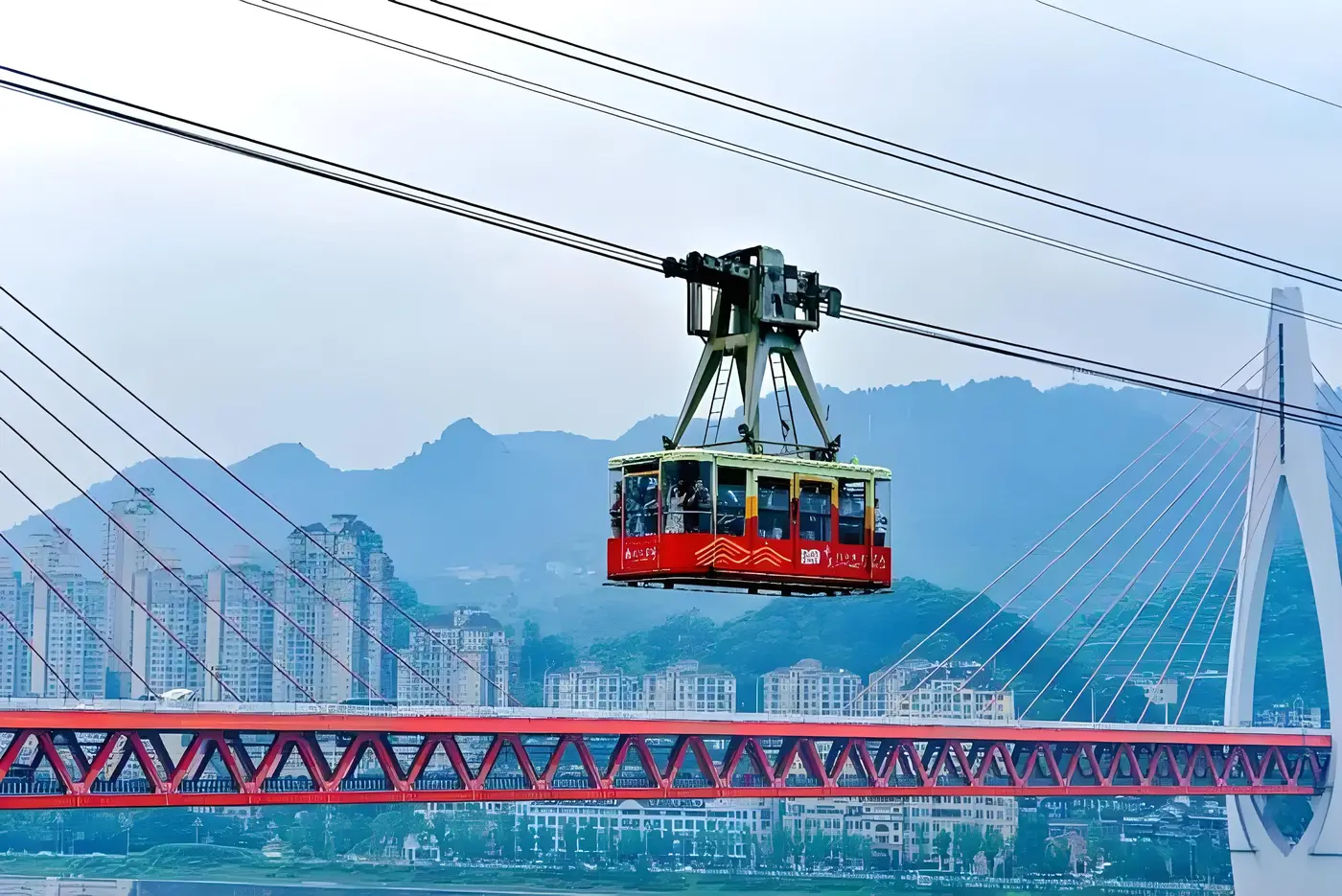
Both cross the same water and sell the same skyline. Doing both is redundant for most travelers, so choose by group and patience:
- Yangtze River Cableway — about CNY 30 one way, running roughly 08:00–22:00. The ride lasts under five minutes. The real cost is the queue: in 2026 tickets routinely sell out two to three hours ahead in peak season, and walk-ups can face long waits. If you want it, book the official WeChat mini-program slot in advance and ride after dark, northbound toward the lit skyline.
- Two Rivers Night Cruise — departs from Chaotianmen pier in the evening (recent scheduled sailings around 19:20 and 20:40; times shift, so reconfirm locally), 45–60 minutes on the water, roughly CNY 60 for deck seating to CNY 120–140 for indoor cabin classes. No queue drama, seats for everyone, and the best angle on Hongyadong and Raffles City lit up.
Our recommendation for families and any group above six: take the cruise. It’s calmer for elders, easier with children, and the per-person cost difference is small once you factor the cable car’s lost queue time. Time your Maghrib prayer before boarding — at the hotel if you’re staying near Jiefangbei, since Chaotianmen is a short ride from there — and the schedule works cleanly.
Ciqikou Ancient Town: Manage Expectations
Ciqikou is a restored Ming-Qing era river port turned snack street, about 30–40 minutes from the center by metro. Two honest notes before you go.
First, the famous food street is effectively off-limits for Muslim visitors — the stalls are dominated by pork products and mala snacks cooked in shared oil. Treat Ciqikou as an architecture-and-atmosphere stop, not a food stop, and plan your meal for before or after. Second, the main lane is as crowded as Hongyadong; the appeal survives if you turn off into the side alleys uphill, where the old teahouses and quieter courtyards are.
An hour and a half is enough. It slots naturally into a morning, which is exactly how we sequence it in our 3–4 day Chongqing itinerary for Muslim travelers.
Halal Hotpot: The Signature Experience, Available Halal
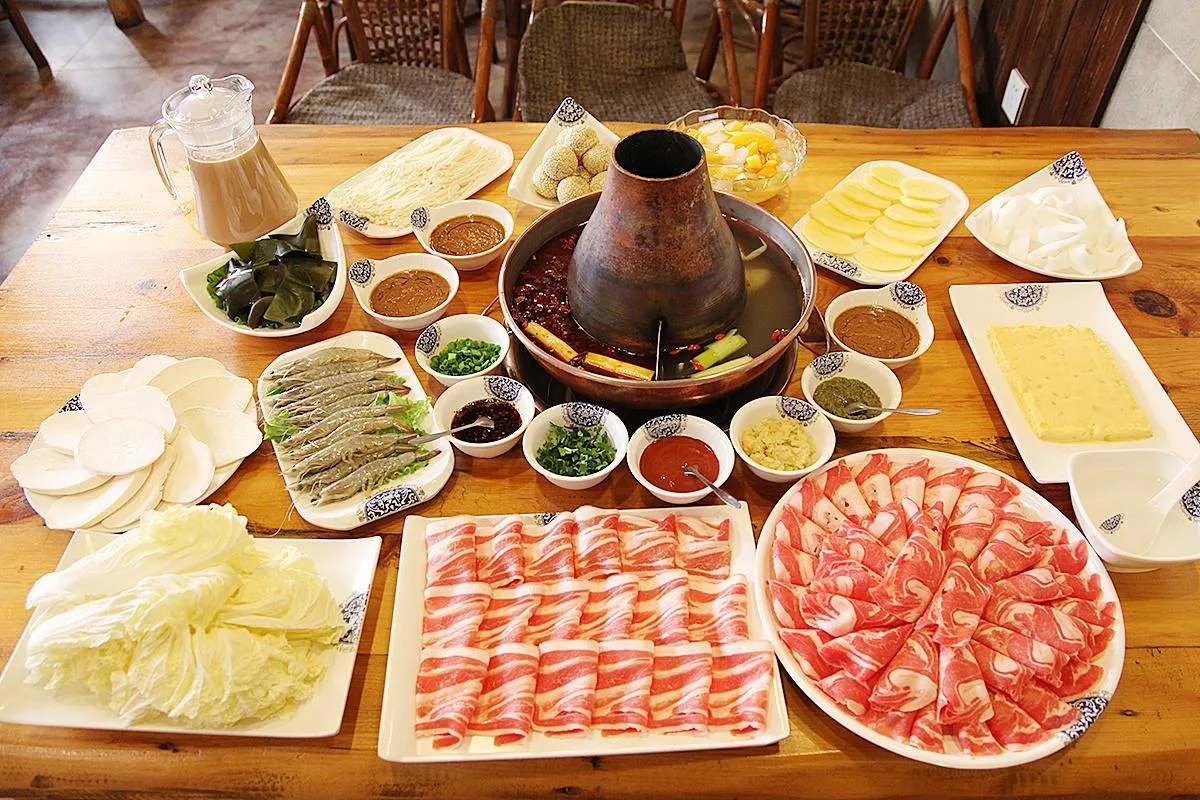
Chongqing invented mala hotpot, and skipping it entirely would mean missing the city’s defining experience. You don’t have to: halal hotpot exists in Chongqing, with beef- and lamb-based broths and separate kitchens, concentrated in the same Jiaochangkou area as the rest of the halal cluster. Treat one hotpot dinner as an attraction in its own right — it’s a two-hour event, best booked for the evening you’re not doing the cruise or Hongyadong. Restaurant specifics, what to order, and how to confirm halal status are in the halal food guide.
Day Trips: Wulong Karst or Dazu Rock Carvings
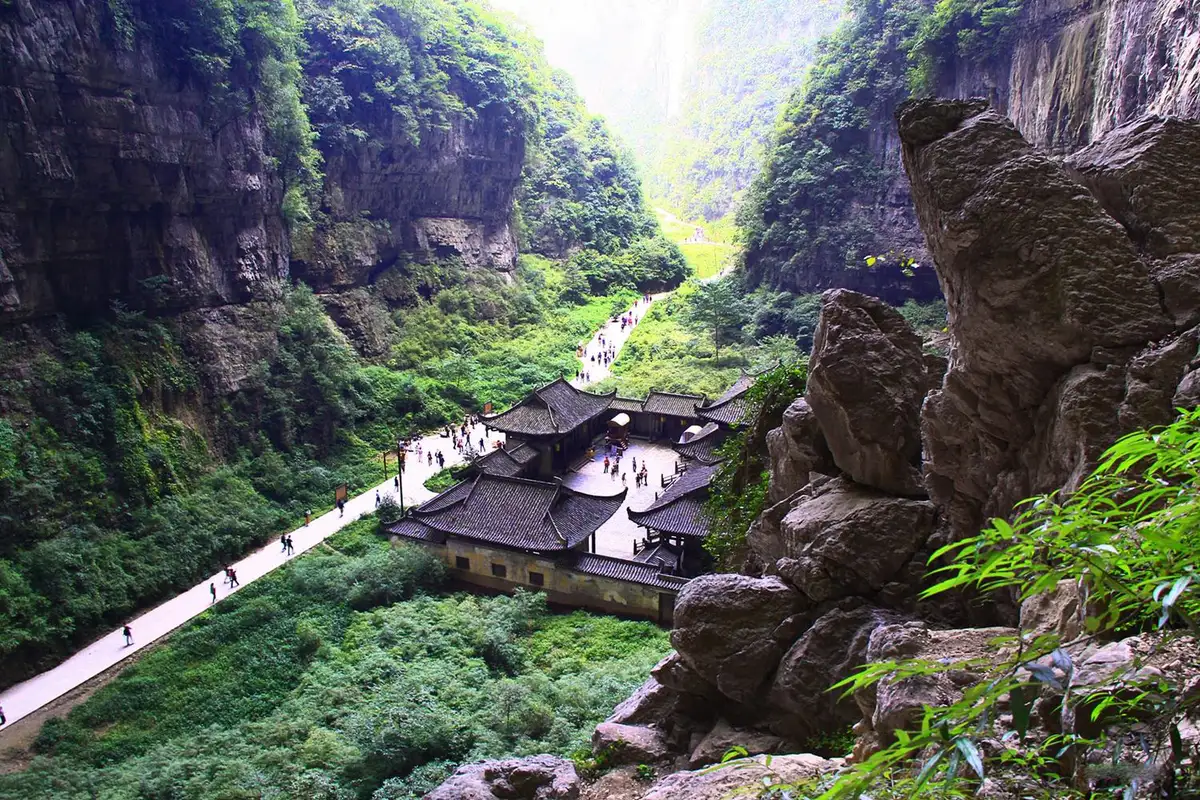
With one spare day, most travelers should pick one of these UNESCO-listed sites, not both.
- Wulong Karst (Three Natural Bridges) — about 2.5–3 hours each way by road. Entry runs CNY 120–155 depending on season, including the shuttle and elevator, with entry hours roughly 08:30–16:30. The walk down through the three bridges takes two to three hours on stairs and paved paths — manageable for most fitness levels, harder for anyone with knee trouble. Choose Wulong if your group wants dramatic nature and photographs.
- Dazu Rock Carvings — about 1.5–2 hours each way. The Baodingshan section, the essential one, charges around CNY 115 in high season and opens 08:30–18:00. The site is Buddhist religious art; Muslim travelers we plan for generally visit it as they would a museum of medieval sculpture, and the carvings are genuinely extraordinary. Choose Dazu for a shorter drive and a culture-first day, or for a group with limited walking capacity.
Either way, a full-day trip needs food and prayer planned in advance: halal options along both routes are thin and change often, so we either plan the day’s lunch around a stop we have re-checked for that specific route or arrange packed halal meals from the city and schedule Dhuhr and Asr at prayer-suitable stops along the drive — a private vehicle makes this straightforward, which is one reason we don’t recommend doing these by public bus with a group.
What You Can Skip
- The cable car in daylight — the skyline reads as gray concrete before dusk; the queue costs the same either way.
- Ciqikou’s food street as a destination in itself — see above; go for the lanes, not the stalls.
- A second observation deck — Raffles City, Eling Park, and the cruise cover the skyline from three angles; adding another repeats the view.
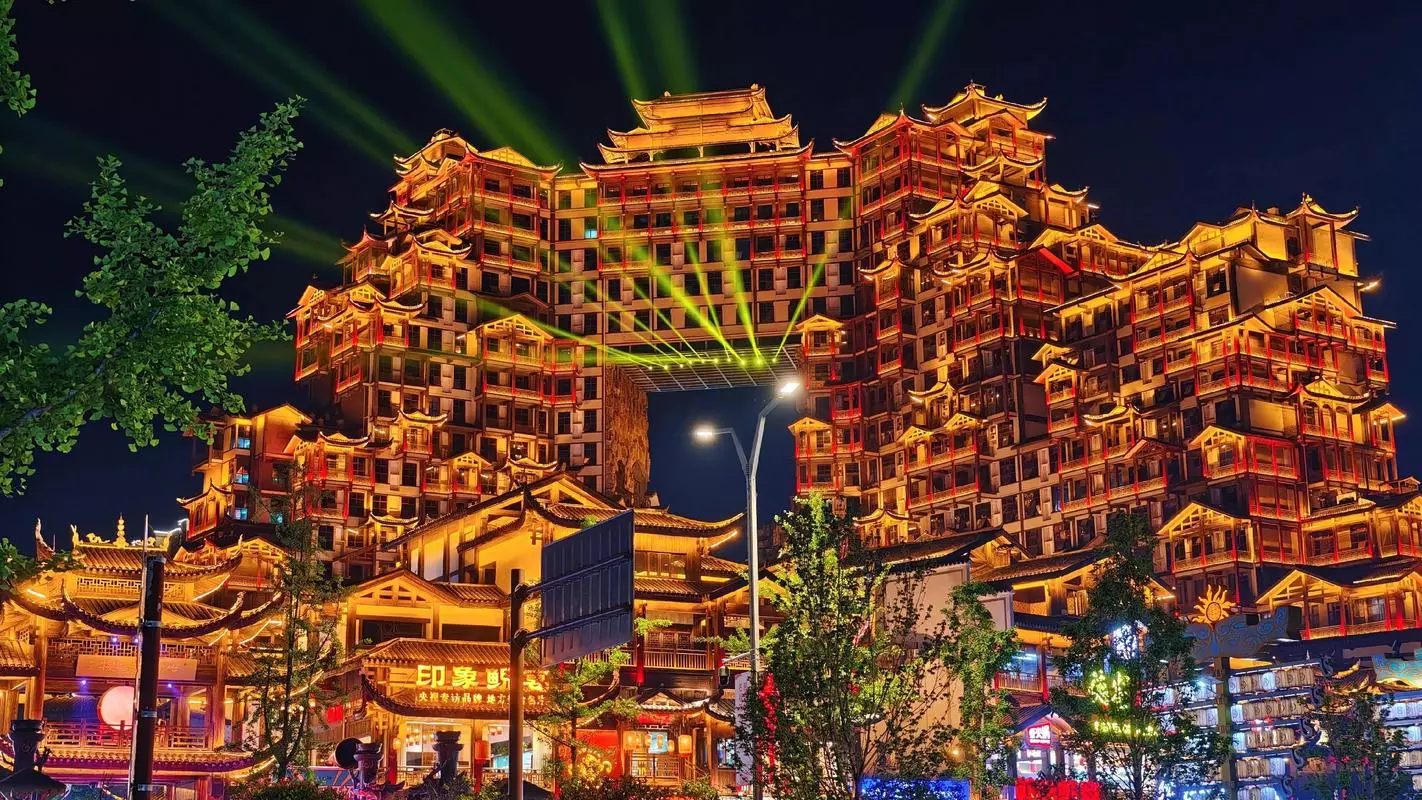
- Themed novelty streets — Chongqing’s themed parks trade on novelty that fades in an hour; the city itself is the attraction.
Putting It Together: Two to Three Days, and a Note for Groups
A clean structure: Day 1 — Jiefangbei, Raffles deck before sunset, halal dinner in Jiaochangkou, Hongyadong at night. Day 2 — Ciqikou morning, Liziba and Eling Park afternoon, halal hotpot or night cruise. Day 3 — Wulong or Dazu. The day-by-day version with meal timing is in our Chongqing itinerary, and the wider city context is on our Chongqing destination page.
For group organizers bringing 10–30 people: the constraint isn’t the sights, it’s the pinch points. Hongyadong and the cable car don’t absorb large groups well at night; the cruise and the day trips do. We typically flip the schedule so big groups do view decks at off-peak hours and hold the cruise as the shared evening event, with halal group dinners booked ahead — walk-in tables for twenty don’t happen in Jiaochangkou on a Saturday.
Chongqing also pairs naturally with Chengdu — roughly 1.5–2.5 hours apart by high-speed rail, and our Chengdu guide covers what’s worth it there. If you’d rather hand the sequencing to someone who does it weekly — tickets booked before slots sell out, halal meals and prayer stops built into each day, one price per person with no shopping stops — message us on WhatsApp and tell us your dates and group size.
FAQ
Is Chongqing worth visiting for Muslim travelers?
Yes — with a caveat. The night scenery is unlike anywhere else in China and the halal dining cluster at Jiaochangkou makes eating easy by Chinese-city standards. The caveat is daytime: without a plan built around evening sights, Chongqing can feel like an ordinary big city. Two to three days, structured around nights, is the right dose.
How many days do you need in Chongqing?
Two days covers the city core; three lets you add Wulong or Dazu. Beyond three, most travelers are better off adding Chengdu than stretching Chongqing.
Is there halal food near Chongqing’s main attractions?
Near most of them, yes — because the halal cluster at Jiaochangkou sits in the city center, next to Jiefangbei and one stop from Hongyadong. Ciqikou and the day-trip sites are the exceptions; plan meals before or after those.
Can Muslim travelers pray while sightseeing in Chongqing?
Yes. Chongqing has several mosques open to visitors; the practical approach is to pick whichever lies on that day’s route rather than detouring across the city. For prayers that fall mid-visit, a hotel near Jiefangbei or a private vehicle covers the gap.
Which is better for a day trip, Wulong or Dazu?
Wulong for nature and drama, at the cost of a longer drive and more stairs. Dazu for a shorter, gentler, culture-focused day. Groups with mixed mobility usually do better at Dazu.