Last Updated on October 5, 2026 by Aaron Chen
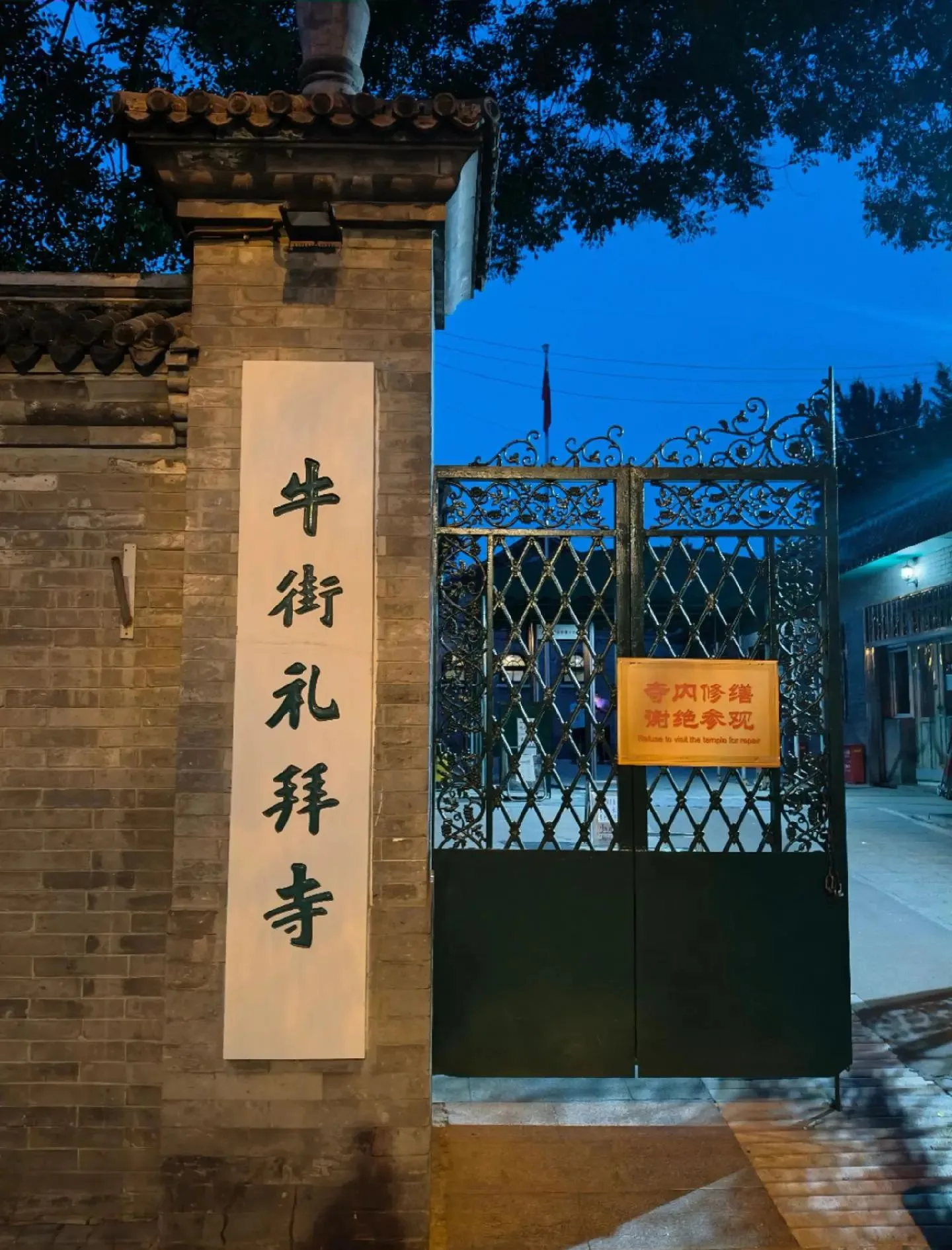
Most of the English-language guides you will find for this question still send you to pray at Niujie Mosque. It has been closed to visitors for a heritage restoration since August 2024, with no reopening expected before around 2027. That one detail tells you how much of the advice online was written years ago — and it is why we wanted to answer this properly. Our team plans Beijing for Muslim travelers all year, and the honest answer is: yes, Beijing is genuinely Muslim-friendly — a Muslim community older than the Forbidden City, halal versions of the city’s own dishes, open mosques that receive visiting worshippers. The catch is that none of it sits where the sights are. Halal food and mosques cluster in a few neighborhoods; the Great Wall, the Forbidden City and the Summer Palace are somewhere else entirely. Beijing works well once you plan for that gap, and badly if you assume the city will hand you a halal meal wherever your day ends.
If your question is bigger than Beijing — whether China as a whole works for Muslim travelers — start with our overview of halal travel in China. Here is the Beijing answer, question by question.
Is It Easy to Get Halal Food in Beijing?
Yes, and better than in most Chinese cities, as long as you go to where it is. Beijing’s Hui Muslim community goes back centuries, and its halal restaurants serve the dishes the city is famous for. The Niujie street — the historic Muslim quarter in Xicheng — keeps its halal restaurants, butchers and Muslim supermarket open through the mosque’s restoration; only the mosque itself is behind hoarding. Across the wider city, three names carry most of our clients’ meals: Hongbinlou, the long-established halal house that serves a fully halal Peking duck; Donglaishun, the halal lamb-hotpot brand dating to 1903, with branches in the center; and Ziguangyuan, a halal chain with outlets all over Beijing for everyday meals. For children who will not touch duck or hotpot, the same kitchens do plain beef noodles, fried rice and lamb skewers, and halal Lanzhou beef-noodle shops fill in the gaps in most neighborhoods. Restaurant by restaurant, with areas and what to order, it is all in our Beijing halal food guide.
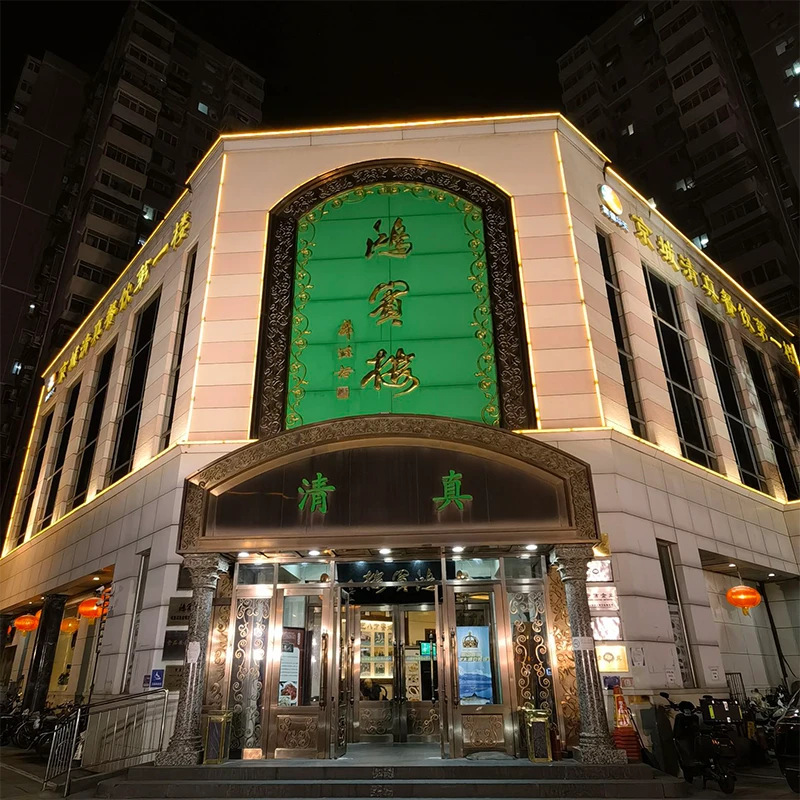
One thing travelers from Malaysia or the Gulf should know before they start reading shopfronts: China has no national halal certifier. The green 清真 (qingzhen) sign marks a Muslim-run kitchen and is trusted by the community, but nobody audits it the way JAKIM or the UAE authorities do, so a sign is where our checking starts rather than where it ends. For client trips we phone-verify each restaurant on the route before the itinerary is locked and confirm again near the travel dates — on one trip a planned restaurant turned out to have closed, and our team had a verified replacement for that meal within about fifteen minutes. That is what the verification is for.
Now the part the directory sites leave out. The sights themselves offer nothing: there is no halal food inside the Forbidden City, the snack corridor at Nanluoguxiang is mostly not halal, and the restaurant strips at the Great Wall cater to tour buses and should not be assumed. Mainstream fast-food chains are not a safe assumption either — in Beijing, as in most of mainland China, we can’t confirm halal certification for KFC or McDonald’s outlets, so ask the staff or skip them. So the working rule is to anchor each day’s main meal to where the halal food is, not to where the sightseeing ends: a solid halal breakfast, an early palace entry, a late lunch afterwards.
Where Can You Pray in Beijing?
At a mosque for the daytime prayers on most days, and at your hotel for the rest — the same pattern that works across China, with one Beijing-specific correction. Niujie Mosque, the oldest and largest in the city, is closed to visitors: religious activities are officially suspended during the restoration, and while some worshippers report being let in through a side gate, that is not something to build a day around. If an itinerary you are reading, or a tour operator you are talking to, still lists “prayer at Niujie Mosque,” that plan has not been updated since 2024. Our Niujie Mosque guide tracks the status and the alternatives.
The working alternative for sightseeing days is Dongsi Mosque in Dongcheng, which stays open, receives foreign Muslims for daily prayers and Jumu’ah, and sits a short taxi ride north-east of the Forbidden City — ten to twenty minutes depending on traffic — so Zuhur there fits naturally after a palace morning. Other mosques across the city hold daily prayers too, and we pick one by which side of Beijing the day’s route lands on rather than sending everyone to the same address; where the women’s prayer arrangements at a mosque matter for your group, that is something we confirm before the trip, not on arrival. Fajr and Isha happen at the hotel; Asr is a mosque when it is on the route and a quiet corner or the vehicle when it is not. When we build Beijing days, the prayer windows go into the schedule first and the sightseeing flexes around them. Our guides are English-speaking and not all of them are Muslim, which is exactly why we brief each guide and driver on the prayer plan before the trip rather than assume it.
Where Should You Stay?
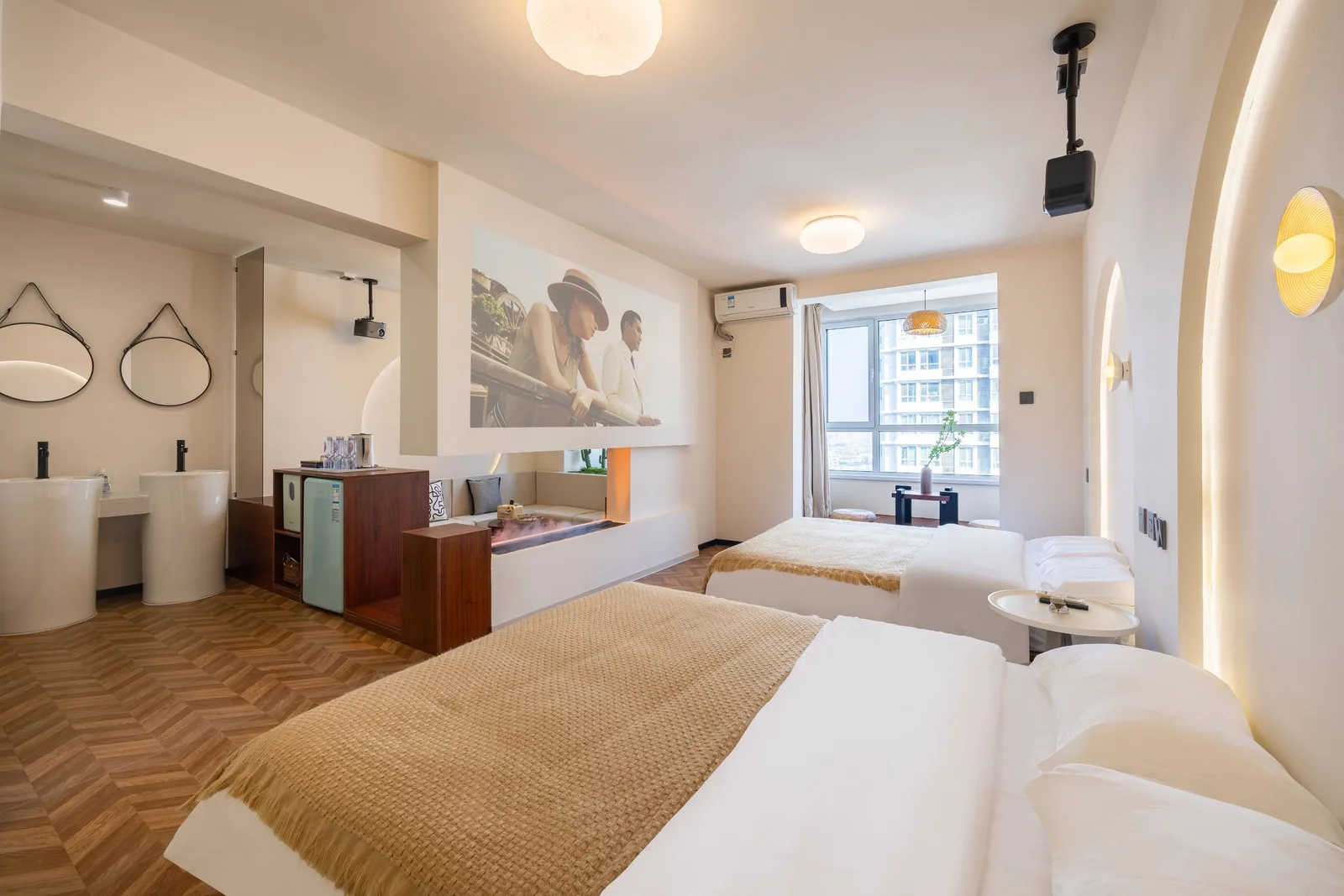
Dongcheng, around Wangfujing, for a first visit. From there the Forbidden City and Tiananmen are a walk or a short ride, Dongsi Mosque is nearby, the hutongs are close and the Temple of Heaven is a short drive south. The halal institutions above are spread through the center rather than packed into Niujie, so from Wangfujing most dinners are a short ride and Niujie itself is one evening’s taxi across town, not a daily commute. It is where we usually place clients, and it removes most of the “scattered” problem before the trip starts. One honest note on breakfast: hotel buffets in Beijing are not halal kitchens. We treat them as fruit, bread and eggs, and put the real breakfast at a halal noodle house nearby — which is part of why the hotel’s exact block matters.
Two things travelers get wrong. First, the airport: Beijing Capital (PEK) is northeast of the city, roughly 45–60 minutes by car to the center, while Daxing (PKX) is far south, usually 60–90 minutes — check which one your flight uses before booking the hotel, and keep arrival evening to a confirmed halal dinner near the hotel and an early night, especially with grandparents or children. Second, sleeping near the attraction you most want to see: a hotel out by the Universal resort or the Great Wall saves you one transfer and costs you every halal dinner for the rest of the stay. Our Beijing itinerary for Muslim travelers lays out the day-by-day version built around this base; for visas, payment apps and connectivity, see our guide to paying in China and, for Malaysian passport holders, the current 30-day visa-free entry.
The Great Wall Day (Beijing’s One Real Gap)
The Great Wall is the day that decides whether Beijing feels easy or hard as a Muslim traveler, and it is the day the guides skip. Mutianyu — the section we use, quieter than Badaling — is about 1.5 hours’ drive from central Beijing, opens at 7:30 in the main season from mid-March to mid-November, and has no verified halal restaurant. A full Wall day means eight to ten hours away from anything halal, with Zuhur and Asr falling in the middle of it.
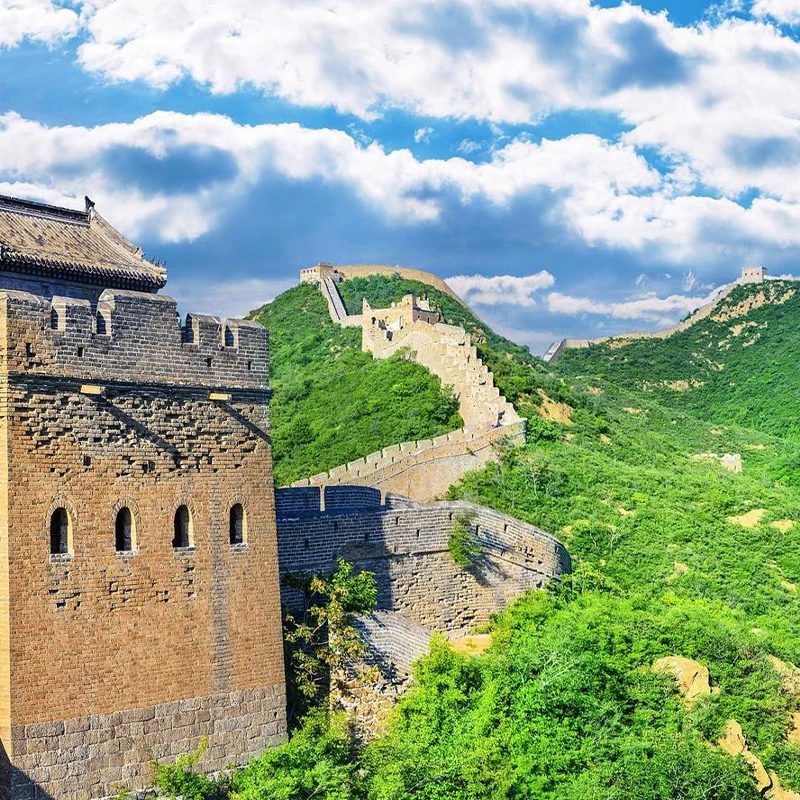
What works is plain and a little boring: a big halal breakfast, a packed lunch that we arrange the evening before through a halal bakery or the hotel, an early departure so you walk the wall before the midday heat and the day-trip buses, and a proper dinner back in the city. Prayer happens on the road — highway service areas have washrooms for wudu, and the prayer itself is beside the car or in a quiet spot, since there are no prayer rooms on that route — which is the practical reason we run Great Wall days with a private car and a driver who has been told the plan, rather than on a bus tour that stops when the bus stops. For grandparents, Mutianyu has a cable car up and back down, so an older traveler rides up, walks a short stretch of the wall between towers, and rides down while the rest of the family walks further. Handle this one day well and the rest of Beijing is straightforward.
Is Beijing Good for Families and Older Travelers?
Good, if you give it the days it needs. Beijing’s sights are big — the Forbidden City alone is close to a kilometer of walking end to end — and a 3-day version leaves no slack for a delayed meal or a long prayer stop. Four days is the comfortable minimum; with children or grandparents we plan five, with the Summer Palace on the lighter final day and the boat across Kunming Lake instead of walking both directions. The Forbidden City’s ticket rules matter for families too: tickets are released seven days ahead at 20:00 Beijing time, sold by real name against each passport, with no gate sales and a Monday closure. Foreign passports work in the system, but the release window is a task that is easy to miss from abroad and impossible to fix at the gate — we book those slots for clients as part of the planning, using the passport details you give us.
Traveling as a Group of 10 or More?
For groups of 10 to 30 — a family patriarch’s trip, a mosque community, a travel agent’s package — three things change. The real-name tickets become a batch job that needs every passport a week ahead. The vehicle changes from an MPV to a coach, which changes where you can stop for prayer and meals, so the route is planned around coach parking rather than improvised. And halal restaurants that seat a walk-in family of five cannot seat 25 unannounced, so every group meal is booked and menu-confirmed in advance — which also keeps the per-person food budget predictable. If you are the person organizing such a group, tell us your group size and dates and we will say honestly what works at that scale.
How Beijing Fits a Longer China Route
For most international Muslim travelers, Beijing is the first city in China, not the only one — the flights land here and the Great Wall is here, which is why it comes first even though Xi’an is the easier halal city. From Beijing the natural pairings are:
- Beijing + Xi’an — the classic route, and the right one if a living Muslim quarter matters to you: the high-speed train from Beijing West to Xi’an North takes about 4.5 hours, and Xi’an’s Great Mosque and Muslim Quarter give you what Niujie cannot right now. See our Xi’an destination guide;
- Beijing + Universal Beijing Resort — the family version; one of our standing itineraries starts from $595 per person (no forced shopping, no hidden fees — the quote itemizes every line, and the per-person figure comes down as the group grows);
- Beijing + Zhangjiajie — history first, then the sandstone pillars from Avatar; it needs three days on the mountain side, so it fits an 8–9 day trip. Our Zhangjiajie Muslim travel guide covers those days.
Combining cities is where the halal logistics stop being a list and start being work — hotels near the food in each city, prayer patterns that change city by city, tickets that must be booked by name. Send us your dates and cities and we will draft the route with those parts already solved, within 24 hours and usually faster. For the wider picture of the city, see our Beijing destination guide.
FAQ
Is there a Muslim quarter in Beijing?
Yes — Niujie, in Xicheng District, centered on the Niujie Mosque founded in 966. With the mosque under restoration the street is a place to eat rather than to pray, but its halal restaurants and shops are open, so Beijing still has a walkable Muslim quarter.
Which city in China is the most Muslim-friendly?
The northwest — Xi’an, Lanzhou, Xining — where Muslim communities are largest and halal food is the default rather than the exception. Among the big eastern tourist cities, Beijing ranks near the top: real halal institutions, open mosques, and a Muslim quarter.
Is KFC or McDonald’s in China halal?
In Beijing we can’t confirm halal certification for any outlet — airport and mall branches included — so ask the staff before ordering, or use qingzhen restaurants, and the same is true across most of mainland China. Use the green 清真 (qingzhen) sign to find halal restaurants instead; our guide to halal Chinese food explains how the system works.
Can you wear a hijab in China?
Yes. Nobody will ask you to remove it in the street, and our clients wearing hijab travel Beijing normally. The practical details — ID checks, how a face veil differs from a headscarf here, curious looks in smaller cities — are in our guide to wearing a hijab in China.
Is there halal food at Beijing airport?
Beijing Capital has one halal restaurant in Terminal 3, in the public area before security rather than at the gates, so it helps on arrival, not before a flight; nothing halal is documented airside. At Daxing a halal noodle shop is reported on the arrivals level, but do not count on it. Either way, plan your last proper meal in the city.
Is there halal food at Universal Beijing Resort?
Not that we can verify inside the park. There is a Donglaishun halal hotpot branch at the resort’s Universal CityWalk outside the gates, open 10:00–23:00, and that is where we put the day’s proper meal — a big halal breakfast before entering, hotpot after. Check the park’s current food rules before relying on carrying anything in.