Last Updated on September 21, 2026 by Halalchinatrips
Yes — and in one respect Guangzhou stands out among China’s big gateway cities: everyday halal eating is easier here than in any of them. Islam reached China through this port, Huaisheng Mosque is traditionally dated to 627, and the Xiaobei district feeds a resident Muslim community every single day. But there are two different Guangzhous, and which one you are in decides how friendly the city feels: the tourist Guangzhou of the old city and Xiaobei, where halal life is effortless, and the trade Guangzhou of Tianhe towers and the Canton Fair complex, where nothing halal should be assumed. We plan for both kinds of travelers, so this guide judges both — including the parts that need real planning.
The Short Answer — and the Three Honest Limits
Guangzhou works very well for Muslim travelers: two historic working mosques, one of the densest halal dining districts in the country, nonstop flights from Kuala Lumpur, Singapore, Jakarta, Dubai and Doha, and a Muslim presence stretching back roughly 1,300 years. If your worry is “will I eat properly in China,” Guangzhou is the city where that worry dissolves fastest.
That is the “yes.” Here is the rest — three limits, in the order they actually catch people:
- Halal life concentrates in two pockets, and thins out fast beyond them. Around Xiaobei and the old mosque quarter you can walk to a verified halal meal in minutes. In Tianhe, Zhujiang New Town and around most big-name attractions, options are scattered and need checking one by one. The city is easy; the wrong hotel location makes it feel hard.
- There is no national halal certification in mainland China. The working standard is the green 清真 (qingzhen) sign — a Muslim-run kitchen answering to the community that eats there daily, which is a different and stronger thing than a downtown restaurant’s convenience “no pork” menu. Malaysian and Singaporean readers will not find a JAKIM-style logo anywhere; our halal Chinese food guide explains how the system works nationwide.
- The Canton Fair changes the city twice a year. During fair sessions in spring and autumn, hotel prices across Guangzhou can double or triple, and the exhibition complex itself sits in a district where reliably halal food is scarce. If your dates touch a fair session — as a buyer or just a tourist passing through — that single fact should shape your booking before anything else does.
None of these limits make Guangzhou a difficult city. They make it a city where the answer to “is it Muslim-friendly” is: extremely, in the right two square kilometers — and manageable everywhere else with a plan.
Eating Halal: Two Clusters That Cover Almost Everything
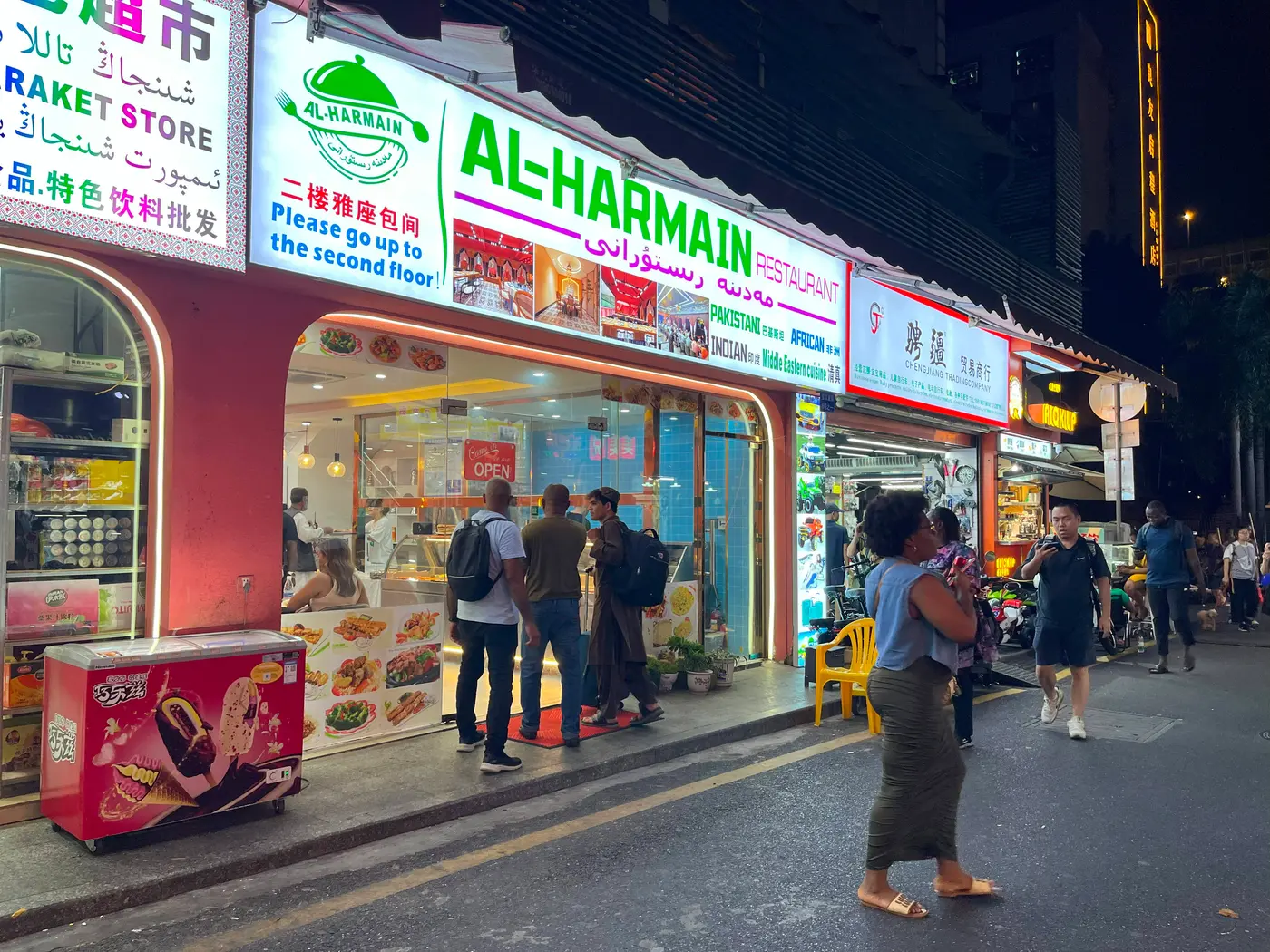
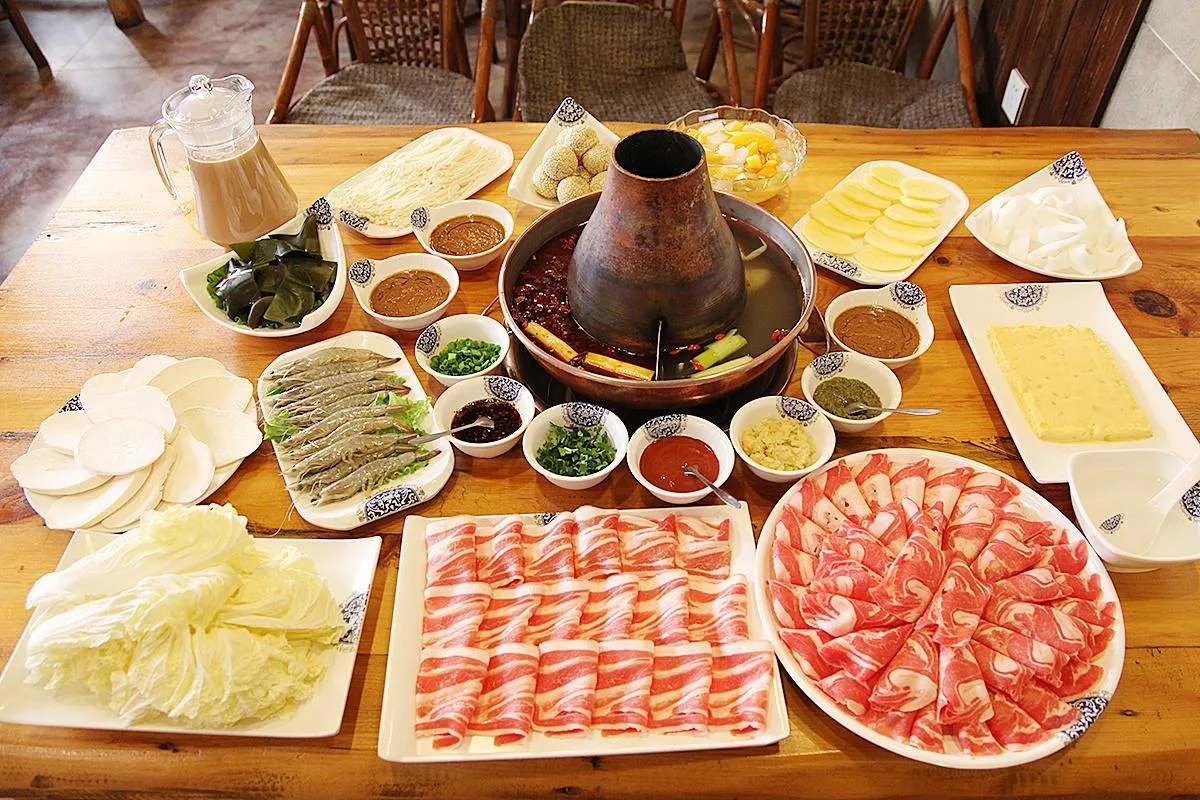
Is it easy to find halal food in Guangzhou? Inside the two clusters, easier than almost anywhere in China. The first is Xiaobei, on Metro Line 5 one stop from Guangzhou Railway Station: the lanes around Baohan Street hold Lanzhou beef-noodle shops, Xinjiang lamb grills, Turkish and Arabic restaurants, and West and East African kitchens — a working neighborhood, not a tourist set, which is exactly why the food is reliable. The second is the old city around Huaisheng Mosque on Guangta Road, a quieter, more historical cluster that pairs naturally with a sightseeing day. Xi’an’s Muslim Quarter is the other city that can claim this kind of ease — the difference is range versus depth: Xi’an gives you one deep Chinese-Muslim food culture, Guangzhou gives you five cuisines on one street. With children, that range is an advantage: hand-pulled noodles and lamb skewers are usually the easiest sell at the end of a long day. Our Xiaobei guide covers the street lane by lane, and the Guangzhou halal food guide names the specific restaurants across the city.
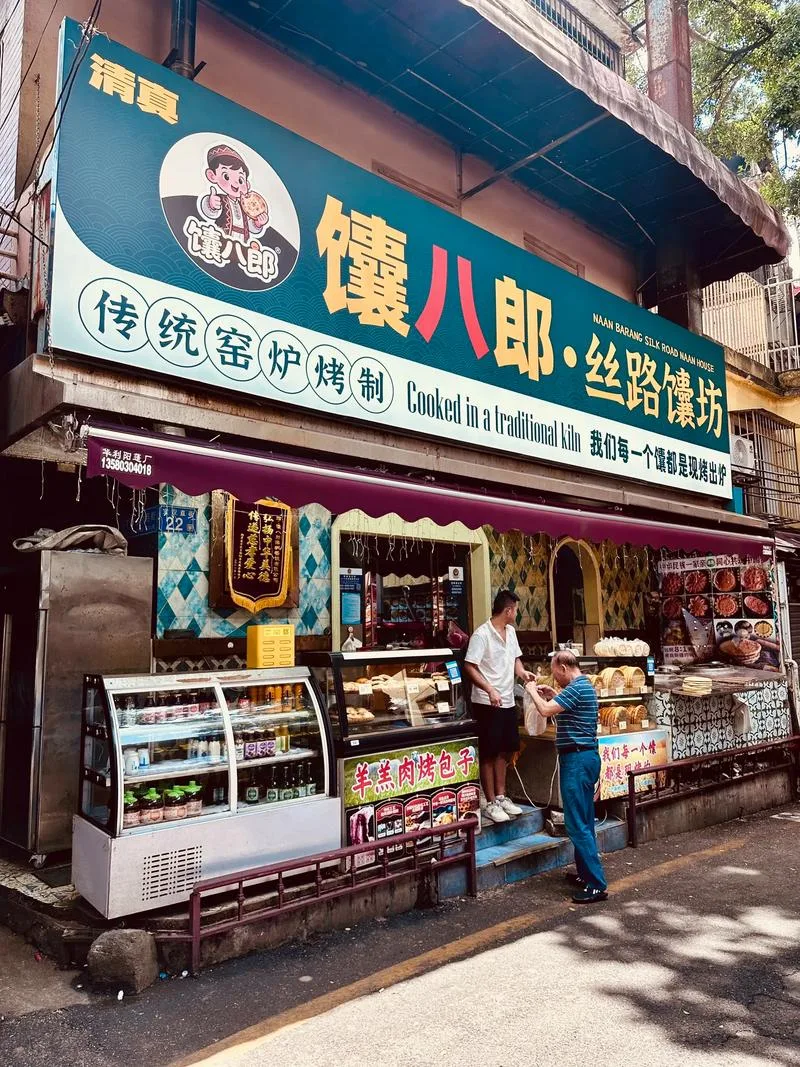
One judgment call matters more than any restaurant list: neither cluster has a gate. Ordinary Chinese restaurants operate on the fringes of both, so “it’s near the Muslim street” is not by itself a guarantee. The method we use when verifying restaurants for our own groups is the one worth copying — look for the qingzhen sign or Arabic signage at the entrance, read who is actually eating there, and when in doubt walk on: on these streets an unambiguous alternative is usually within a couple of minutes’ walk.
Now the other side of the ledger. The modern business districts — Tianhe, Zhujiang New Town — and the areas around Canton Tower and the big theme parks are thin on verified options. We have not verified a halal restaurant inside Chimelong itself, so a family safari day runs on a solid halal breakfast, sealed snacks, and dinner back in Xiaobei. That is the pattern for all of modern Guangzhou — eat before or after, not during — and it is a planning fact, not a crisis.
Prayer: Two Historic Mosques Already on Your Route
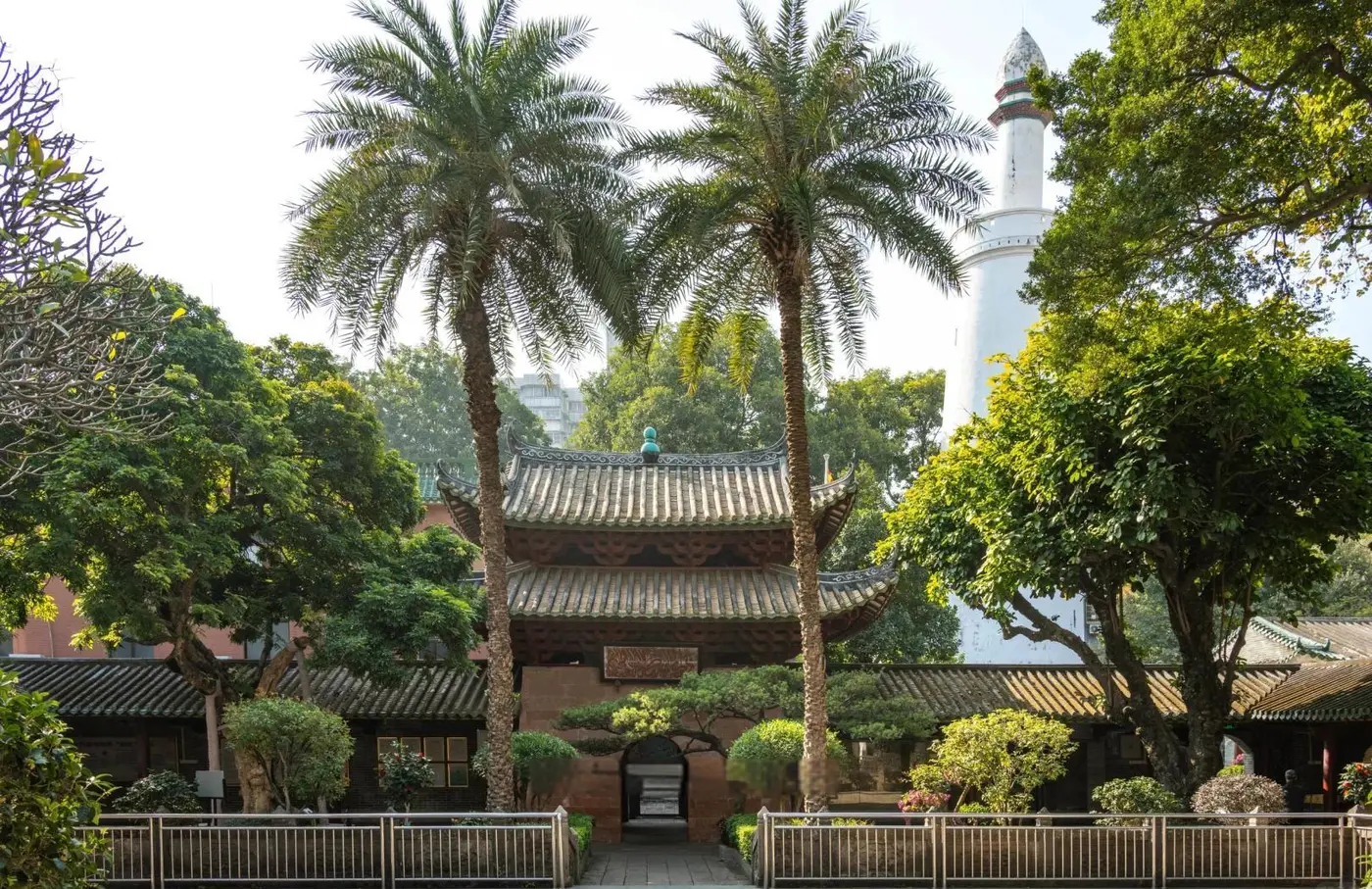
Guangzhou’s two anchor mosques are not detours; they sit where a tourist day already goes. Huaisheng Mosque on Guangta Road — traditionally dated to 627 and usually counted among the oldest mosques in China — holds the five daily prayers and a busy Friday Jumu’ah, in the middle of the old city you would sightsee anyway. Xianxian Mosque on Jiefang North Road, near Yuexiu Park, is also active for the five prayers, and its cemetery is traditionally associated with Sa’d ibn Abi Waqqas, a companion of the Prophet ﷺ — a meaningful visit in its own right, a short ride from Xiaobei. For women, arrangements and entrances vary by mosque and English signage is thin — confirming the women’s section by phone before you arrive is a call we make routinely when planning for families and sisters’ groups.
The rhythm we build into Guangzhou itineraries is simple and worth stealing even if you travel independently: pray Dhuhr or Asr at Huaisheng, walk the old quarter, then arrive at Baohan Street around Maghrib and stay for dinner — prayer and the best meal of the day solved in one movement instead of two problems. Days that do not pass a mosque follow the usual China pattern: Fajr and Isha at the hotel, Dhuhr and Asr in a quiet corner or, on our private trips, in the vehicle between stops. At Baiyun Airport, Terminal 2 has halal dining; traveler directories also list a prayer room there, but we could not confirm it through the airport itself — treat it as a bonus if you find it, and keep a travel mat handy for a quiet gate corner. For how prayer works across the rest of the country, see our guide to mosques in China.
Coming for the Canton Fair? You Are Visiting a Different Guangzhou
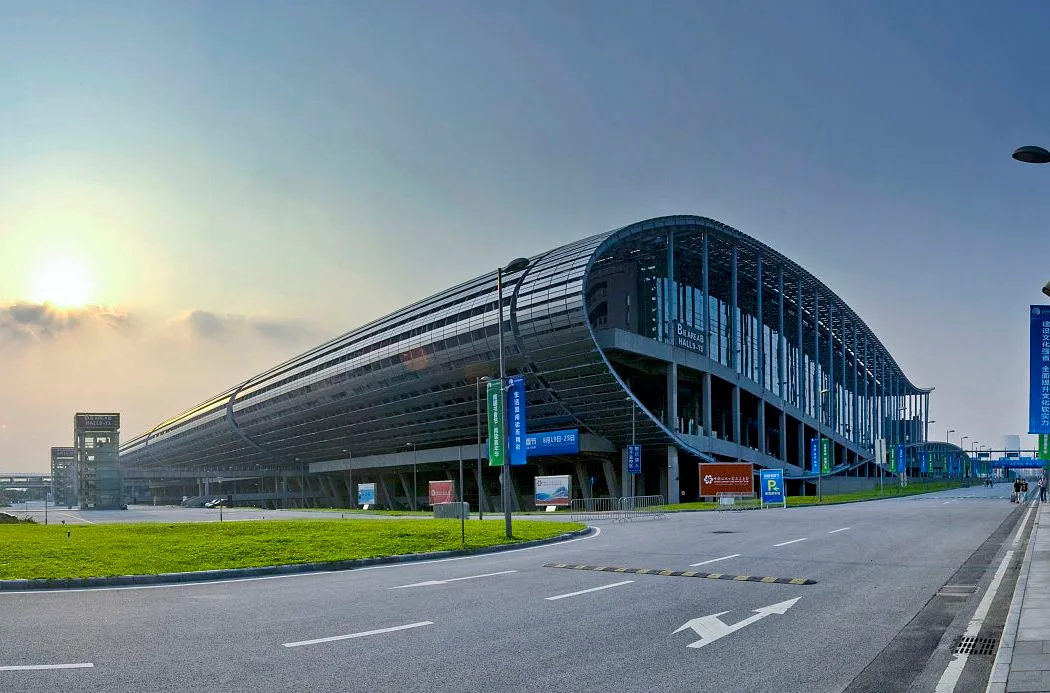
Most Guangzhou guides are written for sightseers, but a large share of the Muslim travelers who actually land here each spring and autumn are buyers — so this section is for you: your Guangzhou is Pazhou, and Pazhou is the thin part of the halal map. The working solution the buyers we host converge on is a hotel around Xiaobei or Huanshi Road and a commute to the fair — roughly 30–40 minutes by metro, longer by taxi in fair-week traffic — because after a twelve-hour fair day, a verified halal dinner downstairs beats a search near the venue every time.
Facilities inside the complex are the part we refuse to answer from memory. Recent sessions have had a prayer room and halal food points inside the fairgrounds, but their locations change from session to session — so when a client asks, we phone the venue and confirm the current session’s arrangements before replying, rather than repeating what was true last spring. Treat any specific hall number you read online the same way: as last session’s answer. Our Canton Fair guide for Muslim buyers keeps the current session’s dates, Friday planning and meal strategy in one place. And if you are bringing a delegation, book the evenings like you book the booths: a restaurant that seats four cannot seat twenty, so we reserve halal group dinners around Xiaobei a day or two ahead — earlier for fair Fridays — and arrange the coach so the group moves on one schedule.
Who Guangzhou Suits — and Who Should Start Somewhere Else
Guangzhou is the right first stop if food reliability is your family’s main worry, if you are flying from Southeast Asia or the Gulf and want a short nonstop route in, or if your China trip is built around trade. It suits families and older parents well: the old-town sights are flat and stroller-friendly, distances between the clusters are short rides rather than long marches, and Chimelong’s safari park fills a full day with children provided meals are planned around it. Getting in is the easy part for many readers: Malaysians enter China visa-free for up to 30 days. The two set-up items that catch first-timers are payment and messaging, and both are solved before you fly — our guides to paying in China and using WhatsApp in China take about ten minutes each. For women traveling together, one detail from our own bookings says more than a policy page: an overseas client’s one-day Guangzhou tour ran with a female English-speaking guide, arranged because she asked — sisters’ groups and mother-daughter trips can request the same, subject to confirming availability for the date.
Choose differently if what you want from China is imperial landmarks or immersion in Muslim street culture. The first is Beijing’s offer. The second is Xi’an’s — a walled city where the Muslim Quarter sets the tone of the old town, a different experience from Guangzhou’s working trade-city Islam; our honest answer on Xi’an draws that comparison properly. And if you are still one level up, deciding on China itself, start with Is China Muslim-friendly? and come back to the city question after.
What most visitors actually do is treat Guangzhou as a front door: two or three days here — our Muslim-friendly guide to the city’s sights and day-by-day itinerary cover that — then a flight or high-speed train onward. Every added city means new restaurants to verify and new prayer logistics, which is the part our local teams handle daily. If you are weighing Guangzhou as a first stop, a fair trip with a buying team, or a two-city route, tell us your dates and group size on WhatsApp and we will show you how the days would actually run — or start from the Guangzhou destination overview.
FAQ
Is there a Muslim hotel in Guangzhou?
No — mainland China has no certified halal hotel system, in Guangzhou or anywhere else. The practical substitute: book around Xiaobei or Huanshi Road so verified halal food is downstairs, treat your room as your main prayer space, and solve breakfast at the neighborhood noodle shops rather than the hotel buffet.
Where is the Muslim area in Guangzhou?
Two places: Xiaobei in Yuexiu district — the living commercial quarter around Baohan Street, best for food — and the old city around Huaisheng Mosque on Guangta Road, the historical cluster that combines best with sightseeing.
Is there halal food at the Canton Fair complex?
Around the Pazhou venue itself, reliably halal food is scarce. Inside the fairgrounds, recent sessions have offered halal food points, but locations change every session — confirm the current arrangement rather than trusting an old forum post. Most Muslim buyers solve dinner in Xiaobei, 30–40 minutes away by metro; our Canton Fair guide covers the current session.
Is KFC or McDonald’s halal in Guangzhou?
No. As in most of mainland China, mainstream fast-food chains in Guangzhou are not halal and make no halal claim. The green-sign qingzhen noodle shops are the fast, cheap alternative, and Xiaobei covers everything above that.
Which city in China is most Muslim-friendly?
For everyday halal eating among the big gateway cities, Guangzhou has the strongest claim; for immersion in Muslim history and street culture, Xi’an; for first-trip ease with children, Shanghai also argues its case. There is no single winner — which is why we answer it city by city in our country-level guide.
Is Guangzhou safe for Muslim travelers?
Yes. Visibly Muslim travelers — including women in hijab, which is not restricted in China — typically meet curiosity, not hostility. Expect cigarette smoke in public places and alcohol at ordinary restaurants; neither is aimed at you, and both are things we route around when we plan.